Breaking News
Breaking News
from Washington and beyond

Alabama Rushes to Eliminate Its Only Two Democrats in Congress

Another Republican governor has joined Donald Trump’s gerrymandering wars in light of the Supreme Court ruling.

Alabama Governor Kay Ivey smiles during a football game
Stew Milne/Getty Images
Alabama Governor Kay Ivey

Alabama is pushing ahead with a racist redistricting scheme after the Supreme Court gutted the Voting Rights Act.

Republican Governor Kay Ivey called Friday for a special session next week of the Alabama state legislature to pass new congressional and state Senate maps, and prepare legislation to hold special primary elections.

The move came one day after Alabama’s Attorney General Steve Marshall asked the Supreme Court to allow the state to implement new congressional and state Senate maps that were redrawn in 2023 before being barred by the Voting Rights Act.

In Wednesday’s decision in Louisiana v. Callais, the court’s six-justice conservative majority effectively dismantled Section 2 of the Voting Rights Act, which prohibits discrimination based on race. While the decision did not eradicate it entirely, the court has raised new hurdles for those seeking to prove a racial gerrymandering claim, and gave its blessing to those who would claim partisan gerrymandering as a legal defense.

The new maps would effectively redraw Alabama’s two Black-majority districts: the 2nd district and the 7th district.

Alabama’s 2nd congressional district, led by Representative Shamari Figures, contains Mobile and Montgomery and would see its Black population shrink from 49 percent to 40 percent, according to the Alabama Reflector.

Alabama’s 7th congressional district, led by Representative Terri Sewell, is Alabama’s oldest majority-Black district and has consistently sent Black Democrats to Washington since 1993. This district includes Selma, as well as parts of Birmingham, Tuscaloosa, and Montgomery.

CJ Pearson, a right-wing influencer, wrote on X that the decision “will likely lead to a COMPLETELY REPUBLICAN DELEGATION!” Pearson, who was one of the first to report Ivey’s move, said that it had been the result of lobbying by Marshall, attorney general candidate Katherine Robertson, and Secretary of State Wes Allen.
Pope Leo Appoints Bishops Who Warned America Is Regressing Under Trump

Pope Leo XIV has named three new bishops who aren’t big fans of Donald Trump.

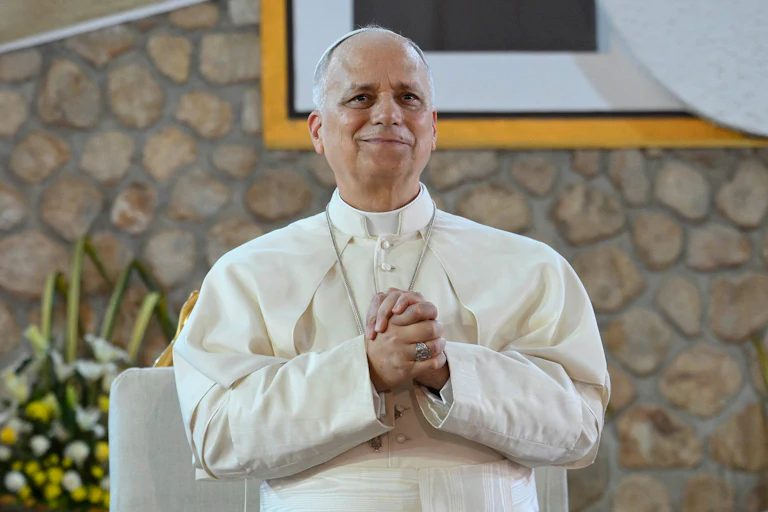
Pope Leo XIV
Simone Risoluti/Vatican Media/Vatican Pool/Getty Images

Pope Leo XIV has named three new bishops in the United States, each of whom have been vocal critics of President Trump.

Evelio Menjivar, a formerly undocumented immigrant, will be the new bishop for the Diocese of Wheeling-Charleston in West Virginia, and Gary Studniewski and Robert Boxie III will be auxiliary bishops in Washington, D.C. The appointments indicate a deliberate choice on the pope’s part to select representatives in the United States who will be similarly unafraid to raise their voices against the Trump administration.

Menjivar, who immigrated from El Salvador to the U.S. in the trunk of a car when he was a teenager, decried Trump’s immigration crackdown last year in the National Catholic Reporter. “The federal government has pursued a ‘shock and awe’ campaign of aggressive threats and highly visible operations of questionable legality that go far beyond mere immigration ‘enforcement,’” he wrote. “We must stand with those at risk … and we cannot let the dark side of anti-immigrant animus take hold.”

Father Studniewski, a former U.S. Army chaplain who serves in the Chevy Chase area, called the January 6 insurrection “very disturbing, very disheartening.”*

“It was a normal day, until all that sickening unrest in the afternoon,” he told Today’s Catholic in 2021. And Father Boxie, who serves at Howard University, was deeply critical of Trump’s war on diversity, equity, and inclusion last year.

“In a lot of ways we have made great progress, but in so many ways, I feel like we’re regressing,” said Boxie. “It’s really frustrating—especially this moment that we’re living in. The attacks on ‘DEI’—I don’t even know what that means anymore. It’s a term that’s been hijacked. It means a lot of things to a lot of different people.”

* This article previously misstated the location of Father Studniewski’s church.

Trump Says It’s Not “Constitutional” for Congress to Block Iran War

Donald Trump has hit the 60-day deadline for needing to get congressional approval on his war in Iran.

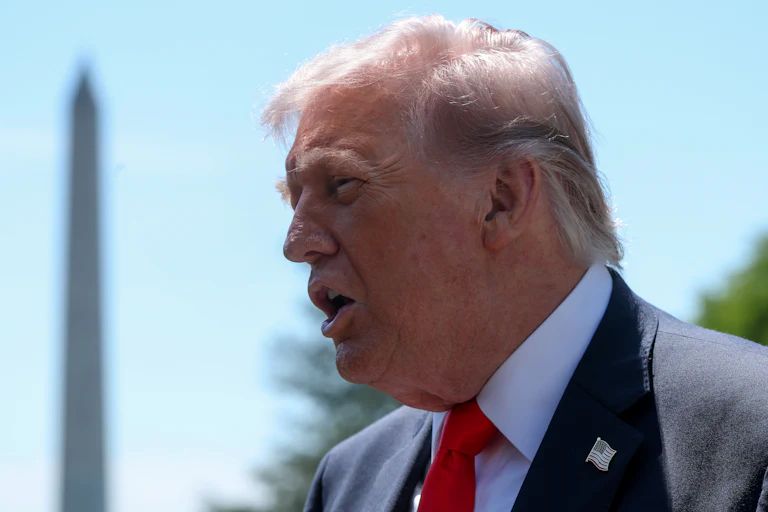
Donald Trump, seen in profile, speaks to reporters outside the White House. The Washington Monument is in the background.
Anna Moneymaker/Getty Images

President Donald Trump claimed Friday it’s unconstitutional to seek congressional approval for war.

Speaking to the press outside the White House, Trump whined that he should not have to comply with the War Powers Resolution of 1973, which requires the president to withdraw his forces from a conflict after 60 days unless Congress declares war or approves an extension.

“There’s no other country that’s ever done it, it’s never been uh, as you know—most people consider it totally unconstitutional. Also we had a ceasefire so that gives you additional time,” he falsely claimed.

“We’re on our way to another victory, a big victory. And I don’t think that it’s constitutional what they’re asking for. These are not patriotic people that are asking,” he said.

The irony is that the War Powers Resolution is the only reason Trump’s reckless military campaign in Iran could even be considered constitutional in the first place. According to Article I, Section 8, Clause 11 of the United States Constitution, Congress has sole power to declare war. The 60-day window is an exception to that rule.

If the War Powers Resolution were totally void, Trump’s war in Iran would be illegal. (It already is, according to international law.)

Trump has simultaneously tried to sidestep Congress’s 60-day deadline by buying into the argument that the clock stopped when a ceasefire was announced halfway through April.

However, the U.S. is already testing the boundaries of its tenuous ceasefire with Iran by installing a military blockade on Iranian ports, an act of war according to international law, and even seizing an Iranian cargo ship. Meanwhile, Israel, America’s ally in its joint military operation, has not stopped its intense strikes in Lebanon, in violation of the ceasefire agreement.

Trump Says Iran War Is “Terminated” as He Refuses War Powers Deadline

President Trump is now pretending the Iran war is over.

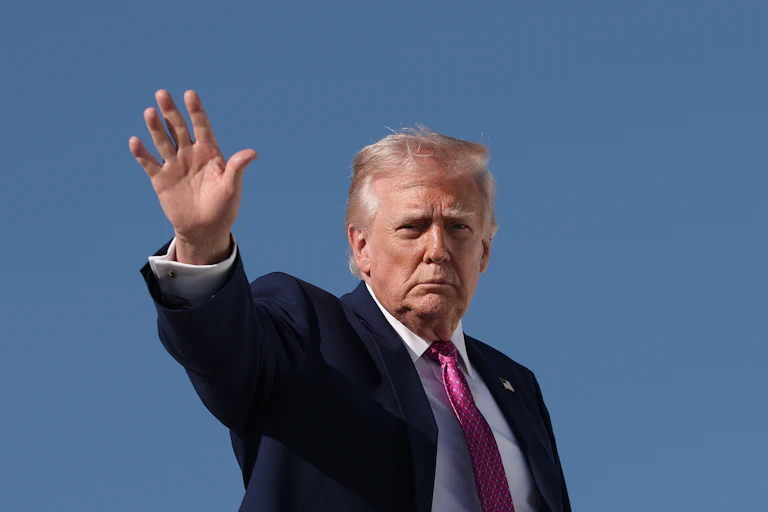
Donald Trump waving
Win McNamee/Getty Images

President Trump is claiming that the war on Iran is actually over in an effort to avoid any sort of accountability.

Trump on Friday officially informed Congress that the war was “terminated,” writing, “There has been no exchange of fire between the United States and Iran since April 7, 2026.... The hostilities that began on February 28, 2026, have terminated.”

The War Powers Resolution states that a president must formally alert Congress of any new war they entered into within 48 hours of hostilities. After that, they have 60 days to end the conflict before Congress steps in and either orders them to stop or allows them to continue. Trump’s 60 days are up on Friday, and it appears that even Republicans want to hold him accountable.

“That deadline is not a suggestion; it is a requirement,” GOP Senator Susan Collins said. “Further military action against Iran must have a clear mission, achievable goals, and a defined strategy for bringing the conflict to a close.”

To avoid any of that, Trump is insisting that the war actually ended with the ceasefire announcement in early April, even as Iran continues to block the Strait of Hormuz, the U.S. continues to block Iranian ships from leaving, and Israel continues to bomb Lebanon. The ceasefire seems to be holding on by a thread, and does not appear to be an end to the conflict in any way.

Trump on Friday called it “unconstitutional” for Congress to try to rein in his powers.

“We’re on our way to another victory, a big victory. And I don’t think that it’s constitutional what they’re asking for,” he said on Friday. “These are not patriotic people that are asking.... Even the losers, even the ones that say all the wrong things admit that it’s been amazing what we’ve done. The strait is totally shut down, it’s flawless.”

If this truly is the end of the war, then it’s unclear who the victor even is.

Trump Announces Tariffs on European Cars as Punishment

The Trump administration is somehow announcing more tariffs.

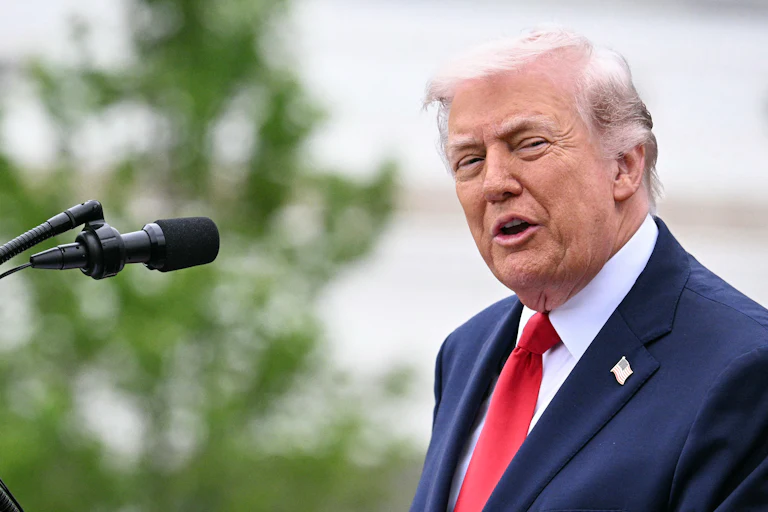
President Donald Trump speaking at a microphone
Jim WATSON/AFP/Getty Images

President Trump announced new tariffs against European car imports Friday, threatening to mess with the economy further.

In a Truth Social post, Trump announced that he is “pleased to announce that, based on the fact the European Union is not complying with our fully agreed to Trade Deal, next week I will be increasing Tariffs charged to the European Union for Cars and Trucks coming into the United States.”

“The Tariff will be increased to 25%. It is fully understood and agreed that, if they produce Cars and Trucks in U.S.A. Plants, there will be NO TARIFF,” Trump posted. “Many Automobile and Truck Plants are currently under construction, with over 100 Billion Dollars being invested, A RECORD in the History of Car and Truck Manufacturing. These Plants, staffed with American Workers, will be opening soon — There has never been anything like what is happening in America today! Thank you for your attention to this matter.”

Why Trump would be “pleased” with the move is one thing, but his claim that several auto plants are currently under construction is misleading at best. Industry experts say that most automakers are not building new plants, but are instead planning to shift their investments years from now. While some car manufacturers have pledged to spend more money in the U.S., they haven’t announced new facilities or manufacturing plants, and their plans may not even happen.

“They will be looking at models that will be coming to the end of their natural cycle, something that occurs at five or so year intervals, and getting ready to announce ‘investments’ to continue the new version of the model at those plants,” Greig Mordue, a manufacturing policy professor at McMaster University, told Al Jazeera.

On top of that, Trump’s decision to roll back much of President Biden’s Inflation Reduction Act killed projects to build domestic auto plants, including a $200 million hydrogen fuel cell factory in South Carolina and a $2.5 billion battery factory in Georgia.

It also forced American car companies to eat investments they made in electric vehicles. Ford canceled a $1.5 billion investment in electric vehicles while General Motors had to absorb a $6 billion hit. Meanwhile, Chinese electric vehicles are the most popular in the world, and are beginning to dominate the market.

All these tariffs will do is drive up prices in the U.S., and consumers will have to resort to buying more used cars, or hold off on purchases altogether. Fuel prices are still high thanks to the war in Iran, which Trump is trying to wish away without any real action. This move, at best, is a long-term plan, and at worst, won’t bring any relief or benefits to the average American.

This story has been updated.