Breaking News
Breaking News
from Washington and beyond

Trump Rushes to Convince People Saudi Arabia Nuclear Deal Is Great

Donald Trump struck a controversial deal for U.S. companies to build and run nuclear power plants in Saudi Arabia.

Donald Trump purses his lips and looks down while walking down the steps of Air Force One.
Kevin Dietsch/Getty Images
Donald Trump disembarks from Air Force One.

President Donald Trump is desperate to sell Americans on his landmark nuclear deal with Saudi Arabia that would loosen restrictions for the close U.S. partner.

In a post on Truth Social Thursday, Trump declared that there would be “no enrichment of material” as part of his nascent nuclear deal, which would allow U.S. companies to make billions building and running nuclear power plants in Saudi Arabia.

But surprise, surprise: That’s not the whole story.

The United States has offered Saudi Arabia a special deal that is reportedly far less restrictive than other agreements under Article 123 of the U.S. Atomic Energy Act of 1954—namely, this deal leaves the door open for enrichment down the line.

The Saudi agreement reportedly states that the two countries will conduct a two-year fuel cycle study on the economic feasibility of domestic enrichment in Saudi Arabia. If, after the study, the two sides agree that it’s feasible, then the U.S. would build an enrichment facility in Saudi Arabia. If not, Saudi Arabia would not be allowed to build its own domestic enrichment for 10 years, while blocking Saudi access to sensitive technology. If approved, the decision on whether or not to build would be made in two years—when Trump is still president.

Trump also claimed in his post that the agreement would require Saudi Arabia to agree to join the Abraham Accords.

Initial reporting about the deal suggested that the agreement would not require Saudi Arabia to recognize Israel. Unsurprisingly, Israel has voiced strong concerns about its closest ally cutting a deal with its enemy.

There are other reasons to be concerned about Trump’s deal. The president’s mishandling of nuclear negotiations is well documented, including his decision to detonate the U.S.-Iran nuclear deal struck by President Barack Obama, and the careless wording of last month’s memorandum of understanding between the U.S. and Iran, which shortly after crumbled in the Strait of Hormuz.

BBC Demands More Records on Jack Smith’s January 6 Report

The BBC wants President Trump to explain his “executive privilege” response to every request in the ongoing defamation case.

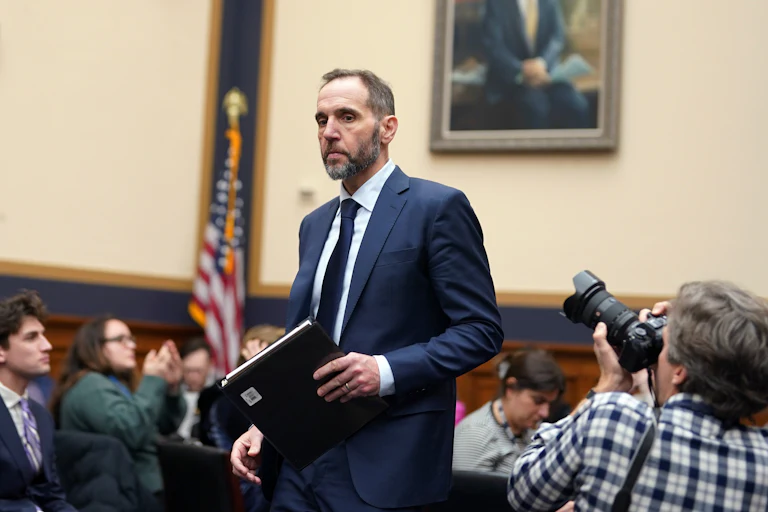
Jack Smith holds a folder while in a congressional hearing
Al Drago/Getty Images
Former special counsel Jack Smith in 2025

The BBC has hit President Trump with his third whammy in 24 hours—with the broadcast news organization this time renewing its demand for the release of records showing how Trump lost his “executive privilege” claims during former special counsel Jack Smith’s investigation into January 6.

The BBC noted in a reply memorandum Wednesday that it has already sent multiple “requests to government agencies seeking to obtain the same evidence the Special Counsel gathered and described as ‘evidence establish[ing] that the violence [on January 6] was foreseeable to Mr. Trump, that he caused it, that it was beneficial to his plan to interfere with the certification, and that when it occurred, he made a conscious choice not to stop it and instead to leverage it for more delay.” 

But the Trump administration rejected those requests, claiming executive privilege. The BBC demanded more information on how Trump lost those same claims during Smith’s probe.

“The government errs in characterizing the Executive Privilege Decisions as ‘information that might be incrementally helpful in litigating a potential future discovery dispute.’ Instead, unsealed decisions will likely be crucial to obtaining information that could be dispositive of President Trump’s lawsuit, as the BBC expects them to show that President Trump’s assertions of executive privilege have already been rejected,” the BBC wrote. “The Court should therefore further unseal the Executive Privilege Decisions and prevent the injustice that would arise from President Trump using already-rejected privilege claims to withhold such vital information.”

This all stems from a $10 billion lawsuit Trump filed last year against the BBC over a 2024 episode of Panorama that he claimed was defamatory because it spliced together sections of his January 6, 2021, speech, highlighting his call for supporters to “fight like hell,” while omitting his request for peaceful protest. If the BBC can prove that Trump was aware of the violence he was fomenting, his whole defamation case falls apart.

On Tuesday, a judge allowed the BBC to move forward with subpoenas against Trump’s closest advisers and confidants—like family members, Stephen Miller, and Steve Bannon—to better determine what Trump’s actual goals were on January 6. The judge also ordered Trump to hand over his financial records, opening yet another lane of exposure against the president.  

Trump Orders Schools to Make Chilling Change to Sex Ed Programs

Donald Trump has gutted programs aimed at preventing teen pregnancy.

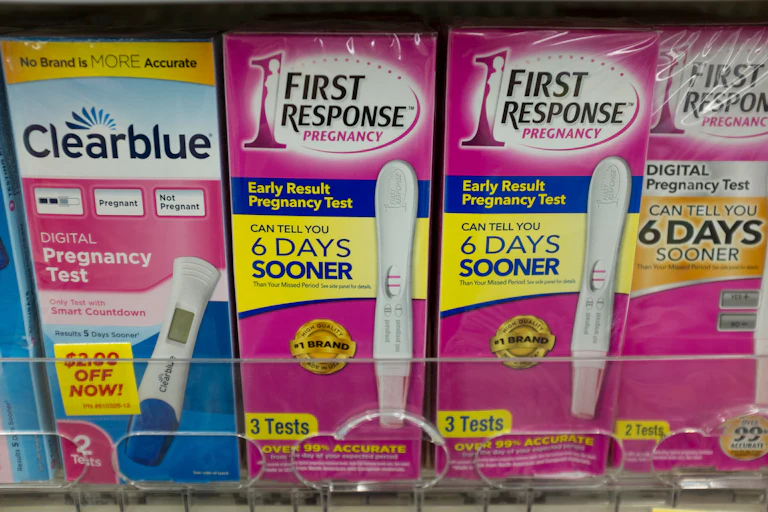
Pregnancy tests on a shelf in a pharmacy
SETH HERALD/AFP/Getty Images

The Trump administration has canceled millions of dollars’ worth of federal grants to organizations running teen pregnancy education programs nationwide, suggesting that the widely effective underage pregnancy prevention services were inappropriately promoting premarital sex.

The funding did not align with the Office of the Assistant Secretary for Health’s outlined priorities, according to a government fact sheet that specified the office would not support “content that encourages, normalizes or promotes sexual activity for minors.”

One such organization interrogated by the assistant secretary—South Carolina nonprofit Fact Forward—was accused of including lessons with “advice on making condom use more pleasurable” and promoting discussions that normalize “use of pornography,” according to a copy of the letter obtained by The New York Times.

“That information was just not true,” Rena Dixon, who runs the group, told the Times. Dixon added that Fact Forward had never used the lessons or materials to which the assistant secretary referred.

Other program directors that spoke with the Times also said that the government had distorted the materials they were using in order to make erroneous claims about their education plans. Several noted that the grants they won required them to use “courses from a federally approved list shown by research to be age-appropriate and effective,” according to the Times.

The federal government first got involved in preventing teen pregnancy in 2010, allocating roughly $100 million to the cause and eventually creating the Office of Adolescent Health and the Teen Pregnancy Prevention Program, or OAH.

At the time, teen birth rates were already in decline, yet the program’s influence still caused rates to fall faster than ever. The government-funded programs advanced the waning trend by investing in proper sex education and increasing access to reproductive health care in communities suffering from disproportionately high rates of teen pregnancy.

But Donald Trump and his allies have nonetheless abhorred the effort. Last month, a spokesperson for Health and Human Services revealed that the agency had canceled 53 out of 67 grants—totaling $68 million—alloted to the pregnancy prevention program. The impact was broad, affecting more than two dozen states across the country.

It’s unclear if the effort will hold up in court. Trump took similar actions during his first term, suddenly canceling dozens of grants issued under the Obama-era program in 2017, though his efforts did not succeed.

In April 2018, Justice Ketanji Brown Jackson—then a U.S. district judge—ruled that HHS had violated its own regulations by prematurely ending the grants without an adequate explanation, ordering the agency to restore the terminated funds.

Read The TNR Blue Book, our new newsletter on the Democratic Party:

Did Trump Officials Rig High School Contest Against Sikh Finalist?

Everyone competing against Aangad Singh thought he’d won the Presidential 1776 Award competition. He wants to know why his answers were marked incorrect.

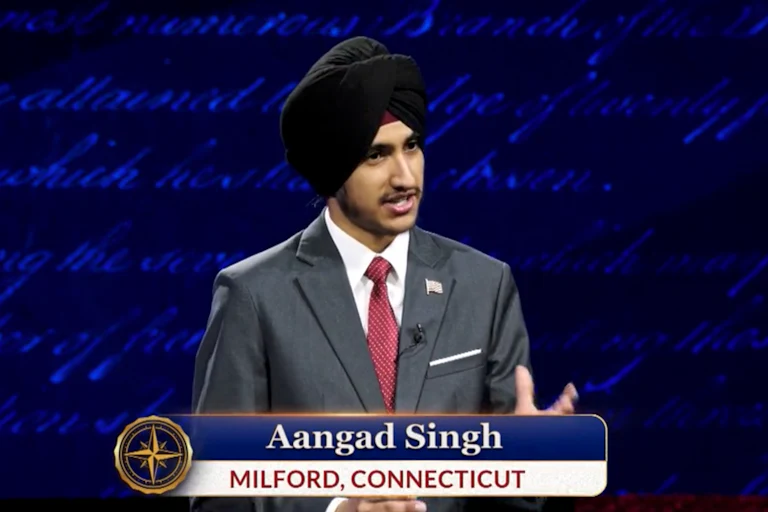
Aangad Singh speaks during the Presidential 1776 Award competition. The chyron notes he is from Milford, Connecticut.
Screen grab/Paramount+
Aangad Singh speaks during the Presidential 1776 Award competition.

The Presidential 1776 Award competition was set up by the Trump administration to honor America’s 250th birthday with a civics contest for high school students.

But the family of 15-year-old Aangad Singh believes he may have been kept out of the competition’s final because of his Sikh background and visible turban, NOTUS reports.

Singh, a rising high school junior who lives in Connecticut, entered the competition in February just like other high school students around the country. He scored well enough to reach the finals in Washington, D.C., at the end of June and make the final eight. But his elimination after that left his family—and many of his competitors—puzzled.

The Singh family didn’t think Aangad had performed poorly, but there wasn’t a live scoreboard. Other contestants told them after the competition that they were sure Aangad had won and were shocked that he wasn’t in the top three. When Aangad’s mother, Ramandeep, asked an official with the Department of Education, which helped run the contest, for the final scores, the official told her that was proprietary information.

So the Singh family waited until the competition was televised on CBS three weeks later, and Aangad was shocked to learn some of his correct answers were labeled wrong.

In one instance, Aangad was asked to give four examples where federal courts have jurisdiction, as outlined in Article 3 of the Constitution.

Two of his answers—“Parties of state and citizens of another state,” and “Case with state and foreign nation”—were marked wrong. He showed his father a copy of the Constitution proving that his answers were right.

In another instance, during a lightning round, Aangad was asked, “Which amendment ended slavery?” and his answer was marked wrong. Initially, he thought his pronunciation of “Thirteenth” was bad and that his th sounded like an f. But he was reassured when the TV subtitles proved that he said the correct answer.

After the round ended, each contestant was interviewed by host Mario Lopez before he announced the three finalists, and Aangad gave an answer about being proud to share his knowledge about the country’s founding principles. Then he watched white contestants from Michigan, Washington, and Wyoming announced as the winners.

Secretary of Education Linda McMahon and Access Hollywood host Mario Lopez speak as the three white finalists of the Presidential 1776 Award listen to them outside the White House.
Secretary of Education Linda McMahon and Access Hollywood host Mario Lopez meet with finalists of the Presidential 1776 Award outside the White House on June 10.
Alex Wong/Getty Images

Singh’s family thought that he was robbed, and weighed taking action. To his mother and uncle, it seemed like Aangad was being kept out of the spotlight—and a visit to the Oval Office to meet President Trump—because he was a brown kid with a turban. They didn’t care as much about getting a share of the $250,000 in scholarship money as much as Aangad being recognized for his hard work.

The Wyoming winner was a homeschooled girl who would later be touted by the Department of Education for culture-war propaganda, and the Washington state winner told Trump at the White House that she wanted to attend Hillsdale College, a politically conservative school, to which Trump said he could give a recommendation.

Aangad’s father, Bhalindar, reached out to the Department of Education twice by email, but has yet to get a response. The department told NOTUS that the questions in the competition were “developed, judged, and scored independently by the James Madison Memorial Fellowship Foundation.” NOTUS sent the foundation a detailed list of questions, but also hasn’t heard back.

Minutes before NOTUS’s deadline, the Department of Education responded, saying that the competition’s rules stated that judges would “exercise independent good faith judgement [sic]” in selecting finalists and winners, and that, by participating, contestants “agree that the decision of the judges is final and binding.”

Read The TNR Blue Book, our new newsletter on the Democratic Party:

Modeling Scout Named Thousands of Times in Epstein Files Found Dead

Daniel Siad, a modeling scout who sent young women to Jeffrey Epstein, was found dead at his home.

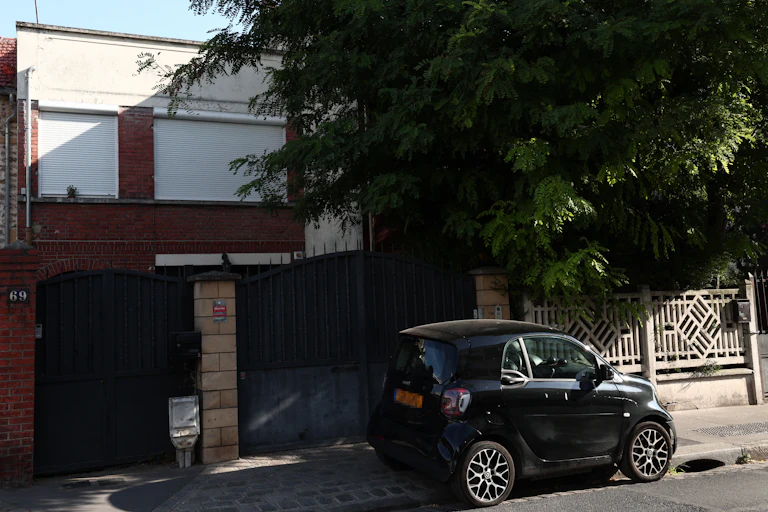
A small car parked in front of a gated home
Xavier Galiana/AFP/Getty Images
The residence of modeling agent Daniel Siad in Colombes, France, a Paris suburb, on July 22

Daniel Siad, the French modeling agent who allegedly introduced dozens of young women and girls to sexual predator Jeffrey Epstein, was found dead in his Paris home on Monday. He was 69. 

Siad was one of many friends and associates that Epstein had in France, and was under investigation in the country for rape and human trafficking. 

Siad is mentioned in the Epstein files released by the Department of Justice more than 2,000 times. Some of the most disturbing conversations between him and Epstein, occurring over a decade, involve him sending pictures and descriptions of young women to the convicted sex offender

“Hello Jeffrey I just found an amizinng One she is 20 years old but she looks younger from Latvia 5’8 She just Did a world campaign For Nivea Last weeck and she will be Doing an other campaign for Garnnier this week willing to sign with me as a personal agent. I am traveling with here to Paris this week let me know if you think it will be good to take here To Next and also what Agency you thing is apropriate for here in The US she said that she meet Jean luck once in Danemark wile she was there with Scoop Models . because a girl like this is future star we need to make here a good contract world wide” Siad wrote in one email in 2009, referring to another modeling agent, Epstein friend, and alleged sex trafficker, Jean-Luc Brunel—who died by suicide in his jail cell in 2022.

“The Russian girl as canceled her fly . I wanted to make for you a great surprise ,it didn’t work this time ,I really hope that it work next time . In This busyness I feel like fisherman some time I cache quick , some time no fish,” he wrote in another 2015 email to Epstein. “I really did good work for scouting in Scandinavia most of them will be ready to start with 2morrow at list 5 of them sixteen and seventeen will be ready for next year .But I can’t send you there pictures as know.”

“The French her name is [REDACTED] she is fifteen her parents checked me out and they are very happy there daughter to start modelin,” he continued. “I am going back to Stockholm then Gotland for what we call Stockholm week all the girls from sweden gather there for five days non stop Parties .to through my hooks.”  

These emails sound like Epstein commissioned Siad to go around and find women and girls to funnel to him for over a decade. Siad has denied all allegations against him, telling CNN just last month that he had no idea Epstein was abusing the girls he sent his way. 

“I never doubt that because I never heard anything from anyone who I introduced [to Epstein] who came back to me that they had a bad—a bad situation with him,” Siad said. “He was such a powerful person. And how can I not trust him?”

Siad was originally from Algeria and moved to Sweden in the 1980s before settling in Paris, where he likely met Epstein through Brunel, although it’s unclear when. 

Epstein spent a lot of time in Paris, particularly after his first conviction. Conductor Frédéric Chaslin and diplomat Fabrice Aidan are two of the other most prominent Frenchmen mentioned in the files along with Siad and Brunel. 

Read The TNR Blue Book, our new newsletter on the Democratic Party: