Breaking News
Breaking News
from Washington and beyond

Trump’s Deportations Turn Into New Horror With End of TPS for Haitians

Temporary Protected Status for Haitians is officially over, turning more than 300,000 people into targets for ICE.

A man stands below a Haitian flag outside.
Little Haiti in Brooklyn, New York, on July 29
Ryan Murphy/AFP/Getty Images
Little Haiti in Brooklyn, New York, on July 29

Temporary Protected Status has officially ended for Haitians, putting hundreds of thousands of people at risk of being deported—even though the United States still designates Haiti with a level 4 “Do Not Travel” advisory.

On Wednesday, U.S. District Judge Ana C. Reyes of Washington, D.C. reversed her initial decision and ruled that TPS was “no longer in effect” for Haitians, following a Supreme Court ruling in June.

The final step puts more than 300,000 Haitians in this country at risk of deportation. Meanwhile, the U.S. tells its citizens not to travel to Haiti due to “the risk of crime, kidnapping, terrorism, unrest, and limited health care”—the same reasons thousands of Haitians were afforded TPS in the first place.

Haitians have been a constant target of racist animosity from the Trump administration, most notably from Trump himself, who claimed on the campaign trail that Haitians were eating cats and dogs in Ohio.

“The way this group has been specifically targeted is symbolic of the administration’s efforts to criminalize immigrants of color,” Advocates for Basic Legal Equality senior attorney Katie Kersh told The Washington Post.

Aside from being forced back into a dangerous and unstable environment, about 200,000 of potential deportees have jobs here, mostly in health care and warehouse jobs—leaving local economies in limbo, as business owners have already begun searching elsewhere for employees.

“This is an embarrassment for the United States of America,” Senator Chris Murphy said on Monday. “There is no safe place to return for TPS holders from places like Haiti and Yemen and Venezuela and Syria. In fact, in those places I just mentioned, the situation is not stabilizing, getting better, it is getting worse.”

El-Sayed Faces Barrage of Racist Attacks After Michigan Win

“That’s the only play they got,” Abdul El-Sayed said after his victory in Michigan’s Democratic Senate primary.

Abdul El-Sayed
Abdul El-Sayed
Finn Gomez/Getty Images
Abdul El-Sayed

Abdul El-Sayed’s win in Michigan’s Democratic Senate primary is already drawing bigoted attacks from the right.

President Trump called El-Sayed a “Communist loser who hates Jews and Israel” Wednesday morning, saying that his victory was “Great News for the Republican Party,” in a post on Truth Social. Vice President JD Vance followed Trump’s lead and attacked El-Sayed in passing in a press conference.

“We don’t want the next administration, whoever, you know, God forbid you’re going to have President El-Sayed in three years. We don’t want him to undo all the incredible work that we’ve been doing when we’ve been taking out the fraudsters and saving the American people money,” Vance said.

El-Sayed’s Republican opponent this November, Representative Mike Rogers, released a statement alluding to El-Sayed’s Muslim faith.

“I spent years hunting terrorists and bringing Osama bin Laden to justice. Never in a million years did I think that I would be running against someone who believes America deserved 9/11,” Rogers said in his statement.

AIPAC, which spent nearly $32 million supporting El-Sayed’s primary opponent, Representative Haley Stevens, signaled Wednesday that it would support Rogers in November, saying in a statement, “Our members remain determined to ensure that voters reject Dr. El-Sayed and his radical anti-Israel agenda in November.”

The National Republican Senatorial Committee Wednesday morning called El-Sayed “the Most Radical Candidate in America,” and referred to him by his full name, Abdulrahman Mohamed El-Sayed, a departure from its previous press releases.

“El-Sayed is the most radical Democrat Senate nominee ever. His support of terrorist organizations, socialist policies, and the defunding of law enforcement makes him dangerous and ultimately disqualified from serving,” NRSC chair and Senator Tim Scott said in the press release. “Michigan has had two Democrat Senators for decades, so we cannot take anything for granted, but we will do everything we can to make sure El-Sayed never steps foot in the U.S. Senate.”

Senate Majority Whip John Barrasso piled on, calling El-Sayed dangerous, scary, and an extremist on the Senate floor Wednesday.

The NRSC has already released an attack ad against El-Sayed full of dog whistles, alleging that he supports the Muslim Brotherhood and believes America deserved 9/11.

At a press conference on Wednesday, El-Sayed brushed off the blatantly Islamophobic attacks, saying, “That’s the only play they got.

“They’re gonna point at me, they’re gonna point at my name, like, ‘Wow, he’s different.’ That’s the best you got? You can’t actually talk about what you want to do? My name is not raising your gas prices. My name is not taking us to war. My name is not the reason you can’t afford your groceries,” El-Sayed said. “So, [Rogers] can point to my name all he wants, but I’ll also tell you this: I’ve been an Abdul in Michigan my whole life. This is like the best place in the world to be Abdul, you know why? Because Michiganders are, they’re big-hearted.”

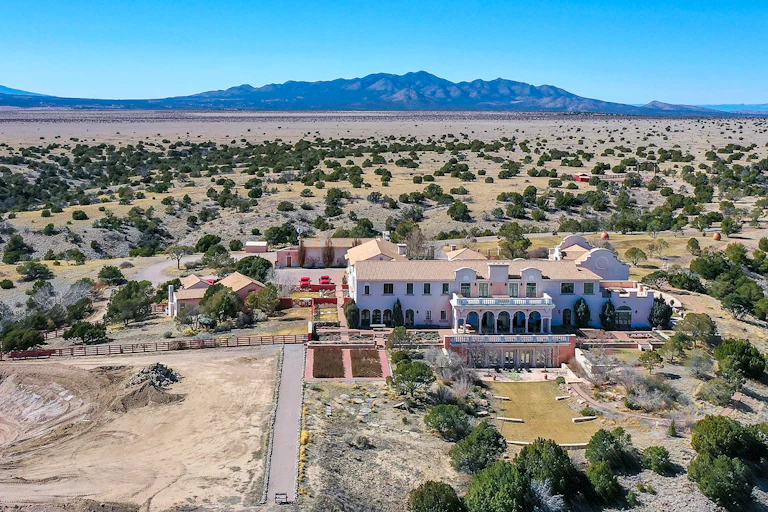
New Mexico Sues Trump DOJ for Blocking Epstein Ranch Investigation

The state has been trying to investigate Jeffrey Epstein’s activities at his Zorro Ranch.

In an aerial view, Jeffrey Epstein’s Zorro Ranch is shown outside of Santa Fe, New Mexico.
Jeffrey Epstein’s Zorro Ranch
Roberto E. Rosales/Getty Images
Jeffrey Epstein’s Zorro Ranch

New Mexico sued the Department of Justice and acting Attorney General Todd Blanche Wednesday for “stonewalling” its investigation into Jeffrey Epstein’s Zorro Ranch.

In a 40-page filing, New Mexico asked for access to unredacted documents from the Epstein files that it claimed the DOJ has been intentionally withholding.

“New Mexico has a duty to protect survivors and investigate crimes committed in our state so that perpetrators can be held accountable,” said Attorney General Raúl Torrez in a statement. “We asked the Department of Justice to cooperate by providing access to records that may be critical to identifying victims, witnesses, and additional criminal conduct at Zorro Ranch. Their delay is actively hurting our criminal investigation and delaying justice Epstein survivors deserve.”

Torrez threatened legal action against the DOJ last month, setting July 31 as the deadline for federal officials to comply with the state investigation into extensive abuse allegations on the property.

Zorro Ranch, located roughly 30 miles south of Santa Fe in the high desert, was rumored to be a hotbed of illicit activity under Epstein’s stewardship. Some of the notorious child sex offender’s victims, including Virginia Giuffre, claimed they were trafficked at the New Mexico estate, and emails issued by ranch staffers allege that the bodies of at least two girls were buried under the building by Epstein’s order, according to documents made public by the Justice Department via the Epstein files.

At one point, Epstein even contemplated turning the estate, which he purchased in 1993, into a headquarters for genetic engineering experiments.

Yet somehow, the property—dubbed “Playboy Ranch” among locals—was never properly investigated, according to New Mexico officials.

The state had every intention to do so until the first Trump administration intervened in 2019, when the federal government ordered New Mexico to turn over its probe to federal prosecutors. But the feds chose to close the case rather than pursue it, according to records obtained by The New York Times earlier this year.

In February, New Mexico lawmakers voted unanimously to pursue another investigation into Zorro Ranch, creating a bipartisan “truth commission” to examine the site’s history. At the time, Torrez also ordered his office to reopen the criminal investigation into Zorro Ranch, demanding “immediate access to the complete, unredacted federal case file.”

Congress ordered the full release of all unclassified, Epstein-related data when it passed the Epstein Files Transparency Act in November, granting the DOJ 30 days after its signing date to comply with the law. But nine months later, the government still has yet to meet its legal obligations.

Most fingers have pointed to Blanche for foiling the files’ release. Even other Trump officials—notably, former Attorney General Pam Bondi—said Blanche was responsible for the bungled rollout.

Nonetheless, Blanche seems to be failing upwards, apparently unscathed by the glaring failure. On Tuesday, the Senate Judiciary Committee advanced Blanche’s confirmation for a full Senate vote, putting him within arms reach of the most powerful law enforcement position in the country.

This story has been updated.

Feds Arrest Armed Man at Trump Golf Course Ahead of His Visit

Jeanine John Taele was arrested after allegedly acting suspiciously on the property.

An aerial view of the Trump National Golf Club Los Angeles
The Trump National Golf Club in Los Angeles on June 16
Justin Sullivan/Getty Images
The Trump National Golf Club in Los Angeles on June 16

Authorities in California arrested a man who was walking around the Los Angeles area Trump National Golf Club on Sunday afternoon.

Jeanine John Taele, 38, first arrived at the golf course on Friday, July 31, three days before Trump was scheduled to be there. He was seen wearing an earpiece and taking pictures and video of the course while the Secret Service conducted a security assessment.

Two days later, on August 2, Taele came back to the course, walked up to federal agents there, and told them he was working for State Department security. After Taele was detained by the Los Angeles County Sheriff’s Department, deputies found a 16-round magazine with hollow-point bullets in his pants pockets and a loaded 9mm pistol in his pickup truck. A home search also revealed a modified A.R.-platform rifle, body armor, and notebooks full of “concerning statements.”

“Mr. Taele’s troubling behavior at the President’s public golf course merely days before the President was expected to arrive raised serious red flags for law enforcement and led to the discovery of an unregistered firearm, a loaded weapon, as well as additional items of concern,” FBI Los Angeles Field Office assistant director Patrick Grandy said. “There is no room for error, particularly in light of previous attempts on President Trump’s life, and the FBI’s Joint Terrorism Task Force, working with our partners at the U.S. Secret Service, the ATF, and the Los Angeles County Sheriff’s Department, will investigate this case thoroughly.”

Taele now faces federal charges of “possession of an unregistered short-barreled rifle,” a felony with a maximum sentence of 10 years in prison.

President Trump has yet to comment.

Trump’s Freedom 250 Fair Sponsors Failed to Disclose Their Donations

Multiple sponsors failed to disclose their donations to Freedom 250.

The field at the Great American State Fair.
The Great American State Fair in Washington, D.C.
Al Drago/Getty Images
The Great American State Fair in Washington, D.C.

Freedom 250’s corporate sponsors may have violated the Lobbying Disclosure Act.

Some of America’s biggest corporations shelled out millions of dollars to support Freedom 250, the Trump administration’s public-private partnership that oversaw spending for the country’s semiquincentennial celebration.

It was no secret who was involved: The Freedom 250 website proudly displayed nearly two dozen of its sponsors, including Palantir, Boeing, ExxonMobil, United Health Group, and more.

But most of those corporations—including defense contractors Lockheed Martin, GE Aerospace, and Northrop Grumman—did not disclose the payments on lobbyist contribution reports that were due to Congress by last Friday, according to a NOTUS investigation.

Just three Freedom 250 backers made note of their event contributions in their recent filings, as required by the federal Lobbying Disclosure Act: Chevron, United Airlines, and RTX, according to NOTUS.

The law “is certainly not airtight, and certain entities have found ways to try to exploit this law,” Aaron Scherb, a longtime ethics and democracy advocate, told NOTUS.

“Nonetheless, it requires full disclosure of political spending when companies are trying to curry favor with an administration and elected officials,” Scherb said. “So, companies contributing to Freedom 250 should absolutely be required to disclose their political spending.”

Freedom 250 is a subsidiary of Task Force 250, an entity that Donald Trump signed into existence by executive order days into his second term. It largely replaced the “America250” nonprofit that was created by Congress a decade ago to oversee the semiquincentennial’s funding and development strategies.

Unlike America250, Freedom 250 is technically a limited liability company housed within the National Park Service’s charity arm, the National Park Foundation.

Trump himself is the chair of Freedom 250, while the rest of his Cabinet are listed as members.

“When it comes to other nonprofits, the question is always whether it was created and controlled by Trump,” Craig Holman, a government affairs lobbyist at the left-leaning nonprofit watchdog Public Citizen, told NOTUS. “But there is little question about Freedom 250.”