Brandon Scott knew from a young age that he wanted to be mayor of his hometown. Raised in a rough area of Northwestern Baltimore that hosts the Preakness Stakes—the second leg of the Triple Crown thoroughbred racing series—Scott would see the potential of his neighborhood on display every third Saturday in May. “When you live in a neighborhood where your neighborhood is the center of the sports world for one day, and then every other day you’re not treated as human, it forces you to make decisions at an earlier time,” he said.
Scott recalled the twofold shock of witnessing a shooting before his seventh birthday—both that it had happened right in front of him and that it hardly provoked any kind of reaction from the adults in his life. “No one really cared. We would go back to school like nothing happened,” said Scott, who was in elementary school at the time. “Pestering my parents, my aunts, uncles, grandparents, older cousins, everybody that watched me. Finally, my mom told me one day that if you want things to change you’ve got to do it yourself.”
So the DIY campaign began. In the span of a decade in local politics, Scott went from city councilman to council president to mayor, becoming Baltimore’s youngest mayor at age 36. Scott, vying to run a city long maligned as one of America’s “murder capitals”—and deemed a “deathbed” by President Donald Trump—made a firm vow during his campaign: He would be the mayor to reduce the homicide rate, which was then averaging well above 300 deaths per year, by 15 percent annually over five years.
The 41-year-old Democrat is about to enter his sixth year in office, and while Baltimore hasn’t reached his ambitious benchmark yet, it’s getting very close. With Scott at its helm, Baltimore has achieved what many see as remarkable progress: Homicides began a year-over-year downward slide in 2023, and the city will very likely close out 2025 at a new record low. In November, Baltimore recorded 15 homicides, contributing to a 30 percent year-to-date drop, according to the city’s reporting. That amounted to 127 murders so far for the year, as of last month. That’s still several times higher than the national homicide rate, but the lowest number the city has posted since 1970.
To reach this point, Baltimore has employed a model that showed promise in Oakland, California, and Philadelphia. Baltimore’s Group Violence Reduction Strategy (referred to by the jargony acronym GVRS) employs focused deterrence, using carrots and sticks. The carrot—access to resources, including mentorship and job training. The stick—accountability, namely the vow of arrest and prosecution under a new state’s attorney, Ivan Bates, who is also credited with the violence turnaround. The vast majority of the people involved with the program are not “hardened” criminals, according to Scott. “Most of the violence, in Baltimore and everywhere else, is interpersonal violence. People have conflict, which humans are going to have, but people don’t know how to resolve that conflict,” Scott told The New Republic in his office just before Thanksgiving. Along with systemic factors like redlining, deindustrialization, and a drug trade targeted at Black, brown, and poor neighborhoods, “you understand that you have a recipe, a melting pot that can cause these things to happen.”
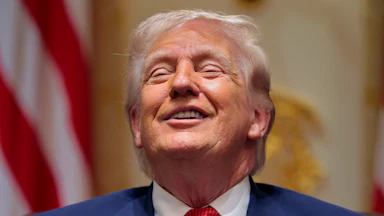
Scott’s understanding of what drives—and cures—violent crime is at odds with the conventional wisdom out of Trump’s federal government. When Trump signed an order deploying National Guard troops to Washington, D.C., in August, he called a press conference where he held up mug shots of several alleged criminals, all people of color, whom he said will “never be an asset to society.” That month, the president also threatened to send troops to combat crime in Baltimore, which he called a “hellhole.”
Trump ultimately spared Baltimore the National Guard treatment, instead directing troops into Chicago, Memphis, and Portland. But Charm City’s brief appearance on the president’s shitlist proved to be beneficial to Scott, as it drew attention to the city’s crime reduction under his leadership. In August, The Atlantic called Baltimore a “useful case study” in lasting violence reduction that could apply to D.C. The Trace, an outlet that reports on gun violence, declared in a headline for a profile of Scott: “Brandon Scott Pushed Baltimore Shootings to Historic Lows. Now Comes the Hard Part.”
The “hard part,” the article goes on to say, involves an ideological binary that wants to see Scott’s approach as either too heavy-handed—like the late-twentieth-century drug wars that shaped Scott’s childhood and adolescence—or too soft on those the city sees as likely to commit actual murder. In reality, GVRS doesn’t fall neatly into either box.
“We’ve made investments in GVRS and organizations that help people with reentry. We’ve made historic investments into schools, into rec centers, into workforce development, all of those things,” Scott told me. “And simultaneously, we’re also going to hold people accountable when they don’t comply. We’re going to go out and go after folks that are trafficking guns in the city, dealing drugs in the city. This is not an either-or approach. There is no silver bullet to dealing with gun violence in this country. You have to do all the things well, all the time.”
Scott mounted a mayoral campaign in 2020 amid two health crises—the pandemic, which exacerbated long-standing health care disparities for Black Americans, and an explosion of violence in cities in the wake of George Floyd’s murder in Minneapolis. Baltimore already knew the physical and psychic toll of policy brutality: In 2015, it experienced widespread protests following the death of 25-year-old Freddie Gray in Baltimore Police custody, prompting former Governor Larry Hogan to send in the National Guard.
Gray’s death and its aftermath remained a raw nerve for Baltimore residents in 2020. The city would reach 335 homicides that year, after hitting a high of 348 the prior year. “It’s just simply unacceptable that people are being shot and killed in the streets every single day, and people are fed up with it,” Hogan, a Republican, said at the time. As Democratic Governor Wes Moore, who succeeded Hogan in 2022, told The New Republic: “We saw how this long cycle just continued to exist in a really difficult and complicated manner.”
In 2019, Scott’s predecessor, Catherine Pugh, resigned as mayor amid a scandal that resulted in her guilty plea on federal charges of conspiracy, wire fraud, and tax evasion stemming from fraudulent sales of her self-published children’s book. Scott narrowly defeated Pugh’s replacement in a multiway primary, in which Scott vowed to tackle the root causes of violent crime, neighborhood by neighborhood.
“When I said we were going to reduce homicides by 15 percent from one year to the next, people laughed,” said Scott, who started out at city hall as an unpaid intern for ex-Mayor Stephanie Rawlings-Blake, the last city leader to try a tough-on-crime approach. “Council members that first year and a half were saying that we needed to switch strategy. But we didn’t veer from it because I had that experience of seeing that first you have to build these things. Switching strategy every other year is how we got to where we were.”
GVRS rolled out in Baltimore’s Western District—which encompasses Penn North, a neighborhood known for open-air drug markets and overdosesin January of 2022. Law enforcement, with the help of community stakeholders, pinpointed likely violent offenders, and Scott sent them each a personal letter, laying out the carrot and stick. In the program’s first 18 months, GVRS produced a 25 percent reduction in homicides and shootings and a 33 percent decline in carjackings, according to the University of Pennsylvania’s Crime and Justice Policy Lab. Researchers also determined the program did not result in an increase in arrests or displacement of crime to other areas, an early sign that GVRS was succeeding in actually stopping violence in its tracks.
“In prior years, we tried a similar strategy, but with very poorly planned resources implemented, so that the prior interactions looked more like a law enforcement crackdown rather than a holistic approach to lowering violence,” said Daniel Webster, a researcher at Johns Hopkins University who studies violence in Baltimore. Under GVRS, the city taps existing resources like Safe Streets, which deploys individuals trained as violence interrupters to mediate conflicts. “You actually figure out who the shooters are, and you apply all your means of changing their behavior so that they don’t shoot people.”
Scott told me his support for this model stems directly from growing up in Park Heights at the tail end of the drug wars. It wasn’t easy then, Scott said, but he was surrounded by family who showed him the value of community engagement. As a kid, he hung out at his uncle’s mechanic shop, where people talked politics, or tagged along to fundraisers.
“When you think about even our African American mayors that preceded me—and there haven’t been that many in Baltimore’s history—they were older, which means life is different for you,” Scott said. “I was bearing the brunt of zero-tolerance policing in the war on drugs. I could walk outside my door and, as it happened to me seven times, be sat down in handcuffs simply because I was Black and breathing. It’s different when you’ve ducked the bullets and when, in my case, you’ve had the gun pointed in your face. It’s different when you’ve lived it, right?”
That logic also applies to a president who has taken sharp aim at Baltimore, a majority-Black city, threatening to potentially upend the years of progress on crime with a single order. In September, Scott accused Trump of “dog whistling” and promoting “racist viewpoints” during the height of his National Guard campaign. “I think it is very notable,” Scott said at the time, “that each and every one of the cities called out by the president has a Black mayor, and most of those cities are seeing historic lows in violent crime.”
It’s true that Baltimore is not alone in this crime-reduction turnaround—though other cities have not reached the same generational low in their homicide rates. After spiking in 2020, the national murder rate is down to below pre-pandemic levels. “Part of that is a lot of our systems are back to normal,” said Webster, who noted that cities also benefited from the one-time infusion of federal Covid relief that many used to bolster social services, with a direct impact on reducing crime. In Baltimore, those funds amounted to over $640 million.
Violent crime is just one of the seemingly intractable problems facing Baltimore. In 2025, the city experienced at least three mass overdose events involving powerful opioids. Between June 2024 and May 2025, 640 people died of drug overdoses, Scott said in October—which he noted was a 25 percent year-to-date decline, but a number that still far exceeds the amount of people who die each year in homicides. The Baltimore Banner, an online news upstart, won the Pulitzer Prize in Local Reporting this year for its series on Baltimore’s opioid epidemic, which involved a yearslong battle for city records revealing that 6,000 people died of overdoses over six years.
In October, a critic of Scott’s on the City Council, Mark Conway, entered the Democratic primary for Maryland’s 7th U.S. House district against Scott ally Kweisi Mfume. Conway said he opted to run in part because he’s frustrated with how the city is handling the epidemic. “I agree with the mayor on a lot of things,” Conway told me. “The one thing we haven’t quite given the urgency it needs is the impact of open-air drug markets and addiction on our communities. In the same way that we all came to the table to figure out a comprehensive violence prevention strategy, we need something similar.” (Scott dismissed this criticism as politics and said people picked up in corner sweeps are, “in the grand scheme of drug dealing, Walmart greeters.” He insisted the city employs more sophisticated plans for bringing down drug networks while providing treatment and support for addicts.)
Conway said that living in Baltimore for many “is the tale of two cities,” especially longtime residents. “It’s the vacant buildings, it’s the hopelessness,” he said. “You go into some neighborhoods and they’re beautiful, absolutely gorgeous neighborhoods, places you want to raise your children, places you want to buy your first or second house. And there’s some places that are not that, and they’re stark differences.”
Since 2022, Baltimore has rolled out GVRS in several other neighborhoods, with a plan to take it citywide in Scott’s second term. Though the data is still incoming, Scott claims that of the more than 300 people involved with GVRS so far, 98 percent have not recidivated. “You don’t see numbers like this anywhere,” he said.
Last year, Scott became the first Baltimore mayor since Martin O’Malley in 2004 to win reelection, which some saw as a referendum on Scott’s leadership during the Key Bridge collapse, a disaster that killed six construction workers and closed the Port of Baltimore less than two months from a contested Democratic primary. The win, among other things, has allowed Scott to continue the work of GVRS for four more years.
There are signs too of progress in Scott’s Park Heights. The neighborhood has new market-rate housing, which Scott hopes might woo residents who had previously moved out. Pimlico Race Course is being demolished and redeveloped, so next year’s Preakness will be held in Laurel, Maryland, right outside D.C.—but the plan is for it to eventually return to its traditional locale. “Park Heights has come a long way,” Scott told me. “It still has a long way to go.”