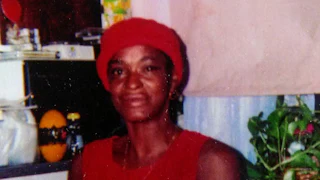
In 2019, I began a large-scale reporting project: I sent out surveys to 10,000 people incarcerated in the United States in women’s prisons on murder or manslaughter charges. I was trying to understand the scale of “criminalized survival,” as it’s been termed: wherein a person—almost always a woman or girl—is arrested, prosecuted, and incarcerated for actions she took to protect herself or a loved one from physical or sexual violence. I received more than 1,000 replies. I found that at minimum, 30 percent of my respondents were criminalized survivors, and I knew I had to write a book. I would interweave my survey findings with three deeply reported stories of individual survivors. Early on, I settled on two women as my subjects, but I hadn’t found a third. Then, a few years into the project, I came upon TC Brooks’s letter. She wrote that she was serving 25 years to life for killing her stepfather after “abuse, more abuse.” She had spent most of her time in prison working to heal and help others. TC included a booklet she had created to educate prisoners about domestic and sexual violence. She’d signed the cover: “Caged no longer on the inside, I sing a song of rebirth. Free from the inside.” Immediately, I began trying to get in touch with TC. Her story was remarkable. She would soon become the third subject of Unreasonable Women.
On July 10, 2019, TC sat before the parole board for the fifth time. She compared the process to being a human roulette ball; she’d been trying to stop the wheel for decades, but it kept spinning. And she kept bouncing around, hoping for some good fortune to strike.
The hearing was overseen by Kevin Chappell, a Department of Corrections career man who had been working for the prisons even longer than TC had been inside them. He had risen in the ranks from guard to lieutenant to administrator to deputy warden, employed in men’s facilities across the state, from Folsom to San Quentin.
TC once again detailed the extensive sexual abuse she had endured, the abuse that led to her murder conviction, and she recounted her fear of being subject to scrutiny and doubt. She once again vowed rehabilitation and accountability, once again unpacked her traumatic past, a past that she had held deep shame about for so long, before a group of imposing strangers.

Chappell wanted to know why TC hadn’t been able to prevent her own rape on the night of her crime. He wanted to know why she hadn’t spoken up sooner about the sexual abuse she had experienced. She wished she could tell him the truth: ’Cause I didn’t wanna be in a room like this, sitting in a chair like this, talking to a man like you.
After two hours, the board broke to deliberate. When they returned 20 minutes later, they told TC and Lilli Paratore, a staff attorney at a legal nonprofit, that they would, in a rare continuance, need additional time to make their decision. They needed to investigate TC’s “violence risk.”
On December 6, 2019, TC and Paratore returned to the parole hearing room at the prison. Commissioner Chappell told TC that while they had taken her youth into account, they could not consider the abuse a mitigating factor.
“We found no information to corroborate your claims of the severe sexual or physical assault at the hands of the victim,” he said. TC still posed “an unreasonable risk to public safety.” She’d be heading back to the California California Women’s Facility. There, he continued, she should focus on creating “healthy boundaries in regards to your relationship with your mom.… I think you’ll learn a lot about yourself in that regard.” She could apply for parole again in a few years. He wished her luck.
TC was accustomed to parole denials, but she was crushed that the commissioner had doubted her about the abuse. “It took so many years and so much courage to face those demons,” she said. “How dare he?”
When Chappell spoke to her, she had been hot with anger, but she had to suppress it. If they saw a hint of fury, she was never, ever getting out. Paratore also presented as calm, though she had internally gone, she told me, to “a place of rage.” She spent weeks writing informal appeals late into the night, arguing that the board had revictimized TC. The questions Chappell had asked, Paratore believed, “reveal a disturbing lack of understanding by the panel about the dynamics of power and control in abusive relationships and how fear, shame, and embarrassment prevent survivors from coming forward about their experiences.”

A month later, in January 2020, TC and Paratore reconvened. They decided that parole wasn’t happening. “Unless her story changed significantly and she just lied,” Paratore told me. “Which, you know, I can’t counsel a client to do.”
Paratore wondered: Maybe there was a different route, one she hadn’t quite put her finger on. She discussed it with her colleagues. Nancy Lemon, the domestic violence expert and law professor, had remained invested in TC’s case. Lemon knew Nancy O’Malley, the elected district attorney in Alameda County, a woman whose predecessor had successfully tried TC.
The D.A.’s office, no matter who led it, had always opposed parole, which was typical for prosecutors. But a new law had recently come into effect in California, allowing a D.A. to support a resentencing for someone who may not have had a fair trial outcome. Lemon and Paratore thought that if O’Malley got to know TC’s case, her office might suggest a new sentence to a judge, who in turn could hand TC a sentence that would mean she’d served her time.
O’Malley met with Lemon and Paratore but made it clear that she didn’t want to be involved in resentencing. In Paratore’s interpretation, it was a political gamble: Were TC to reoffend, the D.A. didn’t want to be linked to letting her out. However, in a highly unusual move, Paratore told me, O’Malley said that if TC requested a commutation from the governor, asking that her sentence be shortened, she would back the request.
Paratore began to immediately compile a packet to be sent to Governor Gavin Newsom. As promised, O’Malley wrote a letter of support for TC. She asked that TC not be allowed to live with her mother, since the relationship was problematic. Otherwise, she wrote, “as all parties are seeking the outcome in the name of justice, I hope to see Ms. Brooks released soon.”
Newsom had a clear path to letting TC go. The same D.A. who had always opposed release now endorsed it. There were no roadblocks for the governor.
In January 2021, Paratore submitted TC’s packet.
On March 12, the Central California Women’s Facility was still under Covid lockdown. Nobody was allowed out of their pods except for critical workers, like laundry or kitchen employees.
“Brooks, open your door,” an officer said over the intercom.
TC poked her head out.
“Put on your states. You’re going to B Yard.”
“The Cop Shop” in B Yard was a building where the warden took calls, and where, as far as the prisoners could tell, the rest of the guards sat around all day, eating food from large tubs they’d brought in from home. It was also where the phone conferences were held.
TC sped across the grounds.
“Where you going, Brooks?” an officer asked.
“Gotta go to Bravo yard,” she said. “To the program office.”
“What for?”
“I’m goin’ home.”
“You sure?”
“I’m pretty sure.”
She approached the Cop Shop and took a seat on a bench. A few prisoners filed in and out of a room. Then it was her turn.
The warden was waiting. She stood before him.
“Brooks?”
“Yes, sir.”
“What’s your number?”
“W45882.”
“You know why you’re here?”
“I believe I do. Am I gonna get a phone call?”
“You are. Do you know who’s gonna call you?”
“The governor’s office.”
The warden looked her over and leaned back. “What do you think of your stay here?” he asked.
“It was a long haul,” TC said diplomatically. “I’ve learned a lot.”
“I read your file,” the warden said. “The past got you here. And I am sorry about your past.”

The phone rang. The warden answered and then handed the phone to TC.
A woman was calling on behalf of Governor Newsom. She had the pleasure and privilege, she told TC, of informing her that Newsom had signed her commutation paperwork. He agreed that she deserved a second chance. TC was ordered for immediate release, within the week. Was there anything she wished to say to Mr. Newsom, the woman asked.
“Tell him I appreciate the second chance, and he will not regret this decision,” TC said. “I promise him, I’m gonna be a feel-good story he can tell.”
She headed back to her cell. She needed to concentrate on getting her affairs in order. She had been confined for 31 years.
She had seven days to go.
From the book Unreasonable Women: Three Stories of Violence, Imprisonment, and Extraordinary Survival, by Justine van der Leun. Copyright © 2026 by Justine van der Leun. Reprinted by permission of Ecco, an imprint of HarperCollins Publishers.