Breaking News
Breaking News
from Washington and beyond

Pete Hegseth Claims Troops Were Never in Harm’s Way in Iran

A reporter asked if Hegseth’s aggressive comments had put more troops’ lives at risk.

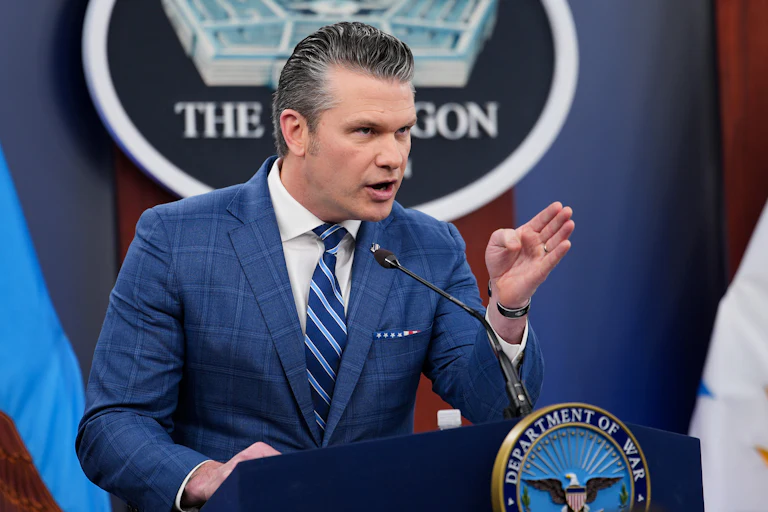
Defense Secretary Pete Hegseth holds both hands out while speaking at a podium
Andrew Harnik/Getty Images

Defense Secretary Pete Hegseth took questions from the press Wednesday after a two-week ceasefire was agreed in the Iran war, and he was about as whiny as you’d expect from a psychopath who’d just been told he couldn’t destroy all of Iran’s civilian infrastructure.

During the conference, Luis Martinez of ABC News asked Hegseth whether his comments such as saying U.S. forces “will give no quarter” to Iran potentially put American lives at risk.

Thirteen U.S. service members have died since the Trump administration, without congressional approval, began bombing Iran on February 28. A Pentagon spokesperson told Time that 373 service members have been injured in the conflict, with five “seriously wounded.”

But Hegseth bristled at the idea that he might be at all responsible for the suffering.

“No!” he said. “I try to be nice up here, but you did listen to what I said, right? ... Of course, it’s ABC. Not a single thing we’ve done has put an American troop in more of a harm’s way. We’ve only set our troops up to harm Iranian military capabilities, which they’ve done to devastating fashion.”

Of course, starting what has proven to be a completely unnecessary war in the first place should make Hegseth and the rest of Trump’s cronies responsible for everything that happens there. Just as military commanders claim credit for their victories, they must also reconcile for their losses.

But Martinez’s question was about Hegseth’s comments while the war was still ongoing. In this respect, the defense secretary has frightened many with his extremist intonations.

“Let every round find its mark against the enemies of righteousness,” Hegseth said during a March 26 prayer meeting, which he ordered to be held at the Pentagon. “Give them wisdom in every decision, endurance for the trial ahead, unbreakable unity, and overwhelming violence of action against those who deserve no mercy.”

At other press conferences, Hegseth has gloated that U.S. forces “are punching them while they’re down, which is exactly how it should be,” and that under his rule, the military does not fight “with stupid rules of engagement.”

It’s not a stretch to think that Hegseth’s bloodthirsty directives have led troops to be overly aggressive in the region, risking their lives in the process. His blatant dismissal of the rules of war also likely means Iran’s forces feel they have carte blanche to do horrible things to our own troops.

When a jet was downed last week, Iranian state media told civilians that they would receive a “prize” for hunting down the missing crew member and handing them in.

Even some of Hegseth’s fellow right-wing Christians, such as Tucker Carlson, have pushed back on his war of aggression. Carlson told ABC News shortly after the first bombs fell he thought the war was “absolutely disgusting and evil.”
Trump Bows to Israel as He Changes Terms of Iran Ceasefire

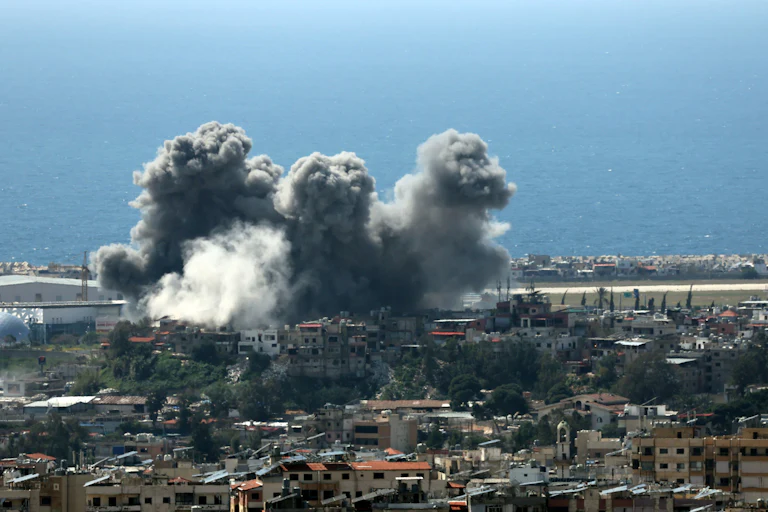
Israel has continued to fire strikes at Lebanon.

Smoke rise over Beirut after an Israeli strike.
Houssam Shbaro/Anadolu/Getty Images
Smoke rise over Beirut after an Israeli strike.

Donald Trump is already running cover for Israel.

The U.S. president agreed to a two-week ceasefire with Iran Tuesday evening, adding in a Truth Social post that he was amenable to a 10-point peace plan that political strategists have pointed out overwhelmingly benefits Tehran.

One point in the list of demands specifies “an end to attacks on Iran and its allies.” Yet despite the concession, Israeli airstrikes continued to rain on Lebanon overnight, marking the single largest attack on the country’s capital since the beginning of the war.

When asked Wednesday about the continued violence in the region by America’s strongest Middle East ally, Trump suddenly claimed that Lebanon was “not included in the deal.”

“Because of Hezbollah,” Trump told PBS Newshour’s Liz Landers. “They were not included in the deal. That’ll get taken care of too. It’s alright.”

But Iran did not interpret the arrangement the same way. Iranian media reported Wednesday morning that Tehran would pull out of the ceasefire agreement altogether if the attacks on Lebanon did not stop. Minutes earlier, state media had reported that the country was considering deterrence operations against Israel over the ceasefire violation.

When Landers asked Trump whether he was alright with Israel’s actions, the president claimed that “it’s part of the deal” and “everyone knows that.”

“That’s a separate skirmish. OK?” Trump added. “You gotta talk faster.”

The chief executive hung up the phone when asked if he regretted his Truth Social post about wiping out the entire Iranian civilization.

It was the influence of Israeli Prime Minister Benjamin Netanyahu—and a pitch for the war delivered on February 11 in the White House situation room—that thrust America into the conflict, according to a New York Times report published Tuesday. U.S. military commanders advised Trump that components of Netanyahu’s plan to attack Iran were “farcical,” but by that point, Trump had already been inspired to throw over Tehran’s theocratic regime.

It’s likely that Netanyahu continues to hold the reins. Last month, Trump told The Times of Israel that the decision to end the Iran war will be a “mutual” decision he makes with the Israeli leader.

Hegseth Accidentally Blows Up Trump’s Favorite Talking Point on Iran

Defense Secretary Pete Hegseth finally admitted not much has changed in Iran.

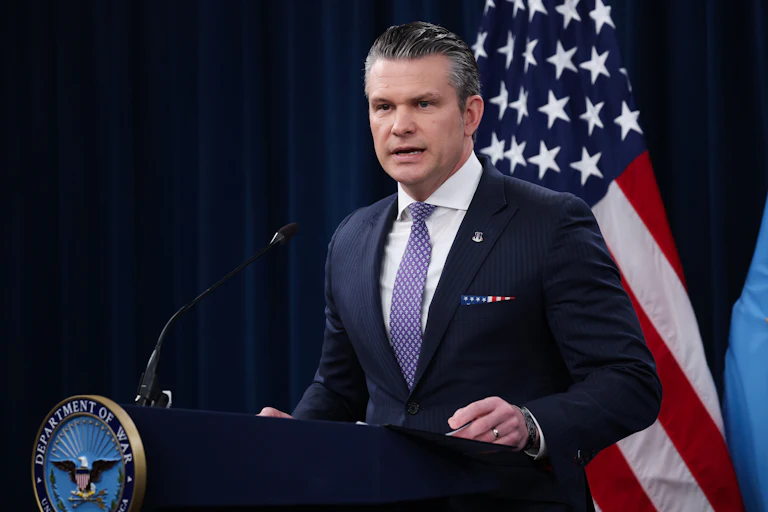
Defense Secretary Pete Hegseth stands at a podium
Win McNamee/Getty Images

Secretary of Defense Pete Hegseth contradicted a major Trump administration talking point regarding the state of Iran’s ruling regime.

A reporter asked Hegseth at a press conference Wednesday whether the U.S. was still encouraging the Iranian people to rise up against their government, and what the two-week ceasefire meant for that. Hegseth’s answer went against the administration’s claim that regime change has already occurred.

“Listen, I would love to see the Iranian people take advantage of this opportunity. They have been oppressed by the previous regime, and they’ll have a new opportunity with this regime. That remains to be seen. That was not our objective in this effort. They’re brave people, horrible things have been done to them,” Hegseth replied.

President Trump and his senior officials have insisted for weeks that the regime ruling Iran has been changed following the assassination of Iran’s Supreme Leader Ayatollah Ali Khamenei. Only Wednesday morning, Trump posted that Iran has “gone through what will be a very productive Regime Change!”

But Hegseth seemed to acknowledge in the press conference that he would like for the Iranian people to still rise up, in effect confirming that the ruling military and religious apparatus that controls Iran hasn’t changed at all. As the new, very shaky two-week ceasefire takes hold and negotiations between Iran and the U.S. begin in Pakistan, it will be interesting to see how the White House deals with Iran’s new rulers. Will it treat with them in good faith or blow up the chances for peace and take hostile action?

Trump Desperately Tries to Spin His Massive Surrender in Iran as a Win

Iran has retained control of the Strait of Hormuz—and Donald Trump insists that’s a good thing.

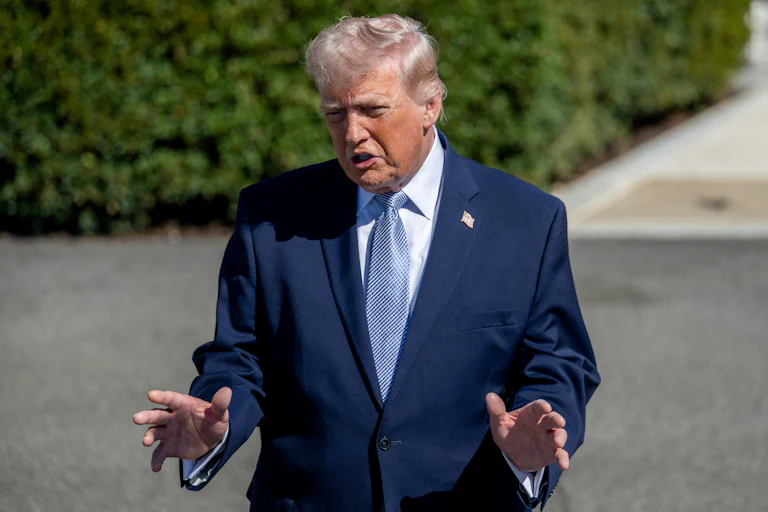
Donald Trump gestures and speaks outside the White House
Daniel Heuer/Bloomberg/Getty Images

Iran called Donald Trump’s bluff. After spending days threatening to completely annihilate Iran, the U.S. president is suddenly open to giving them a lot of money.

In a semi-incoherent post on Truth Social Tuesday evening, Trump called for a two-week ceasefire and suggested that he was amenable to Iran’s 10-point plan, a proposal that the country’s leadership offered the day before. But experts quickly noted that the peace deal was lopsidedly in favor of Iran.

Chief among the concerns was one major concession that would allow Iran to collect millions of dollars in tolls from ships that pass through the Strait of Hormuz, a vital tradeway in the region for oil and gas.

But never fear: “We’re thinking of doing it as a joint venture. It’s a way of securing it—also securing it from lots of other people,” Trump told ABC correspondent Jonathan Karl on Wednesday. “It’s a beautiful thing.”

Political commentators did not agree with the president’s analysis of the new trade tariffs.

“Trump went from ‘we’re going to wipe Iran off the map’ to ‘maybe we’re going into business with them’ literally overnight,” wrote Bulwark founder Sarah Longwell.

“Are we gonna do joint ventures for tollbooths at all the major global straits—Malacca, Gibraltar, etc—or are joint ventures possible only if we have a costly war first with the littoral states?” wrote SUNY Albany political science professor Christopher Clary.

“Dude is insane. 25th amendment,” wrote former MS NOW host and Zeteo News chief Mehdi Hasan.

The strait has been closed since March 2. Situated between Iran and the United Arab Emirates, the waterway funnels approximately one-fifth of all crude oil shipments. In 2024, the U.S. imported roughly 500,000 barrels of crude oil per day through the strait, accounting for about 7 percent of total U.S. crude imports, according to the U.S. Energy Information Administration.

The ramifications of closing the choke point have been felt around the world. In the U.S., the price per oil barrel has exploded due to the strait’s closure, pushing gas over $4 per gallon in most states (in some areas of California, gas has leapt past $7 a gallon). Diesel shot up by 20 cents over the last week alone.

Trump has waffled on the strait’s significance to American markets. Last week, the president rapidly cycled through his opinions on the transit point, claiming in succession that he didn’t care if the strait remained closed and that he needed it reopened.

Iran has let very few ships pass through the channel, even for a fee, over the last five weeks.

Hegseth Calls Woman Reporter “Nasty” After Tough Iran Question

Defense Secretary Pete Hegseth is trying to copy Trump’s methods to get out of answering questions.

Defense Secretary Pete Hegseth points while standing at the podium
Andrew Harnik/Getty Images

Defense Secretary Peter Hegseth snapped at a reporter Wednesday who raised a simple question regarding the administration’s claims of a ceasefire and the reality on the ground.

“Iran has said that safe passage through the Strait of Hormuz will be possible in coordination with Iran’s armed forces and ‘technical limitations.’ What do you believe that means?” the Daily Wire’s Mary Margaret Olahan asked Hegseth at his Wednesday morning press briefing. “And then we’ve also heard reports that Iran has continued striking targets well into this morning. At what point are we beyond a grace period?”

“What we know is that Iran is gonna say a lot of things,” Hegseth replied. “What has been agreed to, what’s been stated is the strait is open.… As far as shooting, we were monitoring it last night, in real time—of course we are. Iran would be wise to find a way to get [a] carrier pigeon to their troops out in remote locations to know not to shoot, not to shoot any longer.”

“If they’re still firing ballistic missiles—” another reporter interrupted suddenly, referring to reports that Iran continued to attack Israel and Gulf countries Wednesday.

“Excuse me? Why are you so rude?” Hegseth replied, visibly annoyed. “Just wait, I’m callin’ on people … so nasty.”

Hegseth likely knows this, and responded to an honest question about a major sticking point in the ceasefire with a personal attack to avoid answering. But while he, President Trump, and the GOP try to spin this as some mastermind dealmaking victory for them, Iran seems to be continuing to do what it wants, at least for the time being. It’ll control the Strait of Hormuz, the Iranian government will remain in place, and it may even continue to fire on Israel and the Gulf allies, as Israel too continues to bomb Lebanon.