Breaking News
Breaking News
from Washington and beyond

Trump’s Biggest Supporters Are Pissed About His Iran Deal

The president’s MAGA base isn’t happy with the agreement he struck with Iran.

Donald Trump wearing a USA hat
Jeff Bottari/Zuffa LLC

After nearly four grueling months, President Donald Trump is trying to end the war he and Israeli Prime Minister Benjamin Netanyahu kicked off in February—but neither Republicans nor Israeli officials are happy with the “Art of the Deal” guy’s dealmaking.

Trump gloated that a deal to end the war was complete on his 80th birthday on Sunday. “I hereby fully authorize the toll free opening of the Strait of Hormuz, and, simultaneously herewith, authorize the immediate removal of the United States Naval blockade,” he wrote on Truth Social.

But despite the president’s insinuation that he had just created peace and opened a vital trade route with one social media post, the deal isn’t actually done. The Wall Street Journal reported Monday that Trump is actually hoping to open the Strait and finish his peace deal on Friday. Trump appropriately backtracked in comments to reporters. “Ships are starting to go out now, and on Friday it will be completely opened,” he said.

And Trump may still be promising a shorter timeline than he can actually achieve. Senior U.S. officials told reporters on Monday that it could take over two weeks for the strait to fully open. The officials also said the text of the deal between the U.S. and Iran would be released by Wednesday—Trump said he expected it to be released Friday.

But the inconsistent statements don’t end there. While the White House has been saying for weeks that Iran won’t get financial relief until it dismantles its nuclear capabilities, Trump said on Sunday that the nation will be allowed to export oil and open its ports immediately after the peace deal is signed. Iran has alleged the deal will give it a whopping $12 billion in relief before negotiations even begin, and that the U.S. has agreed to support reconstruction efforts worth $300 billion down the line. American officials have denied this.

Trump’s contradictory messaging, as well as his perceived reconciliation with Iran, has annoyed Netanyahu—one source told the Journal the Israeli leader is seeking a meeting with the president ASAP—and Republicans back home, who have criticized the president’s refusal to release the details of the peace deal he claims is complete.

“If you want people to stop speculating about the [Memorandum of Understanding], release the MOU,” Fox News host Mark Levin wrote on X. “Don’t brief a few anointed ones to control the narrative and expect everyone else to sit silently. That’s not how our country works.… Controlling the narrative can only last so long.”

The editors of National Review, a conservative magazine frequently critical of Trump, chimed in with an op-ed titled, “Release the Text of the Iran Deal,” lambasting the president for the disparities between his public statements and those from Iran.

“There is the possibility that Trump would return the U.S. to Obama’s failed Iran deal that Trump rightfully tore up in his first term, which would have all the makings of a humiliation after all of the president’s tough talk,” the piece reads.

No less than James Lindsay, an author and mathematician who made a name for himself posting far-right conspiracy theories on social media, called the agreement a “very bad deal built on a very fundamental misconception.”
Trump and His Team Struggle to Get Their Iran Deal Story Straight

The president and top administration officials keep saying different things about the agreement with Iran.

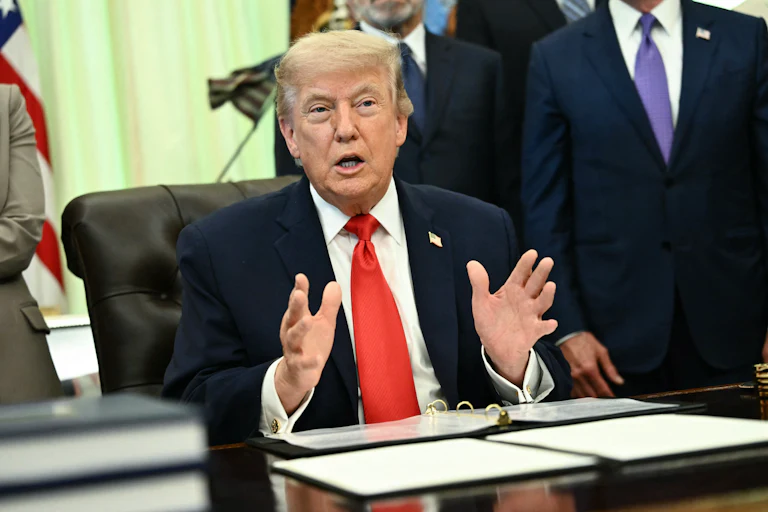
President Donald Trump speaking at his desk in the Oval Office of the White House
Kent NISHIMURA/AFP/Getty Images

The Trump administration doesn’t appear to have its story straight on the tentative peace deal between the U.S. and Iran.

President Trump said on Monday that “the deal is already signed and the strait is already partially opened,” referring to the Strait of Hormuz. “Ships are starting to go out now, and on Friday it will be completely opened.” But senior U.S. officials told The Wall Street Journal at the same time that it could take over two weeks for normal shipping traffic to resume in the strait. On top of that, a spokesperson for the Iranian Foreign Ministry said that a “maritime service fee” would still be charged for ships traversing the strait.

Those same U.S. officials also said that the full text of the deal would be released within two days, contradicting Trump, who said he expected the full text of the deal to be released by Friday.

A major sticking point for Iran, the end of Israeli strikes on Lebanon, is being disputed by Israeli officials. Israeli Defense Minister Israel Katz said Monday that the Israel Defense Forces wouldn’t withdraw from southern Lebanon, and far-right National Security Minister Itamar Ben-Gvir said that “Israel is not subordinate to the United States, and we are an independent and sovereign state.”

“We must not withdraw from any territory that our fighters have occupied and cleared of terrorist infrastructure,” Ben-Gvir added. Trump already criticized Israel on Sunday for airstrikes on the southern suburbs of Beirut “on a special day when we are so close to a Peace Deal with Iran.”

Trump and Vice President JD Vance digitally signed the tentative deal on Sunday, and a formal signing ceremony is scheduled to take place in Switzerland on Friday. But no U.S. allies in Europe, or the G7, have seen the full text, nor has Israel or anyone in Congress. Their objections could still hamstring the agreement, especially if Trump has made unacceptable concessions.

Dan Sullivan (No, Not That One) Barred From Running for Alaska Senator

The silly-sounding Dan Sullivan saga has come to an end.

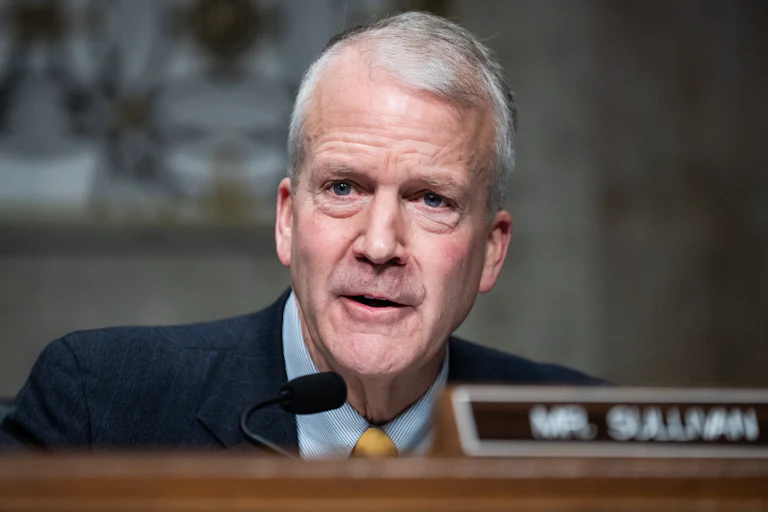
Senator Dan Sullivan speaks during a hearing
Tom Williams/CQ-Roll Call, Inc/Getty Images
Senator Dan Sullivan

There can only be one Dan Sullivan.

A top Alaskan election official ruled Monday that a man sharing the same name as Republican incumbent Dan Sullivan is ineligible to participate in the Last Frontier State’s Senate primary in August.

In a letter addressed to the challenging Sullivan, Division of Elections Director Carol Beecher wrote that his declaration of candidacy was “not filed in order to declare an actual good-faith candidacy for the office of United States Senator, but was instead filed with a purpose to confuse or mislead and to thereby compromise the ballot’s fairness or neutrality.”

Beecher said she had reached that conclusion based on evidence that the 69-year-old retired teacher had “never used” the moniker Dan Sullivan and had similarly “never before professed” a Republican Party affiliation.

“Indeed, I conclude that the preponderance of the evidence is that you chose this new nickname and party affiliation because that name and party affiliation happen to be the name and party affiliation of another candidate in the race,” Beecher wrote.

She added that he had 30 days to appeal the decision but noted that ballots for the August primary would be printed on June 28, a timeline that will likely shut him out of the race altogether.

The new Sullivan filed to run as a Republican in the Senate primary last month, days before the filing deadline. State Republicans have since argued that Sullivan worked with Democrats to cook up the scheme, accusing him of attempting to snatch votes from the two-term senator in a flagrant bid to aid Mary Peltola, a former U.S. representative and the leading Democrat on the ballot.

In a social media post Sunday, Sullivan said he believed he “met the qualification” to run.

“I entered this race because I am unhappy with the 12 year record of the current Senator and I feel we need a change,” he wrote. “It’s that simple.”

Read about what this Dan Sullivan has been up to:

Netanyahu Furiously Scrambles to Meet With Trump Over Iran Deal

Israeli officials are angry with Donald Trump about the deal with Iran.

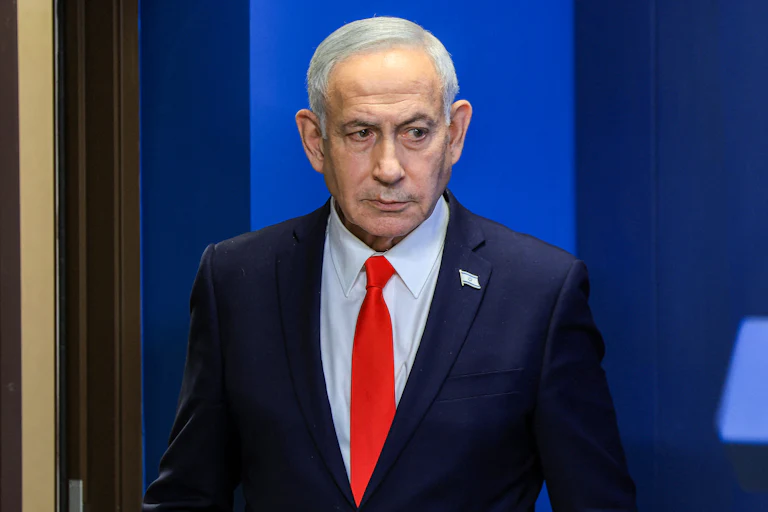
Israeli Prime Minister Benjamin Netanyahu looks to the side
RONEN ZVULUN/AFPGetty Images

President Donald Trump says he’s made a solid peace deal with Iran—but isn’t there someone he forgot to ask?

Israeli Prime Minister Benjamin Netanyahu is looking to schedule an immediate meeting with Trump, likely back in Washington, a person familiar with the matter told The Wall Street Journal Monday.

There is just no way that Netanyahu is thrilled about Trump’s plan to stop bombing Iran, something the Israeli leader has been dreaming about for decades.

It was Netanyahu who pulled the United States into this “joint” conflict, selling the narrative that Iran was building nuclear weapons—even when U.S. intelligence confirmed there was no imminent threat. In the early days of the war, Secretary Marco Rubio admitted that the U.S. went to war because the administration “knew that there was going to be an Israeli action. We knew that that would precipitate an attack against American forces.”

If Trump ends the war now, Netanyahu won’t walk away with anything. It’s unclear what the exact terms of the peace deal are—or whether any firm commitments have been made at all—but the U.S. has failed to satisfy Israeli objectives to execute regime change, undermine regional militias, or significantly upend Iranian missile production.

It’s also not clear what this deal will mean for Israel’s military campaign in Lebanon. On a phone call Monday, U.S. senior officials made clear that an Israeli withdrawal was not a condition of the deal, and that if Iran was not able to control Hezbollah, then Israel would have the right to respond.

Israeli officials were quick to condemn Trump’s deal with Iran, The Washington Post reported earlier Monday.

Itamar Ben Gvir, Netanyahu’s national security minister and an influential far-right leader, slammed the deal on social media. “Trump’s agreement does not bind us. Israel is not subject to the United States, and we are an independent and sovereign country,” he wrote on X. Of course, Israel’s and U.S. military efforts are thoroughly linked.

Finance Minister Bezalel Smotrich, another far-right member of Netanyahu’s coalition, said that Trump’s agreement was “bad for Israel and the entire free world. Period.”

MAGA Rep. Claims Giving Iran Billions of Dollars Is a Great Idea

Donald Trump’s peace deal is coming at a great cost to American taxpayers.

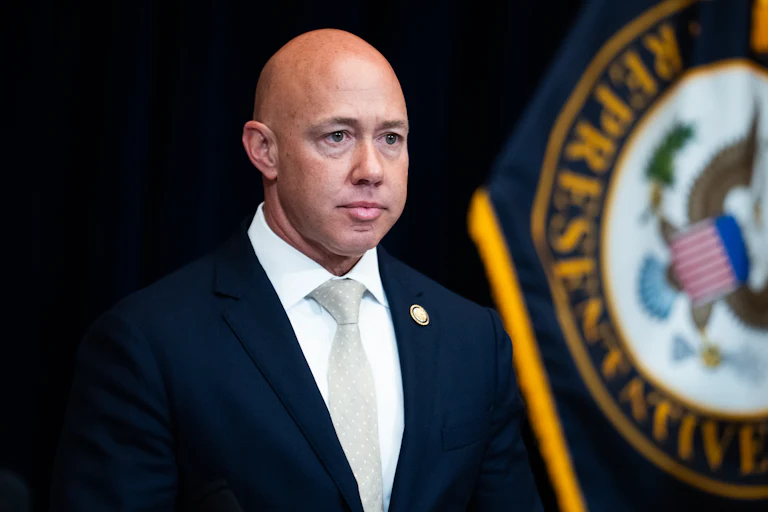
Representative Brian Mast
Tom Williams/CQ-Roll Call, Inc/Getty Images
Representative Brian Mast

The Republican Party is gung-ho for the second coming of former President Barack Obama’s Iran nuclear deal, though this time, reaching similar terms will come at a tremendous cost to American taxpayers.

In spite of the GOP’s well-worn insistence on federal frugality, some conservative lawmakers are suddenly in favor of the Trump administration’s reported plan to provide hundreds of billions in reconstructive aid to Iran.

In an interview with Fox News Monday, Florida Representative Brian Mast defended the expense on the basis that “we destroyed so much.”

“OK, maybe they do end up getting $20 billion, let’s say—we’re still $300 to $500 billion ahead considering we destroyed their Navy, destroyed their Air Force, destroyed all those nuclear facilities I already spoke about, their steel manufacturing, their drone manufacturing,” Mast said.

“We destroyed all that, and closed their ports,” he added. “We’re pretty far ahead.”

The White House and Tehran have already signed a peace deal, though the exact specifications of the agreement have not yet been revealed (and are still being hashed out). The final draft reportedly proposes the immediate reopening of the Strait of Hormuz under Iran’s direction, a commitment from the U.S. not to interfere in Iranian affairs, and a reiteration of Iran’s commitment not to produce nuclear weapons, echoing language included in the 2015 Joint Comprehensive Plan of Action, according to a senior Iranian official who spoke with Reuters.

The most contentious point of the plan, however, is a reported $300 billion reconstruction fund, as well as billions more in unfrozen Iranian assets and forfeited sanctions—all of which will be bankrolled by U.S. taxpayers.

That’s nearly 160 percent of the financial investment that the U.S. has put into Ukraine since Russia attacked it in 2022. That sum hovers around $188 billion, according to the U.S. special inspector general for Operation Atlantic Resolve.