Breaking News
Breaking News
from Washington and beyond

Roberts Trashes Alito’s Dissent on Supreme Court Birthright Ruling

John Roberts called out inconsistencies in Samuel Alito’s argument.

Supreme Court Justice Samuel Alito speaks in court
Jay Janner/The Austin American-Statesman/Getty Images
Supreme Court Justice Samuel Alito

Chief Supreme Court Justice John Roberts called out Justice Samuel Alito’s nonsensical argument about birthright citizenship.

The Supreme Court ruled Tuesday that children born in the United States to parents who were undocumented or temporarily in the country are citizens at birth under the Fourteenth Amendment’s citizenship clause.

In his separate dissent, Alito argued that immigrant parents, in order for their child to automatically be made an American citizen, could not be subject to any foreign power. But he contended that some people who had done “everything within their power to become United States citizens can be seen as no longer subject to any foreign power.”

But Roberts argued that this kind of “ad hoc exemption” was plainly inconsistent with Alito’s own interpretation of the Civil Rights Act.

“He does not explain how that exception can be squared with his view of the text, which (to repeat) is that anyone ‘automatically’ made a [‘national’] of his ‘parents’ native country’ was not entitled to citizenship,” Roberts wrote.

That wasn’t the only reason Alito’s dissent was a mess.

In closing, Alito argued that the majority’s interpretation “saddles this country with an ancient British rule that even the United Kingdom has abandoned,” referring to jus soli, or the right of soil. But the British government scrapped this law by passing the British Nationality Act of 1981—not by asking the courts to rewrite the nation’s founding documents.
MAGA Melts Down After Supreme Court Protects Birthright Citizenship

Republicans aren’t pleased the Supreme Court ruled in favor of upholding the Fourteenth Amendment.

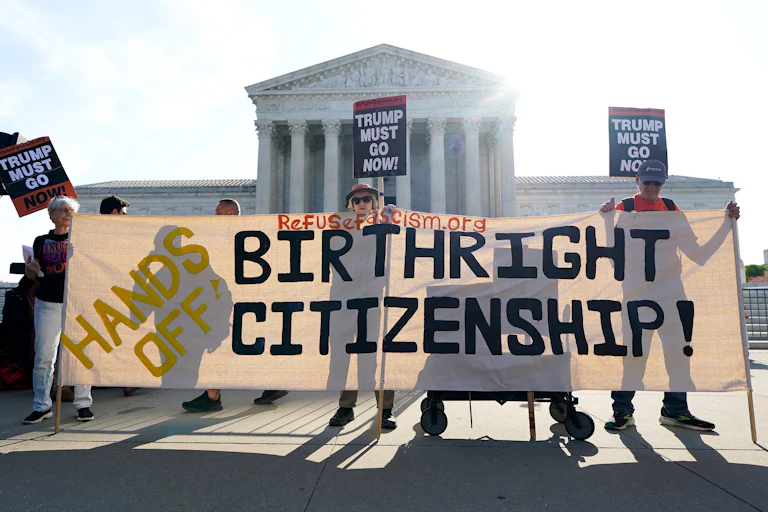
People outside the Supreme Court hold up signs reading "Trump must go now" and "Hands off Birthright Citizenship."
Al Drago/Getty Images
People demonstrate outside the Supreme Court ahead of President Donald Trump’s arrival for oral arguments on birthright citizenship, on April 1.

President Trump’s supporters have begun to rail against the Supreme Court’s birthright citizenship ruling, a significant blow to their mass deportation dreams.

The court ruled 6–3 on Tuesday to strike down Trump’s executive order and uphold the constitutional principle that guarantees virtually anyone born on U.S. soil is an American citizen, regardless of their parents’ immigration status. Republicans weren’t pleased about this safeguarding of the Fourteenth Amendment.

“The Supreme Court’s birthright citizenship decision is wrong, dangerous, and disastrous for American sovereignty and the American people,” wrote GOP Senator Eric Schmitt. “If we can’t fix it with ordinary legislation, then we must do what the Constitution commands in moments of national crisis: We must amend the Constitution and restore American citizenship. We must again put ‘We the People’ first.… This ruling is the final alarm bell.”

Heritage Foundation president and Project 2025’s lead architect Kevin Roberts was equally upset. “The Supreme Court’s ruling on birthright citizenship is a tremendous betrayal of the republic. The Justices in the majority have inflamed the all-out assault on our sovereignty and cheapened the sacred value of American citizenship,” he wrote. “Universal birthright citizenship erases any uniquely American birthright—a distortion that was never the meaning or intention of the 14th Amendment. It is time for a constitutional amendment to correct this gross injustice.”

“We are supposed to be a country, not an orphanage. You can’t jump our fence, give birth, cheat the system, and expect our taxpayers to raise your baby,” right-wing influencer and Charlie Kirk disciple Brilyn Hollyhand chimed. “We will be a country again one day. Illegals will be deported and birthright citizenship will end. If you’re a legal immigrant and won’t assimilate you will be denaturalized. If we want to last another 250 years we can’t be trampled on anymore.”

Strangely, the president himself has remained silent, even as he celebrated two other Supreme Court rulings upholding state bans on transgender athletes and loosening campaign finance laws.

Justices Amy Coney Barrett and Brett Kavanaugh—both Trump appointees—sided with the liberal justices in their decision to project birthright citizenship. Kavanaugh did argue that the law could eventually be changed by Congress, not via executive order, leaving the door open for a future attack on one of the most basic tenets of the American experiment.

Kavanaugh Gives Republicans Road Map to End Birthright Citizenship

Brett Kavanaugh does not consider birthright citizenship to be a done deal.

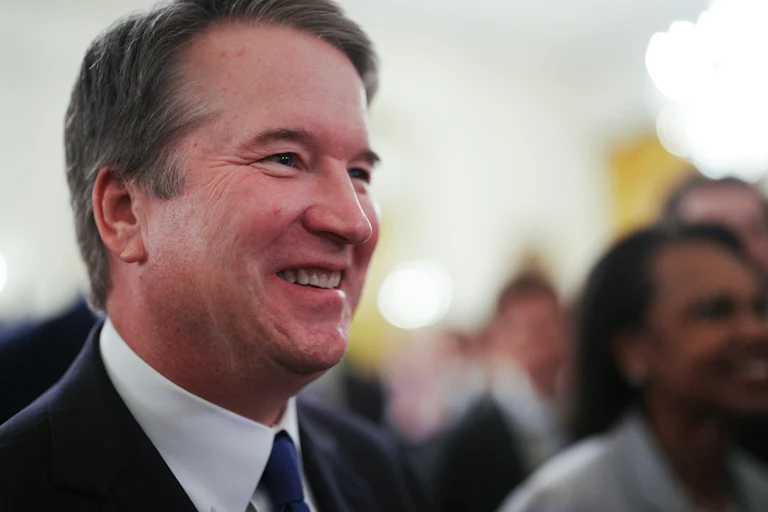
Supreme Court Justice Brett Kavanaugh smiles while walking out of the White House
Aaron Schwartz/AFP/Getty Images
Supreme Court Justice Brett Kavanaugh

The Supreme Court may have upended the White House’s attempt to rewrite the Fourteenth Amendment, but at least one justice pointed Republican lawmakers in a different direction to unravel the birthright citizenship clause.

Justice Brett Kavanaugh, who was appointed by Donald Trump to the bench in 2018, wrote a dissenting opinion in Trump v. Barbara, despite ruling alongside the majority.

His rationale: Trump’s plan to strip American-born second-generation immigrants of their citizenship could work if it were enacted through Congress.

“In my view, the Executive Order does not violate the Fourteenth Amendment. But the Order does contravene a federal statute,” Kavanaugh wrote, referring to the law specifying birthright parameters. “Congress could—consistent with the Fourteenth Amendment—amend [this law] or otherwise enact new legislation establishing exceptions to birthright citizenship for children born to foreign citizens unlawfully or temporarily in the country. But Congress has not yet done so.”

Kavanaugh argued that while Trump’s executive order violated federal law, it did not actually run afoul of the Constitution, even though the federal law echoed the same language employed in the Constitution.

The justice noted that Congress had considered numerous amendments to the law over the last 30 years but never actually enacted any of them.

Trump has tried and failed multiple times over the last year and a half to strip the constitutionally enshrined right. Mere hours after he was sworn into office, Trump signed an executive order stating that children born to immigrants on temporary visas or who are in the country illegally are not entitled to birthright status. That order was blocked by several judges in different court circuits over the last year.

Watch Mike Johnson Learn Supreme Court Upheld Birthright Citizenship

Suffice to say the House speaker is not happy.

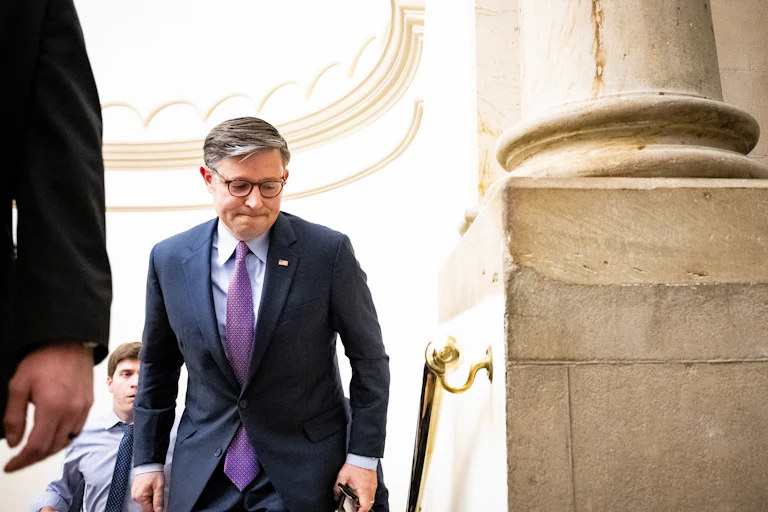
House Speaker Mike Johnson presses his lips together and looks down while walking up stairs in the Capitol
Graeme Sloan/Bloomberg/Getty Images

Everyone needs to hear the sound House Speaker Mike Johnson made when he heard the Supreme Court’s decision to uphold birthright citizenship.

The Supreme Court ruled Tuesday that children born in the United States to parents who were undocumented or temporarily in the county are citizens at birth under the Fourteenth Amendment’s citizenship clause.

Johnson was in the midst of reciting his reasons for opposing birthright citizenship, when the ruling was read to him by a member of the press. The Louisiana Republican looked crestfallen.

“What’s your reaction to that?” one reporter asked, as other members of the press struggled to suppress their laughter.

“MmmmMmmm,” Johnson moaned, like he had a bad taste in his mouth.

“Well, uh, I need to read the opinion, OK? But uh, obviously that’s, I mean you could say that’s a textualist and originalist view,” Johnson stammered. “But, however, I do think that this has been grossly abused in recent years, and that is the case that’s being made by the plaintiffs of the case, and we’re very sympathetic to that because it’s a serious problem.”

The House speaker then suggested that the conclusion from this ruling would be to push for an amendment to the U.S. Constitution, but he noted the significant obstacles to ratifying such a measure.

“I will say I’m very disappointed in that outcome,” Johnson added.

Trump Demands Master List of Espionage Targets Tracked by U.S. Intel

Why is Trump trying to get his hands on a list like this?

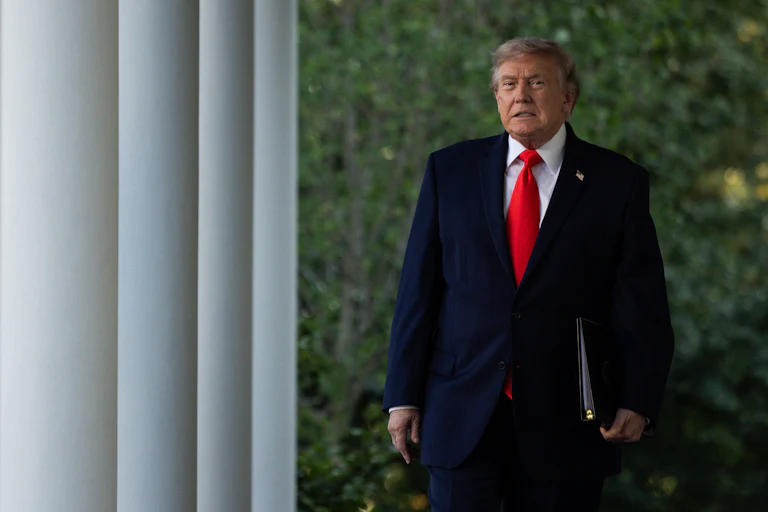
Donald Trump walking in the White House
Tierney L. Cross/Getty Images

President Trump wants a master list of every foreign intelligence target, including potential recruits and people that U.S. agencies suspect are spies.

The New York Times reports that the White House, through the Office of the Director of National Intelligence, has asked federal intelligence agencies to turn over these names, alarming officials who fear that it would compromise operations or be misused. So far, senior counterintelligence staff at the CIA and FBI have resisted the demands, according to the Times.

Intel officials also can’t agree on how to create, maintain, and secure the list. Trump’s new acting director, Bill Pulte, has no intelligence experience, causing FBI and CIA staff to worry about how he’d handle such a document. And the relationship between the ODNI, FBI, and CIA has gotten worse thanks to former Director of National Intelligence Tulsi Gabbard, who pushed Trump’s false claims of election fraud and cut the office’s staff.

Even creating such a list could jeopardize operation security, as it would put sensitive information that is normally compartmentalized into one place. It could also compromise long-term investigations and operations. Some of the targets on these lists are carefully protected even within federal agencies, with many staff not having access to their identities.

An official from Pulte’s office told the Times that it was only trying to follow National Security Presidential Memorandum 7, the administration’s national security strategy targeting supposed anti-American activity on the left. That official said compiling a list of intelligence assets and targets would help with collaboration and information sharing.

As a Trump loyalist, Pulte is likely to closely follow the president’s orders. Under Gabbard, Trump used the ODNI, which is supposed to focus on foreign intelligence, to investigate nonexistent fraud from the 2020 presidential election and other elections where Trump didn’t like the results. What does he want with a full list of intelligence targets? Does he think there could be some foreign connection to elections, or does he have some misguided or odious foreign policy plans?