Breaking News
Breaking News
from Washington and beyond

What’s Going On With the Probe Into ICE’s Killing of Renee Good?

The investigation into Good’s death has gone nowhere.

A person holds a sign that says, "Prosecute the killers of Renee and Alex," with photos of Renee Nicole Good and Alex Pretti, during an anti-ICE protest in Minneapolis.
Jerome Gilles/NurPhoto/Getty Images
Protesters raise signs during an anti-ICE march in Minneapolis.

It’s been six months since a federal agent shot and killed Renee Nicole Good in Minneapolis, yet virtually nothing has come of the federal investigation into the incident thus far.

Immigration and Customs Enforcement agent Jonathan Ross was caught on tape—from multiple angles—sidestepping the front of Good’s red Honda Pilot before advancing toward the driver side door, aiming his gun at Good, and firing his weapon.

The 37-year-old was a mother and an award-winning poet. In the immediate moments after her death on January 7, the federal government’s response seemed to be normal. The FBI mobilized to investigate the crime scene, and local authorities received assurances from the government that the probe would proceed as a joint investigation.

But by that evening, Washington had completely shut out Minnesota police and law enforcement in Hennepin County. The FBI shuttled Good’s SUV to a storage facility before Minnesota authorities got a chance to look at the evidence.

“I was on the phone with the U.S. attorney, and everybody agreed this would once again be a joint investigation. And then suddenly the [Bureau of Criminal Apprehension] was kicked off the case,” Hennepin County Attorney Mary Moriarty told the Pod Save the People podcast in June, referring to the state local law enforcement agency.

“And so we realized then and there it was going to be a different situation,” Moriarty continued. “They took away Renee Good’s car. It’s shrink wrapped. It’s still sitting in a warehouse somewhere. They won’t share any evidence that they collected or got from any statements.”

The restricted access to critical evidence meant that the Justice Department was the only agency left capable of conducting a full investigation into the incident. But Harmeet Dhillon, who leads the DOJ Civil Rights Division, had no interest in doing so, The New York Times reported in January.

Three current and former department officials told the Times that Dhillon would not consider opening an investigation into whether Ross had violated the law. Instead, the department considered investigating Good and her widow, Becca Good, regarding their supposed ties to activist groups. The unusual request prompted the mass exodus of several federal prosecutors.

But the push to shield Ross went all the way to the top. Then–Deputy Attorney General Todd Blanche said in a statement that there was “no basis for a criminal civil rights investigation” into Ross.

Shortly afterward, Donald Trump and his allies began to slander Good as a “domestic terrorist,” preemptively attempting to sentence her in the court of public opinion. Meanwhile, the day after Good was killed, Vice President JD Vance practically promised Ross’s freedom: “That guy is protected by absolute immunity,” Vance told reporters at the time. “He was doing his job.”

As of now, very little has been materially done to investigate Good’s death or hold her killer accountable. In a statement to The Atlantic, the Department of Homeland Security both confirmed that it was still looking into the circumstances of the shooting and echoed Vance’s comments that Ross had “acted in self-defense” after Good had “weaponized her vehicle against him.”

The magazine noted in a story Monday that the word choice was “not particularly indicative of an agency keeping an open mind as to what happened.”

In lieu of legitimate action from the federal government, state and local law enforcement have started to try to gain access to the evidence in their own ways, including legal action to demand federal agents hand over the protected material.

Good’s widow has also filed her own lawsuit, asking for the return of the car so that Minnesota investigators can take a look at it.

The family’s legal team “continues to take all aggressive offensive measures and is fiercely committed to pursuing truth and accountability,” Antonio Romanucci, the family’s attorney, said in an emailed statement to The Atlantic.
JD Vance Went Down Charlie Kirk Rabbit Hole That Alarmed His Wife

The vice president thought he was following his “instincts” about a larger plot behind Kirk’s killing.

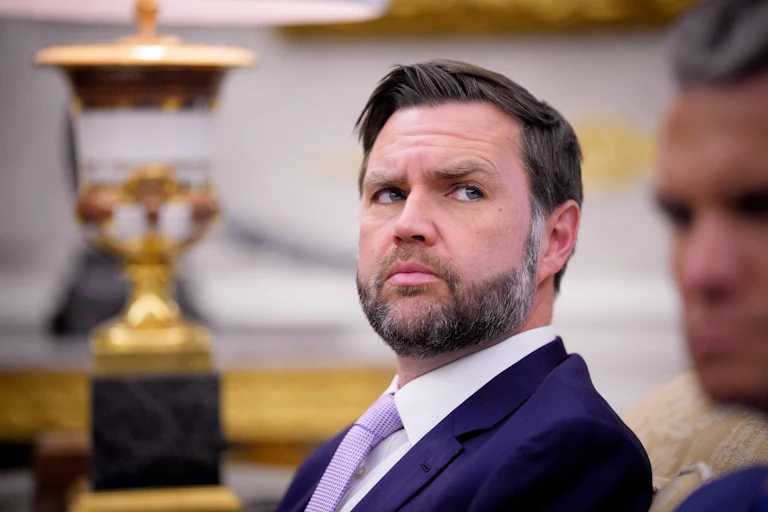
Vice President JD Vance looks sideways in a shifty manner
Andrew Harnik/Getty Images

After conservative activist Charlie Kirk was shot and killed in September, Vice President JD Vance got lost in conspiracy theories.

That’s what New York Times journalists Jonathan Swan and Maggie Haberman wrote in their new book, Regime Change, which looked at the internal workings of President Trump’s 2024 presidential campaign and the first year of his second term in office. The pair mentioned how Vance describes himself as a “doomer” who is “always latching onto the most negative possibilities,” and after Kirk, who Vance considered one of his friends, was killed, the vice president went off the deep end.

Vance’s “instincts told him that there was a larger plot behind the murder,” Swan and Haberman wrote. “He went down countless online rabbit holes, becoming so consumed by the videos and the theories that his wife, Usha, told him she was worried about him.”

This new revelation is worrying. Vance is the immediate successor to the presidency if anything happens to President Trump, who has visible health problems. Besides that, Trump has reportedly chosen Vance as his successor to run for president in 2028.

Future presidents should not be diving into internet conspiracy theories and YouTube rabbit holes, and vice presidents should not have that much time on their hands. How is Vance able to get into the weeds with his position? While he didn’t create a specific policy portfolio, he has taken on some important duties, helping with peace negotiations with Iran and representing the U.S. in different international trips. Evidently, that hasn’t kept him away from crazy internet theories.

DOJ Tries to Hide Blanche’s Communications From Epstein Files Lawsuit

The Justice Department is trying to protect acting Attorney General Todd Blanche from any sort of accountability.

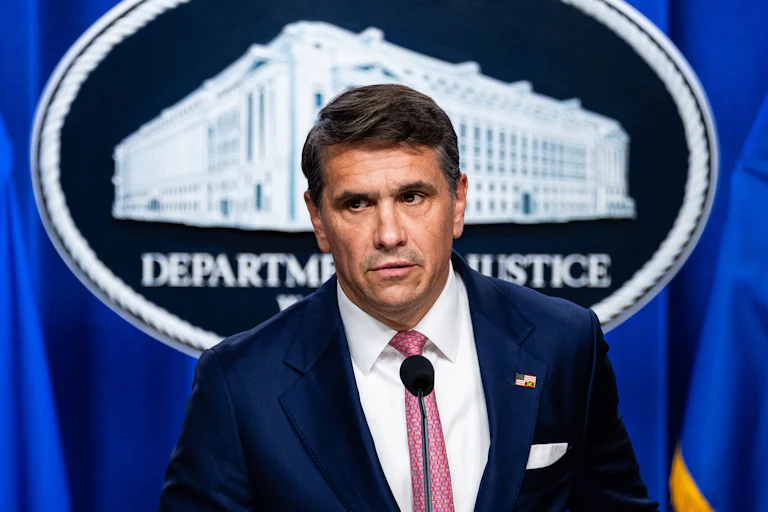
Acting Attorney General Todd Blanche stands in front of the Department of Justice logo.
Graeme Sloan/Bloomberg/Getty Images
Acting Attorney General Todd Blanche

The Justice Department is trying to save acting Attorney General Todd Blanche from a lawsuit seeking the release of his correspondence regarding sexual predator Jeffrey Epstein ahead of his Senate confirmation hearing.

The lawsuit, filed in June by the government watchdog American Oversight, requested “All email communications sent or received by Todd Blanche and containing both a key term from Column A and a key term from Column B,” and “All text messages and messages on messaging platforms ... sent or received by Todd Blanche and containing the term ‘Epstein.’”

Column A contains “Epstein” and “Maxwell,” while column B contains “Trump,” “DJT,” “POTUS,” “DOE174,” “Tallahassee,” and nine other terms.

The lawsuit also argued that Blanche’s upcoming Senate confirmation hearings creates “an urgency to inform the public about Mr. Blanche’s work in his official capacity surrounding the government’s treatment of the Smith Report,” and that “Mr. Blanche’s work history regarding the Epstein Files raises significant questions about the government’s integrity that affect public confidence.” American Oversight requested the records by July 14. The Senate Judiciary Committee has scheduled Blanche’s confirmation hearing for July 15 and 16.

The Justice Department argued against these requests in a 38-page memo, filed Monday, that alleges that American Oversight’s FOIA request would disrupt “the processing of other requests awaiting agency attention” and that granting this one would “wreak havoc on agencies and the court.”

“The FOIA was intended to be available to all members of the public, not just those who are professional FOIA requesters or who have the resources to file a complaint in district court and move for preliminary injunctive relief. It is unfair … for AO to jump ahead of other requesters who filed their FOIA requests earlier, and who are waiting patiently in line for their requests to be processed,” the DOJ argued. “Granting relief would create perverse incentives and send the message that requesters whose preferred deadlines align with high-profile governmental proceedings can circumvent statutory procedures to leapfrog other requesters.”

This response comes as over 1,200 former DOJ employees signed a letter on Tuesday urging Congress to reject Blanche’s nomination.

The Department of Justice has yet to release or unredact all of the entire Epstein files, and has been dogged by Blanche’s own controversies over his handling of the files, given his meeting with Epstein accomplice Ghislaine Maxwell and his past work as President Trump’s personal lawyer. Former Attorney General Pam Bondi has said Blanche is wholly responsible for any missteps with the files, even under her tenure. The new strange, albeit flimsy, argument from the DOJ will only rightly increase scrutiny as his hearing approaches.

Trump Team Allegedly Gave Confidential Info on Asylum Seekers to Iran

ICE forced Iranian asylum applicants to meet with an official from Tehran who had detailed knowledge of their applications.

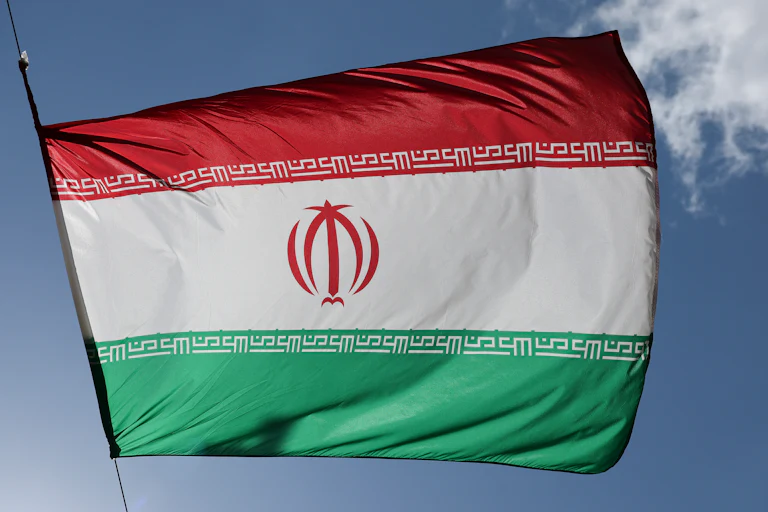
The Iranian flag
Aaron M. Sprecher/Getty Images

A lawsuit filed Tuesday alleged that the Trump administration had shared confidential information about Iranian asylum seekers with Tehran, violating federal immigration regulations and endangering hundreds of people.

In March 2025, the State Department started to hold meetings with Iranian officials to discuss detained Iranian immigrants, according to the complaint from the Iranian American Legal Defense Fund and the Public Citizen Litigation Group.

In those meetings, U.S. officials allegedly shared sensitive information about Iranian immigrants, including details from their asylum applications, in which immigrants reported whether they’d been persecuted for their religious affiliation, sexual orientation, or involvement in women’s rights activism.

Immigration and Customs Enforcement then forced Iranian immigrants to meet with Iranian officials, who seemed to have comprehensive knowledge of their asylum applications, the complaint said. Those meetings have continued amid the ongoing conflict between the U.S. and Iran.

Federal regulation passed in the 1990s bars the U.S. government from revealing confidential information about asylum applications, credible fear determinations, and reasonable fear determinations. If confirmed by a court, the Trump administration has blatantly violated this rule in order to execute the president’s mass deportation agenda.

Roughly 600 Iranian immigrants were detained by immigration enforcement last year. In September, Iranian officials agreed to take as many as 400 deported Iranian immigrants. That month, a flight returned dozens of immigrants to Iran. In nearly every case, either the immigrants’ asylum requests had been denied, or they had not been provided a hearing. Two more flights took place in December and January. The last was a week before the war started.

In addition to cracking down on undocumented immigrants, the Trump administration has made sweeping efforts to undermine legal immigration pathways. There have been mounting reports that asylum cases are being routinely dismissed by immigration judges, and that asylum seekers are then taken into ICE custody for expedited removal. The government has stacked the deck by appointing immigration judges bent on denying asylum claims, curbing America’s refugee program, and imposing steep price increases on H-1B visas.

Trump Kicks Off NATO Meeting With Wild Threat to Seize Greenland

Trump’s threat came as NATO is considering paths forward without the United States.

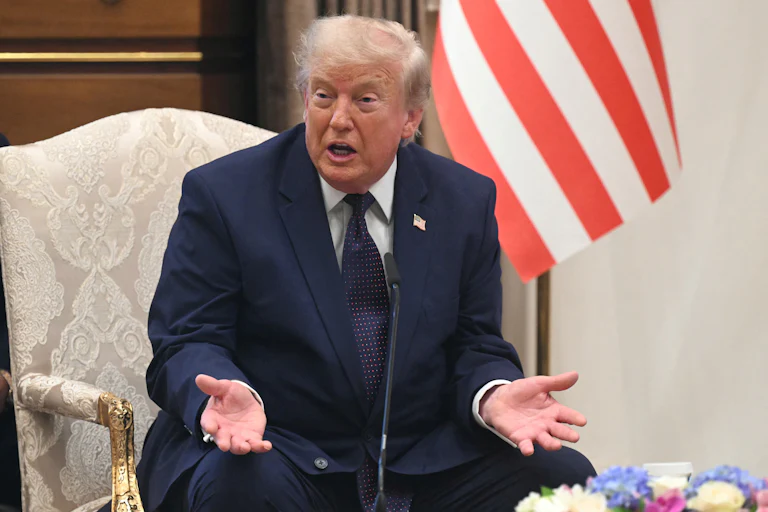
President Donald Trump speaking with his hands open on his lap
Saul Loeb/AFP/Getty Images

President Trump still wants to take control of Greenland, threatening to seize the country while speaking to reporters in Turkey Tuesday.

“That’s what hurt my relationship with NATO. Because Greenland doesn’t help Denmark, Denmark doesn’t spend money to really help Greenland, but it’s an important part for the United States. And it’s surrounded by China ships and Russian ships,” Trump said. “That should be controlled by the United States, not by Denmark. And when NATO wouldn’t go along with it, and with all of the money we spend to help them with Russia, and we don’t have to spend any money. We could remove all of our soldiers out of Europe.”

Trump seemed to have forgotten about Greenland for the past few months after nearly setting off an international incident in January, with his rhetoric alarming NATO leaders so much that they deployed troops to the island in case Trump quickly decided to seize it by force.

The situation seemed to calm down after Trump met with NATO Secretary General Mark Rutte at the World Economic Forum in Davos, Switzerland, later that month. Public opinion in Greenland and Denmark toward the U.S. has plummeted amid Trump’s desperate attempts to take over the territory, including bribing its residents. Trump’s latest bluster is not likely to help.