Breaking News
Breaking News
from Washington and beyond

Trump Secretary Puts Americans in Danger Over “DEI Bike Lanes”

Sean Duffy has derided bike lanes as too woke, and is now stripping mentions of them from federal websites.

Transportation Secretary Sean Duffy speaks during a congressional hearing.
Nathan Posner/Anadolu/Getty Images
Transportation Secretary Sean Duffy at a congressional hearing

Transportation Secretary Sean Duffy is so afraid of seeming woke that he’s willing to make roadways more dangerous.

Earlier this month, Duffy announced that the Trump administration would gut funding for so-called “DEI bike lanes”—even though the Federal Highway Administration had previously urged agencies to consider installing lanes for bicyclists in order to make the road safer for everyone.

Two days later, a staffer at the Federal Highway Administration’s safety office directed staff to update the website to remove that suggestion from the agency’s website, NPR reported Thursday.

The agency, also known as FHWA, had previously advised that “providing bicycle facilities can mitigate or prevent interactions, conflicts, and crashes between bicyclists and motor vehicles, and create a network of safer roadways for bicycling.”

A person who works in web at the Department of Transportation told NPR that staff were left wondering why the changes were being made in the first place. “Why do you need to take down bicycle safety, of all things?” the person told NPR.

“We’re not making the sites better, faster, or quicker, you know, able to provide real information to the communities that use these resources,” they said. “It’s asinine.”

The removal of this guidance is part of a wider push to remove road safety materials from the department’s website—including guidance about bike lanes and speed cameras.

One of the safety tools that the FHWA removed was the Pedestrian and Bicycle Crash Analysis Tool, or PBCAT, which was designed to record detailed accounts of crashes involving bicycles, pedestrians, and motor vehicles, in order to help prevent them in the future.

David Harkey, who helped to develop the tool at the University of North Carolina’s Highway Safety Research Center, said the tool was important because it helped track pedestrian and bicyclist fatalities nationally.

“This is an agency that claims that safety is a priority for them,” he told NPR. “It’s important that proven tools and resources like PBCAT are there on their site and are available for safety professionals across the country.”

A Department of Transportation spokesperson defended the decision in a statement to NPR: “This is a common-sense approach, despite the Left’s belief that everyone should ride a bike to their shoebox-sized apartment to eat crickets to achieve a phony climate agenda.”

But what about those red-blooded all-American car owners who are less safe because there are more bikes on the road? What’s next, outlawing bikes or mandating that everyone buy a car?
Read what Duffy initially said:

Secret Service Agent Punished Over Leaks on Vance’s Annoying Behavior

A Secret Service agent has been put on administrative leave for allegedly leaking details on JD Vance to the press.

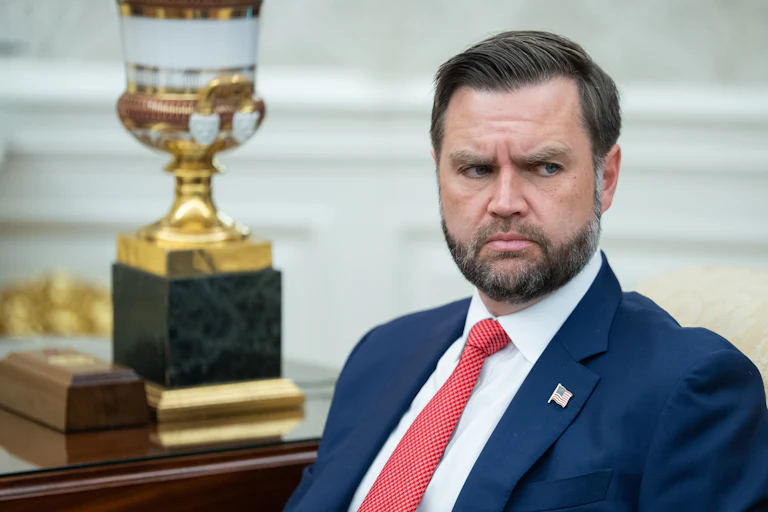
Vice President JD Vance frowns while sitting in the Oval Office.
Aaron Schwartz/CNP/Bloomberg/Getty Images
JD Vance in the Oval Office

The vice president is losing faith in his personal Secret Service detail.

One of the Secret Service agents assigned to protect JD Vance was placed on administrative leave over concerns that he was leaking information to the press, CNN reported late Wednesday.

The action followed an intimate recounting of Vance’s recent travel by MS NOW, in which the news outlet reported that Vance’s Secret Service agents “groused” and complained about the vice president’s decision to use a military helicopter to take his son to a golf lesson at Joint Base Andrews.

“Agents have shared concerns internally about Vance and his office pressing them for trips and assignments that some agents consider an inappropriate or even unprecedented use of government resources compared to prior vice presidents,” MS NOW reported on July 15.

The Secret Service’s internal affairs department is reviewing the agent’s conduct. It is currently unclear if the agent will face administrative consequences or criminal charges, according to an internal source that spoke to CNN.

Donald Trump has been so fixated on internal criticism and media leaks that some of his administration’s counter-measures have tested the boundaries of the First Amendment. During his first term, Trump considered wiretapping the Homeland Security Department to identify the source of his bad press.

That attitude has only escalated in the years since—aided by the sycophantic behaviors of Trump’s new government entourage. Earlier this month, CNN reported that FBI Director Kash Patel and White House Chief of Staff Susie Wiles were personally overseeing a crackdown at the White House to determine who leaked that the ultra-luxury jet gifted to Trump by Qatar lacked the security specs to be considered for use in Air Force One.

So far, Wiles and Patel’s probe has forced government officials to hand over their phones—causing some agencies to pit their own attorneys against the White House—and issued subpoenas to four New York Times journalists that reported the story.

Trump Rushes to Convince People Saudi Arabia Nuclear Deal Is Great

Donald Trump struck a controversial deal for U.S. companies to build and run nuclear power plants in Saudi Arabia.

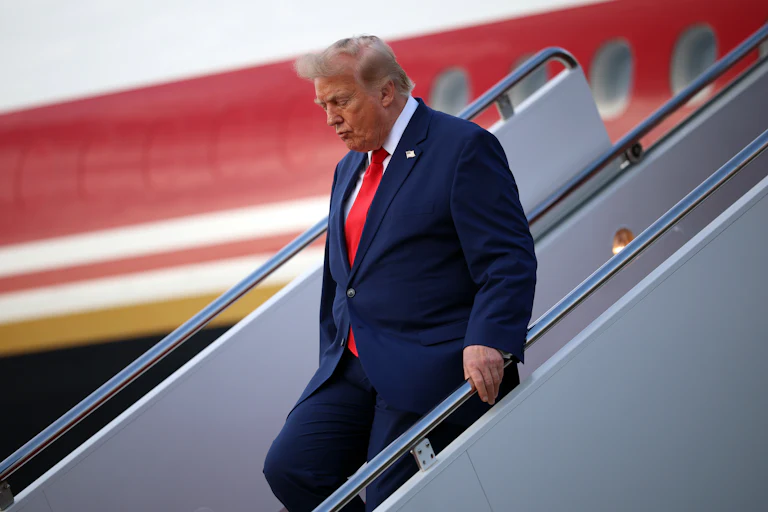
Donald Trump purses his lips and looks down while walking down the steps of Air Force One.
Kevin Dietsch/Getty Images
Donald Trump disembarks from Air Force One.

President Donald Trump is desperate to sell Americans on his landmark nuclear deal with Saudi Arabia that would loosen restrictions for the close U.S. partner.

In a post on Truth Social Thursday, Trump declared that there would be “no enrichment of material” as part of his nascent nuclear deal, which would allow U.S. companies to make billions building and running nuclear power plants in Saudi Arabia.

But surprise, surprise: That’s not the whole story.

The United States has offered Saudi Arabia a special deal that is reportedly far less restrictive than other agreements under Article 123 of the U.S. Atomic Energy Act of 1954—namely, this deal leaves the door open for enrichment down the line.

The Saudi agreement reportedly states that the two countries will conduct a two-year fuel cycle study on the economic feasibility of domestic enrichment in Saudi Arabia. If, after the study, the two sides agree that it’s feasible, then the U.S. would build an enrichment facility in Saudi Arabia. If not, Saudi Arabia would not be allowed to build its own domestic enrichment for 10 years, while blocking Saudi access to sensitive technology. If approved, the decision on whether or not to build would be made in two years—when Trump is still president.

Trump also claimed in his post that the agreement would require Saudi Arabia to agree to join the Abraham Accords.

Initial reporting about the deal suggested that the agreement would not require Saudi Arabia to recognize Israel. Unsurprisingly, Israel has voiced strong concerns about its closest ally cutting a deal with its enemy.

There are other reasons to be concerned about Trump’s deal. The president’s mishandling of nuclear negotiations is well documented, including his decision to detonate the U.S.-Iran nuclear deal struck by President Barack Obama, and the careless wording of last month’s memorandum of understanding between the U.S. and Iran, which shortly after crumbled in the Strait of Hormuz.

BBC Demands More Records on Jack Smith’s January 6 Report

The BBC wants President Trump to explain his “executive privilege” response to every request in the ongoing defamation case.

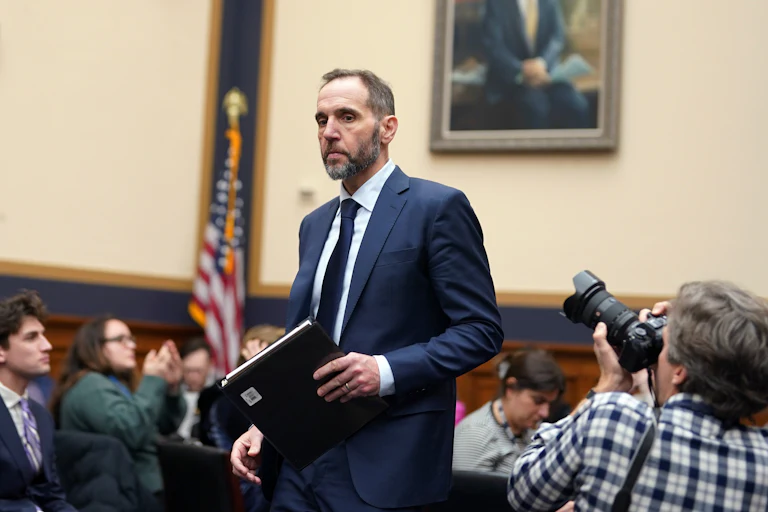
Jack Smith holds a folder while in a congressional hearing
Al Drago/Getty Images
Former special counsel Jack Smith in 2025

The BBC has hit President Trump with his third whammy in 24 hours—with the broadcast news organization this time renewing its demand for the release of records showing how Trump lost his “executive privilege” claims during former special counsel Jack Smith’s investigation into January 6.

The BBC noted in a reply memorandum Wednesday that it has already sent multiple “requests to government agencies seeking to obtain the same evidence the Special Counsel gathered and described as ‘evidence establish[ing] that the violence [on January 6] was foreseeable to Mr. Trump, that he caused it, that it was beneficial to his plan to interfere with the certification, and that when it occurred, he made a conscious choice not to stop it and instead to leverage it for more delay.” 

But the Trump administration rejected those requests, claiming executive privilege. The BBC demanded more information on how Trump lost those same claims during Smith’s probe.

“The government errs in characterizing the Executive Privilege Decisions as ‘information that might be incrementally helpful in litigating a potential future discovery dispute.’ Instead, unsealed decisions will likely be crucial to obtaining information that could be dispositive of President Trump’s lawsuit, as the BBC expects them to show that President Trump’s assertions of executive privilege have already been rejected,” the BBC wrote. “The Court should therefore further unseal the Executive Privilege Decisions and prevent the injustice that would arise from President Trump using already-rejected privilege claims to withhold such vital information.”

This all stems from a $10 billion lawsuit Trump filed last year against the BBC over a 2024 episode of Panorama that he claimed was defamatory because it spliced together sections of his January 6, 2021, speech, highlighting his call for supporters to “fight like hell,” while omitting his request for peaceful protest. If the BBC can prove that Trump was aware of the violence he was fomenting, his whole defamation case falls apart.

On Tuesday, a judge allowed the BBC to move forward with subpoenas against Trump’s closest advisers and confidants—like family members, Stephen Miller, and Steve Bannon—to better determine what Trump’s actual goals were on January 6. The judge also ordered Trump to hand over his financial records, opening yet another lane of exposure against the president.  

Trump Orders Schools to Make Chilling Change to Sex Ed Programs

Donald Trump has gutted programs aimed at preventing teen pregnancy.

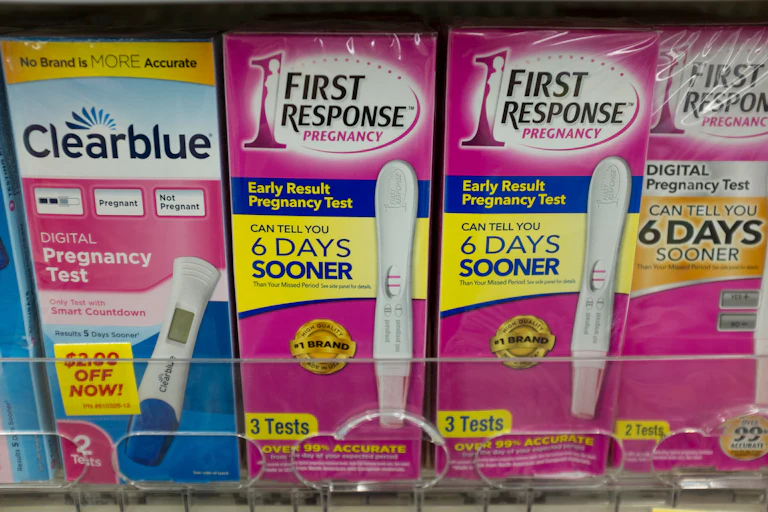
Pregnancy tests on a shelf in a pharmacy
SETH HERALD/AFP/Getty Images

The Trump administration has canceled millions of dollars’ worth of federal grants to organizations running teen pregnancy education programs nationwide, suggesting that the widely effective underage pregnancy prevention services were inappropriately promoting premarital sex.

The funding did not align with the Office of the Assistant Secretary for Health’s outlined priorities, according to a government fact sheet that specified the office would not support “content that encourages, normalizes or promotes sexual activity for minors.”

One such organization interrogated by the assistant secretary—South Carolina nonprofit Fact Forward—was accused of including lessons with “advice on making condom use more pleasurable” and promoting discussions that normalize “use of pornography,” according to a copy of the letter obtained by The New York Times.

“That information was just not true,” Rena Dixon, who runs the group, told the Times. Dixon added that Fact Forward had never used the lessons or materials to which the assistant secretary referred.

Other program directors that spoke with the Times also said that the government had distorted the materials they were using in order to make erroneous claims about their education plans. Several noted that the grants they won required them to use “courses from a federally approved list shown by research to be age-appropriate and effective,” according to the Times.

The federal government first got involved in preventing teen pregnancy in 2010, allocating roughly $100 million to the cause and eventually creating the Office of Adolescent Health and the Teen Pregnancy Prevention Program, or OAH.

At the time, teen birth rates were already in decline, yet the program’s influence still caused rates to fall faster than ever. The government-funded programs advanced the waning trend by investing in proper sex education and increasing access to reproductive health care in communities suffering from disproportionately high rates of teen pregnancy.

But Donald Trump and his allies have nonetheless abhorred the effort. Last month, a spokesperson for Health and Human Services revealed that the agency had canceled 53 out of 67 grants—totaling $68 million—alloted to the pregnancy prevention program. The impact was broad, affecting more than two dozen states across the country.

It’s unclear if the effort will hold up in court. Trump took similar actions during his first term, suddenly canceling dozens of grants issued under the Obama-era program in 2017, though his efforts did not succeed.

In April 2018, Justice Ketanji Brown Jackson—then a U.S. district judge—ruled that HHS had violated its own regulations by prematurely ending the grants without an adequate explanation, ordering the agency to restore the terminated funds.

Read The TNR Blue Book, our new newsletter on the Democratic Party: