On Thursday, the Supreme Court ruled 7–2 that the German pharmaceutical and agrochemical giant Bayer cannot be sued in state courts for failing to warn that glyphosate—a key ingredient in its subsidiary’s bestselling weedkiller, RoundUp—could cause cancer. Make American Healthy Again activists, who have been irate about the Trump administration’s embrace of glyphosate, were predictably furious.
A few hours later, the White House threw them a few scraps. Trump signed an executive order Thursday afternoon promoting pesticide “alternatives.” The order comes with no new federal funding, regulations, or enforcement powers, instead resolving to encourage “creative solutions for evaluating the exposure, diagnosis, and treatments of cumulative chemical exposures on individual health.” SCOTUS’s decision, by contrast, could be worth billions to Bayer. The ruling overturns a $1.25 million state court verdict against RoundUp maker Monsanto, which Bayer acquired in 2018, in a suit brought by non-Hodgkins lymphoma patient John Durnell. More importantly, it stands to toss out thousands of similar suits still making their way through state courts. When the decision was announced, Bayer’s stock jumped.
Eager as Republicans are to keep the so-called MAHA Moms on their side, paying lip service to pesticide alternatives won’t make up for just how helpful the GOP has been to pesticide producers. Republicans are the party of Big Pharma and Big Ag. The question is whether they can continue to be the party of MAHA too.
In the lead-up to yesterday’s decision, the Trump administration lent several critical assists to Bayer. Under the Federal Insecticide, Fungicide and Rodenticide Act, or FIFRA, the EPA is required to regularly assess pesticides’ safety and require manufacturers to place warnings on products that may pose certain dangers. Trump’s Environmental Protection Agency has recently moved to ban states from placing their own warnings on products that the EPA deems safe at the federal level; the agency took aim specifically at California’s warning labels on glyphosate. Because the EPA’s most recent review of glyphosate still says that it’s safe—and because states can no longer issue warnings that contradict the EPA—Bayer has leaned on that Trump 2.0 revision to argue to SCOTUS that it is under no obligation to put any warning labels on its products. Accordingly, Bayer has maintained that it can’t be made to pay the cancer patients who are suing it for having failed to put warnings on RoundUp.
A key basis for Bayer’s case and SCOTUS’s decision—repeated several times in Justice Brett Kavanaugh’s majority opinion—is that the EPA has continually maintained that glyphosate is safe. The court ruled that since successful failure-to-warn suits would require states to add non-EPA-approved warnings to labels, that would run afoul of FIFRA’s requirements for labeling uniformity. The EPA, however, is currently in the process of reassessing the safety of glyphosate and other active ingredients in pesticides. That review is due to wrap up by October 1. At that point the EPA could, at least in theory, find that glyphosate is not safe, invalidating a large part of Kavanaugh’s justification for the majority’s opinion.
There have been recent allegations, as well, that research the EPA has leaned on to argue that glyphosate is safe was influenced by the only company that makes it in the United States. Monsanto has played a hand in several putatively objective studies concluding that glyphosate is safe. That includes one influential 2013 paper cited repeatedly by the EPA. As Mother Jones reported this week, an internal investigation by the EPA concluded in 2017 that the paper had been ghostwritten by a Monsanto employee; the study’s authors have disputed the investigation’s finding. The agency has nonetheless continued to cite it as evidence for the compound’s safety.
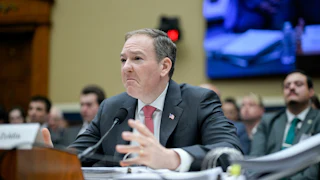
The timing of this case has been extraordinarily convenient for Bayer. The company petitioned SCOTUS to sharply limit failure-to-warn claims last April, and warned that an onslaught of litigation could cause it to pull glyphosate off the market. As I wrote a few months back, representatives from the company then met with staff from EPA Administrator Lee Zeldin’s office in June. They thanked Zeldin’s team for its “work on MAHA,” and, seemingly, for having updated the EPA’s website to reflect its withdrawal of a Biden-era provision allowing California to require warnings on glyphosate. Trump’s Justice Department officially sided with the company in December.
As it continued to fend off lawsuits at the start of this year, Bayer ramped up its lobbying spending. In February, the White House invoked the Korean War–era Defense Production Act to declare glyphosate production “critical to the national defense,” and specifically protected glyphosate producers (read: Bayer) from lawsuits related to material or products produced in accordance with the act. Bayer poured considerable resources into backing “Cancer Gag Act” legislation to grant pesticide producers immunity against health-related lawsuits, which Republicans have championed.
The takeaways from Monsanto Co. v. Durnell are pretty straightforward: A huge corporation paid a lot of money to get the outcome it wanted. Republicans helped at nearly every step of the way, and it will now be much harder for people who believe that a Bayer product is responsible for their cancer to sue the company. Whatever its claims to the contrary, the Trump administration is less interested in Making America Healthy Again than it is in Making Life Easier for Agrochemical Executives.