Breaking News
Breaking News
from Washington and beyond

Arizona Becomes First State to Criminally Charge Kalshi

The “prediction market” platform is finally facing a serious legal challenge.

Kris Mayes, Arizona’s attorney general, speaks outside the Supreme Court.
Eric Lee/Bloomberg/Getty Images
Kris Mayes, Arizona’s attorney general, speaks to the media outside the Supreme Court, on November 5, 2025.

The state of Arizona has filed criminal charges against the online prediction market Kalshi for allowing people to bet on elections and “operating an illegal gambling business” in the state.

Arizona Attorney General Kris Mayes filed 20 misdemeanor counts in Maricopa County Superior Court in the state Tuesday, saying in a statement that “no company gets to decide for itself which laws to follow.”

“Kalshi may brand itself as a ‘prediction market,’ but what it’s actually doing is running an illegal gambling operation and taking bets on Arizona elections, both of which violate Arizona law,” Mayes said.

The New York–based Kalshi said in its own statement that Mayes’s case is based “on paper-thin arguments,” arguing that its business model is not like a casino or a sportsbook and that it “should not be overseen by a patchwork of inconsistent state laws.” Instead, the company says it serves as a conduit for federally regulated swaps, putting it under the federal jurisdiction of the Commodity Futures Trading Commission.

“States like Arizona want to individually regulate a nationwide financial exchange, and are trying every trick in the book to do it,” Kalshi’s statement said. The company faces fines of between $10,000 and $20,000 for each violation if found guilty.

Kalshi’s foray into political betting has raised questions about whether politicians and other insiders are betting on certain events and elections to cash in. They allow people to profit off predicting war and the destruction that comes with it, as was the case with the Iran war or the decision to strike Venezuela. Kalshi recently announced partnerships with CNN and the Associated Press, while its competitor Polymarket has partnered with The Wall Street Journal, Substack, and X.

Arizona’s criminal case will be watched across the country to see if prediction markets can be reined in or regulated. At the very least, hopefully the fate of America’s leadership and human suffering around the world won’t be the focus of wagers from the depraved.
“Crazed Egomaniac”: Trump Team Turns on Official Who Quit Over Iran

Donald Trump’s allies have already launched a smear campaign against the counterterrorism official who quit in protest.

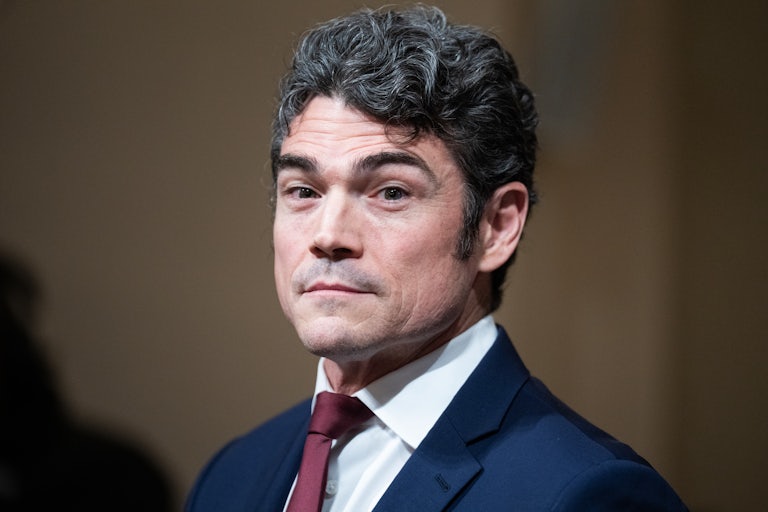
Former Director of the U.S. Counterterrorism Center Joe Kent sits in a House hearing
Tom Williams/CQ-Roll Call, Inc/Getty Images

Within hours, the Trump administration has already turned on the top U.S. counterterrorism official who resigned from his post over the war with Iran.

Powerful Republicans and key Trump officials have spent the day impugning Joe Kent, who resigned from his position as the National Counterterrorism Center director Tuesday morning.

Kent was a well-known political extremist who had to disavow associations with far-right figures, including white nationalists and a Nazi sympathizer, a character trait that should have put him right at home within the ranks of the Trump administration. Yet MAGA world—including some of Kent’s former colleagues—was nonetheless all too eager to disparage the outbound security chief.

Former White House deputy chief of staff Taylor Budowich ripped Kent as a “crazed egomaniac,” who he claimed “rarely” produced “any actual work.”

“He spent all of his time working to subvert the chain of command and undermine the President of the United States,” Budowich wrote on X. “This isn’t some principled resignation—he just wanted to make a splash before getting canned. What a loser.”

Kent argued in his resignation letter that he could not “in good conscience” support the war in Iran. “Iran posed no imminent threat to our nation, and it is clear that we started this war due to pressure from Israel and its powerful American lobby,” he wrote.

Trump, who nominated Kent himself in the early days of his second presidency, practically shrugged off his appointee’s politically motivated resignation, claiming Kent was never strong on security.

“It’s a good thing that he’s out because he said that Iran was not a threat,” Trump said while speaking with reporters at the White House. “Iran was a threat. Every country realized what a threat Iran was.”

White House press secretary Karoline Leavitt plainly objected to Kent’s letter, arguing on X that the Iranian regime “is evil” and that any assertion that Iran did not pose an “imminent threat” to America was a “false claim.” Yet that assessment is not consistent with global intel.

U.K. national security adviser Jonathan Powell, who attended the final talks between the U.S. and Iran, said that Tehran’s proposed revisions to its nuclear program were “surprising” and significant enough to prevent the rush to war, reported The Guardian.

Yet the foreign revelation did not put a dent in the Republican messaging machine.

“We all understood there was clearly an imminent threat that Iran was very close to the enrichment of nuclear capability, and they were building missiles at a pace that no one in the region could keep up with,” House Speaker Mike Johnson told reporters Tuesday. “Iran was building up ballistic missiles … and we knew that their plan was to fire them upon Americans.

“I don’t know where Joe Kent was getting his information,” added Johnson, “but he wasn’t in those briefings, clearly, because everyone … understood that this was a serious moment for us.

“Had the president waited, I am personally convinced that we would have mass casualties of Americans,” Johnson said.

Senior administration officials told The Guardian that Kent was suspected of leaking information to the press, a suspicion that ended his participation in the presidential daily brief process and removed him from deliberations over Iran.

Ex-DOGE Staffer Admits the Whole Thing Was a Total Bust

Nathan Cavanaugh admitted in a deposition video that Elon Musk’s agency failed to accomplish its one mission.

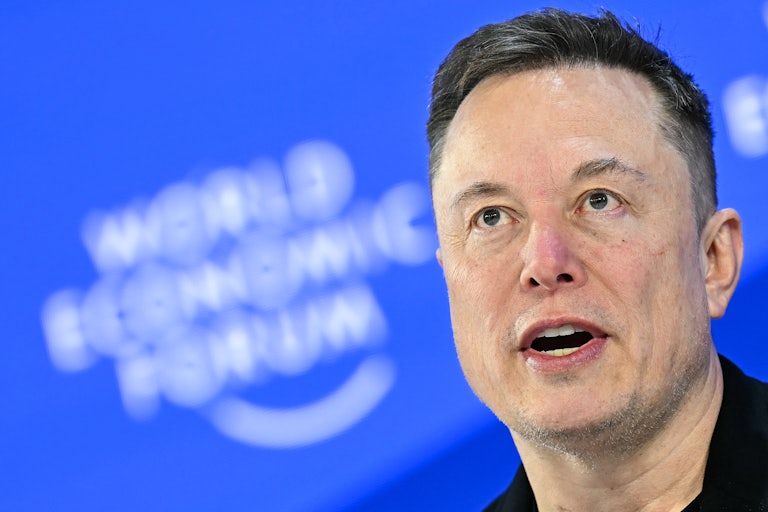
Elon Musk speaks during the World Economic Forum
Fabrice COFFRINI/AFP/Getty Images

The DOGE bros responsible for cutting over 317,000 federal jobs and thousands of grants continue to show they had no idea what they were doing and no remorse for the damage done.

The depositions of two of the bros, Nathan Cavanaugh and Justin Fox, were published on YouTube last week by the plaintiffs of a suit who hope to restore some of the cuts made to the National Endowment for the Humanities.

The nearly 25 hours of depositions are equal parts hilarious and depressing, showing how sloppy Elon Musk’s former staff—most of whom had little experience in government—were in their approach.

For all Musk’s bluster about reducing government spending by $1 trillion, federal spending increased with DOGE at the wheel. Cavanaugh outlined the irony perfectly in his deposition when asked whether he regretted that the slashing of grants had cost many people their livelihood.

“No,” Cavanaugh said. “I think it was more important to reduce the federal deficit.”

“OK,” the interviewer said. “Did you reduce the federal deficit?”

“No, we didn’t,” Cavanaugh replied.

The employees were mocked online for lacking any principles besides “cut every grant that doesn’t relate to white men.” Fox struggled to define DEI at all, and floundered when asked whether he considered a documentary about Jewish women during the Holocaust to be DEI.

“It’s a Jewish—specifically focused on Jewish culture and amplifying the marginalized voices of the females in that culture,” he said. “It’s inherently related to DEI for that reason.”

Both Fox and Cavanaugh used ChatGPT to find grants that fell under the Trump administration’s definition of “radical and wasteful government DEI programs.” The loose guidelines coupled with an imperfect chatbot and sheer idiocy from the bros meant that funding for things such as a new HVAC system for a North Carolina museum or a digital archive for Oregon newspapers were terminated in the purge. Of course, any grant containing the word “BIPOC,” “homosexual,” “LGBTQ,” or “tribal” had almost no shot of survival.

The backlash to the depositions has perhaps been too much to take for the DOGE bros. On March 13, a judge ordered that videos of the depositions be taken off the internet. They’re still quite easy to find.

Pam Bondi Subpoenaed to Testify on Epstein Files “Mismanagement”

The attorney general must testify in Congress.

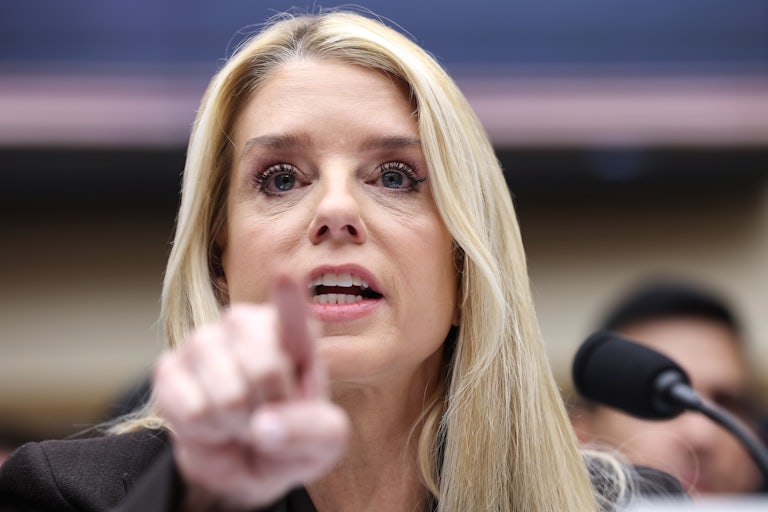
Attorney General Pam Bondi testifies in Congress.
Win McNamee/Getty Images
Attorney General Pam Bondi testifies before the House Judiciary Committee, on February 11.

Attorney General Pam Bondi has been subpoenaed by the House Oversight Committee to testify before lawmakers over her “possible mismanagement” of the Justice Department’s rollout of the Epstein Files.

“On March 4, 2026, the Committee voted to approve a motion directing the Committee to authorize and issue a subpoena to you for a deposition,” Committee Chairman Representative James Comer wrote in a letter to Bondi Tuesday. “The Committee has questions regarding the Department of Justice’s handling of the investigation into Jeffrey Epstein and his associates and its compliance with the Epstein Files Transparency Act. As Attorney General, you are directly responsible for overseeing the Department’s collection, review, and determinations regarding the release of files pursuant to the Epstein Files Transparency Act.” 

Bondi is set to be deposed on April 14, Comer noted. She and Deputy Attorney General Todd Blanche will also sit for a private briefing with Oversight Committee members on Wednesday. 

While Bondi has yet to publicly reply, a DOJ spokesperson called the subpoena “completely unnecessary.” 

“Lawmakers have been invited to view the unredacted files for themselves at the Department of Justice, and the Attorney General has always made herself available to speak directly with members of Congress,” the spokesperson told CNBC on Tuesday. “She continues to have calls and meetings with members of Congress on the Epstein Files Transparency Act, which is why the Department offered to brief the committee tomorrow. As always, we look forward to continuing to provide policymakers with the facts.”

From claiming that the Epstein client list was sitting on her desk (then claiming no such list exists), to giving the MAGA influencers those nothingburger white binders labeled “most transparent administration in history,” to contentious congressional hearings in which she appeared extremely defensive, Bondi has only managed to put even more eyes on the Epstein files—and the connections that President Trump and other elites have to them. Expect more indignation on April 14.  

This story has been updated. 

Watch Mike Johnson Struggle to Name Even One Example of Voter Fraud

The House speaker is unable to share even one real-life example of voter fraud that the SAVE Act would have stopped.

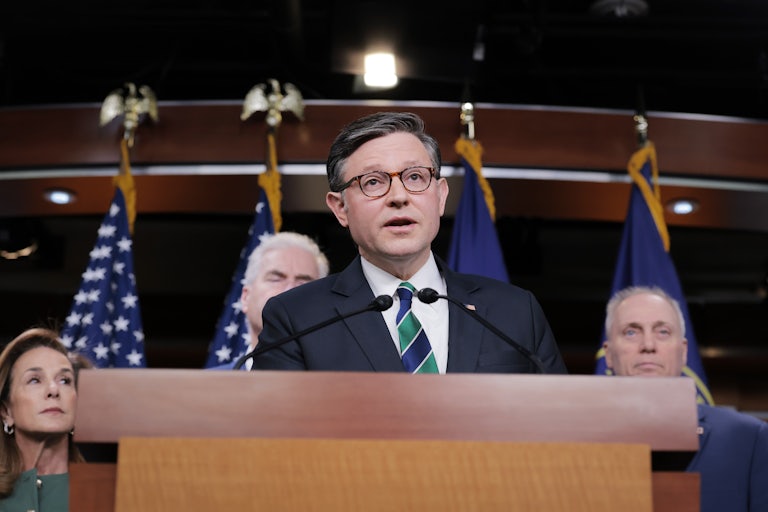
House Speaker Mike Johnson speaks during a news conference
Anna Moneymaker/Getty Images
House Speaker Mike Johnson speaks during a news conference, on March 17.

Speaker of the House Mike Johnson isn’t bothering to try and justify the SAVE Act.

A reporter asked Johnson Tuesday morning if he could point out any example of voter fraud in any previous election in any state that the bill, which would introduce extensive obstacles to voter registration, would have prevented. Johnson flippantly dismissed the question.

“Look, we’re not going to litigate all that. I can tell you what I’ll tell Democrats. You should listen to the American people. Ostensibly, we’re supposed to come here and represent the interests of the American people. This is a 90–10 issue in public opinion polling, and Democrats agree that you should be a citizen and have a photo ID to vote at a tune of about 70 percent,” Johnson responded.

There’s a reason Johnson couldn’t quickly come up with an example. In the past two decades, fraud has only been found in a tiny fraction of cases: much, much less than 1 percent.

Meanwhile, Johnson is exaggerating polling numbers on voter identification in general, not the specifics of the SAVE Act. The bill would require all current registered voters to reregister in person at a voter registration office, and in 45 states, a REAL ID would not be enough to satisfy the bill’s identification requirement. Instead, voters would have to produce a passport, passport card, or certified birth certificate.

Only roughly half of Americans have a passport, and getting a new one costs $165, in addition to the other costs to put together the application. A passport card costs $65, but applicants again face additional costs in terms of photos and required documents if they don’t have the original copy. And all prospective voters who have changed their name after birth, including married women, have to provide proof backing up their name change, such as a wedding license.

All of this would be burdensome for American voters across the country, and create a bureaucratic mess ahead of November’s midterms. It’s quite clear that the Republican Party, led by Trump, is trying to suppress votes and create confusion to prevent big losses in eight months and beyond.

Trump Refuses to Explain His Day-After Plan in Iran as He Bashes NATO

Donald Trump is winging this as he goes.

Donald Trump speaks while sitting in his golden Oval Office.
Yuri Gripas/Abaca/Bloomberg/Getty Images

President Trump can’t articulate any semblance of a real “day-after plan” in his war on Iran. 

The president was questioned by the media after his Tuesday meeting with Irish Taoiseach  Micheál Martin at the White House. 

“You just said that Iran is just a military operation to you. But do you not have a day-after plan, and if so what is your day-after plan for Iran?” a reporter asked. 

“Well we have a lot. Look, if we left right now it would take 10 years for them to rebuild. But we’re not ready to leave yet. But we—we’ll be leaving in the near future. We’ll be leaving in pretty much the very near future,” Trump said vaguely. “But right now they’ve been decimated from every standpoint. And again, we’ve had great support from countries in the Middle East. But we’ve had … essentially no support from NATO.” 

Once again, it sounds like the Trump administration went into this war with no real plan. First Trump was saying that he’d have a hand in picking Iran’s next leader. That didn’t happen. And his call for U.S. allies to help defend oil tankers attempting to pass through the Strait of Hormuz went unheeded—which is why he spent much of Tuesday bashing NATO instead of talking about a day-after plan. 

“NATO is making a very foolish mistake,” Trump said, earlier in the meeting. “I’ve long said that, you know, I wonder whether or not NATO would ever be there for us. So this was a great test. Because we don’t need them.”

Ultimately, Trump’s “near future” timeline offers no hope that this war will end anytime soon. And even if it does, at least 1,444 Iranians of all ages, 850 people in Lebanon, 15 people in Israel, and 13 American service members have already been killed. Thousands more have been injured, and both cultural heritage sites and basic infrastructure have been decimated in Iran. The grim real estate makeover plan he’s trying to build over the rubble of the Palestinian genocide in Gaza isn’t a viable option here. 

Trump Says He’s “Not Afraid” of Iran War Dragging on Indefinitely

Donald Trump brushed off a question about the war ending up the same as Vietnam.

Donald Trump pouts while sitting in the Oval Office
Alex Wong/Getty Images

Donald Trump is openly entertaining the possibility of putting boots on the ground in Iran.

Speaking with reporters at the White House Tuesday beside Irish Taoiseach Micheál Martin, Trump sluggishly claimed that he wouldn’t be afraid to put the lives of American soldiers at risk in order to continue his nonsensical war.

“The Iranian regime has told Sky News that if you put boots on the ground in Iran, it would be another Vietnam. Are you afraid of that?” asked a journalist.

“No, I’m not afraid of—I’m really not afraid of anything,” Trump said.

Moments later, Trump said he would withdraw from the war “in the very near future” but that he wasn’t ready to leave yet.

“We have a lot,” Trump responded when asked if the White House had a “day-after plan,” apparently unwilling to elaborate on the details of what that plan would entail.

“If we left right now, it would take 10 years for them to rebuild,” he continued. “But we’re not ready to leave yet. But we’ll be leaving in the near future. We’ll be leaving pretty much in the very near future. But right now they’ve been decimated from every standpoint.”

But leaving may not be a feasible option in the very near future. The president’s allies have recently interpreted a shift in power, warning that while the early days of the war may have indicated an immediate victory, prolonged U.S. involvement in the conflict has dramatically increased the likelihood of boots on the ground. The changing tide has fueled concern that Trump could draw the country into yet another open-ended Middle East conflict.

At issue is whether the U.S. can obtain control over the Strait of Hormuz, the water channel situated between Iran and the United Arab Emirates. The strait is the single most important energy transit point in the world, funneling approximately one-fifth of all crude oil shipments. Iran began laying mines across the strait last week, effectively sealing the only sea passage from the Persian Gulf and the Gulf of Oman to the rest of the open ocean.

Ensuring the free flow of oil through the strait would likely require seizing control of portions of Iran’s shoreline, a war plan that would almost certainly require the physical presence of U.S. troops in Iran. But doing so could embroil the U.S. and American lives in yet another devastating and unpopular conflict—exactly the kind of action that Trump has railed against for more than a decade.

Trump Thought Iran Struck School Based on Report CIA Said Was Wrong

Donald Trump was initially told Iran was behind the strike on a girls’ school, but he has not changed his stance even after the CIA did.

Donald Trump speaks while wearing a white cap that says "USA"
Nathan Howard/Getty Images

We now know why Donald Trump falsely claimed Iran struck one of its own schools, following the largest loss of civilian life in the war so far.

The Shajareh Tayyebeh girls’ school in southern Iran was hit by a Tomahawk cruise missile on February 28. “Dozens of seven to 12 year-old girls” were killed, The Guardian reported, with the official death toll rising to over 148, per Iranian officials. Unesco described the bombing as a “grave violation” of international law.

In the immediate aftermath, Trump asserted that Iran had accidentally bombed its own civilians.

“In my opinion, based on what I’ve seen, that was done by Iran,” he told the press on March 7, adding: “They’re very inaccurate, as you know, with their munitions. They have no accuracy whatsoever. It was done by Iran.”

But proceeding investigations have revealed it is likely that the U.S. was to blame for the bombing. Iran, for one, does not even possess any Tomahawk missiles. Even the Pentagon has since reportedly determined that the missile was fired by American forces.

The Guardian spoke to two sources who claimed that Trump had been given incorrect information by CIA officials—and then was either never briefed with the correct intelligence, or simply didn’t care to update his own stance.

The officials told Trump after the bombing that the missile seen in video did not resemble a Tomahawk. Within 24 hours, the CIA looked at more videos and realized they had actually been wrong: The missile was, in fact, a Tomahawk.

“It was not clear when Trump was briefed about the updated intelligence findings,” The Guardian reported.

Nonetheless, Trump has stuck with his version of events ever since with typical stubbornness. It’s one of many misleading narratives pushed by his administration on the war in Iran.

Entire Team of Oil and Gas Experts Got DOGE’d Before Iran War

The Trump administration fired key experts that could have helped with the current situation in the Strait of Hormuz.

Marco Rubio looks uncomfortable as he sits at a table behind a United States nameplate.
Rebecca Blackwell/POOL/ AFP/Getty Images
Secretary of State Marco Rubio

The war in Iran has led to a worldwide energy crisis, with oil experts from the Persian Gulf being blocked by Iran’s closure of the Strait of Hormuz. 

Despite this being a cornerstone of Iranian defense for decades, the Trump administration seems to have been caught off guard, and a major reason is that the State Department no longer has any oil and gas experts, having fired them last July as part of reduction-in-force efforts, NOTUS reports

A total of 1,300 people were laid off from the State Department last summer, and the Bureau of Energy Resources was hit hard. The people fired were responsible for planning scenarios if the strait was ever closed, and others had professional relationships with oil and gas companies in the Middle East as well as with foreign diplomats who deal with energy concerns. The only people left in the bureau, ironically, are people who work with clean energy and critical minerals. 

“I’m sure Secretary [of State Marco] Rubio wishes he had that expertise available today,” Geoffrey Pyatt, who served as assistant secretary of state for energy resources during the Biden administration, told NOTUS. “Most of that institutional knowledge was lost with the elimination of the bureau and RIFs last fall.”

That expertise would be critical right now as oil and gas prices skyrocket around the world due to the closure of the strait and  attacks on oil and gas infrastructure in the region. Several former State Department officials who worked on energy told  NOTUS that the administration’s lack of preparedness before striking Iran is clearly apparent. 

“Before any of this should have happened, there should have been discussion about what are the implications of this, and what happens when the Strait of Hormuz turns off,” a former Bureau of Energy Resources staffer said. Other former staffers who now work for oil and gas companies said they don’t have clear points of contact in the Trump administration who they can discuss concerns with. 

Publicly, Trump has been dumbfounded by Iran’s response to U.S. and Israeli attacks. 

“They weren’t supposed to go after all these other countries in the Middle East. Those missiles were set to go after them. So they hit Qatar, Saudi Arabia, UAE, Bahrain, Kuwait. Nobody expected that,” Trump said Monday. The president fails to realize that he fired the people who likely did expect and plan for that exact scenario. 

Trump Is Quietly Trying to Free Man Who Lied About Hunter Biden

Alexander Smirnov gave the FBI information he later admitted was false.

Hunter Biden walks with his wife
Yuri Gripas/Bloomberg/Getty Images

He worked with Russia and Republicans to build a web of lies that could incriminate President Joe Biden. Now he’s being rewarded.

Alexander Smirnov’s various deceptions about Biden and his family—which included telling the FBI that both Biden and his son Hunter had pocketed millions in bribes from the Ukrainian gas company Burisma—were central to Republican efforts to impeach the former president. Smirnov was the caucus’s star witness.

In a plea deal in 2024, Smirnov admitted that he had not only completely fabricated the Biden-Burisma connection but that it was conjured with the assistance of at least four Russian officials.

Yet Smirnov vanished mere months into his six-year prison sentence. In early March, it became clear that the Trump administration was helping him sweep the whole ordeal under the rug, despite the deleterious impacts that Smirnov’s lies and Russian collusion had on American politics.

On March 4, deputy Attorney General Todd Blanche submitted a bizarre and atypical brief supporting Smirnov’s attempts to throw out his sentence and withdraw his plea, reported Mother Jones Monday. Deputy attorneys general have not historically involved themselves in such matters.

In 2025, the DOJ filed a joint motion alongside Smirnov’s attorneys to release him pending appeal. U.S. District Judge Otis Wright tossed the effort in April, but legal experts stressed that the effort could be an early sign that the Trump administration was considering pardoning Smirnov.

Smirnov’s appeal hinges on a stipulation related to his plea deal. At the time, the arrangement stated that Smirnov was “entitled” to a credit for time served, though that credit was never determined by a judge, as specified by the plea. Smirnov and his team are now claiming that his entire sentence should be thrown out since Wright did not comply with the specifications of the plea deal, even though the Russian asset was credited for time served by the Bureau of Prisons.

Instead, Smirnov’s team has pitched that his legal arrangements should be reset to their status before the FBI plea deal. The Justice Department filing supports this sequence of events.