Breaking News
Breaking News
from Washington and beyond

Trump Is Already Ready to Pull the Plug on War He Started

Donald Trump has reportedly told aides he’s ready to end the Iran war, even with no major concessions made on the Strait of Hormuz.

Donald Trump speaks to reporters on Air Force One
Nathan Howard/Getty Images

The White House has practically given up its initial aims for attacking Iran.

Donald Trump has reportedly spoken with his aides about ending the military campaign, even if the Strait of Hormuz remains closed, administration officials told The Wall Street Journal Tuesday.

Situated between Iran and the United Arab Emirates, the Strait of Hormuz is the single most important energy transit point in the world, funneling approximately one-fifth of all crude oil shipments. Iran began laying mines across the passageway earlier this month, effectively sealing the only sea passage from the Persian Gulf and the Gulf of Oman to the rest of the open ocean.

In 2024, the U.S. imported roughly 500,000 barrels of crude oil per day through the strait, accounting for roughly 7 percent of total U.S. crude imports, according to the U.S. Energy Information Administration.

Trump and his aides estimated that reopening the waterway would extend the conflict past the administration’s advertised four-to-six week timeline for military involvement. Allowing Tehran to retain control of the strait would leave a complex problem in the Middle East that would need to be dealt with at a later date.

The president has since reshuffled America’s priorities in the region, opting to focus on decimating Iran’s navy and its missile stockpiles while pressuring the country to resume its oil trade via diplomatic means. Officials told the Journal that if that strategy fails, Washington would press its allies in Europe and the Gulf to pick up the mantle on reopening the strait.

Trump practically confirmed the latter details of the Journal’s report within hours of its publication, writing on Truth Social that European countries should “go to the Strait, and just TAKE IT.”

“You’ll have to start learning how to fight for yourself, the U.S.A. won’t be there to help you anymore, just like you weren’t there for us,” Trump wrote Tuesday morning. “Iran has been, essentially, decimated. The hard part is done. Go get your own oil!”

Defense Secretary Pete Hegseth did not express confidence in an immediate resolution to the conflict, telling reporters at a press conference Tuesday morning that the war could end in “any particular number” of weeks—it’s all up to the president.

Trump’s FTC Settles With Match Over Nightmare Dating App Case

The Federal Trade Commission has settled its lawsuit in a case over stolen dating app users’ information.

A hand holds a phone with several dating app son the screen: Tinder, Bumble, OkCupid, and Hinge.
Alicia Windzio/picture alliance/Getty Images

OkCupid and its parent company, Match Group—which also owns massively popular dating apps like Hinge and Tinder—allegedly shared sensitive user data to a facial recognition software company. President Trump’s Federal Trade Commission is letting them off with a slap on the wrist.

The FTC, which Trump all but controls now after removing the Democratic commissioners, announced Monday it is settling its lawsuit against the companies, while detailing what its investigation uncovered.

“OkCupid provided the third party with access to nearly three million OkCupid user photos as well as location and other information without placing any formal or contractual restrictions on how the information could be used,” the FTC said in a press release. “Since September 2014, Match and OkCupid took extensive steps to conceal—including through trying to obstruct the FTC’s investigation—and deny that OkCupid shared users’ personal information with the data recipient.… When a news story revealed that the third party had obtained large OkCupid datasets, OkCupid claimed to the media and OkCupid users that it was not involved with the third party.”

The third party in question is Clairifai, an AI company that makes facial recognition software. The FTC noted that OkCupid and Match handed over users’ photos, locations, and demographic information.

The FTC has settled the lawsuit in exchange for a promise that the company won’t do the same thing again. There will be no financial penalty. And even worse, Clairafai still has the photos. The FTC has simply banned the companies from misrepresenting things like “the extent to which the companies collect, maintain, use, disclose, delete or protect any personal information such as photos and demographic and geolocation data”—things OkCupid and Match Group have already spent years lying about, according to the FTC’s own investigation.

“Clarifai still has those images. They’ve already used them to train their facial recognition models,” said Douglas Farrar, former FTC director of public affairs. “But the FTC doesn’t order the company to delete the models trained on stolen data.”

It was immediately apparent that the punishment did not meet the severity of the dystopian crime.

“This should be punishable with prison time,” Ohio Democratic congressional candidate Jerrad Christian wrote on X. “Your face shouldn’t be a product for tech companies to sell.”

“Match Group, the biggest name in online dating, sold personal data to a facial recognition firm. They were just fined $0,” the Groundwork Collaborative’s Emily DiVito chimed. “You’re not the customer, you’re the product.”

Another Country Is Helping Iran Target the U.S. Military

First Russia, now China.

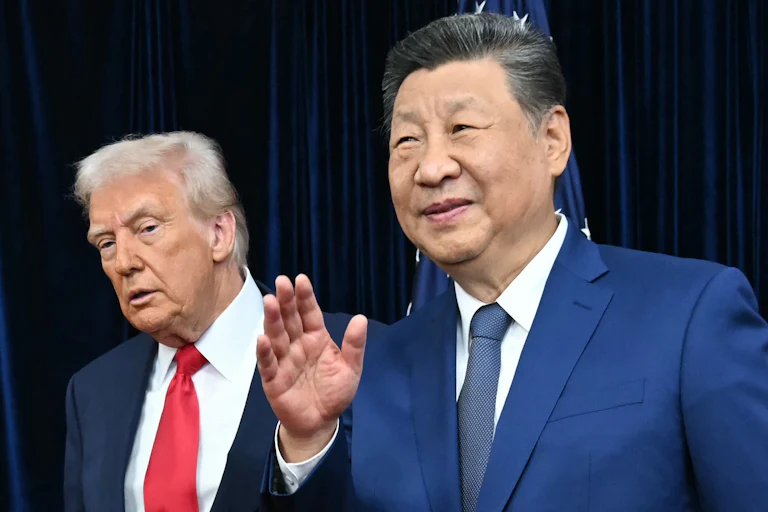
Donald Trump stands next to Chinese President Xi Jinping, who waves
ANDREW CABALLERO-REYNOLDS/AFP/Getty Images

More than one major U.S. adversary is assisting Iran.

China has been sharing intelligence with Iran since roughly two weeks into the war, a “well-placed,” unidentified source “with knowledge” of the situation told HUMINT’s Sasha Ingber. The military cooperation has been ongoing since at least March 10.

The intelligence includes the locations of U.S. troops and equipment. The information is largely GEOINT satellite imagery, which Ingber noted amounts to “targeting coordinates.”

It is not clear why China began distributing intel to Iran, or whether the information exchange was the source of harm to U.S. forces.

So far, more than 1,937 people have been killed in Iran, including dozens of political leaders, according to Al Jazeera. At least 13 U.S. soldiers have also lost their lives in the war, and more than 300 have been wounded. The attacks on U.S. soldiers began on March 12.

“Nothing provided to Iran by any other country is affecting our operational success,” White House spokesperson Olivia Wales told Ingber. But Wales did not deny the intel relay when asked.

In turn, China is receiving intelligence as to how the U.S. conducts its military operations in the current era, information that could provide critical insight should the two countries engage with one another over Taiwan.

“This is something that the White House has been made aware of,” Ingber said. “The person believes that this is one reason why President [Donald] Trump postponed his meeting with [Chinese President] Xi Jinping, which was supposed to happen at the end of March or early April.”

The meeting was rescheduled to May 16.

The revelation would make China the second prominent U.S. adversary to assist Iran in the devolving conflict. Several military officials told The Washington Post on March 6 that Russia shared targeting details with Iran, offering the locations of U.S. military assets such as warships and aircraft across the Middle East. Over the weekend, European allies warned that Russia was aiding Iran more than U.S. officials had let on. They underscored that America’s latest Middle East conflict is intertwined with Russia’s war against Ukraine, reported CBS News.

White House press secretary Karoline Leavitt insisted Monday that the conflict would be resolved in the coming weeks, though military officials have indicated that the war could rage for months.

Blue-Collar Democrat Officially Flips Trump District in Major Win

Republicans have lost yet another seat in Florida that should have been an easy win. All signs point to a GOP bloodbath in the midterm elections.

Lines of voters wait to cast their ballots.
Edward Linsmier/Getty Images

Democrats pulled off another upset in Florida, winning a normally very Republican state Senate district in West Tampa.

Navy veteran and electrical workers union leader Brian Nathan was declared the winner Monday of a special election in Senate district 14 by the Associated Press. Nathan defeated former state Representative Josie Tomkow despite the Republican rancher outspending him by a factor of about one to ten. Nathan won by 40,237 votes to Tomkow’s 39,832, a margin of about half a percentage point and just 855 votes, and there won’t be a recount.

The Senate seat was vacated when its previous occupant, Jay Collins, was appointed Florida’s lieutenant governor. Nathan’s campaign sought to downplay culture wars and instead elevate issues such as better paying jobs, affordable housing, and quality education. It’s the latest Democratic upset in Florida, which has swung solidly Republican in the Trump era.

In December, Miami Beach elected its first Democratic mayor in 30 years, and this month, Boca Raton chose its first Democratic mayor in 45 years. Just last week, Democrat Emily Gregory, a small business owner, also pulled off an upset win in the state House district where Trump’s Mar-a-Lago mansion is located.

The wins are part of a national trend in President Trump’s second term, with Democrats flipping 30 Republican seats in state legislatures across the country, according to The New York Times. While Nathan and Gregory will have to defend their new seats again in November, and Florida still retains Republican supermajorities in both of its legislatures, their wins still signal a rough midterm election for Republicans nationally in November. Trump escalating the war in Iran and continuing to sow economic chaos isn’t helping, either.

Karoline Leavitt Refuses to Say if Trump Put Land Mines in Iran

Karoline Leavitt brushed past the crucial question.

Karoline Leavitt speaks during a White House press briefing.
Alex Wong/Getty Images

White House press secretary Karoline Leavitt had nothing to say Monday to reports that the United States appears to be placing land mines in Iran. 

During a White House press briefing, Leavitt was questioned about recent reports that U.S.-made land mines had been spotted on the ground in Iran.

“Did President Trump sign off on using U.S.-made land mines in Iran?” one reporter asked.

“I don’t have any comment on that report today,” Leavitt said.

“Can you comment on whether they’re being used at all?” the reporter pressed. 

“I don’t have any comment on that,” Leavitt repeated, before quickly moving on. 

Bellingcat, an open-source intelligence organization, first reported last week that the U.S. military appeared to have scattered anti-tank land mines over Kafari, a village in southern Iran. The mines were discovered in a residential area two kilometers away from the entrance to Shiraz South Missile Base. So far, several people have been killed by the mines, according to Iranian media. 

Three experts told Bellingcat that the mines discovered near Kafari were from a U.S.-made Gator mines system. The United States is the only participant in the conflict known to possess these land mines, as they were developed after the U.S. stopped supplying arms to Iran. Central Command declined to comment on the report to The Washington Post.  

The United States has long resisted global demands to stop the use of anti-personnel land mines, which kill or injure civilians for years after conflicts are resolved.

In December, Defense Secretary Pete Hegseth reversed a Biden-era policy banning the use of land mines except on the Korean Peninsula. The previous administration had also taken efforts to destroy its stockpile of land mines that were not necessary for use in Korea. In 2024, the Biden administration sent land mines to Ukraine. Hegseth also ordered an end to the long-running U.S. Humanitarian Mine Action Program, through which the U.S. engages in demining efforts alongside other countries. 

Shortly after Donald Trump reentered office, his administration also shuttered the State Department office that handles weapons removal. Now the Pentagon appears to be making a mess that the United States has no ambition to clean up—with deadly results—and the White House won’t even comment on what’s happening.