Breaking News
Breaking News
from Washington and beyond

Louisiana’s Gun Laws Enabled Man Who Shot His Family Dead to Get a Gun

Shamar Elkins, who shot eight children dead and wounded two adults, had two prior criminal convictions.

People light candles at a vigil for the victims of a mass shooting in Shreveport, Louisiana
Brandon Bell/Getty Images
A candlelight vigil for the victims of a shooting in Shreveport, Louisiana.

The man who just committed the deadliest mass shooting in the U.S. in the past two years had a previous weapons conviction—so how did he get his hands on another gun?

Shamar Elkins, a 31-year-old father, shot and killed his seven children and their cousin Sunday in Shreveport, Louisiana. The victims’ ages ranged from three to 11, CNN reported. He also critically injured two women: his wife and the mother of the eighth child.

But in March 2019, three years after he finished a seven-year stint in the Louisiana Army National Guard, Elkins was arrested for firing a 9-millimeter handgun 300 feet away from the fence line of a school where children were playing outside, KTBS reported.

Elkins was charged with illegal use of weapons and carrying a firearm on school property. He pleaded guilty to the illegal weapons charge, and the second, more serious charge was dismissed. Elkins was placed on probation for 18 months but walked away without a permanent firearms ban.

Elkins was also charged with driving while intoxicated in 2016, CNN reported.

The state of Louisiana has a 10-year ban on firearm possession after certain felonies—crimes of violence, sex crimes, drug crimes, burglaries, for example—but not all felonies. The crime to which Elkins pleaded guilty sat beneath this legal threshold.

Because Elkins’s 2019 conviction for illegal weapons use only resulted in probation, his record fell short of the legal threshold for a permanent firearms ban under U.S. federal law, according to the International Business Times. Elkins was able to legally own a firearm again after his probation ended.
Republican Rep. Obsessed With Hating Muslims Unveils MAMDANI Act

Representative Chip Roy has introduced a sick bill undermining the First Amendment.

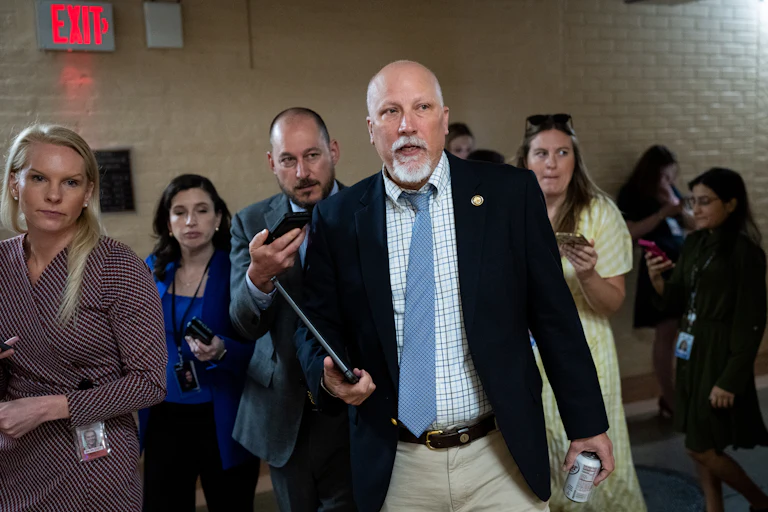
Representative Chip Roy he walks in the Capitol with a tablet in his hand as reporters trail him.
Bill Clark/CQ-Roll Call, Inc/Getty Images

Republican Representative Chip Roy is taking aim at free speech and freedom of religion, introducing a bill that would target immigrants who support “socialism, communism, Chinese communism, Marxism, or Islamic fundamentalism.”  

Roy calls his assault on the First Amendment to the Constitution the “MAMDANI Act,” after New York Mayor Zohran Mamdani, who was elected last year on a platform of democratic socialism. The legislation would make any “alien” who supports or has supported those ideologies “inadmissible, deportable, denaturalizable, and ineligible for naturalization.”

“By targeting the Red-Green Alliance, this legislation deploys new tools to fight back against the Marxist and Islamist advance that has devastated Europe and has now arrived on our doorstep, especially in my home state of Texas,” Roy told Breitbart

His office reportedly provided the right-wing website with a one-page summary of the bill, which cites “the very presence of Zohran Mamdani and those like him who champion Marxist ideologies” as enabling “the mass importation of Marxists and Islamists.”

Roy, who is running for Texas attorney general, has a long history of bigotry against Muslims. Late last month, Roy posted “No more Muslims” on X, drawing backlash from Muslims throughout his state. He has vocally opposed the East Plano Islamic Center’s planned housing development in the Dallas–Fort Worth metroplex, joining other Texas Republicans who warn of a “Sharia law” conspiracy. 

With Republicans having an ever-narrowing majority in the House, the bill is likely just symbolic, but it still shows the level of bigotry and Islamophobia present in the Republican Party and in Texas, even though the state has an estimated 400,000 Muslim residents. Roy will likely face zero consequences for his prejudices, as Republicans are increasingly embracing bigoted conspiracies and opposing constitutional rights.

Supreme Court to Hear Another Case Seeking to Destroy LGBTQ Rights

The Supreme Court will hear arguments on whether religious preschools can still receive state funding if they refuse to admit children of same-sex couples.

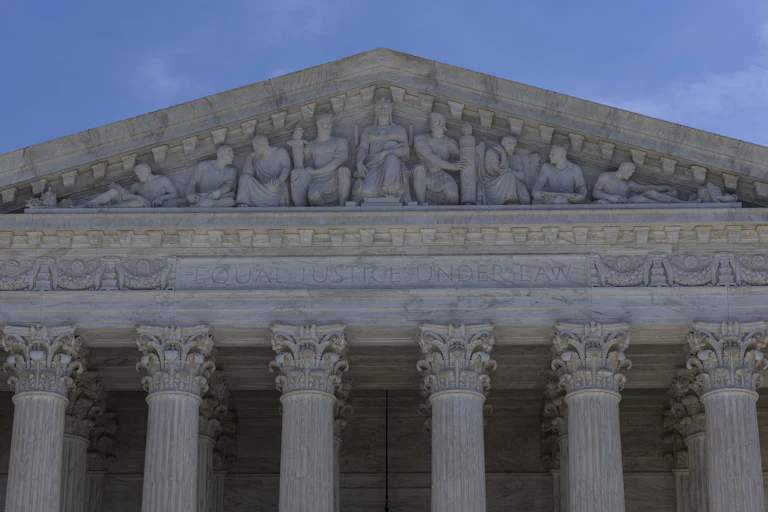
The Supreme Court building in Washington, D.C.
Mehmet Eser/Anadolu/Getty Images

The Supreme Court agreed Monday to hear a new religious rights case that could challenge a landmark 1990 decision.

Parents within the Catholic Archdiocese of Denver, which runs 34 preschools across Colorado’s capital city, have challenged a state mandate requiring church-affiliated preschools to admit children of same-sex couples in order to receive public funds. The church has claimed that the law oversteps its First Amendment rights, as it does not recognize same-sex relationships or transgender identities.

The legal precedent at stake was set during Employment Division v. Smith, in which the high court ruled that Oregon could deny unemployment benefits to a Native American fired for using peyote (a hallucinogenic plant illegal in the state), even though it was used for religious purposes.

Three of the court’s conservative justices have already said that the 1990 decision should be overturned, The Hill reported. The Supreme Court declined to directly take up that question, but is reportedly open to narrowing the precedent set nearly four decades ago.

Colorado’s mandate requires that preschools ensure “an equal opportunity to enroll and receive preschool services regardless of race, ethnicity, religious affiliation, sexual orientation, gender identity, lack of housing, income level, or disability.”

“The rulings below give hostile states a playbook for leveraging their vast and growing government funding programs to pressure religious schools and other ministries to abandon their religious practices or else be excluded from the arena,” the archdiocese’s lawyers at the Becket Fund for Religious Liberty wrote in court filings.

The Trump administration has already chimed in. Without hearing the preschools’ challenge, the admin filed an amicus brief in support of the church, urging the nation’s highest judiciary to take up the case. Trump officials wrote that the U.S. government holds a “substantial interest in the preservation of the free exercise of religion” and in the “enforcement of rules prohibiting discrimination by government funding recipients.”

It’s at least the second instance in which the ultraconservative Supreme Court has agreed to hear a challenge to Colorado’s LGBTQ protections since Donald Trump returned to office. In March, the judiciary sided with a therapist who claimed that the state’s conversion therapy ban discriminated against her based on her views.

Justice Ketanji Brown Jackson was the lone dissenter, and wrote at the time that the majority’s opinion “could be ushering in an era of unprofessional and unsafe medical care administered by effectively unsupervised healthcare providers.”

Trump Considers Bailing Out His Family’s Major Business Partner

The Trump administration seems open to giving a massive lifeline to the UAE—which the country says it may need thanks to the war in Iran.

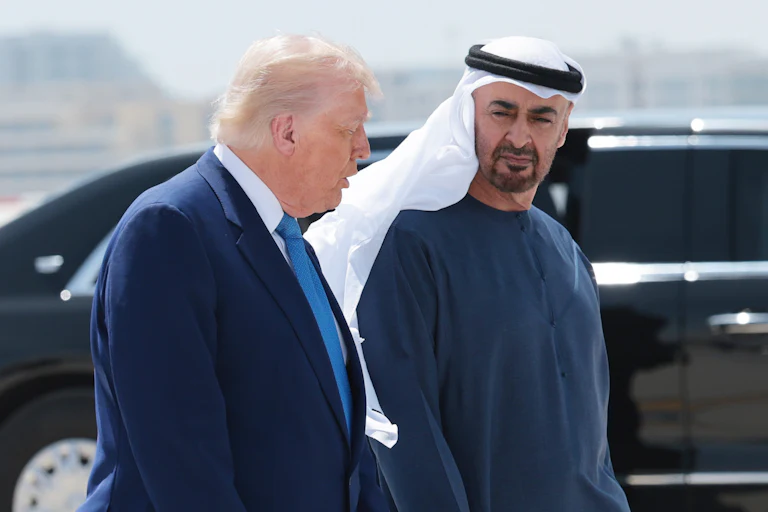
Pesident Donald Trump talks to UAE President Sheikh Mohamed bin Zayed Al Nahyan
Win McNamee/Getty Images
Donald Trump talks to Sheikh Mohamed bin Zayed Al Nahyan, the president of the United Arab Emirates, in Abu Dhabi, May 15, 2025.

The Trump administration is considering a bailout for the United Arab Emirates over economic losses sustained as a result of the U.S. war with Iran.

The Wall Street Journal reported Sunday that UAE officials are speaking with the White House about providing financial relief, such as a currency swap, if their economy takes an even bigger hit during the war. Khaled Mohamed Balama, governor of the UAE’s central bank, raised the issue in meetings with Treasury Secretary Scott Bessent last week. UAE officials reportedly have said their finances are OK for now, but they could need help in the future.

In an interview with CNBC Monday morning, Kevin Hassett, director of the National Economic Council, said that while he hadn’t spoken directly with Bessent about it, if the Strait of Hormuz remains closed and continues to hurt the UAE’s economy, the Trump administration would be willing to provide help.

“The UAE has been an incredibly valuable ally throughout this effort, and I am sure that the treasury secretary will make every effort to help them out should that be necessary,” Hassett said.

President Trump and his family have extensive business ties with the UAE. His son-in-law, Jared Kushner, took in about $200 million from the UAE’s sovereign wealth fund for his investment firm, Affinity Partners, in 2023. The next year, Kushner’s firm secured $1.5 billion from Abu Dhabi-based firm Lunate and Qatar’s sovereign wealth fund.

Last year, the UAE invested $2 billion into World Liberty Financial, the cryptocurrency venture run by Trump’s sons Eric and Donald Jr. Trump happened to lift export restrictions on computer chips at the same time. The Trump Organization is also building a luxury hotel in Dubai.

It’s interesting that administration officials are quick to say they would help out the UAE when other countries who have been hurt economically by the war and the Strait of Hormuz’s closure have been told that they’re on their own. It seems that Trump is certainly willing to help out those who are paying him.

Trump Secretly Overhauled Citizenship Agency to Focus on Deportations

One new team is focused entirely on “denaturalization.”

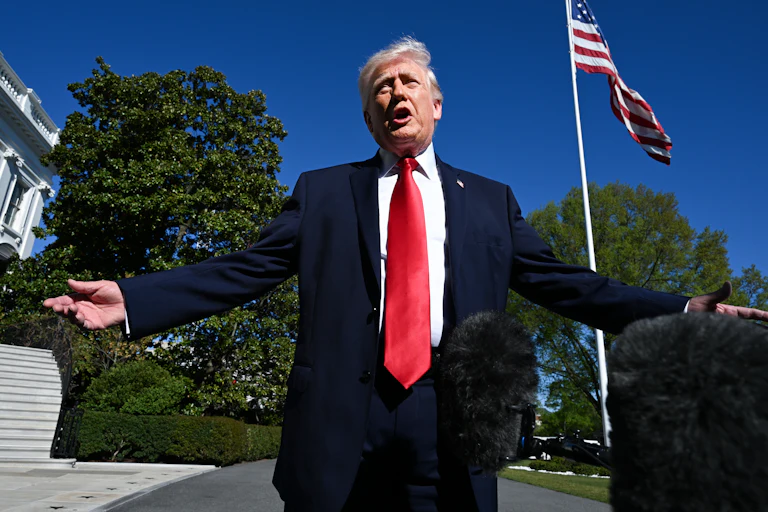
Donald Trump holds his arms out to the side and speaks while standing outside the White House
Matt McClain/Getty Images

Donald Trump’s administration has quietly transformed the agency overseeing legal immigration into yet another arm of the president’s mass deportation scheme.

An internal agency document reviewed by The New Yorker’s Jonathan Blitzer revealed that the U.S. Citizenship & Immigration Services (USCIS), the agency that manages visas, green cards, naturalizations, and other aspects of the legal immigration process, has created a new “Tactical Operations Division.”

The roughly 80-person division consists of teams focused on denaturalization, “refugee re-vetting,” fraud detection and national security, and LPR operations, where officials are tasked with finding cases where they can rescind legal permanent residency status, according to Blitzer.

The division is overseen by Danny Andrade, who was selected to run the newly opened USCIS field office in Nashville.

Sarah Pierce, a former policy analyst for USCIS, wrote on X Monday that the restructuring comes as the agency “lost thousands of employees last year.”

“Its application backlog is at a record high—nearly double its 2020 level. And its Fraud Detection division is larger than ever. Yet [USCIS Director Joseph Edlow] keeps finding new ways to shift agency resources from adjudication to deportation,” Pierce wrote.

UCIS’s workforce shrank 11 percent last year, as the agency has become a site for immigration arrests. In September, the Trump administration passed a new rule allowing USCIS to hire special agents for the purpose of making arrests. And the agency’s latest job listings are in search of so-called “Homeland Defenders.”