Breaking News
Breaking News
from Washington and beyond

Trump Threatens Companies That Seek Tariff Refunds They’re Owed

The president is sending a clear message to corporations as tariff refunds become available.

Donald Trump speaking behind his desk in the Oval Office of the White House
Tasos Katopodis/Getty Images

Donald Trump is still not happy that his tariffs were struck down by the Supreme Court, and he said Tuesday that he would “remember” the companies that don’t seek refunds.

The president spoke to CNBC’s Squawk Box over the phone in a morning interview, and anchor Andrew Ross Sorkin asked him about large companies, such as Apple and Amazon, that haven’t sought tariff reimbursements because they were worried about “offending” the president.

“Would you find it offensive for them to try to collect a refund?” Sorkin asked Trump.

“I think it’s brilliant if they don’t do that. I actually think if they don’t do that, they got to know me very well. I’m very honored by what you just said. If they don’t do that, I’ll remember them,” Trump said, before going off on a tangent about the Supreme Court and birthright citizenship.

Trump’s words could be considered as a threat to companies that do seek refunds for the tariffs they paid, as would be their right under the Supreme Court’s ruling. Trump has praised companies whose executives have cozied up to him or donated large amounts of money to one of his personal projects, and has attacked those that he sees as disloyal to him or his agenda.

The president is explicitly saying that if businesses don’t ask for the money that they are legally owed for the tariffs, they will be in his good graces and can expect positive treatment from the White House. That is highly unethical and, from any other president, would be met with a huge backlash from Congress and media commentators. But since Trump has basically normalized corruption, he’s not likely to face any consequences.
Trump Fed Chair Pick Says They Disagree About How Hot He Is

Donald Trump has said Kevin Warsh looks like he’s out of “central casting.”

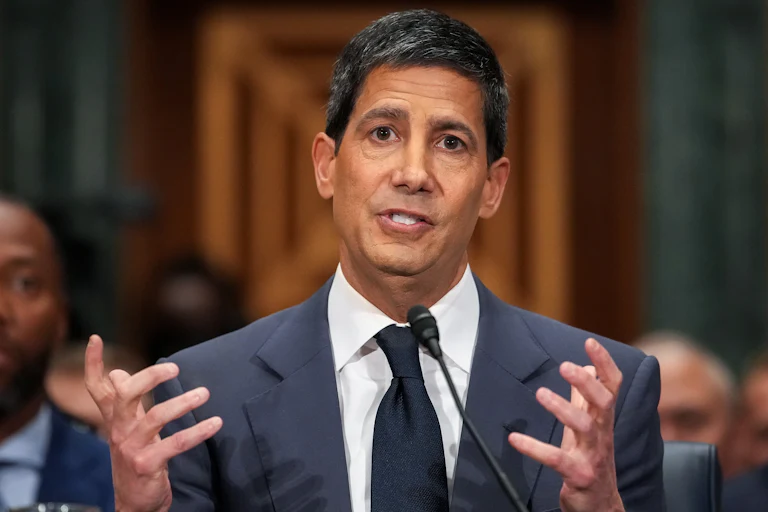
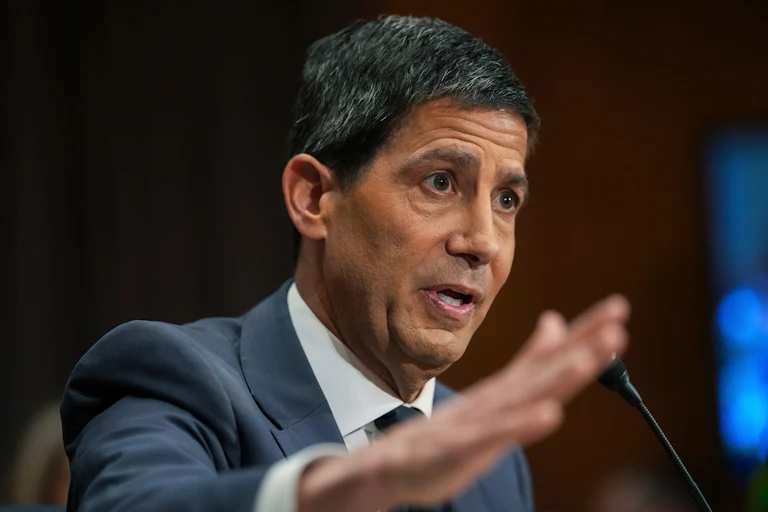
Federal Reserve chair nominee Kevin Warsh gestures and speaks during his Senate committee confirmation hearing
Andrew Harnik/Getty Images)\

Kevin Warsh, the man Donald Trump tapped to run the Federal Reserve, told Congress Tuesday that there’s only one detail that he and the president disagree on.

In the midst of a heated exchange with Senator Elizabeth Warren over his previous pledges to “stand up to Trump,” Warsh failed to name a single line item from the MAGA agenda with which he disagreed.

“Well, senator, the Federal Reserve in recent years has wandered outside of its remit, wandered into other areas,” said Warsh, dodging Warren’s question entirely.

“Just one. Just one little place where you disagree with Donald Trump,” pressed Warren.

“Well, I do have a disagreement, actually, senator, with the president. I think even this morning he said he thought that I was out of central casting. I think central casting—I’d look older, grayer, and maybe show up here with a cigar of sorts,” Warsh smirked.

“Quite adorable, but you know we need a Fed chair who is independent. That’s the only way we preserve the independence of the Federal Reserve,” Warren bit back. “If you can’t answer these questions, you don’t have the courage and you don’t have the independence.”

Maryland Senator Chris Van Hollen similarly questioned Warsh’s chutzpah, citing his monetary policy record on the basis that Warsh’s positions on interest rates “seems to shift with what’s politically convenient, rather than based on sound economic judgment.”

Warsh’s name was a surprise mention late last year when Trump first began floating his replacements for Jerome Powell. Despite railing against Powell’s inflation rates for the better part of his second term, Trump tapped Warsh, another well-known inflation hawk who cut his teeth during the George W. Bush administration and later during the fallout of the Great Recession. But the 56-year-old financier has since changed his tune on the matter and, in doing so, has caught the president’s attention.

Trump has already made his expectations for Warsh crystal clear. Speaking with CNBC earlier Tuesday, Trump said that he would be disappointed if Warsh did not cut interest rates.

Warsh, in turn, made his loyalty clear during his Senate hearing. He refused to acknowledge that Trump lost the 2020 presidential election to Joe Biden, in another apparent attempt to elevate himself to the Trump administration.

Rhode Island Senator Jack Reed ripped Warsh for his transparent affinity for Trump, directly questioning him about Trump’s comments on the business network. Warsh responded that he would maintain independence despite Trump’s pressure campaign to cut rates. Later, in an exchange with Senator John Kennedy, Warsh said that Trump had never asked him to “predetermine, commit, fix, decide on any interest rate decision in any of our discussions.”

“Nor would I ever agree to do so,” Warsh insisted.

Trump’s Fed Pick Refuses to Answer One Easy Question on Epstein

Kevin Warsh, who has appeared in the Epstein files, had a tough time explaining all his undisclosed investments.

Federal Reserve chair nominee Kevin Warsh testifies in the Senate
Andrew Harnik/Getty Images
Federal Reserve chair nominee Kevin Warsh testifies in the Senate, on April 21.

President Donald Trump’s nominee to chair the Federal Reserve, Kevin Warsh, tried to dodge questions Tuesday about his financial ties to convicted sex offender Jeffrey Epstein.

At his confirmation hearing before the Senate Banking Committee, Senator Elizabeth Warren asked Warsh about more than $100 million in investments that he has “refused to disclose to ethics officials and the public,” specifically assets held in vehicles called “THSDFS LLC” and the “Juggernaut Fund.” Warren directly asked the Fed chair nominee whether any of his assets had to do with President Trump or his family, the Chinese government, money laundering, or Jeffrey Epstein.

Warsh refused to answer, saying only that he would sell those investments if he was confirmed. Warren pressed further, asking specifically if Warsh would tell the committee if he had financial ties to Epstein.

“Are you refusing to tell us if you have investments, for example, in vehicles set up to advance Jeffrey Epstein? Is that what you’re telling us—you just won’t tell us?” Warren asked.

Warsh again didn’t answer the question.

“Senator, what I’m telling you is that those assets that you represent at Juggernaut will be sold if I’m confirmed before I take office and sign the oath of office,” Warsh said.

Warren then asked if he would “at least disclose how you would plan to disclose and divest these secret assets,” citing a scenario in which a billionaire looking for inside information from the Fed would cut him a check for $100 million. Warsh still would not answer the question, instead saying that he had come to an agreement with the Office of Government Ethics to divest his assets.

Warsh’s name has popped up a couple of times in the government’s Epstein files. While that doesn’t implicate him in any of Epstein’s crimes, it does show that they traveled in the same circles. Warsh, who would become the wealthiest Fed chair in more than 100 years if confirmed, is married to billionaire heiress Jane Lauder, granddaughter of Estée Lauder and daughter of Republican donor Ronald Lauder. Is Warsh being evasive because he’s trying to dismiss those connections, or is it because he actually has assets connected to the notorious criminal?

Trump Insists He Would Have Won War He Dodged

Donald Trump insisted he would have ended the Vietnam War in five months.

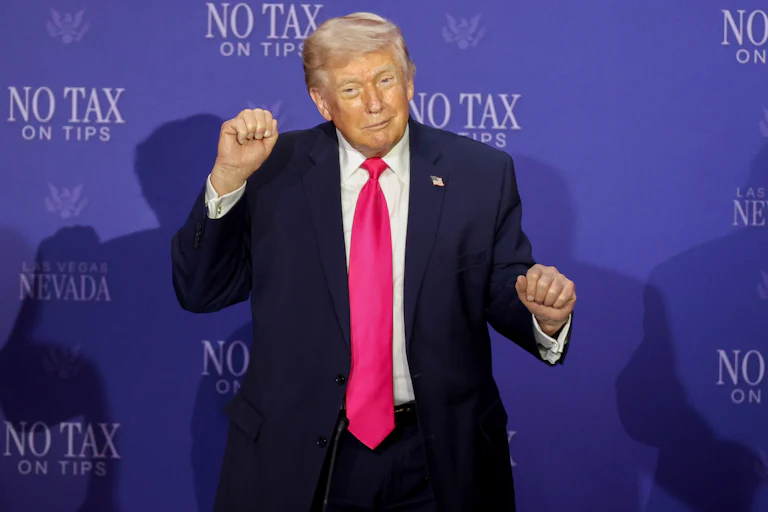
Donald Trump dances
Ian Maule/Bloomberg/Getty Images

President Donald Trump claimed Tuesday it would’ve taken him just five months to end a war he refused to fight in.

Speaking on CNBC’s Squawk Box, Trump bragged about how quickly he ended the war in Iran—shortly after threatening to resume attacks if things don’t go his way in the as-yet unstarted peace talks.

“And I just looked at a little chart, World War I, four years and three months. World War II, six years. Korean War, three years. Vietnam, 19 years. Iraq, eight years. I’m five months. OK, five months,” Trump said. “I would have won Vietnam very quickly. I would have, if I were president, I would have won Iraq in the same amount of time that we won because, essentially, we won here.”

The U.S. formal involvement in the Vietnam War wasn’t actually 19 years long—it was more like eight. But how can one expect Trump to know something like that, when he wasn’t actually there? The president, son of a rich real estate mogul, evaded the military draft five times.

And anyway, Trump clearly has loose definitions for what actually constitutes a war. The president seems to believe war starts and ends when he says so, and then starts again and ends again, and so on ad infinitum.

Hegseth Ends Flu Vaccine Mandate—Ensuring Everyone’s About to Get Sick

Defense Secretary Pete Hegseth says a flu vaccine requirement is “absurd.”

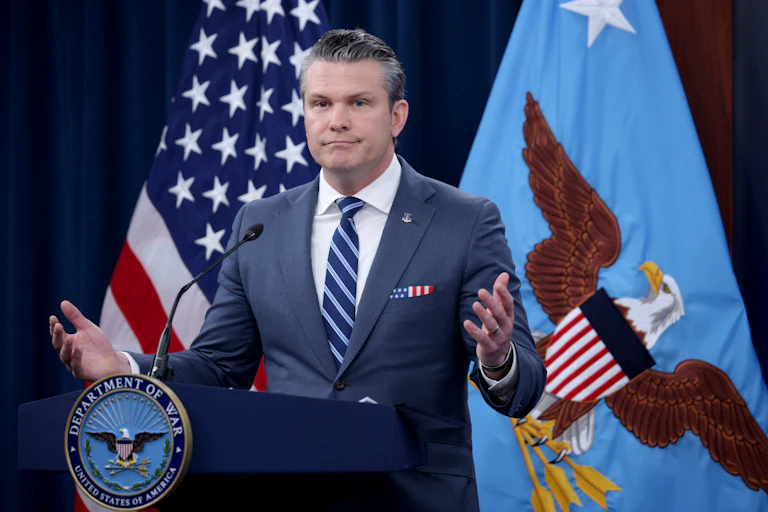
Defense Secretary Pete Hegseth shrugs while standing at a podium
Alex Wong/Getty Images

Defense Secretary Pete Hegseth doesn’t think soldiers living and fighting together in close quarters or aboard warships need to take the flu vaccine.

“Under the disastrous Biden administration, this Pentagon waged an unrelenting war on our warriors on many fronts, including when it came to denying them simple medical autonomy, and the freedom to express their religious convictions,” Hegseth said in a video statement posted on Tuesday morning. “Under President Trump … we’re seizing this moment to discard any absurd, overreaching mandates that only weaken our war fighting capabilities. In this case, this includes the universal flue vaccine, and the mandate behind it.”

The announcement was widely criticized by Democrats for the timing, the level of priority attached to it, and the obvious disregard for the history of influenza in the U.S. military. During World War I, an estimated 45,000 U.S. soldiers died from influenza. Now, Hegseth is proudly eschewing a vaccine that is known to be an effective way to avoid getting the flu—something servicemembers, especially those stationed on warships in the Middle East—would likely appreciate.  

“Nothing says military readiness like sick soldiers,” Democratic Representative Rosa DeLauro said

This story has been updated.