Breaking News
Breaking News
from Washington and beyond

Judge Deals Two More Blows to Trump’s War on DEI in Blue States

Trump’s attempt to block federal grants would have affected things like disaster response.

Firefighter attempts to put out a fire
Myraneli Fabian/Anadolu/Getty Images
A firefighter uses a torch while battling a wildfire in Simi Valley, California, on May 18.

A federal judge handed President Trump two new losses in his war against whatever he perceives as diversity, equity, and inclusion.

U.S. District Judge William Orrick issued a preliminary injunction to freeze Trump’s effort to place anti-DEI conditions on federal grants in multiple cities in Oregon and California, ruling that the move overstepped Congress’s power of the purse.

Grants at risk due to Trump’s move include those that deal with assistance for victims of domestic violence and human trafficking, disaster relief efforts, terrorism preparedness, and “a range of initiatives designed to expand and strengthen services for crime victims, including funding specialized assistance for children, elders, and victims of technology-facilitated abuse.”

“Plaintiffs maintain that ‘[n]othing in the Constitution or federal statutes authorizes Defendants to impose the Challenged Conditions, or anything of the kind, on funds administered through congressional grant programs,’” Orrick wrote. “I agree.”

This is at least the third time in recent weeks that Trump has had an anti-DEI measure temporarily struck down by the courts.
Pete Hegseth Overturns Review of Pilots in July 4 Stunt

Eight pilots flew Apache helicopters over a beach in South Carolina.

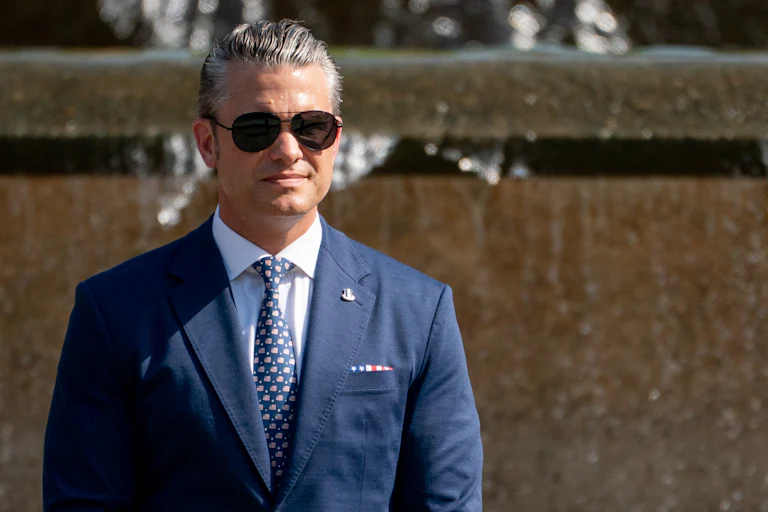
Defense Secretary Pete Hegseth stands in Malcolm X Park during a press conference
Stefani Reynolds/Bloomberg/Getty Images

Defense Secretary Pete Hegseth cut off a safety investigation into eight National Guard pilots who were suspended after they used military helicopters to buzz a crowded beach.

Crowds gathered to celebrate the Fourth of July on the coast of South Carolina were treated to a “Salute to the Shore” demonstration, featuring low-flying Apache helicopters manned by members of the South Carolina Army National Guard. But the moment that the officers landed, they all received notice that they had been suspended, ABC15 reported.

In a statement, Maj. Lisa Allen confirmed that the officers were suspended pending an investigation into possible safety violations that occurred during their demonstration. She said she could not provide further details or speculate on any specific allegations, but she stressed that the suspension was “not punitive.”

“A temporary suspension from flight duties is a routine administrative measure whenever a flight profile is under review,” she said.

MAGA was abuzz over the fact that no reason had been given—and it caught the eye of Hegseth.

“We’ll fix this. Carry on, Patriots,” Hegseth wrote in a post on X Thursday.

The next day, Pentagon spokesman Sean Parnell announced that “effective immediately, the suspension of all involved South Carolina pilots has been lifted.”

This isn’t the first time Hegseth has personally intervened to get officers out of trouble. He previously reinstated two suspended pilots who’d decided to fly their helicopters around Kid Rock’s house during a No Kings protest in March.

Gay Republican Sues Members of His Own Party Over Homophobic Slurs

The Republican candidate for Wyoming’s only House seat says he’s shocked by the harassment he’s facing from his own party.

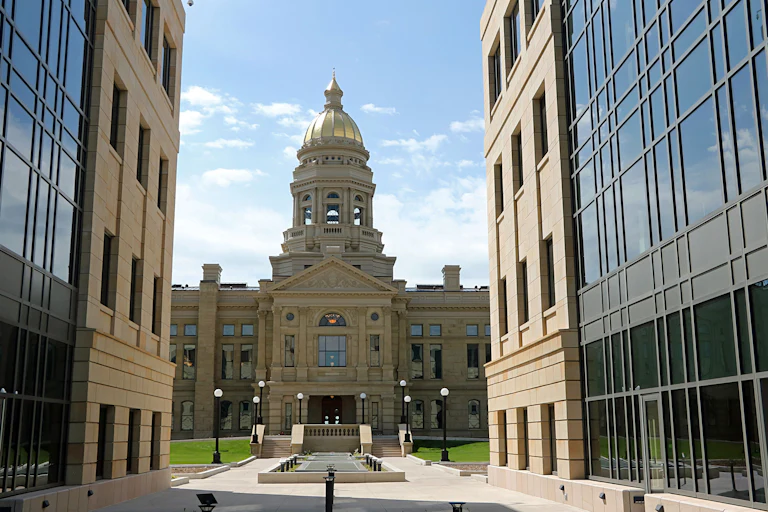
Wyoming state Capitol building
Don and Melinda Crawford/UCG/Universal Images Group/Getty Images
Wyoming state Capitol

Reid Rasner, an openly gay Republican running for Wyoming’s lone House of Representatives seat, is suing members of his own party for defamation stemming from homophobia.

Semafor reports that Rasner is pursuing a case against former Wyoming State Senator Austin “Kit” Jennings, who allegedly pushed rumors that Rasner committed sexual misconduct. The rumors began after Rasner garnered national attention in 2025 for making a personal $47 billion bid to buy the social media site TikTok, and got worse from there.

Rasner, who came out when he was 20, is also settling a case against an Iowa man who repeatedly called him a “pedophile” under his campaign’s Facebook posts. The man claims that his accusation was based on “multiple social media posts and news articles accusing Reid Rasner of serious sexual misconduct,” but didn’t specify any specific posts.

Meanwhile, Wyoming Secretary of State Chuck Gray, who is running against Rasner in the Republican primary, piled on and issued a poll telling respondents that Rasner “married his gay husband in New York.” That poll showed Rasner initially behind Gray by single digits, but losing support after voters were told about his sexuality.

“I’ve never experienced anything like this in my entire life,” said Rasner, 42, to Semafor. “This just isn’t the Wyoming I knew or thought I knew. The state needs to come to terms with the hate and ignorance that’s fueled death threats and violence against me, all because of my sexuality.”

“Everyone told me: Don’t file lawsuits,” Rasner said. “I should have filed them on Day One.”

According to Rasner, certain candidate forums have chosen not to invite him after the rumors started, including one held by the Wyoming Family Alliance, which opposes same-sex marriage.

Even with gay people in President Trump’s administration, such as Treasury Secretary Scott Bessent, the Republican Party still has a lot of homophobia. The “pedophile” and “groomer” slurs actually began as buzzwords for conservatives to attack the LGBTQ community. In a deep-red state like Wyoming, this reaction to Rasner’s campaign is sadly not that surprising.

JD Vance Brags About Cushy New Life as Americans Struggle With Costs

The vice president is thrilled to have private chefs and a new ability to skip TSA lines.

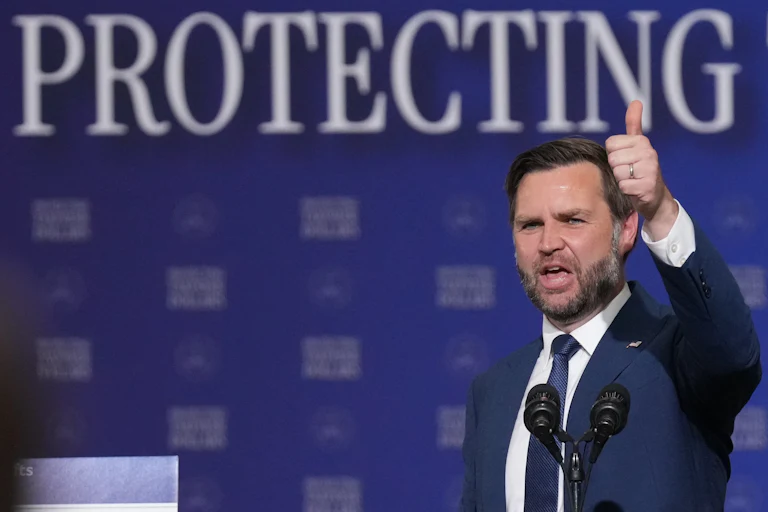
Vice President JD Vance gives a thumbs up while speaking at a microphone
Mark Schiefelbein/Getty Images

American wages have stagnated, while the cost of living—affected by rising inflation and the unending Iran war—continues to climb. Yet the vice president has not been shy about the fact that he is, comparatively, living very large.

JD Vance joined Dirty Jobs star Mike Rowe’s podcast Thursday to chat about faith, family, and the future of America. But amid the pair’s sprawling conversation, the vice president offered a bit of insight into how his new role has offered him a completely new lifestyle.

“My life is—dude, totally transformed,” Vance said, eliciting laughter from Rowe.

Vance earns a base official salary of $235,100 per year as America’s second-in-command, but of course the accoutrements of his high-powered office provide a litany of other perks.

“I don’t go to the grocery store anymore. People go to the grocery store for me. Most of my meals—like, when I cook a meal—I love to cook, actually. Big baker. I like to cook for my kids as a special occasion, but I don’t have to cook anymore because I have an army of people willing to cook my food,” he continued.

“My life is so weird. I fly around on a 757, no more TSA lines for me and the kids. It’s so weird, but it can become the sort of thing that if you internalize it, you start to become an entitled asshole,” Vance said.

Maybe that executive branch dissonance could explain why Donald Trump claimed that Americans need to provide identification in order to go to the grocery store, or why the president has repeatedly insisted that groceries is “an old-fashioned word.”

“We have a term ‘groceries,’” Trump told the leaders of the United Arab Emirates last year. “It’s an old term, but it means basically what you’re buying, food, it’s a pretty accurate term but it’s an old-fashioned sound.”

Affordability is the chief concern for Americans heading into the midterm elections, according to an April Gallup poll. In January, a New York Times/Siena poll found that 65 percent of American voters felt that a middle-class lifestyle was out of reach, while 77 percent said that a middle-class life was more difficult to attain than it was a generation before. All in all, a majority of Americans feel that they’ve been priced out of a broad range of necessities, including education, health care, and having a family.

Those sentiments have surely only been exacerbated in the months since. The cost of oil and gas has skyrocketed since the onset of the Iran war; utility bills have continued to climb; health insurance premiums have drastically outpaced the growth of employee paychecks; and homeownership seems like an increasingly unattainable dream due to low market availability and astronomical prices.

Meanwhile, the White House has repeatedly detached itself from efforts that would aid America’s middle and lower classes. Case in point: Trump’s decision Friday morning to divorce his office from the bipartisan housing bill. Trump did so in another futile attempt to force through his unpopular voter ID bill, the SAVE America Act.

Minnesota Set to Lose Massive Wind Energy Projects Thanks to Trump

Losing projects like this doesn’t just hurt the climate—it also affects jobs and the economy as a whole.

Wind turbines
Al Drago/Getty Images
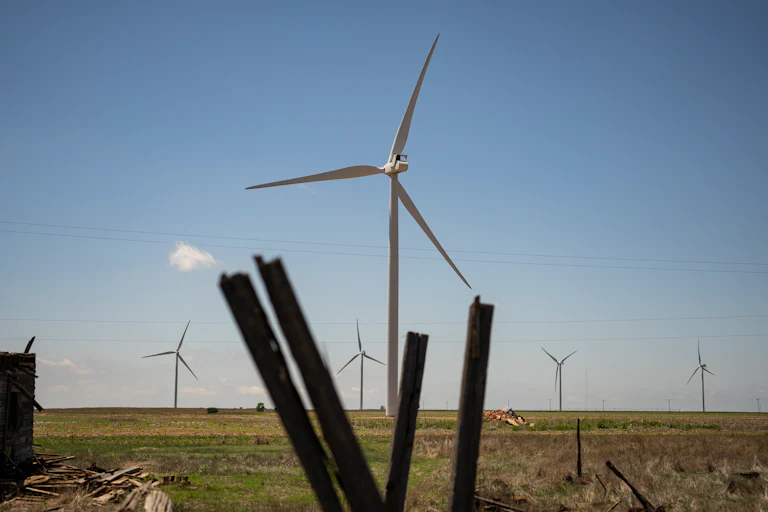
A wind farm in Clarendon, Texas

President Trump’s attacks on wind power could have a devastating effect on Minnesota. 

The state has four wind energy projects that could bring 1,200 construction jobs, 4,400 other jobs connected to the projects, and over $168 million in economic impacts to the state, the Minnesota Reformer reports, citing the progressive think tank North Star Policy Action. 

The Trump administration has stopped the Department of Defense from completing legally mandated national security reviews of proposed wind farms, basically halting their construction across the country. In total, over 250 such projects have been stalled, four of them in the Gopher State, with $1.6 billion in investments behind them. 

“Minnesota has spent decades building one of the strongest wind energy economies in the country, and the federal government is now actively dismantling that through a permitting process turned into an indefinite roadblock,” said Aaron Rosenthal, North Star Policy Action’s research director, to the Reformer.

The St. Paul-based think tank’s report points out that the four wind projects would have a combined output of 1,119 megawatts, more than that of Xcel Energy’s Prairie Island nuclear power plant in the state. Minnesota has a mandate to have 100 percent carbon-free electricity in the state by 2040, and these wind projects would be a big step forward. 

Under President Biden, wind power got a big boost across the U.S., with the 2022 Inflation Reduction Act bringing billions of dollars of federal loans, tax credits, and grants. But Trump has a long-standing hatred of wind power going back to a bitter fight years ago against wind turbines built near his Turnberry golf resort in Scotland

On the first day of his second term as president, Trump signed an executive order freezing wind power permits both on- and off-shore. That lasted until June this year, when the administration abandoned its effort to defend the order in court. But Secretary of the Interior Doug Burgum said last year that he would have to personally approve any federal solar and wind permits, stalling national projects.  

“We have not approved one windmill since I’ve been in office. And we’re going to keep it that way. My goal is to not let any windmill be built,” Trump said in March. To satisfy the president’s vendetta, the federal government has been buying out developers and companies seeking to build wind projects. 

Wind power is abundant in the U.S., especially in the Midwest, and doesn’t produce carbon emissions or pollution. The costs to set up wind farms are rapidly dropping, and it only takes 6 to 9 miles per hour—a gentle breeze—to get turbines to spin and generate electricity. But to the anti-green Trump administration, anything that isn’t oil and gas should be shut down, even if it means higher electricity bills