Trump Openly Mulls Worst-Case Iran Scenario for the First Time
Donald Trump admitted his plan could totally fail.

The Iran war could be entirely in vain, according to Donald Trump.
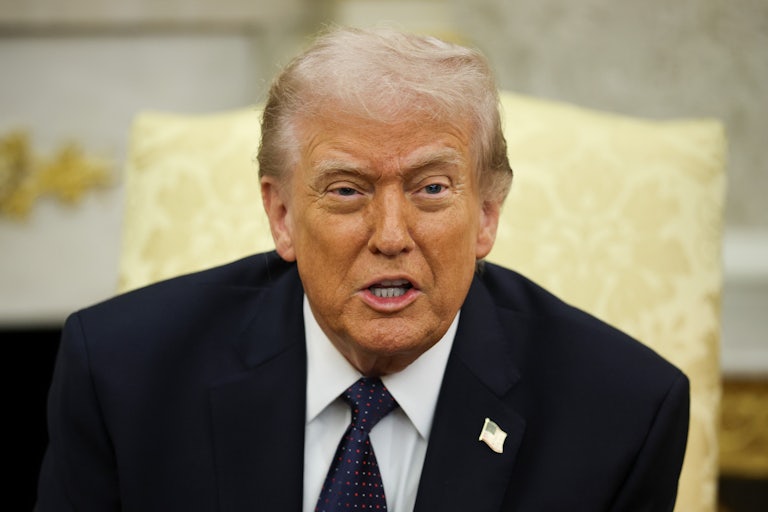
Seated beside German Chancellor Friedrich Merz at the White House on Tuesday, Trump spelled out that the worst-case scenario for U.S. involvement in Iran could see another authoritarian regime taking control of the country.
“What’s the worst-case scenario that you have planned for in Iran?” asked a reporter.
“Well, I don’t know if there’s a worst case,” Trump said. “We have them very much beaten militarily, from a military standpoint. They’re still lobbing some missiles, at some point they won’t even be able to do that because we’re hitting all of their carriers and missile stock.”
Staring at the ground, Trump took a moment to think. Then he spoke again.
“I guess the worst case would be we do this and then somebody takes over who’s as bad as the previous person, right? That could happen,” Trump said, leaning toward Merz. “We don’t want that to happen. That would probably be the worst.
“You got through this, and then in five years you realize you put somebody in who was no better. So we’d like to see somebody in there who would bring it back to the people,” Trump added.
Just one in four Americans say they support the war in Iran, according to a Reuters/Ipsos poll published Monday. In the same survey, 56 percent of respondents said they believe Trump is too quick to use military force as a foreign policy solution.
That could very well be true, considering that the White House has yet to declare an official message—or a plan—for America’s involvement in the Middle East conflict. In fact, the White House has yet to even seek Congress’s approval for attacking Iran.
Per Trump’s own estimates, the war could rage for a few days, or several weeks, or “forever.” He told The Washington Post that the aim of the war would be “freedom for the people” of Iran, then told The New York Times that he had “three very good choices” for who could take control of Iran, and then told ABC News that the “attack was so successful it knocked out most of the candidates” for leadership.
The Wall Street Journal reported Monday that Trump initially stated that the Iranian mission was about “threat reduction,” then about “getting a deal,” then about “regime change” again. “And that was just on Sunday,” reported the paper’s Alex Ward.
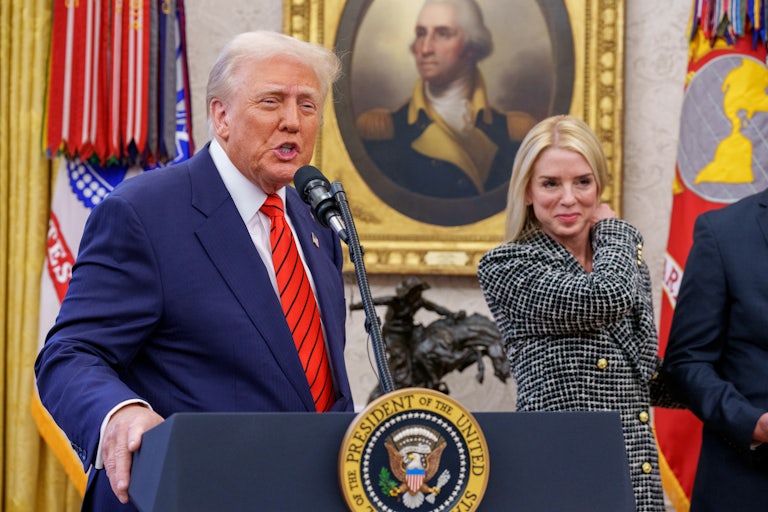
Trump spoke about some objectives for the war during a Medal of Honor ceremony on Monday, but as of Tuesday afternoon has yet to directly address the American people regarding the war.
That’s a major departure from his predecessors who sat at the Resolute Desk, who universally recognized the need to immediately justify military intervention to the public. Woodrow Wilson spoke to the nation the same day he asked Congress to declare war against Germany during World War I, while Franklin D. Roosevelt gave a national address hours before the country declared war during World War II.
So far, six U.S. soldiers have been killed in the conflict, as have more than 20 Iranian officials, including Supreme Leader Ayatollah Ali Khamenei. Eighteen American soldiers have also been seriously injured. More than 700 Iranian civilians have been killed, including 176 children, dozens of whom were at a girls’ school in the country’s south.