Breaking News
Breaking News
from Washington and beyond

Army Suspends Crew in Weird Helicopter Flyover at No Kings Protest

The helicopter then flew by Kid Rock’s house in Tennessee.

People protest against Donald Trump’s administration in Nashville, Tennessee
Seth Herald/Anadolu/Getty Images
No Kings protesters in Nashville, Tennessee

The Army has suspended the aircrew that flew over Kid Rock’s house during a No Kings protest on Saturday.

Two Apache attack helicopters hovered outside the MAGA musician’s 27,000-square-foot Tennessee mansion, a replica of the executive estate that Rock has dubbed the “Southern White House.” In a bizarre exchange recorded by someone at Rock’s house, the “Bawitdaba” singer saluted the wayward copter.

“This is a level of respect that shit for brains Governor of California will never know,” Kid Rock, whose real name is Robert Ritchie, captioned the clip on X. “God Bless America and all those who have made the ultimate sacrifice to defend her.”

A second video posted to Ritchie’s account revealed that two helicopters had passed by his wannabe presidential property.

The Army identified the aircraft as AH-64 Apache helicopters that were operating around Nashville. A military spokesperson told NBC News Monday that the aircraft flew from Fort Campbell, Kentucky, to the Nashville area.

“Army aviators must adhere to strict safety standards, professionalism, and established flight regulations,” the Army said in a statement Monday. “An administrative review is underway to assess the mission and verify compliance with regulations and airspace requirements.”

The Army noted that it would take “appropriate action” if any violations are uncovered.

A spokesperson for the 101st Airborne Division told NBC News that the helicopters’ presence was “entirely coincidental” with the No King demonstrations taking place across the country on Saturday.

Ritchie, a country rapper from Detroit, has become an increasingly prominent figure in the MAGA scene in recent years. He played at the Republican National Convention in 2024, was present in the White House as Donald Trump signed an executive order to curb ticket scalping in March 2025, and headlined Turning Point USA’s counterprogramming to Bad Bunny’s Super Bowl halftime show in February.

He’s also gotten close with Health Secretary Robert F. Kennedy Jr., playing a prominent role in a series of agency-sponsored “Make America Healthy Again” adverts that featured Kennedy and Ritchie chugging milk and swimming in a pool with pants on.
Trump Fumes as Judge Blocks White House Ballroom Construction

A federal judge appointed by George W. Bush has ruled that the construction on Trump’s beloved ballroom “has to stop!”

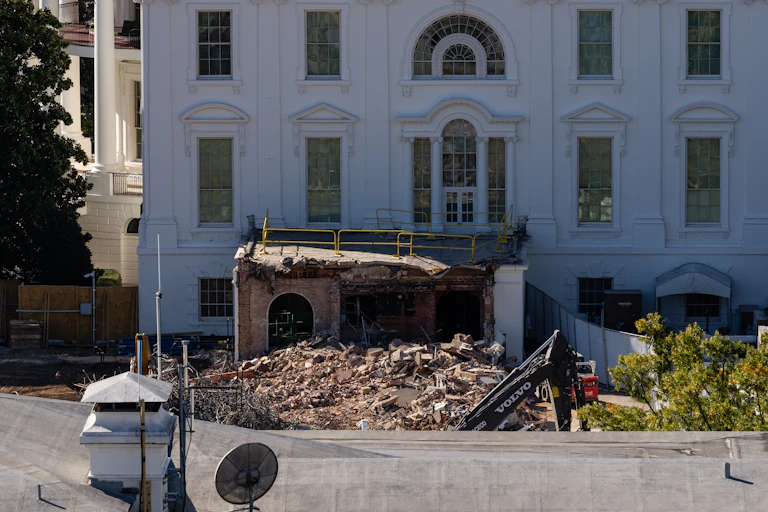
The destroyed East Wing of the White House
Eric Lee/Getty Images
An excavator works to clear rubble after the East Wing of the White House was demolished on October 23, 2025, in Washington, D.C.

A federal judge has temporarily blocked President Trump’s $400 million White House ballroom project after a lawsuit from the National Trust for Historic Preservation—which argues that Trump acted beyond his authority when he demolished the East Wing to build said ballroom.

The Trust was awarded a preliminary injunction by U.S. District Judge Richard Leon, suspending the project until the lawsuit is decided.

“The President of the United States is the steward of the White House for future generations of First Families. He is not, however, the owner!” Leon, who was appointed by former President George W. Bush, wrote. “Unless and until Congress blesses this project through statutory authorization, construction has to stop!”

Enforcement of the ruling is paused for two weeks, while awaiting a probable appeal from the Trump administration—but Leon warned that “any above-ground construction over the next fourteen days that is not in compliance” with his ruling “is at risk of being taken down depending on the outcome of this case.”

Trump, incensed, took to Truth Social to rail against Leon’s decision.

The National Trust for Historic Preservation sues me for a Ballroom that is under budget, ahead of schedule, being built at no cost to the Taxpayer, and will be the finest Building of its kind anywhere in the World. I then get sued by them over the renovation of the dilapidated and structurally unsound former Kennedy Center, now, The Trump Kennedy Center (A show of Bipartisan Unity, a Republican and Democrat President!), where all I am doing is fixing, cleaning, running, and ‘sprucing up’ a terribly maintained, for many years,” Trump wrote. “Yet, The National Trust for Historic Preservation, a Radical Left Group of Lunatics whose funding was stopped by Congress in 2005, is not suing the Federal Reserve for a Building which has been decimated and destroyed, inside and out, by an incompetent and possibly corrupt Fed Chairman.”

Trump’s ballroom was initially projected to cost $200 million, and the price has since ballooned to double that.

This story has been updated.

Federal Judge Saves NPR and PBS, Delivers Massive Blow to Trump

A judge says President Trump violated the First Amendment with his executive order targeting the two media organizations’ funding.

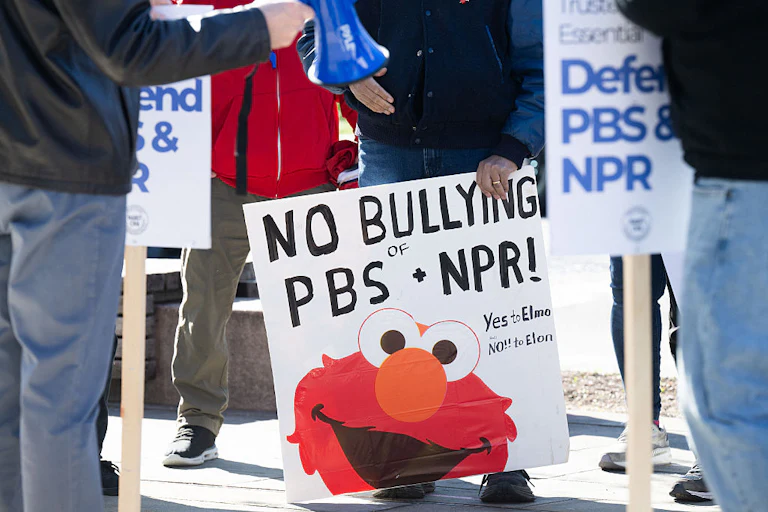
Someone holds a sign that says "No Bullying of NPR + PBS" featuring an image of Elmo.
SAUL LOEB/AFP/Getty Images
A rally calling on Congress to protect funding for PBS and NPR in Washington, D.C., on March 26

A federal judge on Tuesday blocked the Trump administration from defunding National Public Radio and the Public Broadcasting Service. 

U.S. District Judge Randolph Moss ruled that President Trump’s executive order last May to end federal funding for the two public broadcasting networks is illegal and unenforceable, saying that the First Amendment to the Constitution “does not tolerate viewpoint discrimination and retaliation of this type.”

“It is difficult to conceive of clearer evidence that a government action is targeted at viewpoints that the President does not like and seeks to squelch,” Moss, who was appointed to the Washington, D.C., circuit by President Obama, wrote in his ruling. 

Trump and his fellow Republicans have long railed against PBS and NPR for what they perceive as bias towards liberals and Democrats. That’s not enough for the president to deny them federal funding, Moss said, because there is no legal precedent for it. 

“The Federal Defendants fail to cite a single case in which a court has ever upheld a statute or executive action that bars a particular person or entity from participating in any federally funded activity based on that person or entity’s past speech,” Moss wrote. “The First Amendment does not tolerate viewpoint discrimination and retaliation of this type.” 

The heads of NPR (which sued the Trump administration last May) and PBS celebrated the decision. “Public media exists to serve the public interest — that of Americans — not that of any political agenda or elected official,” NPR’s president and CEO Katherine Maher said to the Associated Press. PBS President and  CEO Paula Kerger, called the executive order “textbook” viewpoint discrimination and retaliation. 

“At PBS, we will continue to do what we’ve always done: serve our mission to educate and inspire all Americans as the nation’s most trusted media institution,” Kerger said. 

Trump’s executive order cut off millions of dollars for PBS’s children’s programming from the Department of Education, resulting in layoffs for one-third of PBS Kids employees. The Corporation for Public Broadcasting, which oversaw the federal funding for PBS and NPR, was forced to close after Congress eliminated federal appropriations for the public outlets. 

The Trump administration will likely appeal the ruling, and it’s not clear how or if Congress will resume funding for PBS and NPR. Smaller and more rural communities with fewer news outlets were hit the hardest by the loss of public funding, as comedian John Oliver pointed out on HBO’s Last Week Tonight in November. Arkansas PBS even briefly considered ending its affiliation with the national PBS organization. Hopefully, this court ruling will spur a much-needed revival of public media funding in the U.S. 

This story has been updated.

Bondi Dropped Thousands of Criminal Probes to Investigate Immigrants

Most of the closed cases were investigating terrorism, white-collar crime, drugs, and other offenses.

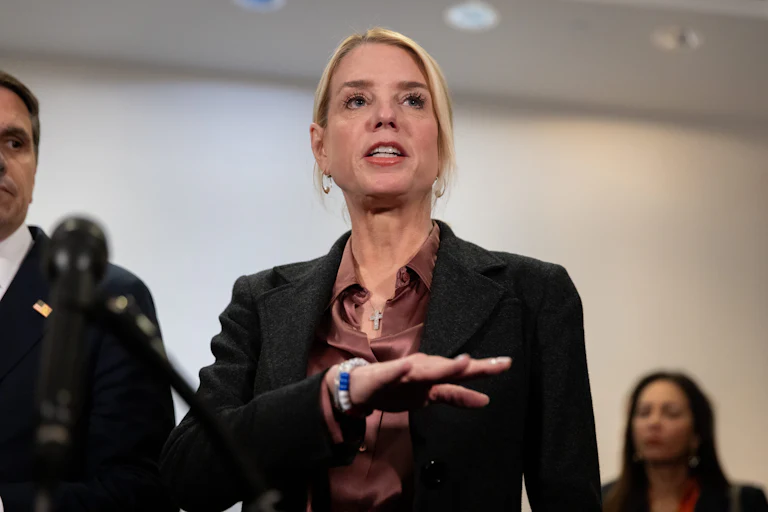
Attorney General Pam Bondi gestures while speaking to reporters
Nathan Posner/Anadolu/Getty Images

The Justice Department dropped thousands of criminal cases last year in an attempt to reorient its efforts—almost singularly—toward winning convictions in cases involving immigrants.

Altogether, America’s top law enforcement agency closed some 23,000 criminal cases in the first six months of Donald Trump’s term, which involved investigations into terrorism, white-collar crimes, and drugs, while prosecuting 32,000 new immigration cases, ProPublica reported Tuesday.

The bulk of the shuttered files were closed without prosecution, and had been referred to the DOJ by different law enforcement agencies under different presidential administrations. Some were the result of yearslong investigations helmed by the FBI or the DEA.

The process began immediately after Attorney General Pam Bondi was confirmed by the Senate in February 2025. That month alone, the DOJ declined nearly 11,000 cases, marking the most it had done so at once since at least 2004, and nearly doubling the previous high, when more than 6,500 cases were dismissed in September 2019 (during Trump’s first administration).

The shift in priorities is an indication that “making America safe again” is not necessarily as much of a goal for the current administration as Trump has promised. At the president’s direction, federal authorities have arrested thousands of noncriminal immigrants across the country. The administration has claimed that the subjects of its deportation purge are the “worst of the worst”—including “murderers, pedophiles, rapists, gang members, and terrorists.”

But demanding the DOJ hyperfixate on immigration (a civil issue that has historically been handled by the courts) has come at a cost to investigating and prosecuting actual crime. Over the last year, the DOJ has declined more than 1,000 terrorism cases, more than other administrations, per ProPublica.

The result has been a crushing blow to agency morale, according to DOJ officials. Federal prosecutor Joseph Gerbasi spent years working on the agency’s Narcotic and Dangerous Drug Section to challenge fentanyl suppliers in India and China before Bondi ordered him to abandon his work.

“All of the building blocks of what would become successful prosecutions were pulled out,” Gerbasi told ProPublica. The career prosecutor retired as the section’s acting deputy chief in March 2025, just weeks into Bondi’s tenure. Gerbasi had worked for the DOJ for 28 years.

He’s not alone: Thousands of lawyers have quit the agency, or been forced out, as Bondi carries out the Trumpian overhaul.

Bondi’s decision to halt the work had an “overwhelming deflating effect on morale,” Gerbasi said.

Trump’s Budget Is About to Force Hundreds of Hospitals to Close

Medicaid cuts caused by Donald Trump’s Big Beautiful Bill are putting in-person care access for millions of people at risk.

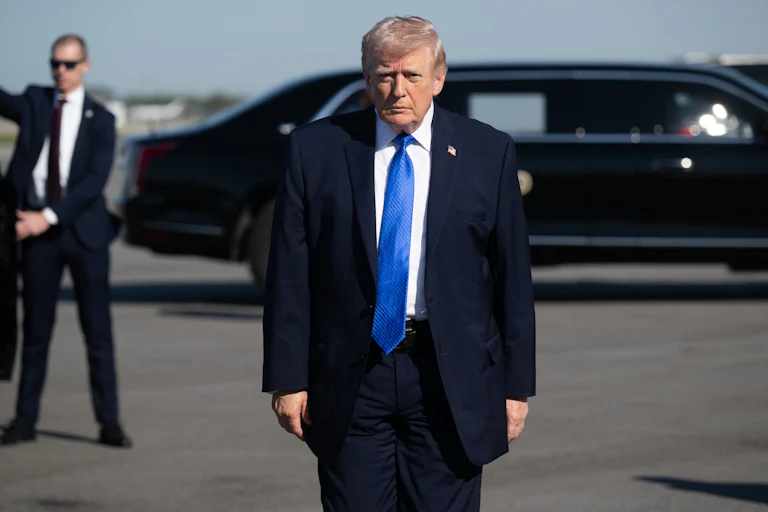
Donald Trump stands on an airport tarmac
SAUL LOEB/AFP/Getty Images

President Donald Trump’s sweeping cuts to Medicaid are putting more than 440 hospitals at risk of closure, which could sever care from millions of Americans.

Public Citizen, a government watchdog, reported Tuesday that 446 hospitals were at a heightened risk of closure due to the president’s behemoth budget bill, which will cut an estimated $911 billion from Medicaid and the Children’s Health Insurance Program, or CHIP, over the next 10 years.

These are hospitals that receive more than 20 percent of their revenue from low-income government programs such as Medicaid and CHIP, and have operated on a negative profit margin between 2022 and 2024. They account for 68,986 beds and employ approximately 275,458 direct patient care workers, not including nonmedical workers.

The hospitals endangered by the president’s bill serve poorer communities with a higher percentage of Hispanic and Black populations than other hospitals. At-risk hospitals served communities that had 7 percent more Hispanic and 4 percent more Black people than other hospitals. Nearly 20 percent of at-risk hospitals served high-poverty areas.

Many of these hospitals hold special Medicaid designations indicating how essential they are to the communities they serve. For example, 19 percent of the at-risk hospitals identified were designated “Critical Access Hospitals,” which are 24/7 health care facilities that operate more than 35 miles from another hospital.

These cuts will hurt hospitals across 44 states, both red and blue. However, five blue states—New York, Massachusetts, Connecticut, Washington, and California—now have more than one-quarter of their hospitals at risk.

In rural communities, more people receive and rely on Medicaid coverage, meaning that rural hospitals—which already operate on razor-thin margins—will be forced to absorb skyrocketing rates of uncompensated care, according to the National Rural Health Association. Rather than shut their doors right away, rural hospitals will cut services and lay off staff, depriving patients of access to essential health care. Public Citizen identified 176 at-risk hospitals in rural areas.

Democratic lawmakers have previously warned that more than 300 rural hospitals are at risk of closure as a result of Trump’s Medicaid cuts. Meanwhile, Republican lawmakers have seemed less than concerned about cutting services.

Approximately half of the hospitals in the United States are in urban areas, and Public Citizen has identified 267 urban hospitals that are also at risk of closure.