Breaking News
Breaking News
from Washington and beyond

Trump Makes It Harder to See if Drugs Are Laced With Fentanyl

The move has shocked public health experts who are worried about a spike in drug overdoses.

Test strips used to detect the presence of fentanyl
ANGELA WEISS/AFP/Getty Images
Test strips used to detect the presence of fentanyl

The Trump administration has canceled federal funding for test strips used to find out if a substance contains fentanyl. 

CBS News, citing a letter from the Substance Abuse and Mental Health Services Administration, reports that government funds can’t be used to purchase the strips anymore, increasing the risk of drug overdoses. The strips also test for other dangerous substances such as xylazine and medetomidine, which are normally used to sedate animals and have been linked to overdose deaths in people. 

Public health organizations are shocked at the move, because test strips only cost about $1 each and can be used to check illicit drugs in powder or pill form. The director of federal policy  at the Drug Policy Alliance, Maritza Perez Medina, called them a “critical, lifesaving tool.” 

“People are just astonished,” Medina told CBS. “There has been a lot of confusion about where this came from.”

The letter cites a July 2025 executive order from President Trump that prohibits SAMHSA, a branch of the Department of Health and Human Services, from using its funding for programs that “only facilitate illegal drug use.” An HHS spokesperson told CBS that the letter clarifies what SAMHSA funding can be used for, which excludes “practices that facilitate illicit drug use and are incompatible with federal laws.”

In 45 states as well as Washington, D.C., test strips are not considered drug paraphernalia, and Nevada as well as California provide information on where to find them online. Congress protected their use in 2018, and as of last July, the agency still allowed its funding to pay for test strips. 

But that’s over now, and organizations around the country will lose badly needed money to prevent drug overdoses. The executive director of the Kentucky Harm Reduction Coalition, Shreeta Waldon, told CBS that the organization was told it would lose a $400,000 grant, and only has a month’s supply of test strips left after distributing 48,465 strips in the first quarter of 2026. 

“It doesn’t make sense that one day something is an evidence-based protocol, and you decide, because of political climate, it is no longer evidence-based,” Waldon said. “If they follow the science and the data, we would never move in this direction.” 

The Trump administration’s public health decisions, from discouraging vaccines to cutting cancer research, don’t seem to be based on preventing deaths. Drug overdoses occur everywhere, including in rural areas where support for the president is strongest. Now many of those places won’t have a critical tool to save lives. 
Louisiana Drowns in Lawsuits Over Republicans’ Election Power Grab

Louisiana Governor Jeff Landry has been hit with lawsuit after lawsuit over his decision to halt the state’s primary elections.

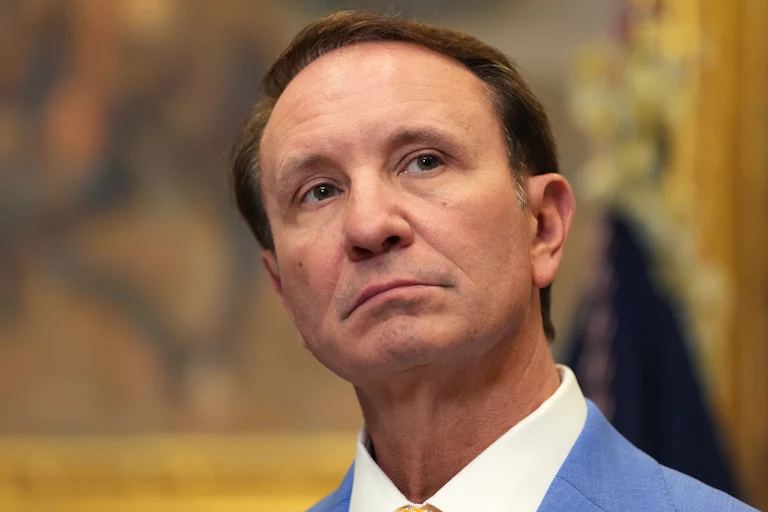
Louisiana Governor Jeff Landry
Win McNamee/Getty Images
Louisiana Governor Jeff Landry

Louisiana Governor Jeff Landry has been hit with multiple lawsuits in the 24 hours since he announced a halt on statewide primaries so that Republicans can redraw favorable congressional districts in the wake of the Supreme Court’s decision to gut the Voting Rights Act in Louisiana v. Callais.

On Friday, several civil rights organizations, including the ACLU, the Louisiana chapter of the NAACP, and the National Council of Jewish Women, sued to block Landry from suspending the May 16 primary election.

“Under Louisiana law, the legislature, not the Governor or the Secretary of State, sets the state’s election schedule. Yet, Governor Jeff Landry, aided by Secretary of State Nancy Landry, has purported to unilaterally cancel Louisiana’s 2026 congressional primary election after it has already begun,” read the lawsuit from the National Council of Jewish Women and Louisiana voters. “Ballots were sent to military voters and overseas voters as required by federal law a month ago. Mail ballots were sent to other voters entitled to vote by mail under Louisiana law almost a week ago. As a result, many voters—including among the Petitioners here—have already voted.”

The lawsuit also cited other Supreme Court decisions to argue that Landry cannot change the map this close to the election. “Quite to the contrary, the Supreme Court has historically found that when voting in an election is within months of beginning—and, here, it has already begun—the state must proceed under the invalidated map, and any infirmities must be corrected for future elections,” the suit read.

The lawsuit from the ACLU, the NAACP, and other voting rights organizations is requesting that a state court block Landry’s decision on the grounds that the Supreme Court ruling did not constitute an “emergency” under state law. Landry had already been hit with another lawsuit on Thursday from Democratic House candidate Lindsay Garcia, who argued the suspension infringes on the First, Fourteenth, and Fifteen Amendments.

The aggressive backlash is no surprise, given that this is perhaps the most egregious example of the GOP’s attempt to force through its own congressional maps, no matter how many Black and brown voters are disenfranchised. Prepare for more to come, and from both sides.

Trump Used Shady Crypto Venture to Triple His Net Worth as President

Donald Trump has gotten much, much richer during his second term—and it’s almost all thanks to crypto.

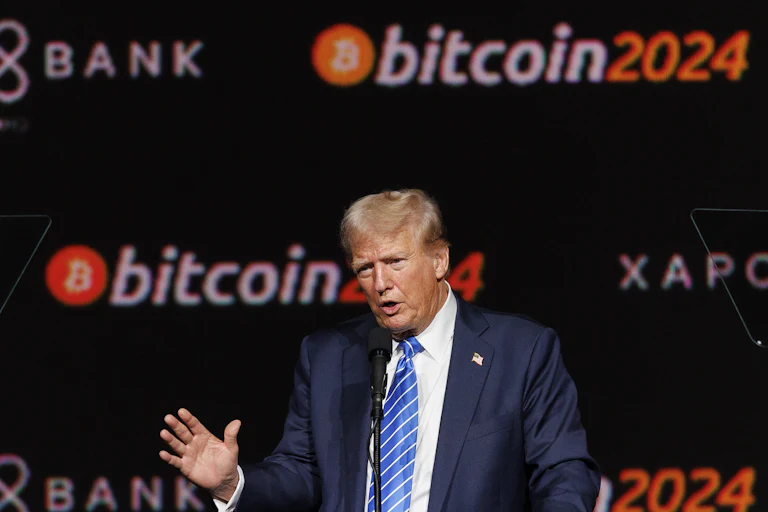
Donald Trump speaks in front of a bitcoin2024 backdrop.
Brett Carlsen/Bloomberg/Getty Images

Donald Trump has nearly tripled his net worth since being elected president a second time, and it’s all thanks to cryptocurrency. 

The president is now worth an estimated $6.5 billion, up from $2.3 billion in 2024, economic analyst and former Obama administration adviser Steve Rattner told MS NOW Friday. Between August 2025 and January 2026, Trump profited to the tune of $3.02 billion from crypto. It all started a few days before his inauguration in January 2025 when he released his $TRUMP meme coin. 

MAGA supporters rushed to buy the coin, which quickly shot up to a $30 billion valuation and peaked at a price of $45. The president was able to cash in, but many of his supporters were left holding the bag as the price plummeted to only $10 four months later. Now, it is worth less than $2.50, according to Rattner. 

X screenshot Steven Rattner
@SteveRattner
Trump’s net worth has nearly tripled in his second term, reaching $6.5 billion.

His administration is the most brazenly self-enriching in American history.

My @Morning_Joe Chart.

(chart)

“It is a coin that means nothing,” Rattner said on Morning Joe. “It is like buying a pet rock, except you don’t even get a rock. It has no value. It has no trading value. It’s not used in commerce—nothing.”  

In contrast, Trump’s net worth actually went down during his first term as he restricted his company from making international deals. This time around, his sons Eric and Donald Jr. created World Liberty Financial to handle cryptocurrency assets, including the USD1 stablecoin. The venture has taken in billions from funds connected to foreign governments, including the United Arab Emirates,  

Trump’s business activities, whether they pertain to cryptocurrency or his real estate investments, are blatantly unethical for any government official, let alone the president. His family is taking in billions from foreign governments and profiting off the presidency itself, violating the Constitution’s emoluments clause. Thanks to the Supreme Court giving him near-total immunity and Republicans in Congress purposefully turning a blind eye, he won’t face any consequences. 

Alabama Rushes to Eliminate Its Only Two Democrats in Congress

Another Republican governor has joined Donald Trump’s gerrymandering wars in light of the Supreme Court ruling.

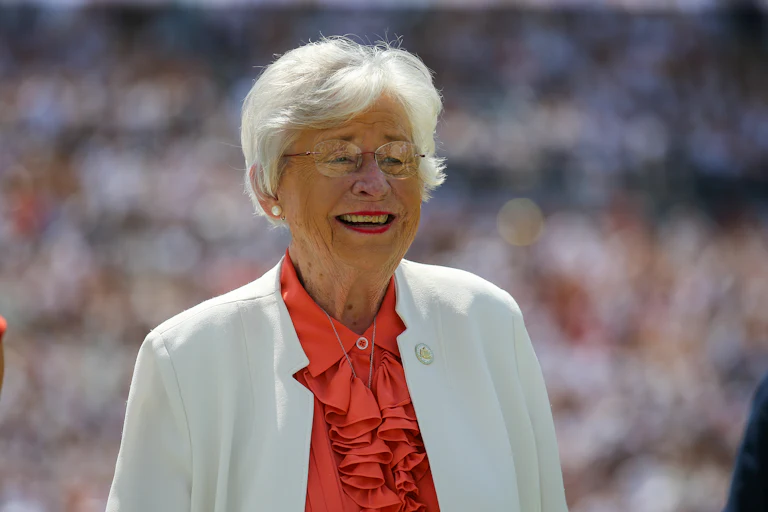
Alabama Governor Kay Ivey smiles during a football game
Stew Milne/Getty Images
Alabama Governor Kay Ivey

Alabama is pushing ahead with a racist redistricting scheme after the Supreme Court gutted the Voting Rights Act.

Republican Governor Kay Ivey called Friday for a special session next week of the Alabama state legislature to pass new congressional and state Senate maps, and prepare legislation to hold special primary elections.

The move came one day after Alabama’s Attorney General Steve Marshall asked the Supreme Court to allow the state to implement new congressional and state Senate maps that were redrawn in 2023 before being barred by the Voting Rights Act.

In Wednesday’s decision in Louisiana v. Callais, the court’s six-justice conservative majority effectively dismantled Section 2 of the Voting Rights Act, which prohibits discrimination based on race. While the decision did not eradicate it entirely, the court has raised new hurdles for those seeking to prove a racial gerrymandering claim, and gave its blessing to those who would claim partisan gerrymandering as a legal defense.

The new maps would effectively redraw Alabama’s two Black-majority districts: the 2nd district and the 7th district.

Alabama’s 2nd congressional district, led by Representative Shamari Figures, contains Mobile and Montgomery and would see its Black population shrink from 49 percent to 40 percent, according to the Alabama Reflector.

Alabama’s 7th congressional district, led by Representative Terri Sewell, is Alabama’s oldest majority-Black district and has consistently sent Black Democrats to Washington since 1993. This district includes Selma, as well as parts of Birmingham, Tuscaloosa, and Montgomery.

CJ Pearson, a right-wing influencer, wrote on X that the decision “will likely lead to a COMPLETELY REPUBLICAN DELEGATION!” Pearson, who was one of the first to report Ivey’s move, said that it had been the result of lobbying by Marshall, attorney general candidate Katherine Robertson, and Secretary of State Wes Allen.

Pope Leo Appoints Bishops Who Warned America Is Regressing Under Trump

Pope Leo XIV has named three new bishops who aren’t big fans of Donald Trump.

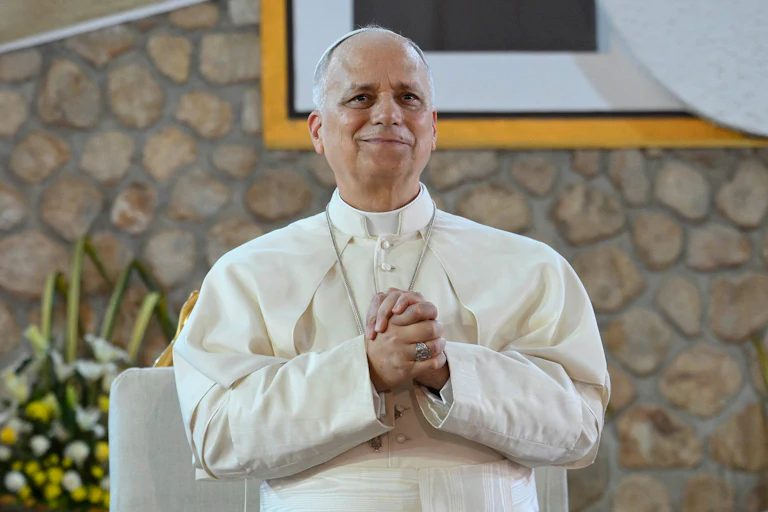
Pope Leo XIV
Simone Risoluti/Vatican Media/Vatican Pool/Getty Images

Pope Leo XIV has named three new bishops in the United States, each of whom have been vocal critics of President Trump.

Evelio Menjivar, a formerly undocumented immigrant, will be the new bishop for the Diocese of Wheeling-Charleston in West Virginia, and Gary Studniewski and Robert Boxie III will be auxiliary bishops in Washington, D.C. The appointments indicate a deliberate choice on the pope’s part to select representatives in the United States who will be similarly unafraid to raise their voices against the Trump administration.

Menjivar, who immigrated from El Salvador to the U.S. in the trunk of a car when he was a teenager, decried Trump’s immigration crackdown last year in the National Catholic Reporter. “The federal government has pursued a ‘shock and awe’ campaign of aggressive threats and highly visible operations of questionable legality that go far beyond mere immigration ‘enforcement,’” he wrote. “We must stand with those at risk … and we cannot let the dark side of anti-immigrant animus take hold.”

Father Studniewski, a former U.S. Army chaplain who serves in the Chevy Chase area, called the January 6 insurrection “very disturbing, very disheartening.”*

“It was a normal day, until all that sickening unrest in the afternoon,” he told Today’s Catholic in 2021. And Father Boxie, who serves at Howard University, was deeply critical of Trump’s war on diversity, equity, and inclusion last year.

“In a lot of ways we have made great progress, but in so many ways, I feel like we’re regressing,” said Boxie. “It’s really frustrating—especially this moment that we’re living in. The attacks on ‘DEI’—I don’t even know what that means anymore. It’s a term that’s been hijacked. It means a lot of things to a lot of different people.”

* This article previously misstated the location of Father Studniewski’s church.