Breaking News
Breaking News
from Washington and beyond

Trump Says It’s Not “Constitutional” for Congress to Block Iran War

Donald Trump has hit the 60-day deadline for needing to get congressional approval on his war in Iran.

Donald Trump, seen in profile, speaks to reporters outside the White House. The Washington Monument is in the background.
Anna Moneymaker/Getty Images

President Donald Trump claimed Friday it’s unconstitutional to seek congressional approval for war.

Speaking to the press outside the White House, Trump whined that he should not have to comply with the War Powers Resolution of 1973, which requires the president to withdraw his forces from a conflict after 60 days unless Congress declares war or approves an extension.

“There’s no other country that’s ever done it, it’s never been uh, as you know—most people consider it totally unconstitutional. Also we had a ceasefire so that gives you additional time,” he falsely claimed.

“We’re on our way to another victory, a big victory. And I don’t think that it’s constitutional what they’re asking for. These are not patriotic people that are asking,” he said.

The irony is that the War Powers Resolution is the only reason Trump’s reckless military campaign in Iran could even be considered constitutional in the first place. According to Article I, Section 8, Clause 11 of the United States Constitution, Congress has sole power to declare war. The 60-day window is an exception to that rule.

If the War Powers Resolution were totally void, Trump’s war in Iran would be illegal. (It already is, according to international law.)

Trump has simultaneously tried to sidestep Congress’s 60-day deadline by buying into the argument that the clock stopped when a ceasefire was announced halfway through April.

However, the U.S. is already testing the boundaries of its tenuous ceasefire with Iran by installing a military blockade on Iranian ports, an act of war according to international law, and even seizing an Iranian cargo ship. Meanwhile, Israel, America’s ally in its joint military operation, has not stopped its intense strikes in Lebanon, in violation of the ceasefire agreement.
Trump Says Iran War Is “Terminated” as He Refuses War Powers Deadline

President Trump is now pretending the Iran war is over.

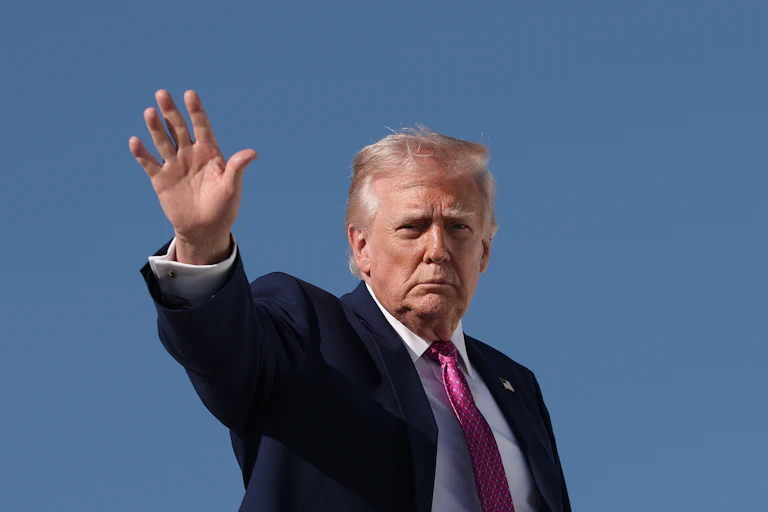
Donald Trump waving
Win McNamee/Getty Images

President Trump is claiming that the war on Iran is actually over in an effort to avoid any sort of accountability.

Trump on Friday officially informed Congress that the war was “terminated,” writing, “There has been no exchange of fire between the United States and Iran since April 7, 2026.... The hostilities that began on February 28, 2026, have terminated.”

The War Powers Resolution states that a president must formally alert Congress of any new war they entered into within 48 hours of hostilities. After that, they have 60 days to end the conflict before Congress steps in and either orders them to stop or allows them to continue. Trump’s 60 days are up on Friday, and it appears that even Republicans want to hold him accountable.

“That deadline is not a suggestion; it is a requirement,” GOP Senator Susan Collins said. “Further military action against Iran must have a clear mission, achievable goals, and a defined strategy for bringing the conflict to a close.”

To avoid any of that, Trump is insisting that the war actually ended with the ceasefire announcement in early April, even as Iran continues to block the Strait of Hormuz, the U.S. continues to block Iranian ships from leaving, and Israel continues to bomb Lebanon. The ceasefire seems to be holding on by a thread, and does not appear to be an end to the conflict in any way.

Trump on Friday called it “unconstitutional” for Congress to try to rein in his powers.

“We’re on our way to another victory, a big victory. And I don’t think that it’s constitutional what they’re asking for,” he said on Friday. “These are not patriotic people that are asking.... Even the losers, even the ones that say all the wrong things admit that it’s been amazing what we’ve done. The strait is totally shut down, it’s flawless.”

If this truly is the end of the war, then it’s unclear who the victor even is.

Trump Announces Tariffs on European Cars as Punishment

The Trump administration is somehow announcing more tariffs.

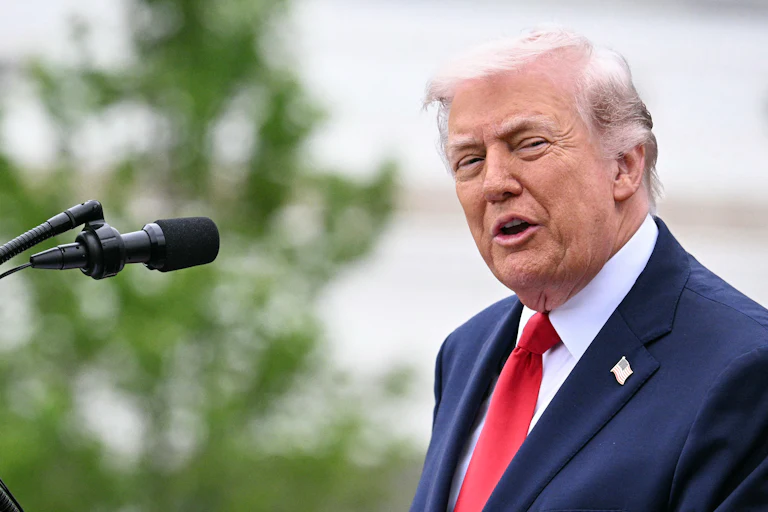
President Donald Trump speaking at a microphone
Jim WATSON/AFP/Getty Images

President Trump announced new tariffs against European car imports Friday, threatening to mess with the economy further.

In a Truth Social post, Trump announced that he is “pleased to announce that, based on the fact the European Union is not complying with our fully agreed to Trade Deal, next week I will be increasing Tariffs charged to the European Union for Cars and Trucks coming into the United States.”

“The Tariff will be increased to 25%. It is fully understood and agreed that, if they produce Cars and Trucks in U.S.A. Plants, there will be NO TARIFF,” Trump posted. “Many Automobile and Truck Plants are currently under construction, with over 100 Billion Dollars being invested, A RECORD in the History of Car and Truck Manufacturing. These Plants, staffed with American Workers, will be opening soon — There has never been anything like what is happening in America today! Thank you for your attention to this matter.”

Why Trump would be “pleased” with the move is one thing, but his claim that several auto plants are currently under construction is misleading at best. Industry experts say that most automakers are not building new plants, but are instead planning to shift their investments years from now. While some car manufacturers have pledged to spend more money in the U.S., they haven’t announced new facilities or manufacturing plants, and their plans may not even happen.

“They will be looking at models that will be coming to the end of their natural cycle, something that occurs at five or so year intervals, and getting ready to announce ‘investments’ to continue the new version of the model at those plants,” Greig Mordue, a manufacturing policy professor at McMaster University, told Al Jazeera.

On top of that, Trump’s decision to roll back much of President Biden’s Inflation Reduction Act killed projects to build domestic auto plants, including a $200 million hydrogen fuel cell factory in South Carolina and a $2.5 billion battery factory in Georgia.

It also forced American car companies to eat investments they made in electric vehicles. Ford canceled a $1.5 billion investment in electric vehicles while General Motors had to absorb a $6 billion hit. Meanwhile, Chinese electric vehicles are the most popular in the world, and are beginning to dominate the market.

All these tariffs will do is drive up prices in the U.S., and consumers will have to resort to buying more used cars, or hold off on purchases altogether. Fuel prices are still high thanks to the war in Iran, which Trump is trying to wish away without any real action. This move, at best, is a long-term plan, and at worst, won’t bring any relief or benefits to the average American.

This story has been updated.

Trump’s FBI Reassigned a Quarter of Entire Agency onto Immigration

Donald Trump’s priorities are not exactly what keeps Americans safe.

The FBI seal on the outside of the building
Graeme Sloan/Bloomberg/Getty Images

The Trump administration massively restructured the FBI in order to accommodate its deportation goals.

More than 6,000 FBI agents were diverted to handling “immigration-related matters” during the first nine months of Donald Trump’s second term, reported The Intercept Friday. The seismic shift has practically redefined the agency and its work.

Prior to January 2025, just 279 agents were assigned to immigration cases. By September, that number was above 6,500, growing the task force by a factor of 23. In total, 9,161 people at the FBI—nearly a quarter of the bureau’s 38,000 staffers—worked on immigration during Trump’s first nine months in office.

The change is larger than previously understood. In October, The Washington Post reported that some 3,000 agents had been reassigned to cover immigration, based on FBI data obtained and circulated by Senator Mark R. Warner.  

“That is a huge, huge number of people,” Aaron Reichlin-Melnick, a senior fellow at the American Immigration Council, told The Intercept of the 6,500-plus figure. “This is just a somewhat shocking scale that we’re looking at.”

The structural shift toward immigration cases is monumental: As the nation’s premiere law enforcement agency, the FBI has historically focused the bulk of its resources on crime. The bureau expanded to include counterterrorism and national security in its purview after 9/11. It has never dedicated this much time and attention to civil matters, sparking concern that the new modus operandi could hinder its criminal investigative work.

“That’s a striking diversion of resources away from public safety,” David J. Bier, director of immigration studies at the libertarian thinktank the Cato Institute, told The Intercept. “We’re talking about the FBI diverting people away from criminal investigations and ongoing criminal activity and into civil immigration enforcement. 

“This is showing the extent to which the resources of the FBI were put at the disposal of Immigration and Customs Enforcement contrary to the intent of Congress, and the abuse of the funds that Congress grants the FBI to accomplish its mission,” Bier noted.

The FBI is not the only federal agency to massively reorient itself toward immigration since Trump’s inauguration. The Justice Department dropped thousands of criminal cases last year in an attempt to funnel its efforts—almost singularly—toward convicting immigration cases. Altogether, the chief law enforcement agency closed some 23,000 criminal cases in the first six months of Trump’s term, including investigations into terrorism, white-collar crimes, and drugs, while prosecuting 32,000 new immigration cases.

The shift in priorities is an indication that “making America safe again” is not necessarily as much of a goal for the current administration as Trump has promised. At the president’s direction, federal authorities have arrested thousands of noncriminal immigrants across the country, despite repeated pledges that the deportation purge is focused on the “worst of the worst”—such as “murderers, pedophiles, rapists, gang members, and terrorists.”

Iran Has Damaged Bonkers Number of U.S. Military Sites

More than half of America’s military sites in the Middle East have been damaged by Iranian strikes.

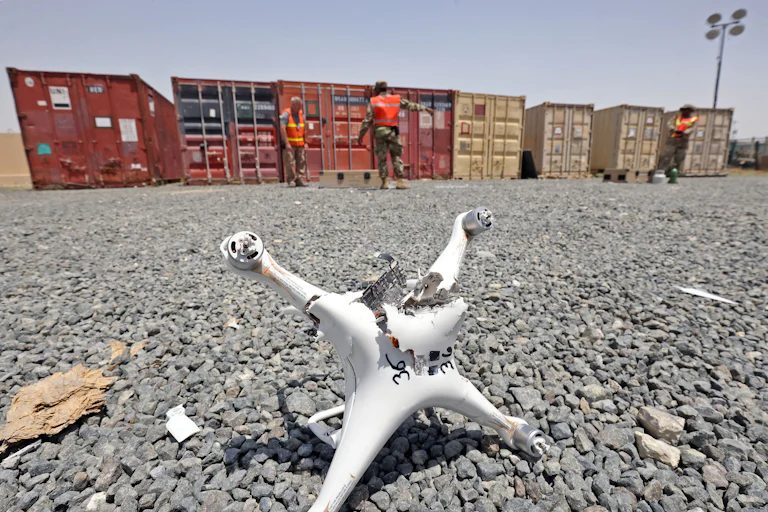
A downed drone during a military drill at Camp Arifjan in Kuwait
ASSER AL-ZAYYAT/AFP/Getty Images
A military drill at Camp Arifjan, Kuwait

The majority of U.S. military positions in the Middle East have been damaged by Iranian strikes, according to a CNN investigation released Friday.

At least 16 American installations across eight countries have been struck as part of Iran’s retaliatory strikes against the U.S. and Israeli military onslaught. A U.S. source familiar with the situation told CNN that the scale of the damage was unprecedented.

“I’ve never seen anything like this before.… These are rapid, targeted strikes, with [advanced] technology,” the source said.

The main targets appeared to be multimillion-dollar aircraft. At the Prince Sultan Air Base in Saudi Arabia, a Boeing E-3 Sentry aircraft, which provides surveillance, command, control, and communications to the U.S. military, was destroyed. That aircraft is worth nearly half a billion dollars, and is currently out of production.

Other targets of Iranian strikes include critical communications systems. At Camp Arifjan in Kuwait, satellite photographs showed that Iran had destroyed all but one ray dome, a structure designed to protect satellite dishes.

Radar systems will also prove the most difficult to replace. “Our radar systems are our most expensive and our most limited resource in the region,” a congressional aide familiar with damage assessments told CNN.

It was previously reported that 13 U.S. bases in the Middle East had been rendered all but uninhabitable, forcing U.S. military service members to work remotely from hotels and office spaces. Within the first two weeks of the war, Iran’s attacks on U.S. military bases caused an estimated $800 million in damage, according to a report by the Center for Strategic and International Studies and a BBC analysis.

During a House Armed Services Committee hearing on Wednesday, Undersecretary of Defense Jules Hurst finally produced a price tag for Donald Trump’s military campaign: $25 billion. But that number does not include the cost of repairing the damage to bases, CNN reported Thursday.

At the same time, Trump has continued to claim that the U.S. has nearly obliterated all of Iran’s military assets—though reports indicate that’s just not true.