Breaking News
Breaking News
from Washington and beyond

NPR Reporter Reveals George Santos Threatened Him Over Fraud Story

Santos denied telling the reporter, “This story is going to get you a gun in your face.”

Former Representative George Santos touches his forehead while walking
Yuki Iwamura/Bloomberg/Getty Images

On Tuesday, NPR’s Bobby Allyn reported that the Department of Justice and the Commodity Futures Trading Commission were investigating George Santos for allegedly making fishy bets on the prediction market Kalshi. Three days later, Allyn said he received a call from Santos in which the former congressman and convicted fraudster threatened him.

“This story is going to get you a gun in your face,” Allyn claims Santos said.

Allyn used three sources to report out his Tuesday piece, which revealed that Santos had bet that he would not attend the State of the Union address in February, after posting a video where he expressed excitement at attending.

Kalshi officials informed federal authorities in the Southern District of New York and Washington, D.C., of Santos’s bets at the time, and an investigation is ongoing.

Santos had a paid partnership with Polymarket, a prediction market seen as Kalshi’s largest rival, but the company cut him off after the NPR story broke.

Santos called Allyn the day after the report was published and argued that the story was incorrect. “My lawyers have been calling the Department of Justice all day, and they can’t find any investigation,” he said. (Allyn said he typed out quotes from the call after Santos told him he could not record it.)

After Santos declined to divulge the names of his lawyers, Allyn asked whether Santos really did have attorneys. “I’m George fucking Santos, of course I have a legal team,” Santos reportedly replied, adding, “This story is going to get you a gun in your face.”

When Allyn texted Santos to confirm his phone number, Santos immediately denied the threat. “I NEVER SAID ‘this story would get a gun in your face, I said ‘it’d blow up in your face,’” Santos texted.

Santos took the initiative the next day, posting on X that Allyn “was now making things up.” (Allyn had not yet revealed what was said during the call.) Santos also claimed he would never act “aggressive and threatening” toward the press.

“He’s now demanding I disclose the names of my lawyers ‘or else,’” Santos added of Allyn. Allyn said he simply asked who Santos’s lawyers were and never used the words “or else.”

Santos’s history of peddling lies and fraud became something of a joke in his home state of New York during his time in office. That history came to a head when he was convicted of wire fraud and aggravated identity theft in April 2025 and sentenced to seven years in jail. President Donald Trump, perhaps seeing something of himself in Santos, commuted the Republican’s sentence in October.
Trump Orders His New Intel Chief to Fire More People

President Trump bragged that Bill Pulte has the power to fire a good chunk of the intel officers since he’s just “acting” director of national intelligence.

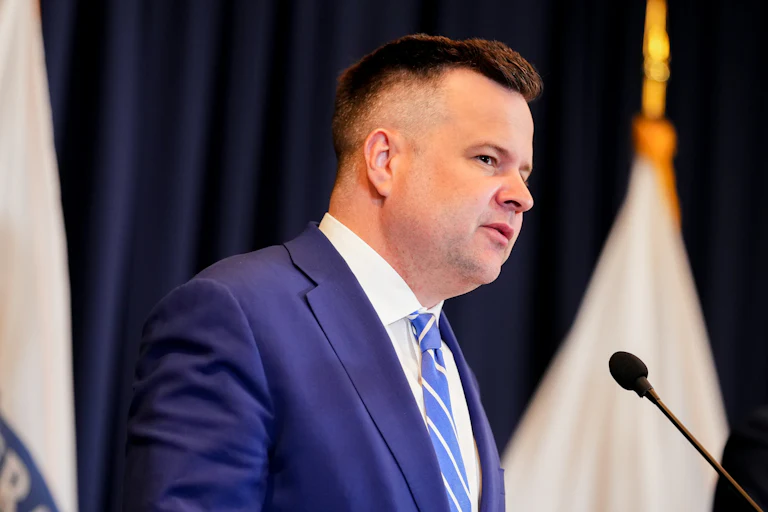
Acting Director of National Intelligence Bill Pulte speaks at a podium.
Eric Lee/Bloomberg/Getty Images
Acting Director of National Intelligence Bill Pulte

President Trump wants his new director of national intelligence to fire more people.

Trump told The Wall Street Journal Friday that he told Bill Pulte, whom he named acting director of national intelligence, that he thought the Office of the Director of National Intelligence was “unnecessary” or “too big.”

“I’d like to see it smaller. I think there are a lot of people in there that shouldn’t be there,” Trump said, referring specifically to people hired in the Obama and Biden administrations. He said he wanted Pulte to “start the process.”

Reducing the size of the ODNI, created after the 9/11 attacks to streamline information sharing between intelligence agencies, is a concerning move for intelligence officials in the government, and suggests that Trump is trying to restrict its staff to loyalists. Trump believes that naming Pulte as acting director, which doesn’t require Senate confirmation, gives him more flexibility to clean house before a permanent director is named.

“You’re less shackled,” Trump said in the interview. “It sort of gives you more power, you know, for a somewhat limited period of time.”

“Frankly, it might be good for him to shake it up before people come,” he added. “Because, if [Pulte] reduced the size, in conjunction with me … and in conjunction with possibly the person coming in … he can do a lot of the hard work and we wouldn’t have to saddle somebody that goes in.”

Pulte used his authority as head of the Federal Housing Finance Agency (which includes the financial institutions Fannie Mae and Freddie Mac) to go after Trump’s enemies with accusations of mortgage fraud. In his new position, he now has intelligence assets, and Trump wants him to get rid of the people who might have a lot of inside information about the president.

Judge Strikes Down Trump’s Massive Attack on Legal Immigration

A federal judge has ruled against the extreme anti-immigration policies Trump instituted last fall.

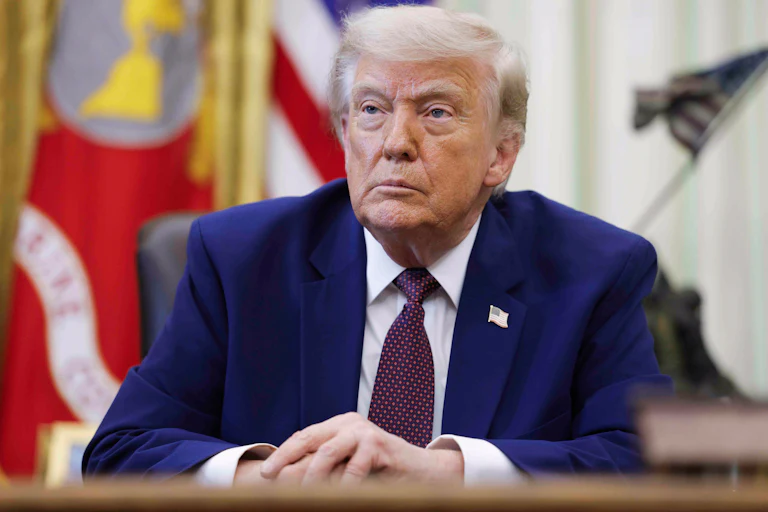
Donald Trump in the Oval Office of the White House
Shawn Thew/EPA/Bloomberg/Getty Images

A federal judge in Rhode Island struck down a slew of President Trump’s policies halting immigration processing and  freezing out asylum-seekers, ruling that a federal agency was motivated by “anti-immigrant sentiments that it is forbidden from letting influence its decision-making.”

Following a deadly attack on a National Guard member in Washington, D.C., last November, Trump ordered an asylum freeze and an end to immigration applications for nationals from 39 countries targeted in his travel ban. That meant thousands of people were unable to apply for not just asylum or work permits but also green cards and U.S. citizenship. 

“Over six months later, many of those individuals remain without work, without legal status, and without any meaningful ability to plan for their futures,” Judge John J. McConnell Jr. wrote.

“In enacting its latest immigration policies, the United States Citizenship and Immigration Services: claims statutory and regulatory authority that it does not possess; makes decisions without the reasoned explanations that it must provide; acts without regard for the reliance interests of applicants that it must consider; and justifies its actions with pretextual concerns of ‘national security’ that mask anti-immigrant sentiments,” McConnell continued. “In legal terms that means USCIS’s actions are contrary to law and arbitrary and capricious.” 

The president had another asylum ban attempt blocked last April.  

Republican Rep. Is Still Missing but Somehow Introducing Legislation

Representative Tom Kean Jr. has been missing for months.

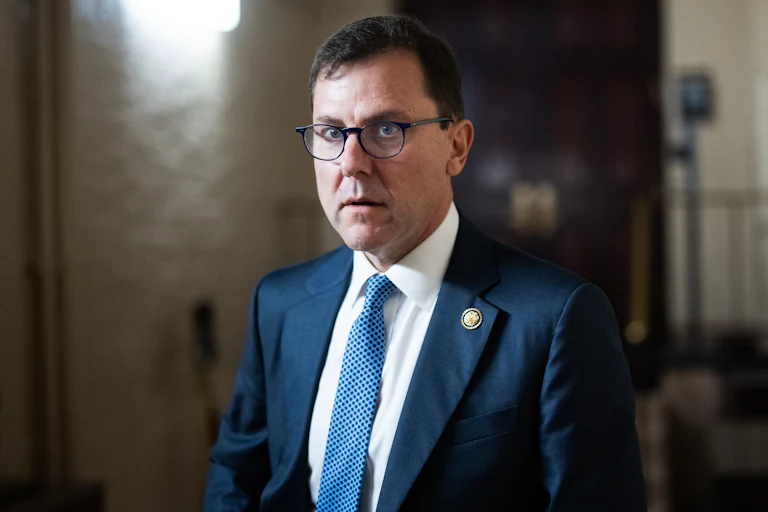
Representative Tom Kean Jr. walks in the Capitol
Tom Williams/CQ-Roll Call, Inc/Getty Images

The case of the missing New Jersey representative continues to baffle constituents, and the fact that Tom Kean Jr. is submitting legislation in absentia isn’t helping matters, as NBC News reported Friday.

Like many members of Congress, Kean posts regularly on X and Instagram about his work. He has recently informed his followers that he is co-sponsoring a Sikh American antidiscrimination bill, honoring first responders across New Jersey, and signing up for the Congressional Crypto Caucus.

Kean also seems busy in the House of Representatives; he introduced a bill on May 29 relating to screening for the pregnancy complication preeclampsia, and he submitted remarks to the Congressional Record this week. “I rise today to commemorate the 65th anniversary of the Jewish Federation of West Central New Jersey,” said one entry.

But Kean, who was elected to serve New Jersey’s 7th congressional district back in 2023, hasn’t actually voted in the House or even been seen in public since March. According to his team, he has a “personal medical issue.”

That’s all fine—these things happen, and Kean should certainly prioritize his health. But back in March, Kean began his absence without anyone on his team bothering to say what was going on. It took multiple weeks, and Republican colleagues speaking out about his disappearance, for Kean’s office to admit he was dealing with medical issues. Today, the public still has no idea what kind of issues Kean has, while his office appears to be running his social media and submitting congressional bills on his behalf.

“If they’re talking to him and he’s signing off on these things, that’s one thing. If they’re doing it without consulting with him, that’s another,” one anonymous New Jersey Democrat who unsuccessfully tried to reach Kean told NBC. “I don’t think the latter is acceptable.”

Kean’s disappearance could cost the GOP come midterm season: He won his Republican primary Tuesday after running unopposed, but he will face off against Democrat and former Navy helicopter pilot Rebecca Bennett in November. New Jersey’s 7th is about as swingy as it gets. Donald Trump carried the district by one percentage point in 2024; Democratic Governor Mikie Sherrill took it by two in November.

How Are We All Just Ignoring Congress Tying Our Military to Israel’s?

A House committee has approved Section 224 of the National Defense Authorization Act.

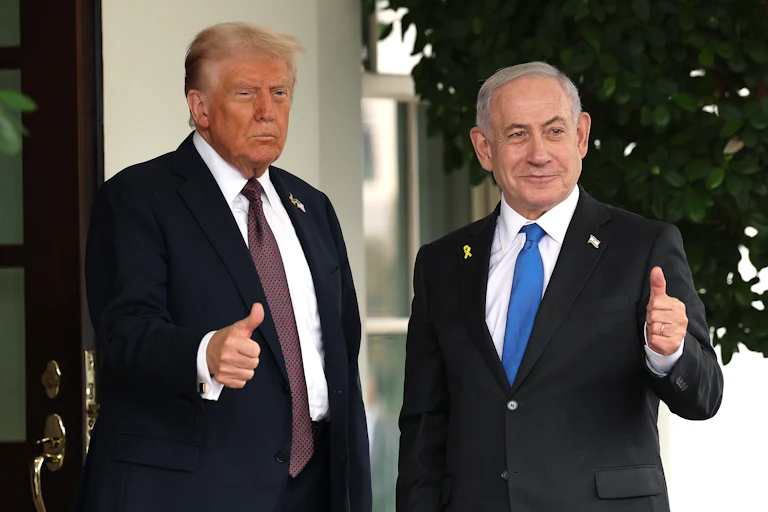
President Donald Trump and Israeli Prime Minister Benjamin Netanyahu both hold up thumbs up signs outside the White House.
Win McNamee/Getty Images
President Donald Trump greets Israeli Prime Minister Benjamin Netanyahu at the White House, on September 29, 2025.

The House Armed Services Committee passed a measure deepening cooperation between the Israeli and U.S. militaries, ignoring allegations that Israel committed war crimes and crimes against humanity in its war on Gaza.

Democratic Representative Ro Khanna proposed an amendment to eliminate the provision, known as Section 224, in the National Defense Authorization Act, but it failed by a voice vote. Khanna said the provision was another reward for Israeli Prime Minister Netanyahu as he tries to call the shots in the war in Iran.

“Everyone in America—whether you’re a Republican, an independent or a Democrat—says that we need to tell Netanyahu that America calls the shots, not the prime minister of any other country,” Khanna said. “They want less cooperation and blank checks to Israel, not more. Only the United States Congress would dream up at this moment, ‘Let’s actually do more for Israel.’”

Section 224 requires the secretary of defense to “to designate an executive agent responsible for synchronising cooperative efforts between the United States and Israel.” That agent would oversee joint efforts, “including bilateral defence technology research, development, testing, evaluation, integration, and industrial cooperation.” No other country has this privilege with the U.S. military.

A voice vote didn’t record the stances of committee members, leaving members of Congress free from scrutiny at a time when Israel’s popularity continues to plummet with the American people. Only one other Democrat, Representative Sara Jacobs, co-sponsored Khanna’s legislation. The NDAA is the main funding bill for the U.S. military, which has to be passed every year.

“As political pressure builds to reduce US military assistance to Israel, Section 224 provides the framework for continuing—and expanding—US-Israel military ties by entrenching Israeli technology within the US defense supply chain in a way that would shield it from the annual appropriations process,” the nonprofit lobbying group A New Policy warned last week. “The use of must-pass legislation as the NDAA as a mechanism of integration speaks to the plummeting popularity of continuing unconditional support to Israel.”

Netanyahu claims to support ending U.S. military aid to Israel, likely because provisions such as Section 224 would ensure Israel gets American help by other means. A major theme in midterm election races across the country, particularly primary races, has been U.S. aid to Israel and campaign funding from the pro-Israel lobby AIPAC, and the political effect of Section 224 could hurt its backers. It remains to be seen if Section 224 survives when the rest of Congress votes on the NDAA.