Breaking News
Breaking News
from Washington and beyond

Sarah McBride Has Perfect Response to Nancy Mace’s Primary Loss

Mace has relentlessly bullied McBride, who is trans, since the Delaware Democrat joined Congress.

Representative Sarah McBride smiles while standing in Congress ahead of Donald Trump's State of the Union
Kenny Holston/Getty Images

Representatives Sarah McBride and Nancy Mace have spent years trading barbs due to the South Carolina lawmaker’s numerous attacks on the transgender community. But on Tuesday, after Mace lost the state’s gubernatorial Republican primary race, McBride kept her comments short and sweet.

“Congress’s top bathroom sheriff, Nancy Mace, was on the ballot,” McBride commented to Axios. “And while all of the votes have not yet been counted, she’s in a respectful 5th place. I don’t like to punch down and I believe in the politics of grace, so I’ll just say, Happy Pride, Nancy.”

McBride was elected to represent Delaware’s sole congressional district in 2024, and subsequently became Congress’s first openly transgender lawmaker.

Mace, meanwhile, couldn’t keep her head above water in her GOP primary, failing to advance to a runoff in a loss that will cap her turbulent, rollercoaster career. Mace’s term in Congress ends in January.

She was initially considered a favorite in the race until her popularity was suddenly kneecapped by several scandals, chief among them her political rebuke of Donald Trump in order to release the Epstein files last year.

In an interview published before the primary, Mace recognized that while she had likely tossed the president’s support by pushing to release the files, she also didn’t have any regrets, describing herself as an “independent conservative” and ardent MAGA candidate.

“That’s the sole reason I didn’t get the endorsement, because I voted to release the Epstein files, and I’m okay with that,” Mace told Politico. “I’ve worked very hard to expose pedophiles, and child rapists, and sex trafficking in my state, and will continue to do it regardless of the outcome of the election.”

She ultimately placed last—far behind Trump’s pick, Lieutenant Governor Pamela Evette, who came in first with nearly 29 percent of the vote just two weeks after receiving his endorsement. Mace has already backed South Carolina Attorney General Alan Wilson in the runoff, despite the fact that she accused him of protecting alleged child sex abusers earlier this year.
Key DOJ Staffer Wanted to Apply to Trump’s Slush Fund

Part of Patrick Davis’s role was to justify the slush fund to members of Congress, an overlap that worried Justice Department officials.

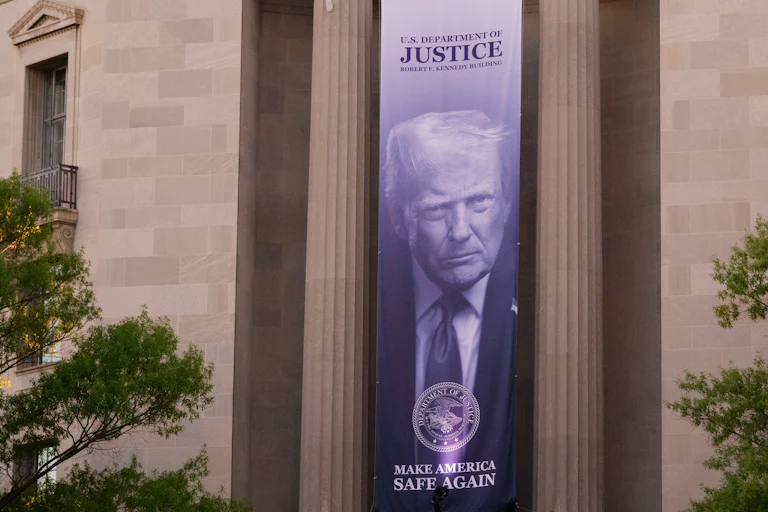
A banner of Donald Trump's face hangs from the Department of Justice building
Kevin Carter/Getty Images

A top staffer at the Department of Justice asked to recuse himself from work related to Donald Trump’s “Anti-Weaponization Fund” so he could cash in on it. 

The sudden request from Patrick Davis, the assistant attorney general for legislative affairs, concerned his colleagues because he’d been charged with liaising with Congress in order to  set up the president’s slush fund, according to two administration officials who spoke to Politico

“[Davis] has relationships with the senators, and it was a very tough time for him to back out,” one of the officials told Politico. “In a very fraught moment, with legislative affairs and stuff with the Hill, DOJ needed to have the head of leg. affairs involved.”

Davis’s potential claim to taxpayer dollars relates to his prior work as Iowa Senator Chuck Grassley’s top investigative counsel for the Senate Judiciary Committee. Davis was one of dozens of congressional aides whose phone and email records were quietly subpoenaed during the investigation into alleged Russian interference, following the 2016 presidential election. Davis only discovered the subpoena years later. 

“It felt like a violation, not simply on a personal level, but more importantly of the separation of powers given the nature of our oversight work,” Davis previously told The New York Times

The two administration officials told Politico that Davis didn’t have a valid reason to recuse himself because the fund hadn’t been formally set up, and Davis would have been useful in preparing acting Attorney General Todd Blanche before he appeared on Capitol Hill to answer questions about the fund.

“It was a hard issue and he just didn’t want to deal with it and didn’t want to be there to address the difficult conversations,” one official told Politico. “The thing was a cop-out.”

A DOJ spokesperson told Politico that Davis had temporarily recused himself “out of an abundance of caution,” and it was later determined that the recusal was not necessary for “a number of reasons.” 

Earlier this month, Blanche confirmed that plans for the fund are dead, but he and Trump have continued to rave about the idea. 

Trump Team Thinks JD Vance Is Conspiracy Theorist After Epstein Saga

A new report reveals how Trump’s inner circle tried to respond to Americans’ anger over the Epstein files.

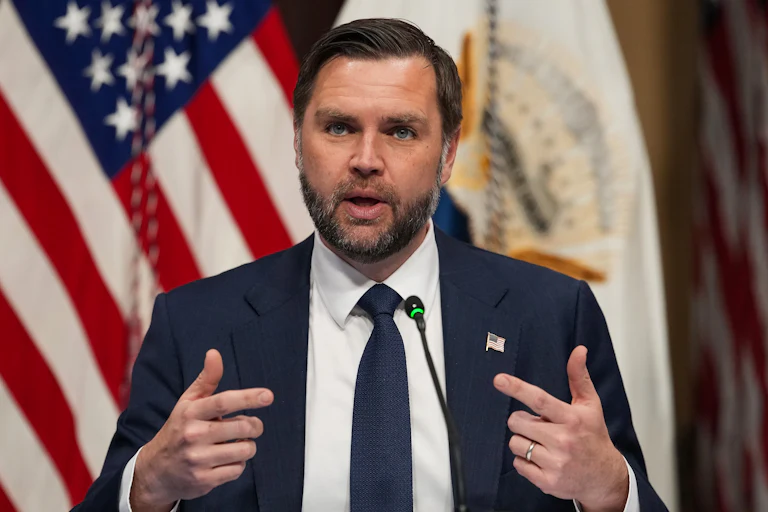
Vice President JD Vance speaking
Andrew Harnik/Getty Images

Other members of President Trump’s Cabinet began to consider Vice President JD Vance a “conspiracy theorist” as he pushed for the release of the Epstein files and an interview with Ghislaine Maxwell in the midst of their panicked attempt to snuff out the biggest controversy of Trump’s second term.

New reporting from The New York Times reveals that while the Cabinet remained staunch in their public defense of Trump, there was chaos behind the scenes last year over Trump’s deep connections to the sexual predator. Vance played a large role in the internal discord, as he seemed to be the loudest voice pushing “the darkest theories about Epstein and a cabal of predators hidden within the country’s ruling class”—leading White House chief of staff Susie Wiles to call him a major conspiracy theorist.

When Trump’s Cabinet learned that The Wall Street Journal was set to publish its story on Trump’s birthday letter to Epstein, the team met in the Situation Room to discuss their options. Vance pushed for the administration to fully release the files quickly, suggesting that they have Epstein co-conspirator Ghislaine Maxwell either do an interview with Tucker Carlson or testify before Congress. In Vance’s mind, this would solidify Trump’s alibi and secure confidence with their MAGA base—which happened to care very much about the Epstein files. Both plans were struck down, and the team pointed out that Maxwell would want something in return.

“Pardoning Maxwell, a trafficker of young girls, would create a huge P.R. problem,” communications director Steven Cheung argued.

“We can’t offer Ghislaine Maxwell anything,” said White House deputy chief of staff James Blair. “A, I don’t know why we would. And B, if we give Ghislaine Maxwell any sort of break whatsoever and then she turns around and says nice things about us, or says nice things about us and we give her a break, it will undermine the entire point of her saying good things. That will feed the conspiracy theory, period. If there’s nothing for her to say that hurts us, we shouldn’t have to offer her anything.”

The report makes it abundantly clear that there was no consensus on how to handle the political tsunami of the Epstein files, as it also details the falling out between former Attorney General Pam Bondi, former FBI Co–Deputy Director Dan Bongino, and FBI Director Kash Patel. The drama between them came to a head after a tumultuous few months in which Bondi went from claiming she had Epstein’s client list sitting on her desk to handing out big white binders to MAGA influencers, to then claiming there was essentially nothing new in the files.

“You fucked this thing up from the start,” Bongino screamed at her, a day after the DOJ memo claiming there was nothing more in the files to be released. “The way you’ve been talking about this—that dumb fucking charade with the Epstein files, the ‘They’re on my desk’ nonsense, all the promises to the folks out there.”

While it’s unclear where Vance stands among Trump and the rest of the Cabinet now, it’s clear that he’ll have to answer for the internal decisions made last summer for the entirety of his political career.

Republican Congressman Caught Faking Call to Dodge Questions

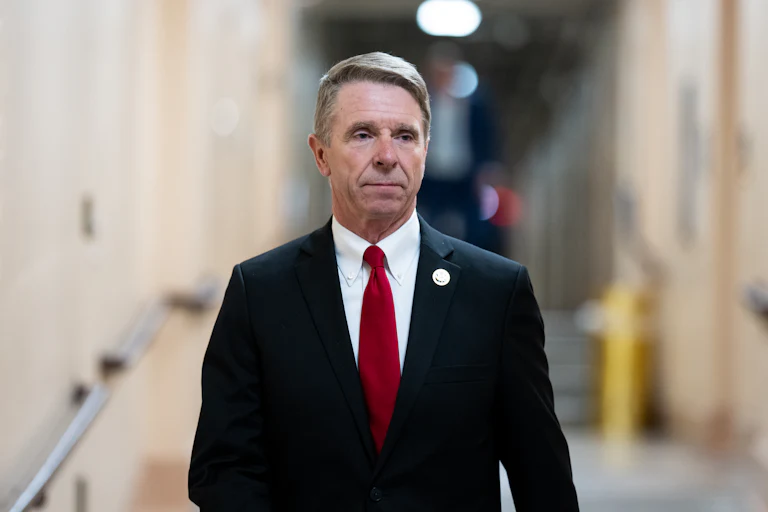
Representative Rob Wittman pretended to be talking on the phone for more than a minute.

Rob Wittman
Bill Clark/CQ-Roll Call, Inc/Getty Images

Possible Republican cuts to Social Security was too controversial of an issue for one member of Congress to handle. 

Republican Representative Rob Wittman of Virginia was asked by Meidas Touch outside of the Capitol Tuesday about House Speaker Mike Johnson’s rumored plans to cut Social Security, and he immediately tried to pretend he couldn’t answer the question. Wittman grabbed his phone and started an imaginary conversation, with his phone screen clearly showing that he wasn’t on a call.  

Wittman fully committed to his bit, ignoring follow-up questions and pretending to discuss a fictional appointment while walking by cars for over a full minute. When his “call” ended, he proceeded to leave the Capitol grounds. It’s not the first time Wittman has faked a phone call to avoid speaking with reporters, as he did the same thing to Drop Site News reporter Julian Andreone last week. 

On Monday, Johnson said in a radio show appearance that “entitlement programs like Medicare, Medicaid, and things like Social Security” need to be “adjusted and fixed,” which appears to indicate that cuts are coming. 

Ken Martin, the chairman of the Democratic National Committee, attacked Johnson on X, saying, “Republicans have a plan to cut Social Security, Medicare, and Medicaid—after already passing the largest healthcare cut in history. Higher costs, less healthcare. That’s what Republicans are running on this November.” 

In response, Johnson accused Democrats and the media of fearmongering, claiming that Republicans are the only ones doing anything about fraud and abuse. But the GOP’s record, particularly during President Trump’s second term, shows that they have no misgivings about cutting programs like Medicare or Social Security. If they retain control of Congress after November, those cuts are almost certainly coming. 

Someone Please Explain to Trump How the Trade Deficit Works

Donald Trump’s bizarre post raises questions about his economic know-how.

Donald Trump speaks to reporters after the Knicks game
Samuel Corum/Getty Images

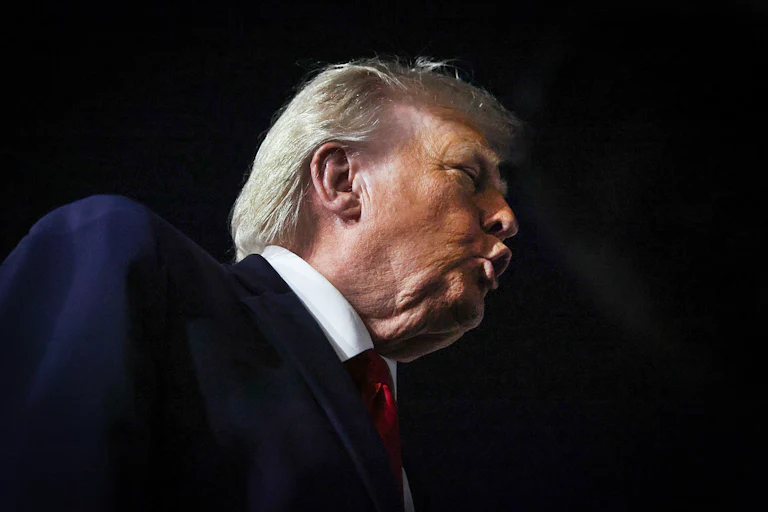
President Donald Trump posted a humiliating economic statistic Tuesday that revealed his kindergarten-level understanding of economics.

Trump wrote on Truth Social that the U.S. trade deficit had “widened by the most in nearly 34 years,” linking an article from six months ago that said that the trade gap had increased 94.6 percent to $56.8 billion after exports tumbled in November. As of April, the trade deficit is even wider at $55.9 billion.

A widening trade deficit is not a good sign for Trump’s economy, especially considering the president’s vow to erase it altogether. So how did the post end up on Trump’s timeline?

It’s not clear where the mistake was made, but Trump’s previous statements suggest that he doesn’t understand what a trade deficit is.

The president has described the trade deficit as a “loss,” even though it simply indicates that one country spends more on goods from another country than that second country spends on goods from the first. Economists say that having a trade deficit is not an inherently bad thing, because the U.S. simply can’t and shouldn’t make everything. But Trump has insisted that a wide trade deficit means the U.S. is being taken for a ride.

It appears this misunderstanding may be more widespread throughout the administration. Last month, the DOJ suffered a resounding legal loss because it misrepresented Section 122 of the Trade Act: It claimed that the phrase “balance-of-payments deficits” in the law is the same as a “trade deficit.” It is not, a court ruled.

There’s also a simple explanation for Trump’s post: The president is days away from turning 80 years old, prone to having senior moments, and may have gotten confused.

If that’s the case, then the post is still concerning. Trump uses his social media to speak to Americans on a global stage, make wild threats against foreign countries, manipulate the stock market—and apparently also post outdated information about the U.S economy.

In either case, someone take this old man’s phone away, please.