Breaking News
Breaking News
from Washington and beyond

Trump Picks Equally Unqualified Intel Chief After Democratic Revolt

Donald Trump has agreed to drop Bill Pulte—but his new choice is just as bad.

U.S. Attorney for the Southern District of New York Jay Clayton gestures and speaks while sitting on stage during an event
Michael Nagle/Bloomberg/Getty Images
Jay Clayton

The Trump administration’s Epstein investigator is getting his shot at running U.S. national intelligence.

The president’s nominating process to replace Tulsi Gabbard took a sudden right turn Thursday when he named Jay Clayton, the U.S. attorney for the Southern District of New York, as his permanent director of national intelligence.

“Few people anywhere in the Legal Community are respected at the level of Jay. I encourage the United States Senate to confirm Jay as soon as possible,” Donald Trump wrote on Truth Social.

Clayton has previously worked as a partner at Sullivan & Cromwell, providing counsel on corporate crisis management. He was also an adjunct professor at the University of Pennsylvania’s law school. He was handed his role atop the Southern District of New York without any prosecutorial experience, and seemingly does not have any relevant experience to run America’s national security operation, either.

The president had initially tapped Bill Pulte, a national real estate developer serving as the director of the Federal Housing Finance Agency, to temporarily serve in Gabbard’s stead. But Pulte—who similarly had no relevant experience for the job—became a point of contention with lawmakers, who argued that his appointment, even just as acting DNI, was effectively illegal as his resume lacked requirements for the job that had been written into the law.

To prevent Pulte becoming permanent DNI, Democrats blocked efforts to renew FISA Section 702, a statute that allows federal agencies such as the NSA and the CIA to surveil people without warrants, but that is set to expire Friday.

It is not yet clear how Clayton will change opinions—or the written requirements. Why the White House singled him out as an exceptional candidate to satisfy the administration’s agenda is far less murky.

Clayton has passed countless litmus tests proving his loyalty to the MAGA movement. He has seeded doubt in America’s election integrity, claiming as recently as Monday that there is a “deep problem with voting in America.” He has also defended Trump’s $1.8 billion taxpayer-bankrolled slush fund for the president’s aggrieved political allies, arguing with CNBC last month that Trump was entitled to “recourse” after a government contractor leaked his tax returns.

“Anybody whose tax returns have been intentionally leaked should have recourse against the government,” Clayton said.

And Clayton unquestioningly did the president’s bidding with regard to his appointment to the SDNY, probing Jeffrey Epstein’s social connections—so long as they tied back to former Democratic President Bill Clinton, former Obama administration adviser Larry Summers, and Democratic donor Reid Hoffman. Later, Clayton was handed an additional Trump admin priority in overseeing the investigation into Venezuelan President Nicolás Maduro, despite his dubious financial ties to the cases.

It is not clear how quickly the Senate will move to confirm Clayton’s confirmation. Among other steps, Clayton still has to fill out a detailed questionnaire, undergo an FBI background check, and sit for a public hearing before the upper chamber conducts its final vote.

This story has been updated.
Read more about the intelligence chief battle:

Trump Gets Birthday Surprise With “8647” Message on National Mall

Trump’s “Freedom 250” celebration in D.C. is off to a great start.

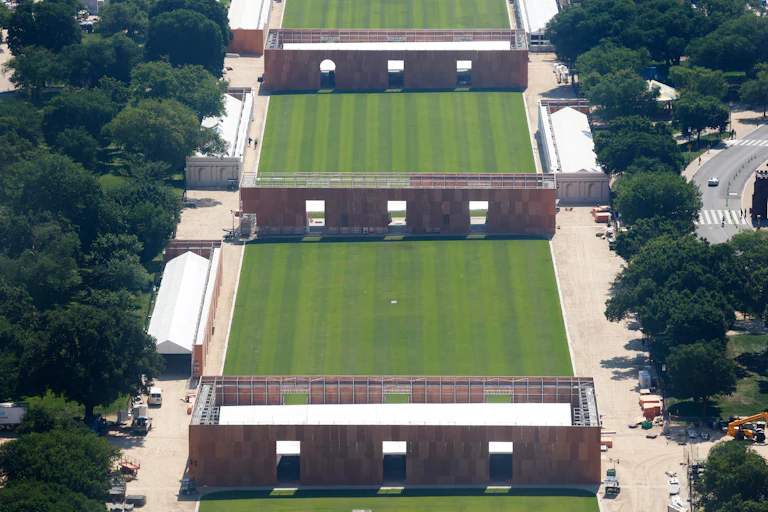
Structures are built on the National Mall in Washington, D.C., in preparation for America’s 250th celebration.
Kevin Carter/Getty Images
Structures are built on the National Mall in Washington, D.C., in preparation for America’s 250th celebration on June 7.

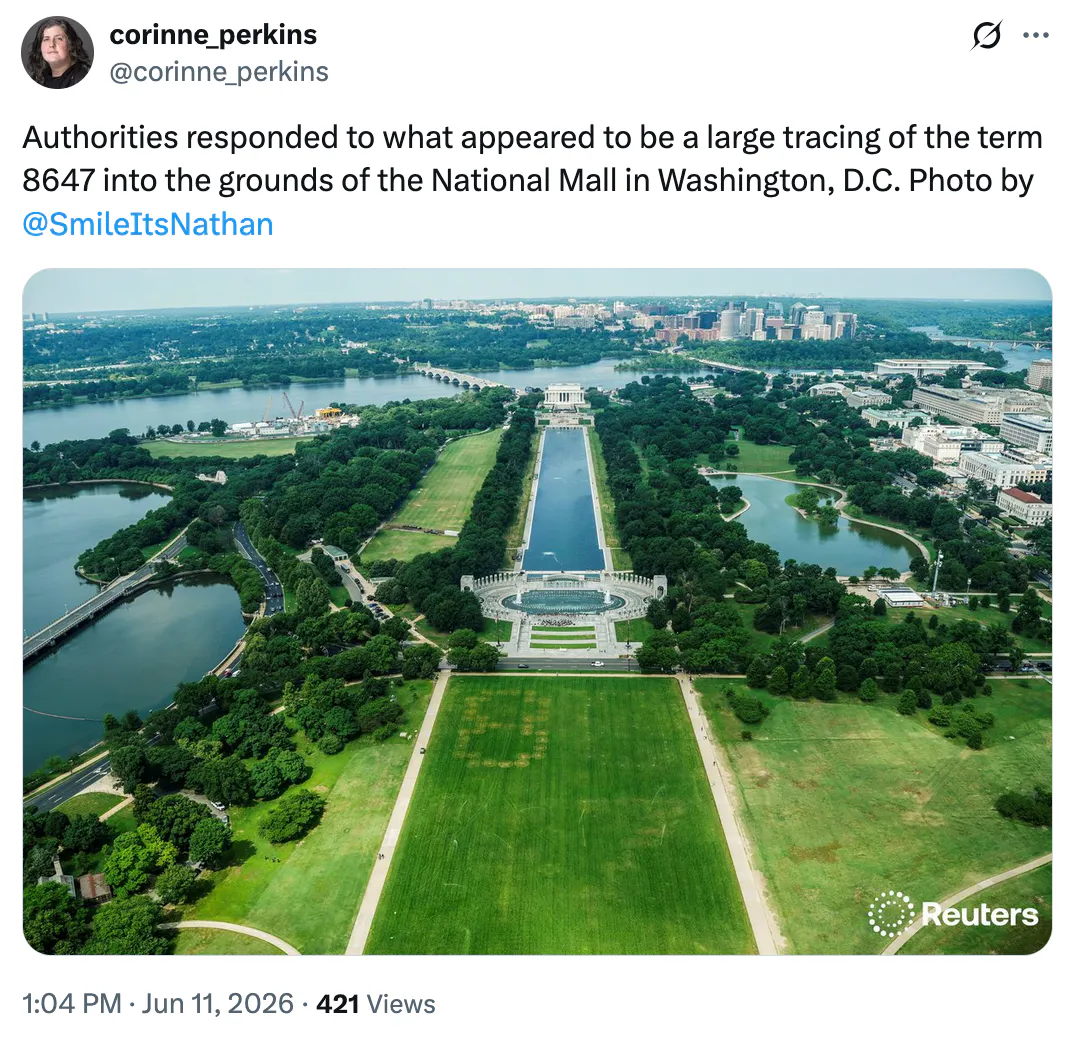
Someone has traced “8647”—the anti-Trump expression that got former FBI Director James Comey indicted—into the grass on the National Mall in Washington, D.C.

It’s still unclear who made the markings, or how. The administration has yet to formally respond.

Reuters photographer Nathan Howard captured a photo of the apparent tracing.

X screenshot corinne_perkins @corinne_perkins Authorities responded to what appeared to be a large tracing of the term 8647 into the grounds of the National Mall in Washington, D.C. Photo by @SmileItsNathan (photo of the 8647 message in the National Mall, with the 8 being most visible)

The slogan “8647” has two parts: “86”—originating in restaurants and meaning to nix or cancel—has developed a broader slang usage for cancelling something. In some cases, it has been used to refer to killing or disappearing someone. “47” refers to Trump’s status as the forty-seventh president.

This appears to be an impressively clandestine act of protest right in the middle of preparations for President Trump’s garish “Freedom 250” festival, which begins next week with the already collapsing “Great American State Fair.” The FIFA World Cup Fan Zone also began drawing visitors to the National Mall on Thursday, just in time to see the message.

Trump Cancels Iran Strikes Just as Abruptly as He Started Them

Donald Trump continues to give us all whiplash.

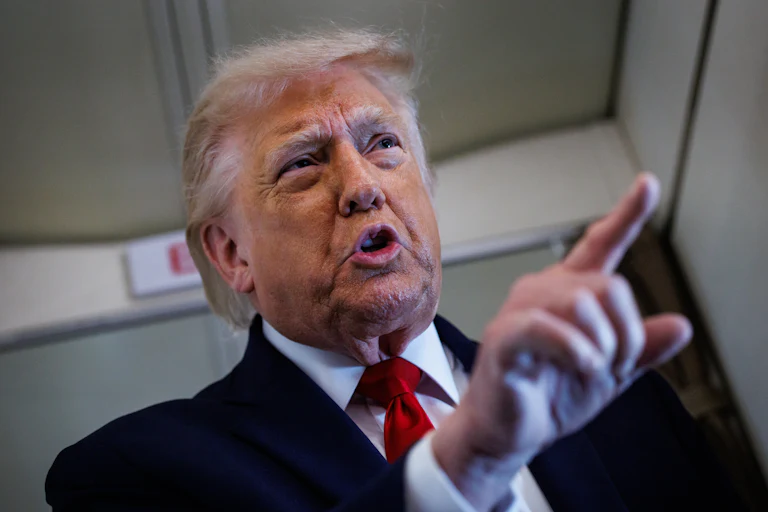
Donald Trump gestures with one finger while speaking to reporters on Air Force One
Samuel Corum/Getty Images

Donald Trump has canceled an attack against Iran that was scheduled to take place Thursday evening.

The president in a post on Truth Social suggested that the two countries had come to an agreement.

“Discussions and final points have been, in both concept and great detail, approved by all parties involved, including the United States, Israel, Saudi Arabia, UAE, Qatar, Turkey, Pakistan, Bahrain, Kuwait, Jordan, Egypt, and others,” Trump wrote.

“The Naval Blockade will remain in full force and effect until this Transaction is finalized—Time and place of the signing to be announced shortly,” he added.

The markets immediately reacted to Trump’s announcement: Stock indexes soared and oil prices plummeted.

The Trump administration’s negotiating strategy with Tehran has promised peace deals week after week to no avail. The wildly unpopular Middle East conflict is currently in its fourth month.

U.S. forces had already bombed Iran through two consecutive nights this week in the White House’s latest attempt to force Iranian leadership into negotiations to end the war. The attacks occurred despite the obvious risks of escalation.

“If we need to negotiate with bombs, we will negotiate with bombs,” Defense Secretary Pete Hegseth said Wednesday. “We will strike them hard tonight and hopefully Iran makes a good decision.”

The development comes in the immediate wake of a violent threat Trump made against Iran earlier Thursday, in which he pledged that the U.S. would strike Iran “VERY HARD TONIGHT” and would further take control of Iranian oil assets and infrastructure, including Kharg Island.

Negotiators worked through Wednesday night in Tehran to iron out the specifications of the peace deal, which both Qatari and Iranian leadership believed would satisfy the White House’s expectations, reported Axios. Insiders that spoke with the publication said that the new plan narrowed in on three main issues: focusing on the mechanism for releasing Iran’s frozen assets, arranging to reopen the Strait of Hormuz during a 60-day ceasefire period, and creating a roadmap for negotiating Iran’s nuclear program during the ceasefire.

This story has been updated.

Trump Team Secretly Still Plotting Slush Fund Payouts

Trump officials are saying one thing publicly and another behind closed doors.

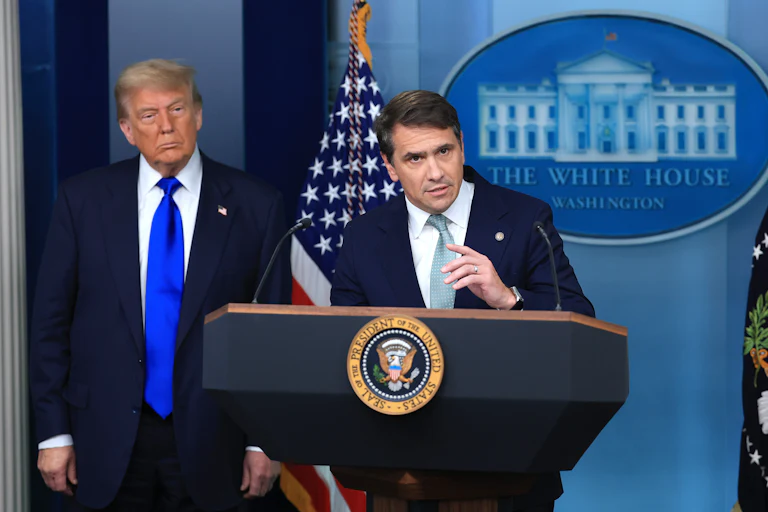
Donald Trump watches as acting Attorney General Todd Blanche speaks at the podium in the White House press briefing room.
Joe Raedle/Getty Images
President Donald Trump and acting Attorney General Todd Blanche

Trump officials are secretly telling Trump’s supporters that his $1.776 billion Anti-Weaponization Fund is still on, even as they publicly say that it’s dead.

The Atlantic reports that staffers in the Justice Department and White House are still telling Trump allies that they will get some form of payment, looking at ways to activate parts of the slush fund and alternative methods of compensating Trump loyalists at the same time, even though last week, Acting Attorney General Todd Blanche said publicly that “we are not moving forward with the fund.”

The DOJ has refused to put the fund’s demise in writing, even after being pressed by a federal judge on Wednesday. When asked why they were refusing, DOJ lawyers replied, “I don’t know,” suggesting that work is going on behind the scenes. Judge Richard Leon warned the administration that if they say the fund is dead, they had better not be lying.

Inside the administration, officials are reportedly divided on whether the fund will come to fruition. Anonymous sources told The Atlantic that the administration is continuing to work on the fund quietly, hoping the objections will dissipate and the story will leave the news cycle.

“Trump didn’t want to fight this out in public,” one DOJ official told the publication. Blanche’s nomination as attorney general is already facing opposition from some Senate Republicans, like Thom Tillis and John Curtis, who are threatening to hold it up to ensure the Anti-Weaponization Fund is officially killed. The fund faces legal challenges, as well, with Republican Senator Bill Cassidy joining his Democratic colleague Cory Booker in a court filing supporting a lawsuit against the fund.

A White House official told The Atlantic in an email that “any speculation about potential future actions is just that—speculation. President Trump remains committed to addressing Biden-era weaponization.”

As the midterms approach, the fund will be politically toxic for Republicans, and Democrats will certainly be using it as campaign fodder. The Trump administration has to know this, but will it take the safe option and kill it, or try to keep its efforts hidden until after November?

Oil Execs Warn Trump Gas Prices Are About to Get Hell of a Lot Worse

Fuel inventories that have so far helped to mitigate rising gas prices a little are running low.

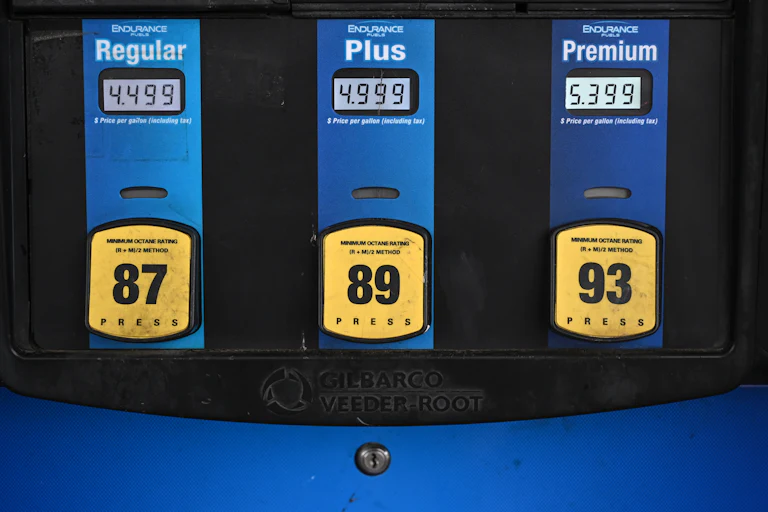
A gas station pump shows prices per gallon
Alex Wroblewski/Bloomberg/Getty Images

Gas prices could climb even higher in the coming months.

Industry officials have already warned the White House that the prices could spike yet again due to rapidly diminishing inventories, reported The Washington Post Thursday.

Since the beginning of the Iran war, commercial and government inventories have supplemented gas consumption across the U.S. The reserves have allowed prices to hover around $4.50 per gallon for the last four months—but that could change very quickly, according to oil and gas executives, who are often loath to make such alarming predictions.

“We’re sounding the alarm on these inventories going to record lows,” American Petroleum Institute CEO Mike Sommers told Fox Business. “We have to solve this problem in the Strait of Hormuz.”

Some inventories could be wiped out in a matter of weeks, according to the Post—just in time for summer holidays.

“I have absolutely no doubt the White House—from the president on down—is fully aware of the nearly universal alarm among oil companies and analysts about the direction of travel for oil prices this summer,” Bob McNally, a former Bush administration energy adviser, told the Post.

Yet Trump has been remarkably cavalier about the rising costs. With inflation at a three-year high, Trump stunned reporters, lawmakers, and voters alike on Wednesday with just four words: “I love the inflation,” he said.

“I love it,” he insisted, pledging that oil prices will drop “like a rock” when the war ends.

But the end of the war seems to be nowhere in sight. U.S. forces bombed Iran through two nights this week, part of the White House’s latest strategy to force Tehran to make a deal, despite the obvious risks of escalation.

“If we need to negotiate with bombs, we will negotiate with bombs,” Defense Secretary Pete Hegseth said Wednesday. “We will strike them hard tonight and hopefully Iran makes a good decision.”

Meanwhile, Trump’s allies aren’t so sure that their political movement will weather the brewing economic storm. The far-right populist rode the 2024 campaign on vehement promises of affordability; through his presidency, he swore that Americans would see lower utility bills, cheaper groceries, and more American-based jobs. But that hasn’t been the case.

Instead, as millions of Americans struggle with the rising cost of living and companies contend with rattled supply chains, the president’s inner circle fear that it might be too late to fix the problem for Trump’s midterm-dependent acolytes.

“Whether it’s peak inflation or not, it doesn’t matter,” one former Trump administration official told Politico. “The die has been cast in terms of how people are looking at the economy.”