Breaking News
Breaking News
from Washington and beyond

Supreme Court Takes Up Monumental Case on Assault Weapons Bans

The Supreme Court has agreed to hear a “gun rights” challenge to state bans on weapons like the AR-15.

AR-15 pointed out the window
Silas Stein/picture alliance/Getty Images

The Supreme Court on Tuesday agreed to hear a challenge to state and local bans on assault weapons, a move that could destroy restrictions on semiautomatic weapons like AR-15s—which are popular with mass shooters.

While the court chose not to adjudicate the issue last year, four of the court’s six conservative justices at the time expressed their opposition to such bans on Second Amendment grounds. The issue will be taken up in the court’s next term in October.

The specific bans that will be challenged originate in Connecticut and Cook County, Illinois—part of the greater Chicago area. Connecticut’s law is directly related to the 2012 Sandy Hook shooting, in which Adam Lanza shot and killed 20 children and six adults with an AR-15, a shotgun, and two semiautomatic pistols.

“We will not back down from defending Cook County’s long-standing ban on assault weapons. These weapons of war are designed to inflict maximum carnage and have no place in our communities,” Cook County State’s Attorney Ellen O’Neill Burke wrote on X. “Countless victims have already endured the devastating impact of gun violence. We will defend this lawful ordinance before this nation’s highest court to continue protecting the people of Cook County.”
Trump Threatens to Break the Law Over Birthright Citizenship

Donald Trump is trying to act like the fight isn’t over.

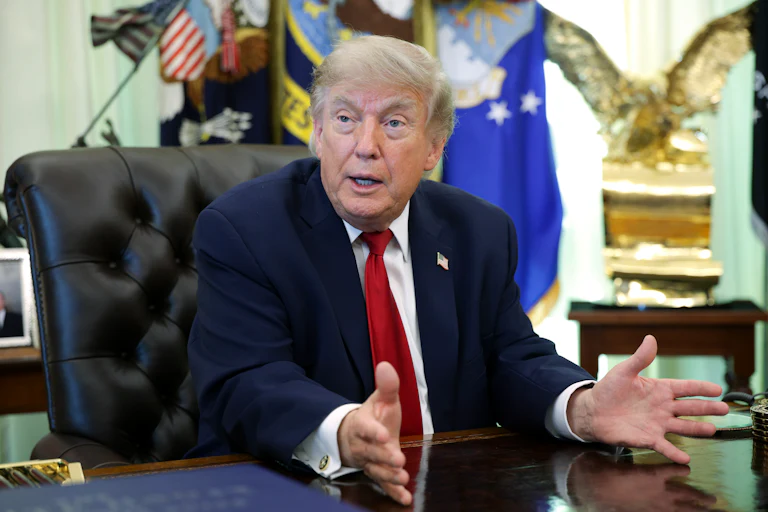
Donald Trump speaks while sitting at his desk in the Oval Office. He rests his forearms on the desk and gestures with his hands.
Alex Wong/Getty Images

Donald Trump claims to have a trick up his sleeve to upend birthright citizenship—though his plan to do so would most likely run afoul of the law.

The president downplayed the Supreme Court decision Tuesday that killed his attempts to rewrite the Fourteenth Amendment, claiming that he and his allies could “easily make it up in Congress through Legislation.”

“No long and unwieldy Constitutional Amendment is necessary!” he wrote on Truth Social. “Congress should start TODAY to work on ending expensive and unfair to our Country, Birthright Citizenship. They will have my Complete and Total Support!”

But that’s simply not true. Any attempt to change or alter birthright citizenship would require a constitutional amendment, since the right was enshrined in the Constitution in 1868 when Dred Scott was overturned and the Fourteenth Amendment was ratified.

Accomplishing that would require a level of coordination and bipartisanship seemingly beyond the current Republican Party. A constitutional amendment requires a supermajority—two-thirds of both the House and Senate—to pass. Alternatively, the issue could technically be put to a constitutional convention, though two-thirds of states would need to support the motion to have one at all, and any proposed changes to an amendment would still require ratification by three-fourths of the states.

The president was still embittered by the ruling hours after it was read at the bench, writing in a separate post that he “would like to congratulate President Xi, and the Great Country of China, on their massive Birthright Citizenship WIN.”

In another post, Trump went on to claim that while the Supreme Court’s birthright ruling was a “loss” for his second-term agenda, he had actually won the “biggest and most consequential Decision” when the court extended him (by a 6-3 margin) sweeping new authorities over some two dozen agencies that were originally intended to be independent. That included granting him the ability to fire members of the Federal Trade Commission.

Republican Congressman Missing for Months Says He Was Depressed

Representative Thomas Kean Jr. still had time to trade stocks while absent from Congress.

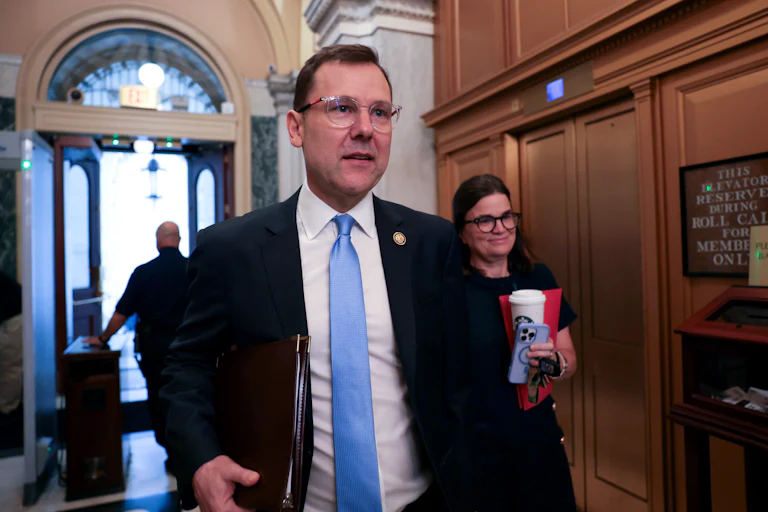
Representative Thomas Kean Jr. arrives at the Capitol with his wife Rhonda Kean.
Anna Moneymaker/Getty Images
Representative Thomas Kean Jr. arrives at the Capitol with his wife, Rhonda Kean, on June 30.

Republican Representative Thomas Kean Jr. was back at work Tuesday, and explained why he went missing in March without actually offering much of explanation.

In a speech on the House floor, Kean said that he was hospitalized on doctor’s orders for depression. He noted that it was a “difficult speech” for him to make as he is a private person and talking about himself doesn’t come naturally, but said that “I believe I owe an explanation to the people of New Jersey’s 7th district, my colleagues in this chamber, and to the American people for my actions.”

Kean said that months ago, he underwent medical testing at a hospital and was diagnosed with depression. While Kean didn’t believe he would need a long-term hospital stay, he said he was advised to remain put by doctors. Early on, he didn’t understand his condition, he added.

“It is physical. It is emotional. And until you experience it yourself, it is difficult to fully understand how powerful this illness can be,” Kean said. He said he was hesitant to accept his doctors’ advice that a long-term stay would be the fastest way to recovery, given his obligations to his family, colleagues, and constituents.

“But, as the over 48 million of my fellow Americans being treated for this illness have come to discover, there is no timeline for healing. There is no timeline for recovery. Only the work of getting better, one day at a time,” Kean said.

It was a heartfelt speech, but the New Jersey congressman failed to explain why his social media accounts continued to post regularly and his office still introduced legislation while he was missing. Kean’s financial disclosures showed that he was also trading stocks in April while he was ostensibly in the hospital, and his reelection campaign racked up travel expenses showing him using Uber and Amtrak in San Francisco, far from his constituents, in that same month.

If Kean’s depression was so severe that he needed hospitalization, how does he explain personally trading stocks and racking up travel expenses on the other side of the country? Kean also missed several important votes in Congress, including on the budget. He’s not in a safe Republican district, either: Donald Trump carried it by just one percentage point in 2024, and Democratic Governor Mikie Sherrill won it by two last November.

Kean is not the first member of Congress to deal with depression: Former Representative Jesse Jackson Jr. was treated at the Mayo Clinic for bipolar depression in 2012 and later resigned that year, and former Representative Patrick Kennedy dealt with depression throughout his congressional career, receiving in-patient treatment in 2006 and 2009 and deciding not to run for reelection in 2010.

While Kean won his primary unopposed, he faces Democrat and former Navy helicopter pilot Rebecca Bennett in November’s general election. Kean may not be able to escape scrutiny for his lack of transparency over the last few months.

Roberts Trashes Alito’s Dissent on Supreme Court Birthright Ruling

John Roberts called out inconsistencies in Samuel Alito’s argument.

Supreme Court Justice Samuel Alito speaks in court
Jay Janner/The Austin American-Statesman/Getty Images
Supreme Court Justice Samuel Alito

Chief Supreme Court Justice John Roberts called out Justice Samuel Alito’s nonsensical argument about birthright citizenship.

The Supreme Court ruled Tuesday that children born in the United States to parents who were undocumented or temporarily in the country are citizens at birth under the Fourteenth Amendment’s citizenship clause.

In his separate dissent, Alito argued that immigrant parents, in order for their child to automatically be made an American citizen, could not be subject to any foreign power. But he contended that some people who had done “everything within their power to become United States citizens can be seen as no longer subject to any foreign power.”

But Roberts argued that this kind of “ad hoc exemption” was plainly inconsistent with Alito’s own interpretation of the Civil Rights Act.

“He does not explain how that exception can be squared with his view of the text, which (to repeat) is that anyone ‘automatically’ made a [‘national’] of his ‘parents’ native country’ was not entitled to citizenship,” Roberts wrote.

That wasn’t the only reason Alito’s dissent was a mess.

In closing, Alito argued that the majority’s interpretation “saddles this country with an ancient British rule that even the United Kingdom has abandoned,” referring to jus soli, or the right of soil. But the British government scrapped this law by passing the British Nationality Act of 1981—not by asking the courts to rewrite the nation’s founding documents.

MAGA Melts Down After Supreme Court Protects Birthright Citizenship

Republicans aren’t pleased the Supreme Court ruled in favor of upholding the Fourteenth Amendment.

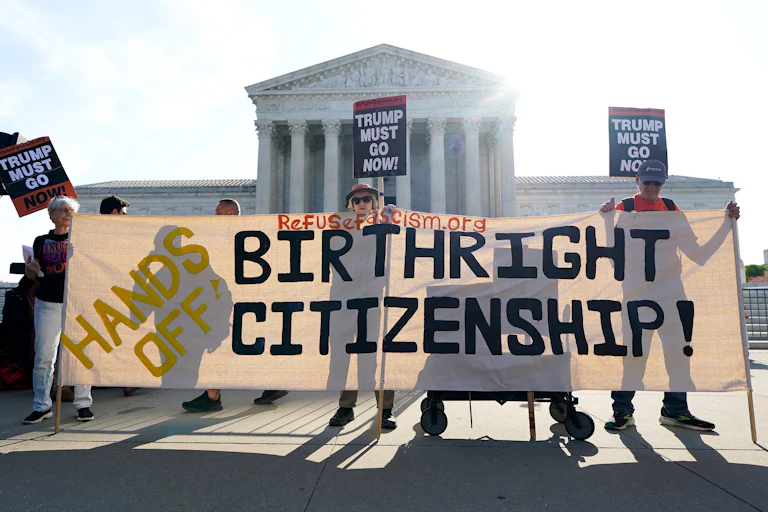
People outside the Supreme Court hold up signs reading "Trump must go now" and "Hands off Birthright Citizenship."
Al Drago/Getty Images
People demonstrate outside the Supreme Court ahead of President Donald Trump’s arrival for oral arguments on birthright citizenship, on April 1.

President Trump’s supporters have begun to rail against the Supreme Court’s birthright citizenship ruling, a significant blow to their mass deportation dreams.

The court ruled 6–3 on Tuesday to strike down Trump’s executive order and uphold the constitutional principle that guarantees virtually anyone born on U.S. soil is an American citizen, regardless of their parents’ immigration status. Republicans weren’t pleased about this safeguarding of the Fourteenth Amendment.

“The Supreme Court’s birthright citizenship decision is wrong, dangerous, and disastrous for American sovereignty and the American people,” wrote GOP Senator Eric Schmitt. “If we can’t fix it with ordinary legislation, then we must do what the Constitution commands in moments of national crisis: We must amend the Constitution and restore American citizenship. We must again put ‘We the People’ first.… This ruling is the final alarm bell.”

Heritage Foundation president and Project 2025’s lead architect Kevin Roberts was equally upset. “The Supreme Court’s ruling on birthright citizenship is a tremendous betrayal of the republic. The Justices in the majority have inflamed the all-out assault on our sovereignty and cheapened the sacred value of American citizenship,” he wrote. “Universal birthright citizenship erases any uniquely American birthright—a distortion that was never the meaning or intention of the 14th Amendment. It is time for a constitutional amendment to correct this gross injustice.”

“We are supposed to be a country, not an orphanage. You can’t jump our fence, give birth, cheat the system, and expect our taxpayers to raise your baby,” right-wing influencer and Charlie Kirk disciple Brilyn Hollyhand chimed. “We will be a country again one day. Illegals will be deported and birthright citizenship will end. If you’re a legal immigrant and won’t assimilate you will be denaturalized. If we want to last another 250 years we can’t be trampled on anymore.”

Strangely, the president himself has remained silent, even as he celebrated two other Supreme Court rulings upholding state bans on transgender athletes and loosening campaign finance laws.

Justices Amy Coney Barrett and Brett Kavanaugh—both Trump appointees—sided with the liberal justices in their decision to project birthright citizenship. Kavanaugh did argue that the law could eventually be changed by Congress, not via executive order, leaving the door open for a future attack on one of the most basic tenets of the American experiment.