Breaking News
Breaking News
from Washington and beyond

Kavanaugh Gives Republicans Road Map to End Birthright Citizenship

Brett Kavanaugh does not consider birthright citizenship to be a done deal.

Supreme Court Justice Brett Kavanaugh smiles while walking out of the White House
Aaron Schwartz/AFP/Getty Images
Supreme Court Justice Brett Kavanaugh

The Supreme Court may have upended the White House’s attempt to rewrite the Fourteenth Amendment, but at least one justice pointed Republican lawmakers in a different direction to unravel the birthright citizenship clause.

Justice Brett Kavanaugh, who was appointed by Donald Trump to the bench in 2018, wrote a dissenting opinion in Trump v. Barbara, despite ruling alongside the majority.

His rationale: Trump’s plan to strip American-born second-generation immigrants of their citizenship could work if it were enacted through Congress.

“In my view, the Executive Order does not violate the Fourteenth Amendment. But the Order does contravene a federal statute,” Kavanaugh wrote, referring to the law specifying birthright parameters. “Congress could—consistent with the Fourteenth Amendment—amend [this law] or otherwise enact new legislation establishing exceptions to birthright citizenship for children born to foreign citizens unlawfully or temporarily in the country. But Congress has not yet done so.”

Kavanaugh argued that while Trump’s executive order violated federal law, it did not actually run afoul of the Constitution, even though the federal law echoed the same language employed in the Constitution.

The justice noted that Congress had considered numerous amendments to the law over the last 30 years but never actually enacted any of them.

Trump has tried and failed multiple times over the last year and a half to strip the constitutionally enshrined right. Mere hours after he was sworn into office, Trump signed an executive order stating that children born to immigrants on temporary visas or who are in the country illegally are not entitled to birthright status. That order was blocked by several judges in different court circuits over the last year.
Watch Mike Johnson Learn Supreme Court Upheld Birthright Citizenship

Suffice to say the House speaker is not happy.

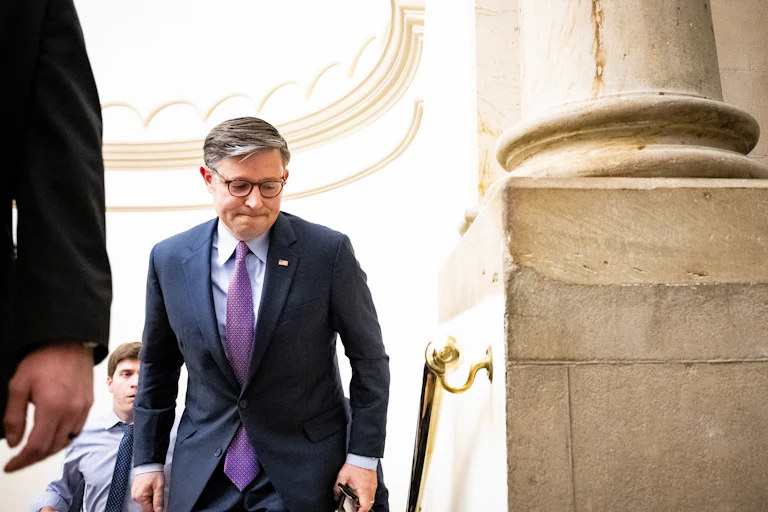
House Speaker Mike Johnson presses his lips together and looks down while walking up stairs in the Capitol
Graeme Sloan/Bloomberg/Getty Images

Everyone needs to hear the sound House Speaker Mike Johnson made when he heard the Supreme Court’s decision to uphold birthright citizenship.

The Supreme Court ruled Tuesday that children born in the United States to parents who were undocumented or temporarily in the county are citizens at birth under the Fourteenth Amendment’s citizenship clause.

Johnson was in the midst of reciting his reasons for opposing birthright citizenship, when the ruling was read to him by a member of the press. The Louisiana Republican looked crestfallen.

“What’s your reaction to that?” one reporter asked, as other members of the press struggled to suppress their laughter.

“MmmmMmmm,” Johnson moaned, like he had a bad taste in his mouth.

“Well, uh, I need to read the opinion, OK? But uh, obviously that’s, I mean you could say that’s a textualist and originalist view,” Johnson stammered. “But, however, I do think that this has been grossly abused in recent years, and that is the case that’s being made by the plaintiffs of the case, and we’re very sympathetic to that because it’s a serious problem.”

The House speaker then suggested that the conclusion from this ruling would be to push for an amendment to the U.S. Constitution, but he noted the significant obstacles to ratifying such a measure.

“I will say I’m very disappointed in that outcome,” Johnson added.

Trump Demands Master List of Espionage Targets Tracked by U.S. Intel

Why is Trump trying to get his hands on a list like this?

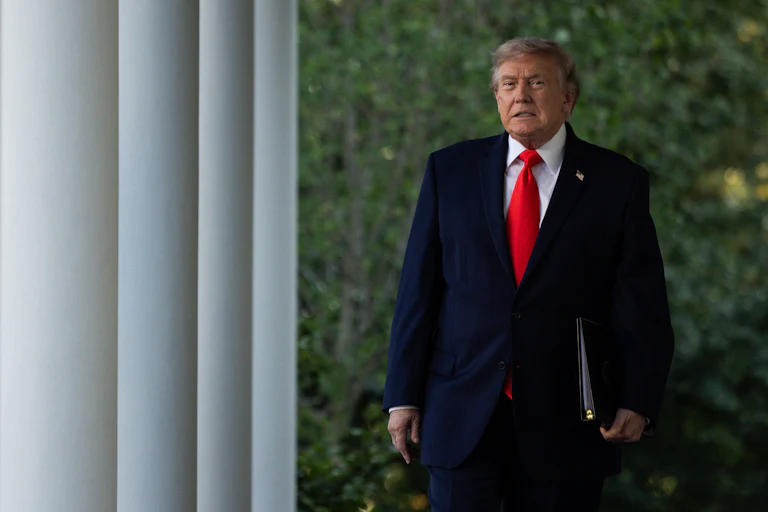
Donald Trump walking in the White House
Tierney L. Cross/Getty Images

President Trump wants a master list of every foreign intelligence target, including potential recruits and people that U.S. agencies suspect are spies.

The New York Times reports that the White House, through the Office of the Director of National Intelligence, has asked federal intelligence agencies to turn over these names, alarming officials who fear that it would compromise operations or be misused. So far, senior counterintelligence staff at the CIA and FBI have resisted the demands, according to the Times.

Intel officials also can’t agree on how to create, maintain, and secure the list. Trump’s new acting director, Bill Pulte, has no intelligence experience, causing FBI and CIA staff to worry about how he’d handle such a document. And the relationship between the ODNI, FBI, and CIA has gotten worse thanks to former Director of National Intelligence Tulsi Gabbard, who pushed Trump’s false claims of election fraud and cut the office’s staff.

Even creating such a list could jeopardize operation security, as it would put sensitive information that is normally compartmentalized into one place. It could also compromise long-term investigations and operations. Some of the targets on these lists are carefully protected even within federal agencies, with many staff not having access to their identities.

An official from Pulte’s office told the Times that it was only trying to follow National Security Presidential Memorandum 7, the administration’s national security strategy targeting supposed anti-American activity on the left. That official said compiling a list of intelligence assets and targets would help with collaboration and information sharing.

As a Trump loyalist, Pulte is likely to closely follow the president’s orders. Under Gabbard, Trump used the ODNI, which is supposed to focus on foreign intelligence, to investigate nonexistent fraud from the 2020 presidential election and other elections where Trump didn’t like the results. What does he want with a full list of intelligence targets? Does he think there could be some foreign connection to elections, or does he have some misguided or odious foreign policy plans?

Justice Sotomayor Warns Trans Athlete Bans Aren’t Based on Any Facts

The three liberal justice on the Supreme Court dissented as the judiciary upheld state bans on transgender athletes.

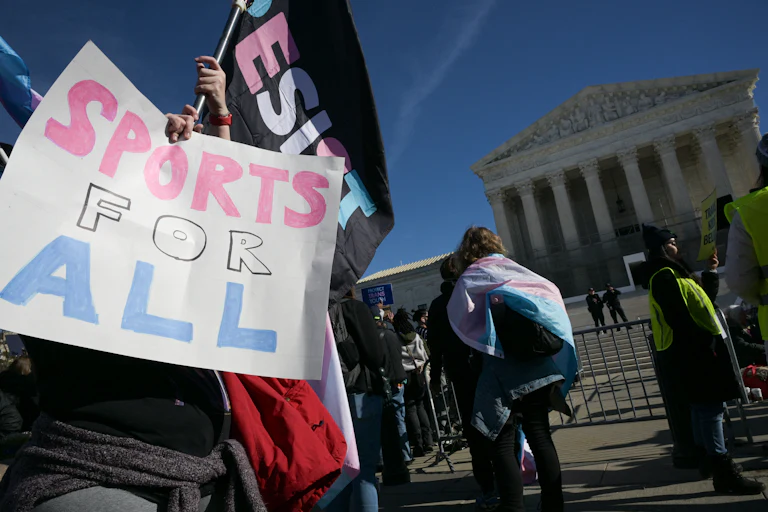
Someone holds up a sign that reads "Sports For All" while another waves a "Resist" flag. Both are in the trans flag colors and they stand before the Supreme Court.
Oliver Contreras/AFP/Getty Images
LGBTQ rights advocates rally outside the Supreme Court as justices hear arguments in challenges to state bans on transgender athletes in women’s sports, on January 13.

The Supreme Court on Tuesday upheld West Virginia and Idaho state laws banning transgender athletes from competing on teams that align with their gender, further restricting trans rights in the U.S.

This is the court’s first ruling on laws regarding trans athletes, and follows last year’s decision in U.S. v. Skrmetti allowing states to ban gender-affirming care for transgender minors.

The ruling contributes to an increasingly bleak legal landscape for trans people in the U.S. Both petitioners argued that the state bans are discriminatory, and violate the Fourteenth Amendment’s equal protection clause. One argued that the restrictions are also a violation of Title IX, which prohibits discrimination in schools on the basis of sex.

All three liberal justices dissented in the decision, noting that they would have sent the case back for further factual findings on the equal protection claim.

Justice Sonia Sotomayor wrote a partial dissent, joined by Justices Ketanji Brown Jackson and Elena Kagan.

“States do have some room to legislate around issues when there exists significant, and genuine, scientific debate,” Sotomayor wrote. “At this point, however, neither the District Court nor the Fourth Circuit has passed upon any of the available evidence or made the necessary factual findings about the state of the scientific debate.

“The majority’s opinion ends by reciting the many wonderful ways in which playing sports can be valuable to young people. It can help build resilience, tenacity, leadership, and discipline. It can lead to life-long friendships, community, and a sense of belonging. It can bring joy and the thrill of victory, along with all the lessons one learns from experiencing defeat. The benefits are immense,” Sotomayor continued. “Because of the Court’s decision today, West Virginia, and any other state actor, can deny B. P. J. and others like her these experiences simply because it thinks they have an inherent athletic advantage, even if the facts show that they do not.”

“A transgender woman penalized for being perceived as aggressive has experienced discrimination ‘on the basis of sex’ just as much as a cisgender woman has, no matter that the transgender woman’s behavior matches expectations of her sex assigned at birth,” Justice Jackson wrote in an additional dissent. “Either way, the institution has imposed its gender-based expectations upon her. And either way, the institution may have violated Title IX.”

The majority decision will have national repercussions on transgender athletes competing in youth and college sports. The number of trans athletes participating in these activities is already very slim.

Rachel Kahn contributed reporting to this story.

Supreme Court Hands Trump Massive Blow Over Birthright Citizenship

The high court struck down Donald Trump’s executive order overturning birthright citizenship.

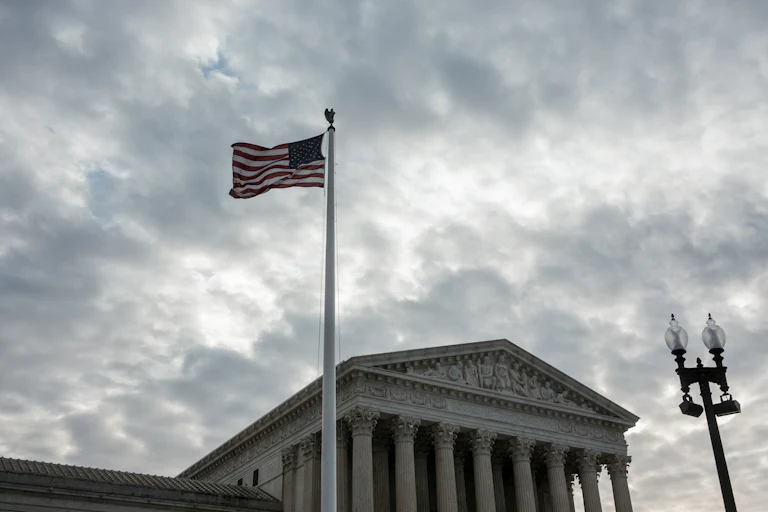
The Supreme Court building in Washington, D.C.
Kent Nishimura/Bloomberg/Getty Images

The Supreme Court has tossed another one of the president’s efforts to kill birthright citizenship.

In a 6–3 decision filed Tuesday, the court ruled in favor of the 1868 constitutional clause, which entitles any person born on U.S. soil to an American passport, further safeguarding the protections of the Fourteenth Amendment from the Trump administration.

Chief Justice John Roberts delivered the majority opinion, writing that “citizenship, then and now, was the right to have rights—to freely participate in our political community. The Framers of the Fourteenth Amendment extended that promise to ‘every free-born person in this land.’ We keep that promise today.”

Justices Clarence Thomas, Samuel Alito, and Neil Gorsuch dissented. Justice Brett Kavanaugh voted with the majority but wrote a dissenting opinion disagreeing in part with the court’s ruling.

Altogether, two Donald Trump appointees—Kavanaugh and Amy Coney Barrett—ruled against the executive order, marking the third such time in recent memory that the president’s Supreme Court appointments have turned against him.

Trump has tried and failed multiple times over the last year and a half to strip the constitutionally enshrined right. Mere hours after he was sworn into office, Trump signed an executive order stating that children born to immigrants on temporary visas or who are in the country illegally are not entitled to birthright status. That order was blocked by several judges in different court circuits over the last year.
In December, the nation’s highest judiciary agreed to hear another one of the administration’s birthright challenges, this time pertaining to a case out of New Hampshire. The executive branch argued in the case that language included in the Fourteenth Amendment—specifically, “subject to the jurisdiction of”—required applicable children not only to be present in the country at the time of the birth but also to confer their allegiance to the United States.

The argument appeared thin at best, considering the administration did not clarify how it expected people who had just been born to declare their allegiance.

Solicitor General D. John Sauer wrote in legal arguments filed at the time that the naturalized citizenship pathway had become “pervasive” with “destructive consequences.”

During arguments in May 2025, justices on both ideological sides of the court flamed the Trump administration’s efforts to rewrite birthright citizenship through America’s courts, questioning why the government’s attorneys would even bring the case to the judiciary’s doorstep when “every court has ruled against” the administration on birthright citizenship.

At the time, Kavanaugh pressed Sauer into a corner, forcing the solicitor general to admit that the Trump administration doesn’t even know how it would enforce its birthright citizenship order. Sauer managed to appall Barrett by arguing that Trump has the “right” to disregard legal opinions that he doesn’t personally agree with.

In Tuesday’s case syllabus, the Supreme Court noted, “If Congress intended to limit American citizenship to the children of those domiciled in the United States, nothing in the succinct language of the Citizenship Clause conveyed that design; words appearing frequently in the Executive Order—‘mother,’ ‘father,’ ‘lawful,’ ‘temporary’—are absent from the Clause.”

This story has been updated.