Will we be safer living inland, away from coastal storms? What about forest fires? Should we have children, and if so, how many? Can we handle old age in a flooding basement, or at the end of a dirt road? What if everywhere we love is dangerous?
When we try to plan our lives rationally, the climate crisis stymies us at every turn. There are already so many other factors to consider—where can we find community and work? Where can we afford to live?—and useful information can be hard to come by. Zillow, the real estate listings platform, just made matters worse. In October, The New York Times recently reported, the company ceased publishing climate risk with its listings. The listings platform had only begun this potentially helpful practice last year, using data from First Street, a risk-modeling firm.
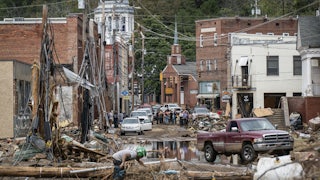
For homeowners, failing to consider climate risks could be catastrophic—in fact, it already is. Almost half the homes in the United States are at serious risk from the climate crisis, whether due to flooding, wildfires, hurricanes, heat, or bad air quality. Adding to the problem, while potential homebuyers struggle to obtain data to guide their decisions, the insurance industry does not suffer from challenges of this kind. Insurers are making rational decisions in their own interests, leaving homeowners with insurmountable costs, or even uninsured. State Farm canceled 72,000 home insurance policies last year, leaving those homeowners unprotected in future disasters. And Hurricane Helene inflicted some $200 billion in damages last year, of which, Grist reported, almost none were covered by insurance. While in some cases insurers are refusing to cover risky homes, in others, they are setting prices so high that millions are going without, or getting cheaper, less comprehensive insurance.
The result of all this, the Senate Budget Committee warned a year ago, will be “a collapse in property values with the potential to trigger a full-scale financial crisis.” Early this year, First Street, the firm that provided climate risk data to Zillow before last month, predicted that over the next three decades, Americans would lose nearly $1.5 trillion in assets due to the damage that climate change would wreak on our homes. For many American homeowners, this is a quick path to financial ruin: Their home is their most valuable asset, with home equity accounting for 45 percent of their net worth. The percentage is much higher for Black and Hispanic homeowners, who tend to have much less wealth overall than white homeowners.
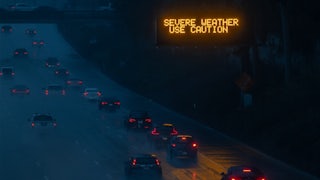
You could end up losing much more than an asset. Far from stereotypically risky locations like Tornado Alley or the Gulf Coast, severe weather events exacerbated by climate change now threaten people’s lives everywhere from Brooklyn basements to the Pacific Palisades.
It’s easy to criticize Zillow for holding back this information. But Zillow isn’t in the business of serving the public interest. It’s a for-profit company that makes money by advertising and other services to the real estate industry, which wants people to buy homes. And climate risk isn’t a topic that encourages that.
Homeowners trying to sell their climate-risky properties understandably aren’t wild about the climate ratings, either. This problem will only grow in the coming years; consider all the baby boomers who retired to coastal Florida or North Carolina’s Outer Banks and will one day leave their heirs struggling to sell their imperiled properties, a demographic time bomb of climate and financial peril.
As the Insurance Fairness Project pointed out in a statement on the Times story about Zillow’s change to its ratings, governments should step in and provide this kind of information to potential homebuyers. We need more, not less, information on how the climate crisis might affect our lives, and private companies like Zillow aren’t best placed to provide that.
The Trump administration isn’t likely to help with this, considering its concerted efforts to defund the National Oceanic and Atmospheric Administration, or NOAA, and other sources of climate research. The president has also repeatedly insisted that climate change is a “scam” and a hoax.” But state and local governments also have a stake in helping homebuyers make informed decisions; risky home choices will potentially put enormous pressure on rescue services, firefighting, and government relief agencies, adding costs to the inevitably horrific disruptions of the climate crisis, and devastating local economies. They could provide some of this information too.
Of course, that’s not the only solution. Home builders and developers should not build in the most climate-vulnerable places, and regulation to that end would make sense. As Harvard Business School researchers understatedly pointed out this summer, that idea “has not caught on.” But it’s an important component of reducing both individual and society-wide risk, along with designing neighborhoods and homes to be more climate resilient, upgrading sewer systems, and using stronger materials to build, rather than doing everything cheaply for a false sense of affordability.
Of course, addressing the climate crisis at the same time, to help prevent its worst effects, would be even better. But we probably won’t see much effort on that front under this administration, no matter how many Trump voters watch their wealth crumble into the sea.