Breaking News
Breaking News
from Washington and beyond

Trump to Be Named Time Person of the Year—and He’s Already Celebrating

Time magazine is expected to crown Donald Trump the 2024 “Person of the Year.”

Donald Trump rests on a yellow couch, leaning over on the armrest
Oleg Nikishin/Getty Images

Donald Trump is slated to be named Time magazine’s 2024 “Person of the Year,” according to Politico.

The magazine expects to make the official announcement on Thursday morning, and the president-elect intends to ring in the New York Stock Exchange to celebrate. Trump was named “Person of the Year” after his victory in 2016 as well. This year’s runner-ups included Vice President Kamala Harris, Kate Middleton, Elon Musk, and Benjamin Netanyahu.

Trump keeps a close watch on the naming each year. In 2013, when it was Pope Francis, he commented, “A joke and stunt of a magazine that will, like Newsweek, soon be dead. Bad list!”

He changed his tune in 2016 when he was “Person of the Year.” “It means a lot, especially me growing up reading Time magazine. And, you know, it’s a very important magazine,” he said.
FBI Director Caves to Trump’s Dangerous Wishes by Resigning

Donald Trump has already picked Kash Patel to replace Christopher Wray.

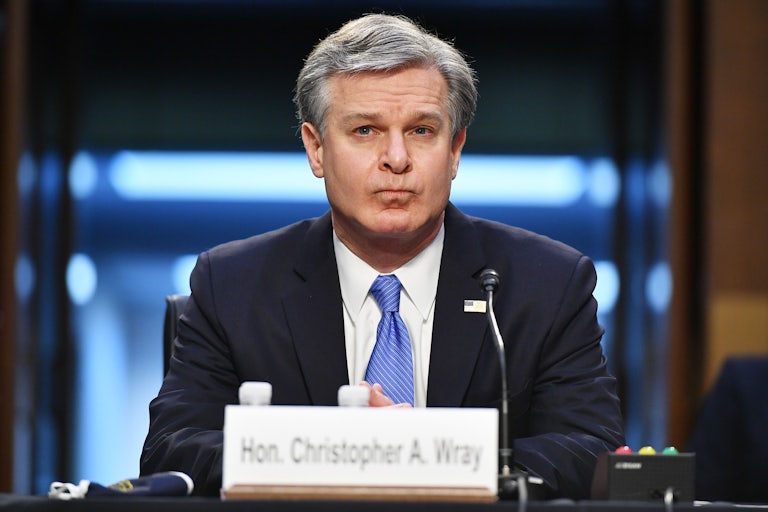
Christopher Wray purses his lips while testifying during a Senate Judiciary Committee hearing
Mandel Ngan/AFP/Getty Images

The director of the Federal Bureau of Investigations, Christopher Wray, resigned from his post on Wednesday.

It’s been less than two weeks since Donald Trump announced his intention to replace Wray with Republican operative Kash Patel in a statement that failed to acknowledge the incumbent director’s requisite exit. Trump appointed Wray to the position seven years ago after ousting James Comey amid an investigation into whether the forty-fifth president’s advisers colluded with the Russian government during his 2016 presidential campaign. Wray’s term wasn’t slated to end until 2027.

“This is the best way to avoid dragging the bureau deeper into the fray, while reinforcing the values and principles that are so important to how we do our work,” Wray told FBI employees.

Wray said he will serve until the end of the current administration and then leave once Trump takes office in January.

“The resignation of Christopher Wray is a great day for America as it will end the Weaponization of what has become known as the United States Department of Injustice,” Trump wrote on Truth Social following Wray’s announcement. “I just don’t know what happened to him. We will now restore the Rule of Law for all Americans.”

The 10-year term minimum for FBI directors is designed to insulate the position from the sway of political influence—but Wray will mark Trump’s second firing of the bureau’s top official during his time in power.

Speaking with NBC News’s Meet the Press, Trump said he wasn’t “thrilled” with Wray’s job at the country’s top law enforcement agency, suggesting that the FBI’s role in repossessing sensitive and classified documents from Trump’s Florida estate had marred his opinion of his appointee.

“He invaded my home,” Trump said on Sunday. “I’m suing the country over it. He invaded Mar-a-Lago. I’m very unhappy with the things he’s done, and crime is at an all-time high. Migrants are pouring into the country that are from prisons and from mental institutions, as we’ve discussed. I can’t say I’m thrilled.”

Of course, the FBI did not “invade” Mar-a-Lago—rather, the agency executed a court-approved search warrant to reclaim documents that Trump had taken from the White House after the end of his last presidency.

Patel, a Trump loyalist, hasn’t yet dished details on how he intends to change the FBI, though he has promised that sweeping reforms are on the way. Former intelligence officials have warned that Patel’s appointment could strip the FBI of its independence and that his leadership could oversee an era in which the agency is tasked with politically motivated investigations from the Trump administration.

“Kash Patel is the most qualified Nominee to lead the FBI in the Agency’s History, and is committed to helping ensure that Law, Order, and Justice will be brought back to our Country again, and soon,” Trump wrote on Truth Social Wednesday. “We want our FBI back, and that will now happen. I look forward to Kash Patel’s confirmation, so that the process of Making the FBI Great Again can begin.”

Patel himself has demonstrated a propensity for politically charged witch hunts. The nominee has promised to go after 60 people named on a so-called “enemies list” who he believes are members of the executive branch “deep state.” They include President Joe Biden, Vice President Kamala Harris, Defense Secretary Lloyd Austin, Comey, Hillary Clinton, and Obama-era FBI Director Eric Holder.

This story has been updated.

Senior GOP Senator Secretly Refusing to Bend the Knee to Trump

Incoming Majority Leader John Thune has a plan to defy Donald Trump.

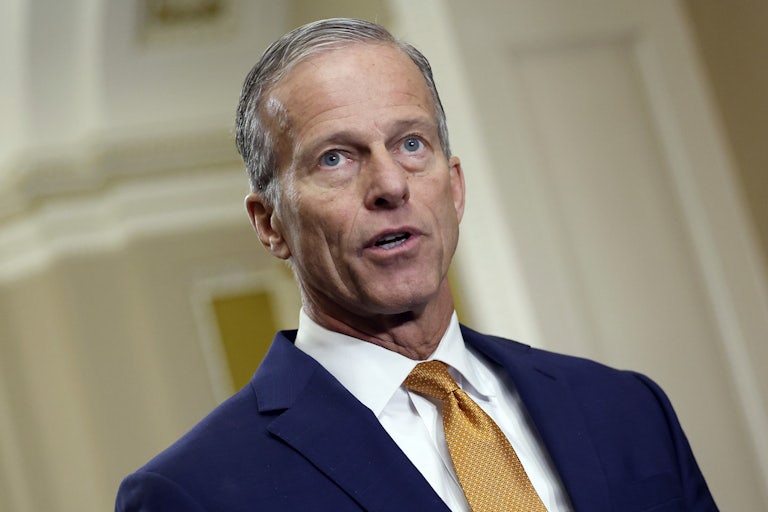
Senator John Thune speaks to reporters
Kevin Dietsch/Getty Images

Senator John Thune, the chamber’s incoming majority leader, is reportedly working behind the scenes on a plan to block some of Donald Trump’s controversial Cabinet nominees.

During an appearance on MSNBC’s Morning Joe Wednesday, MSNBC contributor Katty Kay said that after attending an event where she spoke to a swath of Republican senators, her understanding was that Thune intends to “protect” some of his fellow Republicans while still opposing Trump’s more preposterous picks, such as Fox & Friends host Pete Hegseth and former Democratic representative turned MAGA acolyte Tulsi Gabbard.

“He can’t have all the same senators go out and say ‘no’ against all of the picks. And so he’s coming up with some kind of rotation scheme,” Kay explained. “Maybe it’s Thom Tillis votes against one of them, maybe if Joni Ernst votes against one of them—maybe somebody else votes against one of them, the thinking is that they could probably get rid of four, and that includes Matt Gaetz.”

For his part, Thune seems to have avoided ever becoming a full Trump sycophant. When the Access Hollywood tape came out in 2016, Thune called on Trump to withdraw his candidacy in favor of Mike Pence. Thune wasn’t the majority leader Trump wanted, but he was the one he got. Now, he may prevent Trump from getting his way, again.

However, MAGA activists have been quick to execute online pressure campaigns against any Republican senators who don’t comply with Trump’s demands for swift confirmations—recently targeting Iowa Senator Joni Ernst after she seemed reluctant to support Hegseth.

Biden’s Historic (and Potentially Stupid) Plan to Rein in Trump

Joe Biden is looking to prevent Donald Trump from charging certain people with crimes.

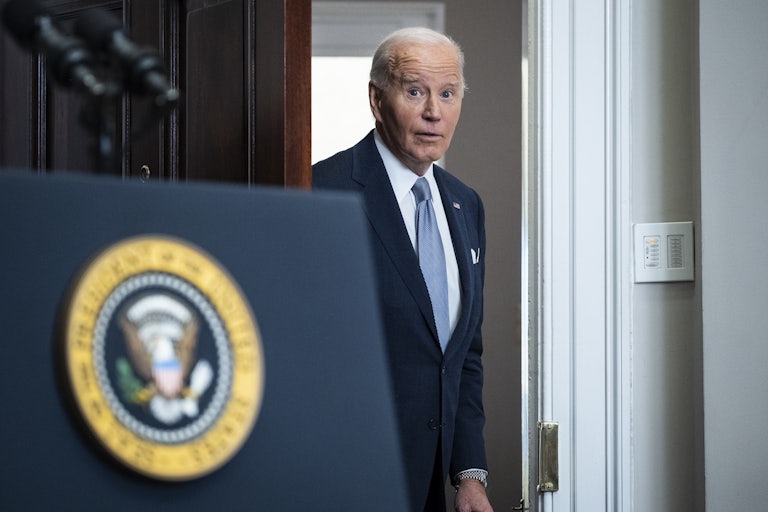
Joe Biden enters a room to give a press conference
Pete Marovich/Getty Images

President Joe Biden has spent the majority of his White House tenure practically ignoring pardon requests—but now he’s working to pardon certain individuals before they’ve even been charged with wrongdoing.

In the last four years, Biden’s office has received 10,500 pardon requests, but out of those, he has issued just 25, according to Axios. Then, on December 1, the 82-year-old pardoned his son Hunter Biden, sparking immense backlash from members on the left and the right for going back on his promise to obey the jury’s decision in his son’s case.

The Biden administration is working around the clock to finalize more pardons before he exits the Oval Office on January 20, but some of the names in discussion don’t actually warrant a pardon—yet.

Biden is reportedly considering issuing preemptive pardons for Democratic Representative Bennie Thompson and former Republican Representative Liz Cheney, after Donald Trump told MSNBC’s Meet the Press that the pair should be “jailed,” reported TheGrio Wednesday.

“We are not done yet,” one high-ranking Justice Department official (who did not want to be identified due to the sensitivity of the pardons) told the publication.

But Biden’s plan to save his allies will only add fuel to the fire of his critics, who believe that he is advancing a devastating legacy that involves backtracking on his campaign promises and undermining the rule of law. The move could potentially give more fodder to Trump supporters who falsely believe people such as Cheney or Anthony Fauci, Trump’s chief medical adviser during the Covid-19 pandemic, have committed crimes.

The preemptive pardons would also set an egregiously dangerous precedent for future administrations, creating an executive privilege that could very easily be exploited by a Trump administration already surrounded by criminally charged allies.

In the week and a half since Biden saved his son from an imminent criminal sentence, interest groups have vied to focus the president’s attention on their own wannabe pardon recipients. Progressives are fighting to pardon “those that are elderly, those that are ill, those that are non-violent offenders, those who have been incarcerated because of cannabis convictions,” Massachusetts Representative Ayanna Pressley told Axios. Republicans and libertarians, meanwhile, have pushed Biden to pardon government whistleblowers, including Julian Assange and Edward Snowden.

Trump May Have Just Cost Himself a Bunch of Allies

Donald Trump will avoid accountability. But will his alleged partners in crime?

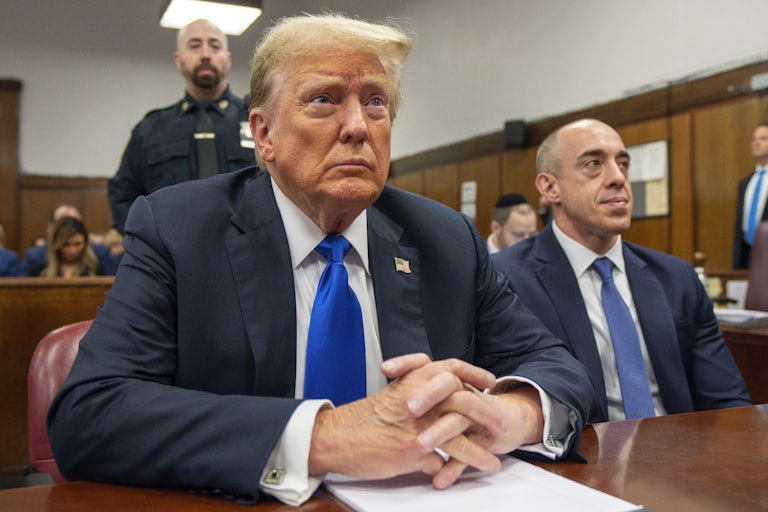
Donald Trump sits in a courtroom with his hands folded in front of him
Steven Hirsch/Pool/Getty Images

Donald Trump may be off the hook for his criminal trials, but that doesn’t mean his associates are getting equal treatment.

Dozens of the president-elect’s aides and allies are still facing the music in five states—Arizona, Georgia, Wisconsin, Nevada, and Michigan—for their involvement in Trump’s 2020 election conspiracy.

“Our job is justice and that job does not change depending upon who wins the presidential election,” Nevada Attorney General Aaron Ford told Politico. “The rule of law does not cease to exist because [Trump] has won the presidency.”

Eighteen of Trump’s associates are on the hook in Arizona, where they’re accused of orchestrating a scheme to use fake electors to flip Arizona’s 2020 election results over to Trump. They include Rudy Giuliani, Trump White House chief of staff Mark Meadows, and attorneys John Eastman and Christina Bobb. Two of the charged individuals have already pleaded guilty, including former Trump attorney Jenna Ellis, who arranged a plea deal with state prosecutors in exchange for dismissed charges.

The rest of the lot are slated to start trial in January 2026. All of the indicted individuals in Arizona face the same slew of charges, which include counts for conspiracy, forgery, fraudulent schemes and practices, and fraudulent schemes and artifices—the last of which holds a potential sentence of up to five years in prison.

“I have no intention of breaking that case up. I have no intention of dropping that case,” Arizona Attorney General Kris Mayes told MSNBC last month. “A grand jury in the state of Arizona decided that these individuals who engaged in an attempt to overthrow our democracy in 2020 should be held accountable, so we won’t be cowed, we won’t be intimidated.”

Eighteen people close to Trump are charged in Georgia for their participation in the fake elector conspiracy, including some who overlap with the Arizona case, such as Giuliani and Meadows. Four individuals have already pleaded guilty, including the architect of the scheme Kenneth Chesebro, though he has since attempted to withdraw his plea.

In Wisconsin, Chesebro, Trump campaign operative Michael Roman, and veteran Wisconsin lawyer James Troupis have been charged with forgery in the alleged fraud. In Nevada, 21 GOP activists still face prosecution for their role in the scheme. And in Michigan, 16 GOP electors have been charged with felonies, though one has since been let off the hook through a plea deal.

But Trump’s return to the White House and his ability to suddenly walk free will put jurors and prosecutors deliberating the case in a strange position: identifying guilt in Trump’s allies as they dance around the soon-to-be president’s role at the epicenter of the vast conspiracy.

The criminal cases against Trump died overnight after the MAGA leader won the presidential election, effectively allowing him to skirt all responsibility by resuming an office that cannot be criminally prosecuted. Trump faced 91 criminal charges across four cases that prosecutors waited years to take to court. Separately, he was convicted on 34 criminal counts relating to covert hush-money payments made to porn actress Stormy Daniels ahead of the 2016 election—but that sentencing dissolved just days after Trump won the election.

However, he’s still on the hook for eight civil cases relating to his involvement in the January 6 attack. The cases, which come from congress members and injured police officers, could be the last bastion in holding Trump to account for failing to intervene as his supporters ransacked the U.S. Capitol.