The White House appears to think that it can ignore a Supreme Court ruling by lying about its previous defeat and trying to achieve the same goal another way.
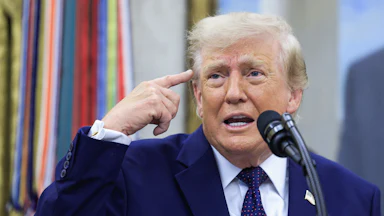
President Donald Trump issued an executive order on Thursday that purported to narrow the scope of birthright citizenship, two months after suffering a major defeat on the subject at the high court. The order’s text claims that it targets “certain categories of children of aliens who do not fall within the rule of birthright citizenship as announced by the Supreme Court” in Trump v. Barbara in June.
The Fourteenth Amendment’s citizenship clause says that “all persons born or naturalized in the United States, and subject to the jurisdiction thereof, are citizens of the United States.” For the last 150 years, the overwhelming judicial and scholarly consensus has been that anyone born on U.S. soil is a U.S. citizen, except for the children of foreign diplomats and other moribund exceptions. The Supreme Court confirmed this interpretation in the 1898 case United States v. Wong Kim Ark.
Trump issued an executive order last January that purported not to recognize the citizenship of children born on U.S. soil to temporary visa holders and/or undocumented immigrants. In Trump v. Barbara, the Supreme Court struck down the executive order as unconstitutional. The targeted children “satisfy both elements of the Citizenship Clause: they are ‘born … in the United States’ and ‘subject to the jurisdiction thereof,’” Chief Justice John Roberts wrote for the court. “Under the Constitution, they are citizens at birth.”
Every person currently living inside the United States falls into one of four categories. They are either a U.S. citizen by birth or naturalization, a lawful permanent resident (better known as a green card holder), they’ve gained entry with a temporary visa, or they unlawfully entered the U.S. Nobody disputes that the citizenship clause applies to the children of U.S. citizens. The Supreme Court ruled that the citizenship clause covers the last two groups, except for a few narrow exceptions: If the clause covers the children of temporary visa holders, it must logically cover the children of permanent residents, as well. “Permanent” is just a lifelong version of “temporary,” after all.
Trump’s new executive order saw things differently. It claimed that the court merely held that the citizenship clause “extends the privilege of citizenship to children born to parents in the United States ‘for whom no extraterritorial fiction applies.’” This language, from Roberts’s opinion, referred to the medieval understanding of diplomatic immunity. English kings could not expect the allegiance of foreign ambassadors on English soil because the common law “considered [them]—by a fiction of extraterritoriality—to remain on foreign soil and thus ‘under the ligeance’ of their home country.”
The White House somehow took this description as an invitation to invent new purported exceptions to the citizenship clause. “This order identifies, non-exhaustively, and prescribes action concerning certain categories of children of aliens who do not fall within the rule of birthright citizenship as announced by the Supreme Court,” the order claimed. There is no evidence that Roberts and the majority intended for the executive branch to identify new exceptions, and plenty of reasons to believe that they intended to foreclose them.
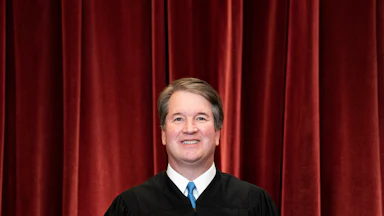
To the contrary, the chief justice emphasized how limited the existing exceptions were at multiple points throughout the decision. “The ordinary legal meaning of the text of the Clause thus neatly captures the common law rule, with its broad reach and narrow exceptions,” he observed at one point. Justice Brett Kavanaugh, who only partially concurred with Roberts’s opinion, also wrote separately to make a similar argument about new exceptions to the one now advanced by the White House. If that had been the actual ruling, Kavanaugh would not have needed to write his own opinion at all.
Reading the executive order reminds me of CDOs, otherwise known as collateralized debt obligations. Before the financial crisis in 2008, banks would gather large numbers of risky subprime mortgage bonds and repackage them into CDOs before selling them to other banks. Credit ratings companies would give CDOs high marks because the bonds were considered less risky in the aggregate than on an individual basis. This was more or less true until it very suddenly and dramatically wasn’t.
In the 2015 film The Big Short, the late great Anthony Bourdain explained CDOs to the audience by comparing them to a fish stew. An unscrupulous chef in this metaphor would use a mixture of day-old fish and fresher ingredients to make a more palatable dish. “You see, it’s not old fish,” Bourdain sardonically tells the audience, “it’s a whole new thing. And the best part is, they don’t even realize they’re eating day-old halibut.”
Trump’s latest executive orders work along the same lines. We’ll start with the freshest cuts of fish, so to speak, and work toward the most spoiled ones. First, the order refuses to recognize U.S. citizenship for children if “either parent of that person is a foreign government employee.” This includes “ambassadors,” as well as foreign nationals “employed by [their country’s] embassy,” “employed by a foreign government in an official capacity,” or “employed by an international organization that possess international-organization immunity.” All of these people are either temporary visa holders or green card holders.
At least one of these categories is indisputably ineligible under the citizenship clause. Children of foreign ambassadors have been categorically excluded from U.S. citizenship since the Fourteenth Amendment’s ratification in 1868. By definition, their parents are not “subject to the jurisdiction of the United States” because they possess diplomatic immunity, which is an ancient and well-defined principle in foreign relations. The executive order tries to widen this exception by including a range of foreign nationals who work in diplomatic roles but do not actually have diplomatic immunity.
Trump’s order does not use this term, but more than a few of the targeted personnel would likely have what is known as “consular immunity.” This principle in international law extends immunity to certain foreign government employees for their official acts, but not in their private capacity. If Britain’s ambassador to the United States and one of the Embassy’s aides jointly murdered someone in the middle of the National Mall in D.C., the ambassador could not be prosecuted in U.S. courts (unless London revoked their immunity). The aide, on the other hand, could be indicted and tried right away.
Justice Clarence Thomas even addressed the difference in passing in his Barbara dissent when discussing Roberts’s invocation of diplomatic immunity. He observed that “diplomatic immunity extends to ‘only a narrow set’ of ‘diplomatic official[s],’ not to all foreign representatives,” quoting from a friend-of-the-court brief filed by Texas Senator Ted Cruz and some of his colleagues. “Most foreign officials receive a partial immunity, such as immunity for their official acts,” Thomas continued. “But, partial immunity cannot render a person not ‘subject to the jurisdiction’ of the United States for Fourteenth Amendment purposes.”
Cases on the foreign-diplomat exception itself are vanishingly rare, but Thomas’s distinction appears to have been official practice before now, as well. The U.S. government recently denied birthright citizenship to a 75-year-old man who was born in New York while his father was a Nicaraguan diplomatic official. The State Department had granted the man a passport for decades, only to revoke it in 2018 after learning that the man’s father actually had diplomatic immunity at the time of his birth. A Ninth Circuit Court of Appeals panel sided with the government last August.
It is even less likely that the foreign-diplomat exception could extend to anyone who is merely “employed by a foreign government in an official capacity.” A French civil servant who happens to give premature birth on U.S. soil while visiting this country on vacation, for example, is undoubtedly “subject to the jurisdiction” of the United States. She would possess no form of legal immunity and would thus be indistinguishable from any other temporary visa holder under Barbara. (I’m also curious how someone could be “employed by a foreign government” in anything but an “official capacity.”) The same would logically be true for United Nations or European Union employees. It could even apply to the children of representatives of the Holy See, though they tend to not have them.
From here, the fish in the stew reek a little more notably. The next category of people targeted by the order would not be recognized as U.S. citizens if at least one parent is “engaged in a commercial transaction to purchase or access birthright citizenship for [child], or engaged in fraudulent activity to obtain citizenship.” This appears at first glance to be targeted at birth tourists, but its reach may turn out to be more complicated than that.
One of the subcategories, for example, would target children whose parents “engage in a commercial transaction to ensure that the person’s mother is present in the United States, or a territory of the United States, to give birth.” Again, this would run counter to Barbara, which concluded that birthright citizenship applies to temporary visa holders. It would also produce some bizarre and perhaps unintended circumstances.
Suppose, for example, that a green card holder from Australia is married to an H-1B visa recipient from Ireland. The Irish visa holder flies to Dublin for her sister’s wedding. While there, she takes a pregnancy test that gives a positive result. She buys a new plane ticket—which would certainly be a “commercial transaction”—to return home ahead of schedule to share the exciting news with her Australian husband. Does that render them no longer “subject to the jurisdiction” of the United States?
I count at least eight justices in Barbara who would likely say “no.” For Roberts and the other four justices who joined his majority opinion in full, the child would be a U.S. citizen under Barbara’s terms. Kavanaugh’s bizarre statutory argument would almost certainly lead to the same conclusion by a different road. So would the Thomas-Gorsuch stance that the citizenship clause only applied to parents who are domiciled in the United States, which would cover the Australian father. Alito did not address permanent residents since that executive order did not apply to them.
The Trump administration explained that it hopes to specifically tackle the phenomenon of “birth tourism,” where foreign nationals lawfully enter the U.S. to give birth and ensure that their children are U.S. citizens by birth. A separate executive order on the subject aims to prevent the entry of commercial birth-tourism customers into the U.S. altogether. Since these people are by definition temporary visa holders, the U.S. government could simply deny them visas.
A second subcategory in the executive order would also exclude children born to parents who “engage in a commercial transaction with a surrogate present in the United States, or a territory of the United States, to give birth.” This is the first time that surrogacy has come up in the Trump administration’s birthright citizenship discussions. It apparently refers to a practice whereby some foreign billionaires allegedly pay surrogates to have their children on U.S. soil, then return them to China without ever setting foot in the United States themselves. It is unclear whether the order would only apply to children born to U.S. citizen parents or only a foreign national surrogate.
At last, we come to the parts of the order pulled from the darkest, dankest parts of the walk-in freezer. The most unusual carve-out is for children “born in a territory or territorial waters of the United States where citizenship is not conferred by federal statute.” The “territorial waters” part may be a reference to an archaic exception in United States v. Wong Kim Ark, the 1898 case where the Supreme Court upheld birthright citizenship. Among the handful of exceptions it listed was children “born on foreign public ships.”
The court linked this exception to an existing premise that a child “born on the ocean is a subject of the prince to whom his parents then owe allegiance; for he is still deemed under the protection of his sovereign, and born in a place where he has dominion in common with all other sovereigns.” Roberts did not discuss it in Barbara and it is only mentioned in passing by the concurring and dissenting opinions. Either way, the advent of commercial aviation in the mid-twentieth century rendered it all but moribund.
The “territory” exception is a different matter. Children born in U.S. territories and overseas possessions are U.S. citizens at birth under federal law, with one notable exception: American Samoa, a set of islands in the South Pacific that is home to roughly 43,000 people. The United States peacefully acquired the islands in 1900, but at the Samoans’ request, Congress has refused to extend features of U.S. sovereignty to the islands that exist everywhere else. Its inhabitants are considered “U.S. nationals” instead of “U.S. citizens.”
In 2022, three American Samoans asked the Supreme Court to recognize them as birthright citizens—a rare instance where the clause’s modern interpretation did not revolve around immigrants. They argued that the Insular Cases, a set of Supreme Court rulings that generally held that the Constitution does not apply with full force in territories acquired since the Spanish-American War, should be overturned. At least two justices, Neil Gorsuch and Sonia Sotomayor, have echoed that sentiment. But the court ultimately declined to hear their case. It would be hard to square Barbara’s understanding of “subject to the jurisdiction” with the practice in American Samoa, but it is unclear if the high court wants to overturn the Insular Cases along the way.
The last category is the children born to parents who are an “alien enemy,” which the order “defined to include any member of a designated Foreign Terrorist Organization … or Specially Designated Global Terrorist.” In layman’s terms, this means any members of a terrorist group as designated by the State Department. Federal law generally allows the executive branch to seize assets and impose financial restrictions on members of those groups.
This provision appears mainly intended to “own the libs” by allowing the administration and its allies to criticize the order’s challengers for trying to give U.S. citizenship to terrorists. Josh Blackman, a conservative law professor at the South Texas College of Law, gave credence to that reading in a blog post at Reason magazine on Thursday. “The order explains that the child of an alien enemy is not a citizen at birth,” Blackman wrote. “I welcome a lawsuit from the ACLU demanding citizenship for the children of members of Foreign Terrorist Organizations.”
One need not be a member of the ACLU to spot the constitutional problems here. Designating a group as a “foreign terrorist organization” flows from an act of Congress and the executive branch’s discretion. Members of those groups are undoubtedly “subject to the jurisdiction” of the United States; they are routinely prosecuted in U.S. courts for crimes against U.S. citizens. Describing someone as a terrorist does not supersede the Constitution, and depriving U.S. citizenship to otherwise eligible children based on their parents’ alleged or proven crimes would be manifestly unconstitutional and morally reprehensible.
For what it’s worth, this provision also appears to be based on a misconception about the September 11 hijackers. Trump publicly claimed in 2015 that the hijackers’ wives “knew exactly what was going to happen,” returned to Saudi Arabia before the attacks, and thus didn’t warn anyone in the United States. One small problem with this claim is that none of the hijackers were married or had wives in the United States at any point.
Finally, Trump cites no actual legal authority to justify the executive order. The text of the order does not cite the U.S. Code or any acts of Congress beyond the terrorist-designation law, which does not mention citizenship. The White House also pointed to no statutory provisions that allow the executive branch to refuse to recognize U.S. citizenship on these grounds. Stephen Miller, Trump’s top domestic policy aide, gave a justification of his own during an Oval Office appearance with Trump on Thursday evening.
“The president is using his authority as commander in chief to sign first an executive order using the new rule the Supreme Court issued to expand the definitions of people who are ineligible for birthright citizenship,” Miller claimed. “That includes, for example, members of foreign terrorist organizations and large categories of people who lobby and act on behalf of foreign governments.”
To describe the president’s authority in these terms is to admit that it doesn’t exist. There is no “commander in chief” power to ignore the citizenship clause or the Supreme Court’s ruling on it. On the contrary, it is Congress to which the Constitution gives the power to set “rules for naturalization.” If Congress had given the power to invent new exceptions to birthright citizenship to the president, the White House would have said so. If Congress had done so, it would have been unconstitutional, as well. And if the Trump administration wants to serve a day-old fish stew to the justices, it shouldn’t be surprised when they spit it out.