Breaking News
Breaking News
from Washington and beyond

Mike Johnson Seems Uncomfy With Trump’s New Shutdown Plan for Backpay

House Speaker Mike Johnson contradicted himself in real time on whether furloughed federal workers should get backpay.

House Speaker Mike Johnson speaks
Eric Lee/Bloomberg/Getty Images
House Speaker Mike Johnson

House Speaker Mike Johnson said Tuesday that he hopes federal workers receive their back pay, making it seem possible that they won’t—even though he knows federal law requires that they be compensated.

Speaking on the House floor, the Louisiana Republican suggested that there was new analysis that showed that federal workers furloughed during the government shutdown might not be entitled to back pay.

“I hope that the furloughed workers receive back pay, of course,” Johnson said immediately after, claiming that was why he and President Donald Trump had begged Senate Minority Leader Chuck Schumer to spare federal workers from a government shutdown.

“We don’t want this to happen,” Johnson said.

But as Aaron Fritschner, deputy chief of staff for Representative Don Beyer, noted on X, this was a blatantly dishonest gambit—and Johnson knew it. As Johnson’s own website states: “Under federal law, employees are entitled to back pay upon the government reopening.”

Screenshot of House Speaker Mike Johnson's website
Screenshot

It seems that Trump’s administration may be preparing to withhold back pay from federal workers in the president’s latest ploy to force Democrats to abandon their fight for health care subsidies.

Axios reported Tuesday that a draft of a memo from the White House Office of Management and Budget claimed that federal workers may not be entitled to just compensation after the government reopens, under the Government Employee Fair Treatment Act Trump signed during a previous shutdown in 2019.

“Does this law cover all these furloughed employees automatically? The conventional wisdom is: Yes, it does. Our view is: No, it doesn’t,” one senior White House official told Axios. OPM’s draft memo claimed that the law had been previously misconstrued to ensure back pay to furloughed workers.

The White House claimed that an amendment to the law assuring workers will be paid “subject to the enactment of appropriations Acts ending the lapse” refers to when federal employees will be specifically appropriated funds by Congress, and not how it has always been understood as the completion of the shutdown. A joint resolution that accompanied the 2019 amendment said that the government would pay “obligations incurred.”

It seems OMB is preparing to move forward with holding federal employees’ pay hostage. Government Executive reported that OMB had quietly deleted a line from a document about Frequently Asked Questions During a Lapse in Appropriations that referred to the GEFTA rule that “employees will be paid retroactively as soon as possible after the lapse ends, regardless of scheduled pay dates.”

But OPM’s special instructions for agencies affected by a lapse in appropriations starting October 1, 2025, stated just the opposite. “The appropriate retroactive pay for periods of furlough and excepted work will be provided after the lapse ends, as required by law,” the instructions say.

Democratic Senator Chris Van Hollen, who helped write the 2019 back-pay measure, told Government Executive the meaning of the statute was clear.

“The law is the law,” he said. “After the uncertainty federal employees faced in the 2019 Trump Shameful Shutdown, Senator Cardin and I worked to ensure federal employees would receive guaranteed back pay for any future shutdowns. That legislation was signed into law—and there is nothing this administration can do to change that.”

This isn’t the only dirty trick the administration has pulled to intimidate Democrats into submission. Trump has also threatened to execute mass layoffs amid the government shutdown. Administration officials have insisted that the Democrats forced the president’s hand, but the move is entirely in line with Trump’s agenda as outlined in Project 2025, and the president has touted the “unprecedented opportunity” to make sweeping permanent cuts to programs and departments that he doesn’t like.
Bondi Loses It After Being Asked About Epstein Files With Trump’s Name

What is Attorney General Pam Bondi hiding?

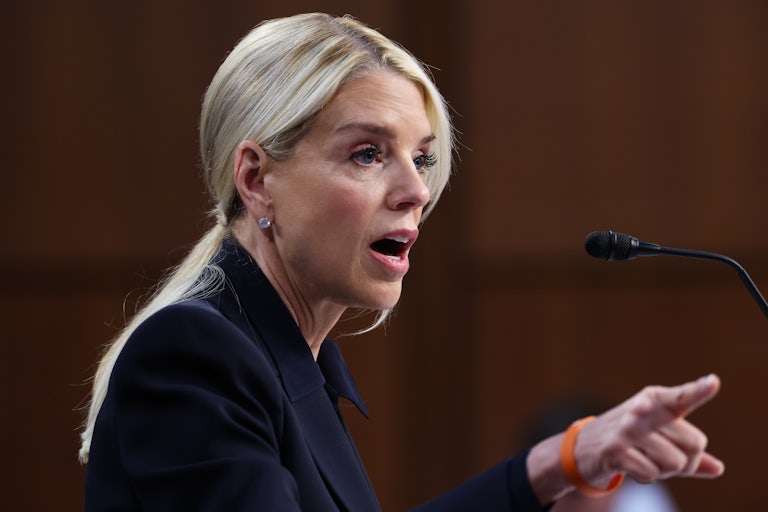
Attorney General Pam Bondi speaks animatedly in a Senate hearing while ushering both hands to herself.
Win McNamee/Getty Images

Attorney General Pam Bondi somehow managed to be smug and combative while offering an incredibly weak answer to a basic question about her department’s handling of the Epstein files. 

“So who gave the order to flag records related to President Trump?” Senator Dick Durbin asked Bondi during a Senate hearing on Tuesday. 

Bondi paused for a beat. 

“To flag records for President Trump?” she said, as if she was confused or unfamiliar with what Durbin asked. 

“To flag any records which included his name.” 

Bondi shook her head, smiling slightly. 

“I’m not going to discuss anything about that with you, senator.” 

“Eventually you’re going to have to answer for your conduct in this,” Durbin replied. “You won’t do it today, but eventually you will.” 

This all goes back to July, when Durbin’s office found that Bondi told personnel to flag any mention of Trump in the Epstein files. It was later revealed that once flagged, Trump’s name was redacted from the files.  

This is such a clear example of the attorney general—historically a politically neutral position (or at least meant to be such)—openly caping for her president. If she can’t be transparent and honest in a Senate hearing, how are we expected to take anything she says seriously? 

Pam Bondi Flails as Democrat Grills Her on Tom Homan’s $50K Cash Bribe

The attorney general was asked nearly 10 times what exactly Tom Homan did with his massive cash bribe.

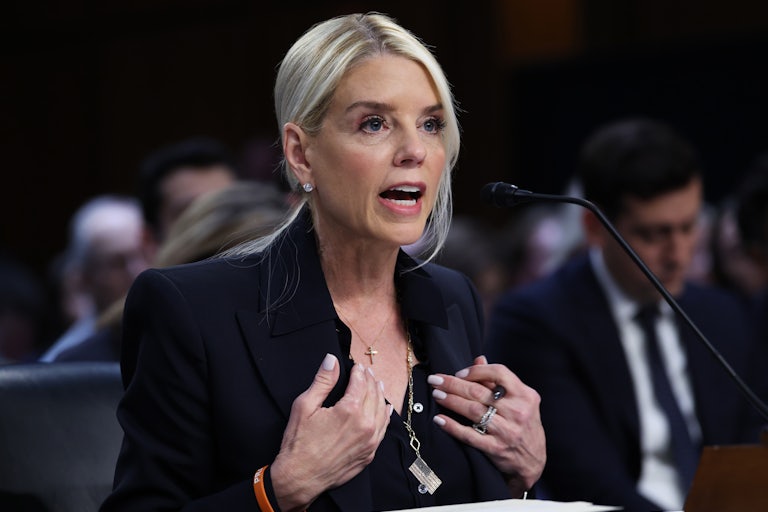
Attorney General Pam Bondi testifies in the Senate.
Win McNamee/Getty Images

At least eight times during a Tuesday hearing, Rhode Island Democratic Senator Sheldon Whitehouse asked Attorney General Pam Bondi about what border czar Tom Homan did with the $50,000 cash bribe he received from undercover FBI agents in 2024.

Again and again, Bondi refused to answer.

“What became of the $50,000 in cash that the FBI paid to Mr. Homan, in a paper bag evidently?” the senator asked the attorney general, who slowly flipped to a page in a binder so she could quote a statement from her deputy attorney general.

“Senator,” she said, “as Deputy Attorney General Todd Blanche recently stated, the investigation of Mr. Homan was subjected to a full review by the FBI agents and DOJ prosecutors. They found no credible evidence of any wrongdoing.”

Nowhere in that response was an actual answer, Whitehouse observed, so he again asked what became of the $50,000. Bondi vaguely urged the senator to “look at your facts.”

“Are you saying that they did not deliver $50,000 in cash to Mr. Homan?” Whitehouse pressed. Bondi began reciting the statement she previously attributed to Blanche, which Whitehouse noted addresses a “different question.”

He repeated his question, asking if the FBI ever got the $50,000 back. Bondi told the senator to consult the FBI.

“They report to you,” Whitehouse pointed out. “Can’t you answer this question?” Bondi said he could talk to FBI Director Kash Patel, leading Whitehouse to ask if Homan kept the money. The attorney general, chuckling, began to repeat her previous spiel verbatim.

“I can see I’m not going to get a straight answer from you to a very simple question,” Whitehouse said. Out of the blue, Bondi leveled a personal attack, accusing Whitehouse of working with “dark money groups.”

Staying on track, Whitehouse asked whether the reported investigation looked into whether Homan declared the $50,000 on his tax returns, leading Bondi to make another unrelated accusation, this time that Whitehouse “pushed for legislation that would subsidize [his] wife’s company”—an imperfect telling of allegations first made by a conservative watchdog group and amplified by people like Elon Musk.

Whitehouse pointed out the irrelevance of that claim, promising to submit the questions Bondi failed to answer as “questions for the record,” or written, formal questions Congress provides witnesses after a hearing for inclusion in the record.

The questions about Homan were far from the only ones that Bondi avoided answering during Tuesday’s hearing, in which she frequently seemed more interested in verbally attacking Democratic senators attempting to conduct oversight.

You Won’t Believe What Trump Switched to After Bad Bunny Complaint

Donald Trump has more issues with the NFL than just the next Super Bowl halftime performer.

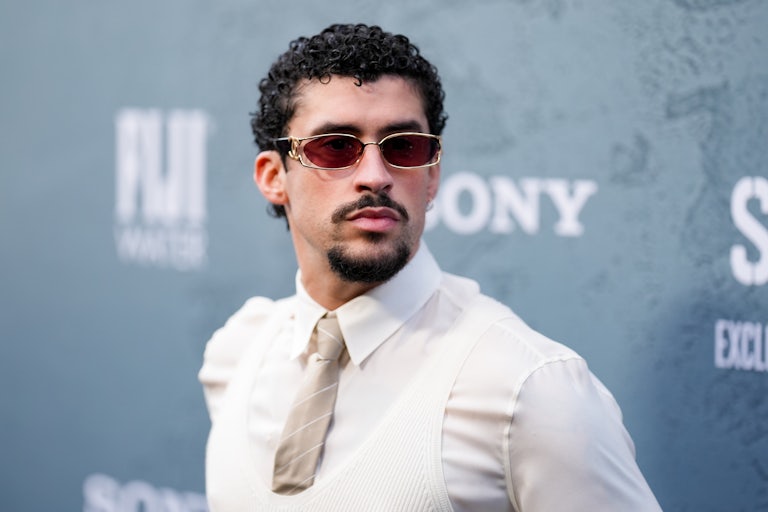
Bad Bunny attends a premiere event
John Nacion/Variety/Getty Images

The president has deployed the National Guard to multiple cities, rattled the economy with inconsistent tariffs, and frazzled the country’s longest international alliances. But late Monday, he also weighed in on the Super Bowl’s halftime pick.

In an interview with Newsmax’s Greg Kelly, Donald Trump spoke out against the NFL’s decision to hire Latin superstar Bad Bunny to perform during the coveted slot.

“The NFL just chose the Bad Bunny Rabbit or whatever his name, this guy who hates ICE, he doesn’t like you, he accuses everything he doesn’t like of racism,” said Kelly. “Do you think maybe we should just kind of entertain blowing off the NFL, like a boycott or something along those lines?”

“This guy does not seem like a unifying entertainer, and a lot of folks don’t even know who he is,” he added.

“I never heard of him, I don’t know who he is, I don’t know why they’re doing it, it’s like crazy,” Trump said. “And then they blame it on some promoter that they hired to pick up entertainment.”

“I think it’s absolutely ridiculous.”

But Bad Bunny wasn’t the only new development in the football league that upset Trump. After barely finishing his thought about the halftime show, the president also took aim at the NFL’s new “dynamic kickoff” rule, calling it “ridiculous” and “terrible.” The kickoff rule was made official this year after it drastically improved player safety in the 2024 season.

“The ball is kicked, and the ball is floating in the air and everyone’s standing there watching it,” Trump groused. “It’s ridiculous. It’s not any safer than the regular kickoff. I think it—it just looks so terrible. I think it really demeans football, to be honest with you.”

It’s almost impossible to escape Bad Bunny in 2025. His music plays everywhere from clubs to grocery stores across the country, and is near nonstop on the radio.

The 31-year-old is, as of now, one of the most dominant music artists in the world, topping the charts on multiple continents. Billboard crowned him the artist of the year in 2022, and he was the most streamed artist on Spotify between 2020 and 2022. He’s also elevated Puerto Rican music and culture to the global stage, highlighting the economic disparities present on the island.

But it’s not just his music that has made him an international phenomenon. His bombastic personality has helped establish him in American culture: Besides partaking in the Super Bowl, Bad Bunny found himself in the country’s pop culture spotlight during a three-year on-again-off-again relationship with the Kardashians’ Kendall Jenner. He has also hosted Saturday Night Live, a mainstay of American comedy for the last 50 years, twice.

Shortly after the NFL unveiled Bad Bunny as its halftime pick, the Trump administration fired back: Immigration and Customs Enforcement announced that federal immigration officers would be in attendance at America’s most-watched annual television event. Days later, the White House appeared to backtrack on that, claiming that there was “no tangible” plan for agents to monitor the venue.

Bondi Refuses to Answer One Easy Question on Trump Deploying Troops

Attorney General Pam Bondi was grilled on Trump’s decision to deploy troops to Illinois and Chicago.

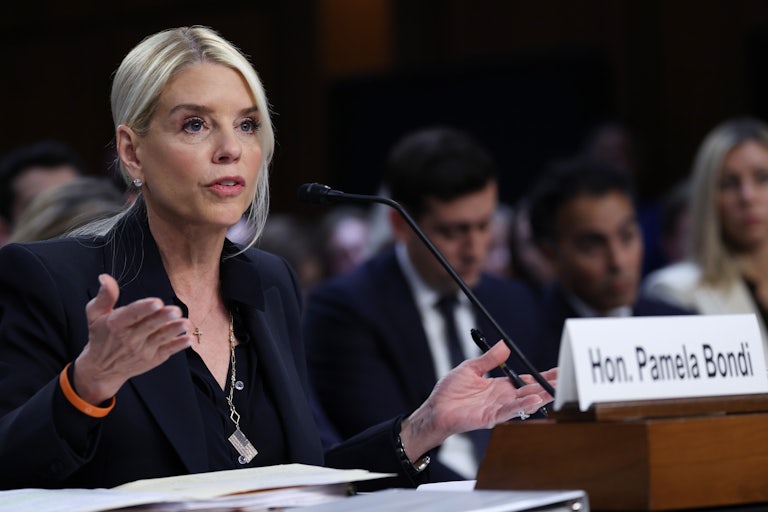
Attorney General Pam Bondi testifies in the Senate.
Win McNamee/Getty Images

During a Senate Judiciary hearing on Tuesday, Attorney General Pam Bondi chose to verbally attack Senator Dick Durbin rather than answer his basic question regarding the legal justification for sending the military into U.S. cities.

“Were you consulted by the White House before they deployed National Guard troops to cities in the United States?” Durbin asked.

“I am not going to discuss any internal conversations with the White House,” Bondi responded.

“You won’t even say whether you talked to the White House about this?”

“I am not going to discuss any internal conversations with the White House with you,” Bondi repeated.

“I noticed that,” Durbin replied. “What’s the secret? Why do you wanna keep this secret so the American people don’t know the rationale behind the deployment of National Guard troops in my state? The word is, and I think it’s been confirmed by the White House, they are going to transfer Texas National Guard units to the state of Illinois. What’s the rationale for that?”

This set Bondi off.

“Yeah, chairman, as you shut down the government, you voted to shut down the government, and you’re sitting here. Our law enforcement officers aren’t being paid, they’re out there working to protect you. I wish you loved Chicago as much as you hate President Trump,” Bondi said, staring down Durbin. “And currently, the National Guard are on the way to Chicago. If you’re not going to protect your citizens, President Trump will.”

Durbin was unphased.

“I’ve been on this committee for more than 20 years. That’s the kind of testimony you expect from this administration,” he said. “A simple question as to whether or not they had a legal rationale for deploying National Guard troops becomes grounds for a personal attack. I think it’s a legitimate question, it’s my responsibility. She refuses to answer as to whether she had any conversation with the White House about deploying national troops to my state. That’s an indication, I’m afraid, [of] where we are politically in this place.”

The fact that the attorney general can not give a basic justification for the president’s decision to flood American streets with the military suggests either her own incompetence or complicity, likely both.

“We’re here to make America safe,” Bondi later said to Durbin. “Whether or not you want us to.”