Breaking News
Breaking News
from Washington and beyond

Trump Sent the Economy Into Free Fall, New Report Shows

The latest report showed growth has shrunk significantly.

Donald Trump gestures while speaking at a podium
Tom Williams/CQ-Roll Call, Inc/Getty Images

So much for Donald Trump’s “Golden Age.” It looks like the United States’ economic growth is officially in free fall.

Between October and December, the United States’ real gross domestic product fell from 4.4 percent to just 0.5 percent, the U.S. Bureau of Economic Analysis reported Thursday.

That figure is significantly less than the agency’s second estimate of 0.7 percent growth, reported last month.

The government reported that the economy grew 2.1 percent last year, compared to 2.8 percent in 2024 and 2.9 percent in 2023. If GDP growth is beneath two percent annually, that can typically be considered a recession.

The surprising economic slow-down in the fourth quarter can be attributed to the government shutdown, which cut federal spending and investment by 16.6 percent and trimmed 1.16 percent points off of growth in Q4. Consumer spending expanded at a pace of 1.89 percent, down from the previous estimate of 3.5 percent in the second quarter.

This weakened economy has set the stage for Trump’s increasingly expensive war in Iran. The president’s reckless military campaign in the Middle East has triggered significant disruptions in global commerce and sent energy prices surging.
Iran Warns Trump as Netanyahu Threatens to Blow Up Ceasefire

Iran is pressuring Trump to decide between his support for Israel and his desire to see a ceasefire.

A woman wearing a face mask on a balcony takes a picture with her phone of Lebanese first responders searching under the rubble
Ibrahim AMRO/AFP/Getty Images
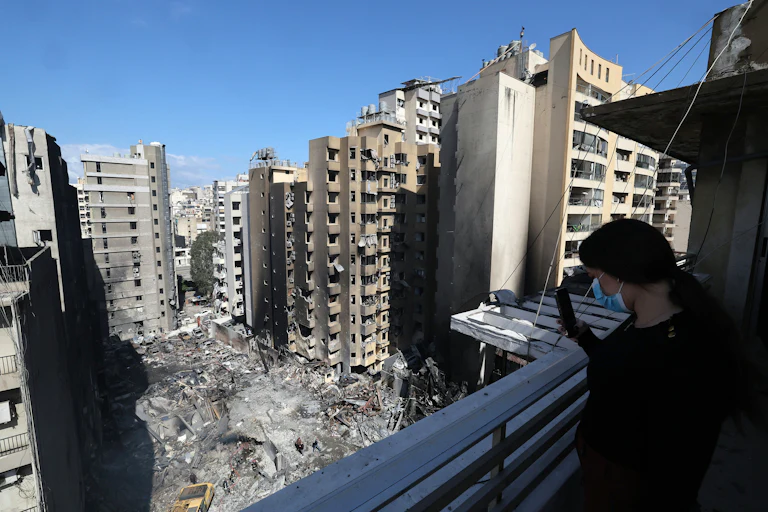
A woman takes a picture of Lebanese first responders searching under the rubble at the site of an Israeli airstrike in Beirut’s Corniche Al Mazraa neighborhood, on April 9.

Iran is not happy that Israel is continuing to bomb Lebanon and is warning Donald Trump to enforce what it says is “an inseparable part of the ceasefire.”  

In a post on X Thursday morning, Iran’s speaker of parliament Mohammad-Bagher Ghalibaf posted three points emphasizing Lebanon’s importance to the ceasefire deal, noting that it was part of the first point in Iran’s 10-point plan, that mediator Pakistan “publicly and clearly stressed the Lebanon issue,” and that ceasefire violations “carry explicit costs and STRONG responses.” 

Ghalibaf screenshot X

“Extinguish the fire immediately,” Ghalibaf warned. 

Iranian Foreign Minister Abbas Araghchi posted on X Wednesday that “the Iran-U.S. Ceasefire terms are clear and explicit: the U.S. must choose—ceasefire or continued war via Israel. It cannot have both.” 

“The world sees the massacres in Lebanon. The ball is in the U.S. court, and the world is watching whether it will act on its commitments,” Araghchi said. 

Iranian President Masoud Pezeshkian echoed Araghchi.

“Renewed aggression by the Zionist regime against Lebanon blatantly violates the initial ceasefire. Such actions signal deception and non-compliance, rendering negotiations meaningless. Our hands remain on the trigger. Iran will never forsake its Lebanese brothers and sisters,” Pezeshkian posted on X Thursday. 

At least 203 people were killed in Lebanon in Israeli strikes on Wednesday, according to the Lebanese Health Ministry, with over 1,000 wounded. Strikes continued Thursday, with at least seven people killed in the southern Lebanese town of Abbassiyeh.  

Meanwhile, the status of the Strait of Hormuz was unclear Thursday morning. Few ships were traversing it despite the supposed ceasefire, and Iranian officials said Wednesday that traffic was once again blocked due to the strikes on Lebanon. But U.S. and Israeli officials are claiming, contrary to Pakistan, that Lebanon wasn’t part of the ceasefire.

Israeli Prime Minister Benjamin Netanyahu posted on X in Hebrew Thursday morning that “we will continue to strike Hezbollah wherever required, until we restore full security to the residents of the north.” 

Vice President JD Vance said Wednesday that “if Iran wants to let this negotiation fall apart—in a conflict where they were getting hammered—over Lebanon, which has nothing to do with them and which the United States never once said was part of the ceasefire, that’s ultimately their choice. We think that would be dumb, but that’s their choice.”

So, is the ceasefire all but dead? Will the White House do anything about Israel’s continued bombing of Lebanon? If this two-week peace deal is meant to hold up, then these questions have to be answered, otherwise more civilians will die and things will only get worse. 

Automatic Registration for U.S. Military Draft Coming Soon

The draft-dodging president is overseeing the change to the military draft.

U.S. Army combat soldiers
ALEX WROBLEWSKI/AFP/Getty Images

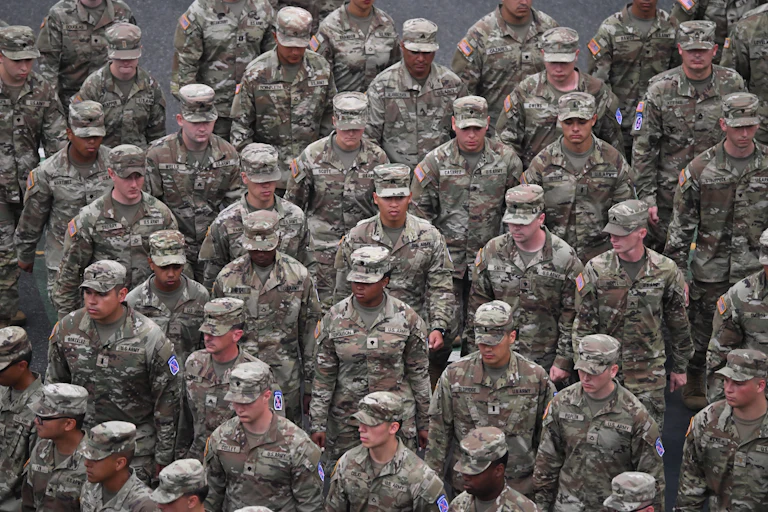
President Trump plans to automatically sign up military draft-eligible men for a potential draft, an ominous decision to make in the midst of a war on Iran.

While registration into Selective Service—the massive database that tells the United States how many men it can force into war in the event of a national emergency—has historically been required for every U.S. male upon turning 18, the sign-up process was manual.

“On December 18, 2025, the President signed the FY 2026 [National Defense Authorization Act] into law, mandating automatic Selective Service registration. The Agency engaged with Congress throughout the NDAA process regarding the automated legislative proposal,” the Selective Service System said in a public statement. “This statutory change transfers responsibility for registration from individual men to SSS through integration with federal data sources. SSS will implement the change by December 2026, resulting in a streamlined registration process and corresponding workforce realignment.”

Multiple Democrats were quick to call out the administration’s misplaced priorities.

“If they can automatically register you for WAR, they can automatically register you to VOTE,” Democratic House of Representatives candidate Sarah McGee wrote on X. Others posted old tweets from White House deputy chief of staff Stephen Miller about how young men should vote for Trump lest they be “drafted to fight in Kamala’s and Cheney’s 3rd World War.”

The last time the U.S. had a draft was in 1973, for the Vietnam War, which caused institutional and ideological damage that this country is still dealing with today. A draft in this era would be even more catastrophic.

Pentagon Threatened the Pope After He Criticized Trump

It was so bad that Pope Leo changed his plans to travel to the U.S.

Pope Leo gestures while speaking into a microphone
Tiziana FABI/AFP/Getty Images

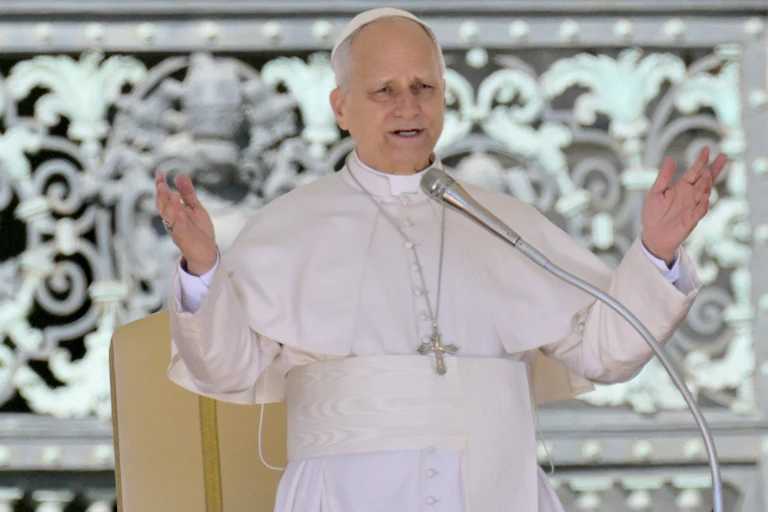
Relations between the United States and the Catholic Church have not been the same since January, when senior U.S. defense officials shared an abrasive message with a Vatican official.

Days after Pope Leo XIV delivered his State of the World speech, Undersecretary of Defense for Policy Elbridge Colby summoned Cardinal Christophe Pierre, the Vatican’s U.S. representative, to a closed-door Pentagon meeting for a bitter lecture.

“The United States,” Colby said, according to a blistering new report by The Free Press, “has the military power to do whatever it wants in the world. The Catholic Church had better take its side.”

One U.S. official present at the meeting brought up the Avignon papacy, a period in the fourteenth century in which the French monarchy bent the Catholic Church into submission, ordering an attack on Pope Boniface VIII that led to his downfall and subsequent death and forcing the papacy to relocate from Rome to Avignon, a region inside France.

The Trump administration had taken issue with the pope’s critique of its militaristic proclivities. Defense Secretary Pete Hegseth and other top Pentagon officials were particularly aggrieved by portions of Leo’s January 9 speech in which the pope argued that “a diplomacy that promotes dialogue and seeks consensus among all parties is being replaced by a diplomacy based on force,” and that “war is back in vogue, and a zeal for war is spreading.”

The pope’s address was dissected line by line and interpreted as a hostile message toward the administration, reported Letters from Leo Substack writer Christopher Hale.

It was difficult not to interpret Leo’s comments as an immediate commentary on Donald Trump’s second administration, which had at that point bombed Iran’s nuclear facilities, kidnapped Venezuelan leader Nicolás Maduro, fiercely advocated for the dissolution of NATO, and threatened America’s allies, including claiming that the U.S. would seize control of Canada and Greenland.

But the blatant intimidation tactic is the first of its kind ever made by American officials to the Catholic Church. There are no public records of any previous meetings between Vatican and U.S. officials at the Pentagon, let alone an instance in which the world power suggested that it could force the Bishop of Rome into captivity.

The Vatican was so alarmed by the Pentagon’s warning that Pope Leo canceled his plans to visit the U.S. later in the year, reported Hale, who noted that “many in the Vatican saw the Pentagon’s reference to an Avignon papacy as a threat to use military force against the Holy See.”

Tensions had not been mended by February, when the Holy See rejected the White House’s invitation to host Pope Leo—the religious order’s first U.S.-born pontiff—for America’s 250th anniversary in July. Instead, the Catholic leader has arranged to visit a very different locale on July 4: Lampedusa, a tiny island between Tunisia and Sicily where North African immigrants wash ashore by the thousands.

“Robert Francis Prevost is too deliberate a man to have chosen that date by accident,” commented Hale.

The White House has dismissed the entire account, writing in a statement to reporter Barbara Starr that “the Free Press’s characterization of the meeting is highly exaggerated and distorted.”

“The meeting between Pentagon and Vatican officials was a respectful and reasonable discussion,” the Defense Department official continued. “We have nothing but the highest regard and welcome continued dialogue with the Holy See.”

This story has been updated.

RFK Jr. Using Your Taxpayer Money to Become a Podcast Bro

He’s making a government-backed podcast about ... how the government is lying to you.

Robert F. Kennedy Jr. looks up slightly
Tom Williams/CQ-Roll Call, Inc/Getty Images

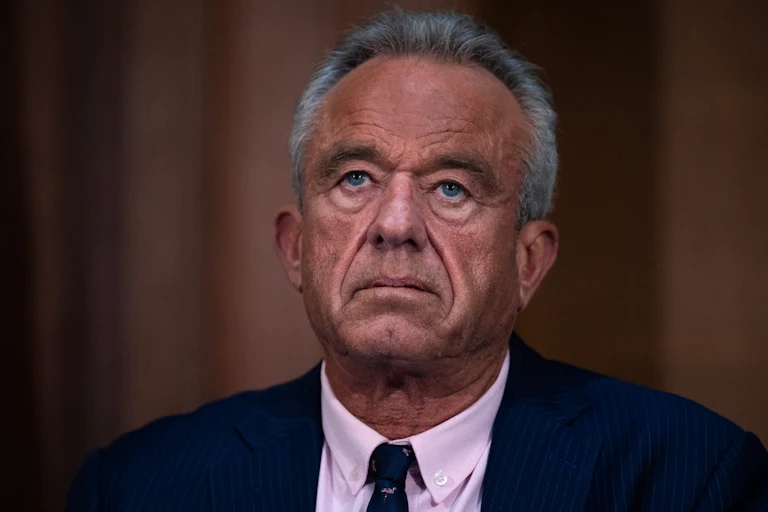
As bombs rain down on innocents in the Middle East, gas prices skyrocket, and data centers displace poor communities across the land, at least Americans can take solace in the fact that Robert F. Kennedy Jr. is starting a podcast.

The Health and Human Services secretary, best known for having a brain worm and allegedly contributing to 83 Samoan deaths by spreading anti-vaccine propaganda there, announced his new podcast Wednesday with a 90-second video on his government X account.

“Many of us have come to the conclusion that the government actually lies to us,” Kennedy says in the video, presumably forgetting the fact that he works for the government. “This podcast is about telling the truth, especially when it’s uncomfortable.”

Kennedy goes on to say his podcast will involve him speaking to medical experts and innovators in order to tell said truth. He also gets slightly spiritual with things: “I’m going to ask the questions, and lift the taboos, and expose the hypocrisy and the conflicts and the corruption. We’re going to follow the evidence wherever it leads, and we’re going to name the names of the forces that obstruct the paths to public health. This isn’t going to be about politics. It’s about our families, it’s about our children, and it’s about confronting the spiritual malaise and embracing the truth.”

RFK Jr. has spasmodic dysphonia, which makes his voice difficult to listen to at the best of times. But honestly, the podcast idea isn’t a bad one. Our wackjob health secretary debating actual medical experts about Americans’ health problems? It’s like The Joe Rogan Experience meets House!

Unfortunately, it’s hard to believe RFK when he says the podcast won’t be political. More likely, his guests will take the shape of “alternative” medical gurus looking to profit off of listeners and sow distrust in an American medical system that Donald Trump is already trying to defund.

Karoline Leavitt Lashes Out Over Question on Trump’s Morality

Reporters asked how Donald Trump could claim the moral high ground after threatening to wipe out Iran’s “whole civilization.”

Press Secretary Karoline Leavitt speaks at a podium during a White House press briefing
Heather Diehl/Getty Images

White House press secretary Karoline Leavitt threw one of her patented tantrums Wednesday in her first appearance since Donald Trump’s deranged threat to wipe out Iran’s “whole civilization” if it did not agree to his terms.

Andrew Feinberg, a journalist with The Independent, asked Leavitt how Trump could claim the U.S. was fighting a just war after such extreme rhetoric.

“When the U.S. invaded Iraq in 2003, George W. Bush said in a message to the Iraqi people that the military campaign was directed ‘against the lawless men who rule your country and not against you,’” Feinberg said. “Yesterday, the president threatened to destroy Iran’s civilization.… Not the Iranian government, but the Iranian civilization. The Iranian people. The U.S. has been a moral leader for most of its history by fighting wars against other governments, not against civilizations. How can the president claim that America can ever have the moral high ground if he’s threatening to destroy civilizations?”

Leavitt shot back, using all the jingoism she could muster: “Andrew, I think you should take a look at the actions of this president over the course of the past six weeks, and the actions of the brave men and women in the United States military.… The president absolutely has the moral high ground over the Iranian terrorist regime, and for you to even suggest otherwise is frankly insulting.”

Leavitt then called on a different reporter over Feinberg’s protestations. Feinberg could be heard saying, “With all due respect, Karoline …” a handful of times before giving up, as it became clear that Leavitt wasn’t going to let him speak again.

Leavitt received a similar question later in the conference when a reporter asked what her understanding of Trump’s “a whole civilization will die tonight” post was.

“I think it was a very, very strong threat from the president that led the Iranian regime to cave to their knees and ask for a ceasefire and agree to reopening the Strait of Hormuz,” Leavitt replied.

“It was a very strong threat that led to results. And as the secretary of war stated at the Pentagon this morning, it was not an empty threat by any means. The Pentagon had a target list that they were ready to hit go on at 8 p.m. last night, if the Iranian regime had not agreed to open the Strait, which they did. I think that’s something we should all be grateful for.”

“Does he see the United States as a moral leader in the world given that he’s—” the reporter pressed before Leavitt cut her off.

“I was asked this exact same question by your colleague … and I think again, the insinuation by anyone in this room that Iran somehow has the moral high ground over the United States of America is insulting,” Leavitt said.

In addition to Leavitt misrepresenting some facts here—the Strait of Hormuz is again closed after Israel attacked Lebanon Wednesday morning, per Iranian reporting—the fact that the White House is actually praising the president’s threat to exterminate an entire nation is as cruel as it gets. But would you expect anything less from such a bloodthirsty regime?

Bombshell Report Reveals Trump Was Begging for Iran to Join Ceasefire

This contradicts everything the president has said about the war.

President Donald Trump
Anna Moneymaker/Getty Images

Recent reporting from the Financial Times reveals it was President Trump, not the Iranian government, who was begging for a ceasefire.

FT reports that the Trump administration had been privately pushing for a ceasefire for weeks to alleviate the economic strain caused by Iran’s control of the Strait of Hormuz, and depending on Pakistan for mediation. Pakistani Army Chief Asim Munir was communicating with Iranian officials, special envoy Steve Witkoff, Vice President JD Vance, and Trump himself even after the president threatened to wipe out Iranian civilization on Tuesday.

According to the five people familiar with the diplomatic back channel, Trump had been asking for a ceasefire since as early as March 21, when he first threatened to bomb Iran’s power plants.

This contradicts virtually everything the Trump administration has claimed about Iran—that Trump’s constant bombings and threats of extinction caused a wounded, demoralized Iranian regime to limp to the negotiating table, desperate for a deal with the U.S.

“They are begging to make a deal, not me. They’re begging to make a deal,” Trump said less than two weeks ago. “And anybody that saw what was happening over there would understand why they wanna make a deal.… They are begging to work out a deal.”

Peace talks between the U.S. and Iran are expected to take place in Islamabad on Friday, although the speaker of Iran’s parliament has claimed the U.S and Israel have already broken the parameters of the already fragile ceasefire.

The Weirdest Detail in Iran’s Ceasefire Agreement

You won’t believe how Iran wants tolls on the Strait of Hormuz to be paid.

Vessels in the Strait of Hormuz
Shadi J. H. Alassar/Anadolu/Getty Images
Vessels in the Strait of Hormuz

Iran expects to make even more money off of a potential peace deal with the White House.

Beyond the 10-point peace plan that Donald Trump already signaled he was open to, Iran additionally expects countries to pay $1 per barrel of oil that passes through the Strait of Hormuz, reported the Financial Times Wednesday. Tehran demanded that the fee be paid in cryptocurrency, and that importers notify Iranian authorities about the content of their ships ahead of their arrival.

“Once the email arrives and Iran completes its assessment, vessels are given a few seconds to pay in bitcoin, ensuring they can’t be traced or confiscated due to sanctions,” Hamid Hosseini, a spokesperson for Iran’s Oil, Gas and Petrochemical Products Exporters’ Union, told FT.

The email requirement is a preventative measure to thwart the influx of weapons into the country, according to Hosseini.

“Iran needs to monitor what goes in and out of the strait to ensure these two weeks aren’t used for transferring weapons,” said Hosseini. “Everything can pass through, but the procedure will take time for each vessel, and Iran is not in a rush.”

But Iran is no stranger to cryptocurrency. The country has built a $10 billion internal crypto economy in recent years, relying on the digital assets as a means to circumvent international sanctions, according to a Yahoo! Finance report published last month.

The price of Brent crude, a global oil benchmark, fell to $96 dollars per barrel in the wake of the fragile ceasefire arrangement, a staggering drop from its high of nearly $112 on Tuesday.

Iran’s 10-point peace plan includes various demands for an immediate end to the regional violence, including proposals for a permanent end to the war, guarantees that Iran and its allies would not be attacked again, an end to Israeli strikes on Hezbollah in Lebanon, and a halt to all regional attacks.

The multipoint deal also seeks the lifting of all U.S. and international sanctions on Iran, and the imposition of a new $2 million toll per ship through the Strait of Hormuz, a vital oil tradeway situated between Iran and Oman.

Trump claimed Wednesday that he planned to turn the Hormuz toll into a “joint venture” that the U.S. would jointly benefit from. It is not clear if Iran is open to that possibility.

Meanwhile, a senior Iranian official told Reuters that the strait could be reopened as soon as Thursday or Friday—so long as it is “limited” and “under ‌Iran’s ⁠control.”

Netanyahu Declares Ceasefire Is “Not the End” as Iran War Spirals

Israeli Prime Minister Benjamin Netanyahu is destroying Trump’s ceasefire deal—and he’s proud of it.

Israeli Prime Minister Benjamin Netanyahu
Ronen Zvulun/POOL/AFP/Getty Images

Israeli Prime Minister Benjamin Netanyahu declared Wednesday that the U.S.-Iran ceasefire agreement is “not the end of the campaign,” as he launched the largest wave of attacks in Lebanon since the start of the war.

“Let me be clear: We still have objectives to complete, and we will achieve them—either through agreement or through renewed fighting,” Netanyahu said in a televised statement. “We are prepared to return to combat at any moment required. Our finger remains on the trigger. This is not the end of the campaign, but a step along the way to achieving all our objectives.”

His statement is sure to assuage the fears of warmongers complaining that the ceasefire will prevent the U.S. from killing more innocent Iranians.

This comes amid Iranian media reports of Iranian air defense activity and explosions in Tehran, Isfahan, and Kerman. Israel also launched an unprecedented wave of attacks in Lebanon, with 100 airstrikes in 10 minutes, injuring nearly 300 people.

“The conditions for a ceasefire between Iran and the United States are clear and explicit: America must choose either a ceasefire or the continuation of war through Israel; both cannot coexist,” Iranian Foreign Minister Abbas Araghchi wrote on Telegram. “The world is witnessing the killings in Lebanon. Now the ball is in America’s court, and global public opinion is watching to see whether this country will fulfill its commitments or not.”

White House Can’t Explain Who Exactly Is Bombing Iran After Ceasefire

Does Trump even care about this ceasefire holding?

White House press secretary Karoline Leavitt
Anna Moneymaker/Getty Images

The White House didn’t have an answer Wednesday to apparent violations of the ceasefire between the U.S. and Iran.

At a press conference, Trevor Hunnicutt, White House correspondent for Reuters, pointed out to White House press secretary Karoline Leavitt that air defenses in Iran had been activated, with explosions reported in cities across the country, including Isfahan, despite the ceasefire.

“Who is bombing Iran right now?” Hunnicutt asked Leavitt. Caught off guard, she initially stumbled before responding, asking if those reports were “as of a few minutes ago.” Hunnicutt said yes.

“Obviously, I’ll have to go back and check with the national security team. I’m standing out here with all of you. But I will do that, and we will get you an answer, OK?” Leavitt said, adding that while she couldn’t verify those reports, she wanted to check with the experts in the White House.

“I would just say, and I would echo what the vice president said this morning, this is a fragile truce; ceasefires are fragile by nature. We’ve seen this with respect to the 12-day war with Iran and Israel last year,” Leavitt continued, referring to JD Vance’s comments in Hungary earlier in the day. “It takes time sometimes for these ceasefires to be fully effectuated, and one of the results of Operation Epic Fury is that we completely dismantled Iran’s command and control center, which makes it difficult for them to pass messages up and down the chain, and so we understand that.”

But Hunnicut wasn’t asking about Iranian strikes, but rather bombings in Iran, making Leavitt’s point about the Iranian chain of command moot. Israeli and American commanders certainly shouldn’t have communication issues, and the fact that Iran is still being bombed despite a ceasefire raises questions about who is violating it.

Israel continued to bomb Lebanon Wednesday, claiming that the country was not part of the deal (eventually with Trump’s acquiescence) despite Iran and mediator Pakistan saying otherwise. Is Israel still attacking Iran despite the deal, or is Trump promising one thing while doing another?