Breaking News
Breaking News
from Washington and beyond

Hegseth Hatches Plot to Oust Army Secretary in Middle of War

Defense Secretary Pete Hegseth is apparently pissed that the secretary of the Army is outshining him.

Defense Secretary Pete Hegseth and Army Secretary Daniel Driscoll stand at attention alongside three other men.
Anna Moneymaker/Getty Images
Defense Secretary Pete Hegseth stands next to Army Secretary Daniel Driscoll (center).

Defense Secretary Pete Hegseth is reportedly attempting to frame Army Secretary Dan Driscoll as a “resistance figure” in an effort to oust him from the Trump administration. 

Multiple sources told The Hill that Hegseth, who has ousted multiple senior military officials both before and during the war on Iran, sees Driscoll as a rival of sorts. Sources noted that Hegseth’s paranoia had been heightened in recent weeks following Trump’s firing of his two Cabinet colleagues, Pam Bondi and Kristi Noem. And Driscoll has previously been floated as a potential successor to Hegseth if he ever gets canned.    

“He’s just really uncomfortable with anyone who could potentially be outshining him,” a current Pentagon official told The Hill. The Pentagon itself denies this, stating that Hill sources were “serving up fake news to anyone gullible enough to write about it.” And head Pentagon spokesperson Sean Parnell wrote that Hegseth “maintains excellent working relationships with the secretaries of every service branch.”  

But another Pentagon official claimed that Hegseth’s inner circle “believes they’ve uncovered proof that Driscoll has become a resistance figure within the Pentagon not only against Hegseth, but against President Trump as well”—raising major doubts about just how copacetic things really are inside Hegseth’s Pentagon right now.  

Hegseth has also made moves targeted at Driscoll’s support network, firing his chief of staff, Gen. Randy George, and two other high-ranking military officials. The new plot against Driscoll fits into a larger pattern with Hegseth, who at the start of his term was overcome by paranoia and suspicion so intense that he made Pentagon employees take polygraph tests and would only speak in confidence to his wife.

It’s unclear what exactly Driscoll has done to elicit this alleged treatment from Hegseth, other than to be reasonably well liked and respected. 

“From what I’ve seen in the press, and from whatever it’s worth, what I hear from people in the Army, it’s not like Driscoll is scheming and plotting to make Hegseth look bad. I mean, Hegseth takes care of that himself on a regular basis. It’s just, it’s all just very strange. And it’s just irresponsible,” retired Army reserve colonel and Pentagon staffer Kevin Carroll told The Hill

Driscoll has no plans to resign, and has stated that “serving under President Trump has been the honor of a lifetime.”  
Army Survivors of Deadliest Iran Attack Say Pete Hegseth Is Lying

Troopers that were injured in the attack say they were “unprepared.”

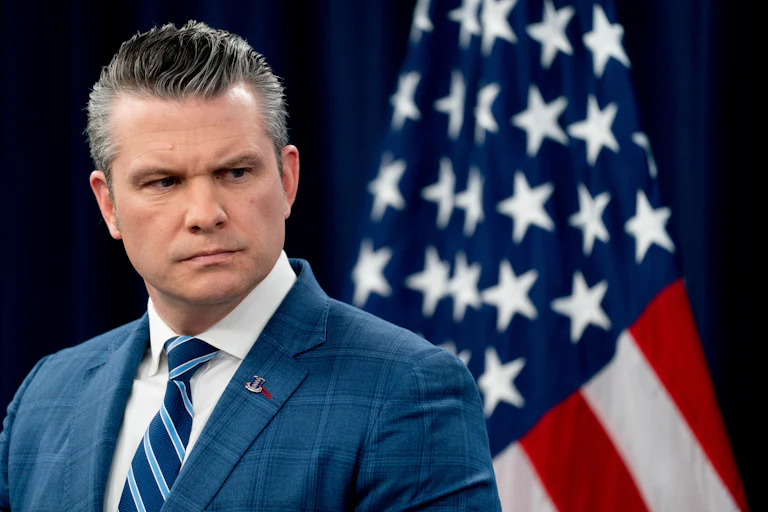
Defense Secretary Pete Hegseth frowns and looks to the side during a press conference
Stefani Reynolds/Bloomberg/Getty Images

When Defense Secretary Pete Hegseth described a deadly Iranian strike in Kuwait as a rare “squirter” that had broken through the defenses of a U.S. military base, it didn’t quite sound right—especially to the service members who actually lived through it. 

“Painting a picture that ‘one squeaked through’ is a falsehood,” one of the injured soldiers told CBS News Thursday. “I want people to know the unit … was unprepared to provide any defense for itself. It was not a fortified position.”

The injured soldier, a member of the Army’s 103rd Sustainment Command who spoke to CBS News under the condition of anonymity, highlighted the valiant efforts of his fellow service members who were left in a dangerous situation by their leadership.  

“I don’t think that the security environment or any leadership decision diminishes in any way their sacrifice or their service,” the injured soldier told CBS in an interview. “Those soldiers put themselves in harm’s way and … I’m immensely proud of them, and their family should be proud of them.”

Ahead of Operation Epic Fury, U.S. troops in the Gulf region were instructed to move away from the “X,” or danger zone. But a group of soldiers were sent from Kuwait City to Port of Shuaiba, still well within striking distance for Iran. There, they would establish a makeshift portside tactical operations center in a series of small tin buildings.

“We moved closer to Iran, to a deeply unsafe area that was a known target,” another soldier told CBS News. “I don’t think there was a good reason ever articulated.”

The soldier described how the troops had been protected by only a thin layer of vertical standing blast barricades. “From a bunker standpoint, that’s about as weak as one gets,” he told CBS News. Images of the base showed that it had limited defenses against drone or missile strikes. 

When asked to describe the degree of fortification at the makeshift operations center, the soldier told the outlet: “I mean, I would put it in the ‘none’ category. From a drone defense capability … none.”

This runs counter to the Pentagon’s repeated assertions that the operations center was fortified. “Every possible measure has been taken to safeguard our troops—at every level,” Pentagon spokesman Sean Parnell wrote on X in March. 

The Iranian strike on that base killed six U.S. service members, making it the deadliest Iranian strike of the first five weeks of the joint U.S.-Israeli military campaign in Iran. More than 30 military members were hospitalized, with dozens suffering from injuries, including burns, shrapnel wounds, and brain trauma. 

The Defense Department did not initially release information about how many were hurt in the strike, and U.S. Central Command initially claimed that five had been seriously wounded. This isn’t the only case of the Pentagon downplaying the toll of Trump’s reckless war in Iran The government has published outdated numbers in statements on casualties, resulting in an undercount of how many troops have been wounded or killed, and a U.S. official said last week that the Pentagon appeared to be engaged in a “casualty cover-up” in Iran.

Pope Meets With Top Obama Adviser Following Pentagon Threat

Pope Leo continues to snub Donald Trump.

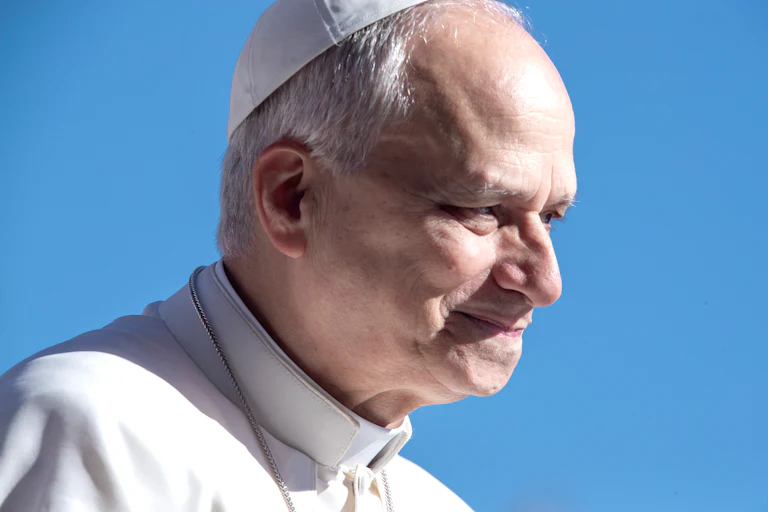
Seen in profile, Pope Leo smiles during his weekly general audience in St. Peter's Square
Maria Grazia Picciarella/SOPA Images/LightRocket/Getty Images

Barack Obama could be about to one-up Donald Trump yet again.

Pope Leo XIV met with Obama adviser David Axelrod Thursday morning, reported Substack journalist Christopher Hale, marking a major progression in the quest to land the 44th president a meeting with the Chicago-born pontiff.  

Obama’s enthusiasm for meeting the pope was made apparent in February, when he joined Brian Tyler Cohen’s podcast for a Valentine’s Day episode.

“I’ll be honest with you, being president or even being an ex-president, I can kind of meet everybody, so I’ve met a lot of folks,” Obama said at the time. “The person who I have not yet met that I’m looking forward to meeting—and I hope I get an opportunity sometime in the future—is the new pope, who’s from Chicago, and a White Sox fan.”

Axelrod worked as Obama’s chief strategist on both of his presidential campaigns. It’s not clear what Axelrod and the pope discussed, but the shrinking degrees of separation between the global figures bodes well for Obama’s dream.

The effort to pair the two has been actively in the works since at least March, when Hale reported that the Holy See had been in communication with Obama’s team about arranging a meeting.

That could mean that Obama meets Pope Leo XIV before Trump does.

Leo became the first American-born pope on May 8, 2025, but Trump has not managed to meet him over the past year. Instead, the Vatican has shied away from the Trump administration, in no small part due to threats made by Defense Department officials who were unhappy with the pontiff’s various criticisms of Trump’s warmongering.

Days after Pope Leo XIV delivered his “State of the World” speech in January, Under Secretary of Defense for Policy Elbridge Colby summoned Cardinal Christophe Pierre, the Vatican’s U.S. representative, to a closed-door meeting at the Pentagon. The atmosphere was anything but friendly: Pentagon officials openly threatened the religious ambassador, asserting that the Catholic Church needed to get behind the Trump administration’s global whims due to the country’s military prowess.

One U.S. official present at the meeting brought up the Avignon papacy, a period in the fourteenth century in which the French monarchy bent the Catholic Church into submission, ordering an attack on Pope Boniface VIII that led to his downfall and subsequent death, and forcing the papacy to relocate from Rome to Avignon.

The Vatican was so alarmed by the Pentagon’s warning that Pope Leo cancelled his plans to visit the U.S. later in the year, reported Hale, who noted that “many in the Vatican saw the Pentagon’s reference to an Avignon papacy as a threat to use military force against the Holy See.”

The Vatican also rejected the White House’s invitation to host the pope for America’s 250th anniversary on July 4.

Read about the pope’s relationship with the current administration:

“America First” President Using Foreign Steel for White House Ballroom

President Trump is facing backlash over his decision to use foreign steel for the construction of his gaudy ballroom.

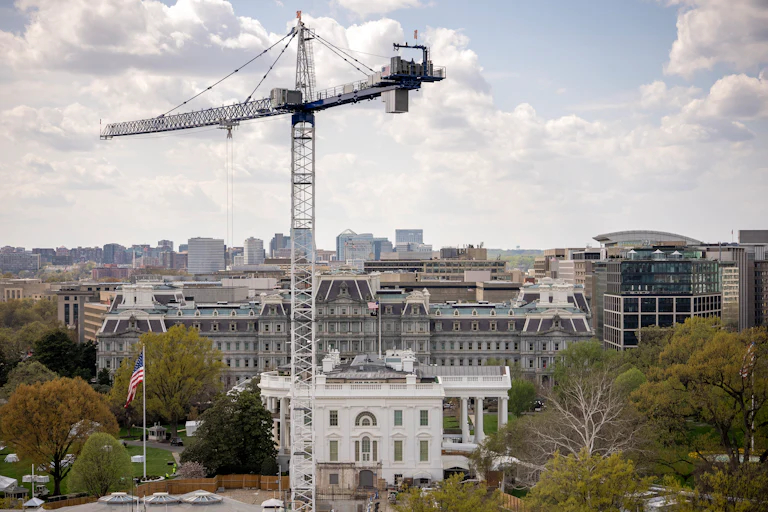
A crane stands next to the White House
Andrew Harnik/Getty Images

Donald Trump, despite his praise for the U.S. steel industry, will be using foreign steel for his ballroom project.

The New York Times reports that Luxembourg-based company ArcelorMittal will be providing millions of dollars in steel for the project, all produced in Europe. Trump said in October that he was offered $37 million worth of donated steel for the ballroom, but didn’t say where it was from.

He told ballroom donors at the time that a “great steel company” had come forward with a gift.

“He said, ‘Sir, I’d like to donate the steel for your ballroom,’” Trump recounted to the donors. “I said: ‘Whoa, that’s nice.’ And I found out—‘How much is the steel?’ I called the contractor. ‘Sir, it’s down for $37 million.’ I said, ‘This is a nice donation, right?’”

He called the steel “great steel as opposed to garbage steel, because they dump a lot of garbage around. You know, steel is like everything else, including human beings. Steel could be high quality, and it can be low quality. He wants to make sure it’s high quality.”

Days after Trump made that announcement last year, he halved tariffs that applied to automotive steel exports that ArcelorMittal happens to produce in Canada. An unnamed White House official told the Times that despite ArcelorMittal being a foreign company, it was benefiting the U.S. through a joint venture with Japan’s Nippon Steel in Alabama and an iron mine in Minnesota, and denied that the company received anything in return for its donation.

Last year, the Trump administration allowed Japan-based Nippon Steel to take over U.S. Steel in exchange for a “golden share” in the company, which allows the government to block major decisions such as offshoring or layoffs. Why would Trump get steel from ArcelorMittal when the government already has a close (and controversial) stake in U.S. Steel?

On top of that, going with a foreign steel company contradicts Trump’s stated “America First” ethos, which critics seized upon Wednesday.

“While the White House imports foreign steel to build Trump’s ugly Epstein Ballroom, California is opening its first new steel plant in 50 years,” California Governor Gavin Newsom’s press office posted on X. “Thanks, Gavin Newsom!”

“Make America Luxembourg Again?” Newsom also posted on his personal account.

“Foreign steel in the White House? Are you kidding? We’ve got Iron Range mines shut down & 100’s @steelworkers laid off. Instead, they’re outsourcing one of the most iconic American buildings overseas! American steel built this country, it should build the White House too,” Minnesota State Senator Grant Hauschild, a Democrat, said on X.

Trump Warns NATO to Clean Up His Mess in Iran War

Trump has issued an ultimatum after his meeting with the NATO secretary general.

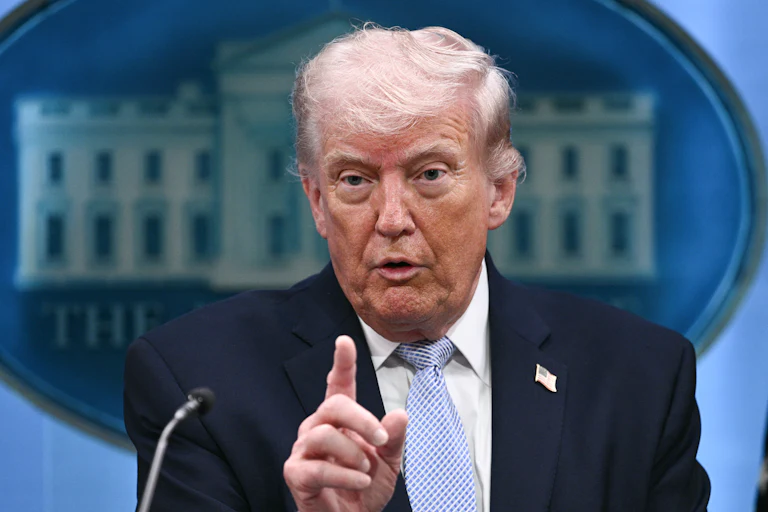
Donald Trump points as he speaks
Brendan SMIALOWSKI/AFP/Getty Images

President Trump issued an “ultimatum” to European countries regarding the Strait of Hormuz after meeting with NATO Secretary General Mark Rutte at the White House on Wednesday.

German news magazine Der Spiegel reported that Trump is expecting NATO members to help reopen the strait, which Iran closed in retaliation for the war Trump started without speaking to any of those NATO members. He’s also threatening to pull U.S. military support from any countries that don’t help reopen the strait.

Trump’s demand is equivalent to an “ultimatum,” several European diplomats told Der Spiegel.

“None of these people, including our own, very disappointing, NATO, understood anything unless they have pressure placed upon them!!!” Trump posted on Truth Social early Thursday morning, hours after his meeting with Rutte.

This isn’t the first time Trump has begged NATO to help him reestablish a status quo that he disrupted. Last month, Trump claimed that other countries—such as China—depend more on the Middle East waterway than the U.S. does, and should therefore be leading the charge in reopening the bomb-laden strait.

“I’m demanding that these countries come in and protect their own territory, because it is their territory. It’s the place from which they get their energy. And they should come and they should help us protect it,” Trump said. “Why are we maintaining the Hormuz Strait when it’s really there for China and many other countries? Why aren’t they doing it?”

Trump Sounds Ready to Break His Own Ceasefire in Iran

Donald Trump reportedly begged for a ceasefire. Less than 48 hours later, he already seems over it.

Donald Trump mimes aiming a gun while speaking at a podium
Chen Mengtong/China News Service/VCG/Getty Images

It’s been less than 48 hours since the U.S. brokered a fragile, two-week ceasefire agreement with Iran, and Donald Trump is already raring for his next fight.

The president issued another violent threat against Iran Wednesday night, promising that the “shootin’ starts” if the two countries do not reach a “REAL AGREEMENT.”

“All U.S. Ships, Aircraft, and Military Personnel, with additional Ammunition, Weaponry, and anything else that is appropriate and necessary for the lethal prosecution and destruction of an already substantially degraded Enemy, will remain in place in, and around, Iran, until such time as the REAL AGREEMENT reached is fully complied with,” Trump wrote on Truth Social.

“If for any reason it is not, which is highly unlikely, then the ‘Shootin’ Starts,’ bigger, and better, and stronger than anyone has ever seen before.”

“It was agreed, a long time ago, and despite all of the fake rhetoric to the contrary—NO NUCLEAR WEAPONS and, the Strait of Hormuz WILL BE OPEN & SAFE,” he continued. “In the meantime our great Military is Loading Up and Resting, looking forward, actually, to its next Conquest. AMERICA IS BACK!”

Iran offered a 10-point peace plan on Monday that the White House tepidly agreed to work with, mere minutes before Trump’s deadline the following night to completely obliterate the country.

The plan includes various demands for an immediate end to the regional violence, including proposals for a permanent end to the war, guarantees that Iran and its allies would not be attacked again, and an end to Israeli strikes on Hezbollah in Lebanon.

It also seeks the lifting of all U.S. and international sanctions on Iran; the imposition of a new $2 million toll per ship through the Strait of Hormuz, a vital oil passageway situated between Iran and Oman; and a $1 toll per barrel of oil delivered through the waterway.

But there was an additional detail included in versions of the ceasefire arrangement distributed in Farsi—Iran’s native language—that was not included in the English edition, specifying the “acceptance of enrichment” for Iran’s nuclear program, suggesting that the country was not yet willing to let go of its plans to develop nuclear technology.

While it’s hard to see how any components of the deal offer a benefit to the U.S., the final point undermines Trump’s rationale for the war entirely: The president’s primary interest in fighting Iran was to cripple the country’s nuclear program, stripping any potential for the country to create a nuclear weapon. Failing to do so would imply that the war—which has so far cost the lives of 13 U.S. troops and billions of dollars in munitions—was a complete waste of time, even by the White House’s own metrics.

Trump Has Sent America’s GDP Into a Downward Spiral

The latest report showed growth has shrunk significantly.

Donald Trump gestures while speaking at a podium
Tom Williams/CQ-Roll Call, Inc/Getty Images

So much for Donald Trump’s “Golden Age.” It looks like America’s economic growth is officially in free fall.

Between October and December, America’s real gross domestic product fell from 4.4 percent to just 0.5 percent, the U.S. Bureau of Economic Analysis reported Thursday.

That figure is significantly less than the agency’s second estimate of 0.7 percent growth, reported last month.

The government reported that the economy grew 2.1 percent last year, compared to 2.8 percent in 2024 and 2.9 percent in 2023. If GDP growth is beneath 2 percent annually, that can typically be considered a recession.

The surprising economic slow-down in the fourth quarter can be attributed to the government shutdown, which cut federal spending and investment by 16.6 percent and trimmed 1.16 percent points off of growth in Q4. Consumer spending expanded at a pace of 1.89 percent, down from the previous estimate of 3.5 percent in the second quarter.

This weakened economy has set the stage for Trump’s increasingly expensive war in Iran. The president’s reckless military campaign in the Middle East has triggered significant disruptions in global commerce and sent energy prices surging.

Iran Warns Trump as Netanyahu Threatens to Blow Up Ceasefire

Iran is pressuring Trump to decide between his support for Israel and his desire to see a ceasefire.

A woman wearing a face mask on a balcony takes a picture with her phone of Lebanese first responders searching under the rubble
Ibrahim AMRO/AFP/Getty Images
A woman takes a picture of Lebanese first responders searching under the rubble at the site of an Israeli airstrike in Beirut’s Corniche Al Mazraa neighborhood, on April 9.

Iran is not happy that Israel is continuing to bomb Lebanon and is warning Donald Trump to enforce what it says is “an inseparable part of the ceasefire.”  

In a post on X Thursday morning, Iran’s speaker of parliament Mohammad-Bagher Ghalibaf posted three points emphasizing Lebanon’s importance to the ceasefire deal, noting that it was part of the first point in Iran’s 10-point plan, that mediator Pakistan “publicly and clearly stressed the Lebanon issue,” and that ceasefire violations “carry explicit costs and STRONG responses.” 

Ghalibaf screenshot X

“Extinguish the fire immediately,” Ghalibaf warned. 

Iranian Foreign Minister Abbas Araghchi posted on X Wednesday that “the Iran-U.S. Ceasefire terms are clear and explicit: the U.S. must choose—ceasefire or continued war via Israel. It cannot have both.” 

“The world sees the massacres in Lebanon. The ball is in the U.S. court, and the world is watching whether it will act on its commitments,” Araghchi said. 

Iranian President Masoud Pezeshkian echoed Araghchi.

“Renewed aggression by the Zionist regime against Lebanon blatantly violates the initial ceasefire. Such actions signal deception and non-compliance, rendering negotiations meaningless. Our hands remain on the trigger. Iran will never forsake its Lebanese brothers and sisters,” Pezeshkian posted on X Thursday. 

At least 203 people were killed in Lebanon in Israeli strikes on Wednesday, according to the Lebanese Health Ministry, with over 1,000 wounded. Strikes continued Thursday, with at least seven people killed in the southern Lebanese town of Abbassiyeh.  

Meanwhile, the status of the Strait of Hormuz was unclear Thursday morning. Few ships were traversing it despite the supposed ceasefire, and Iranian officials said Wednesday that traffic was once again blocked due to the strikes on Lebanon. But U.S. and Israeli officials are claiming, contrary to Pakistan, that Lebanon wasn’t part of the ceasefire.

Israeli Prime Minister Benjamin Netanyahu posted on X in Hebrew Thursday morning that “we will continue to strike Hezbollah wherever required, until we restore full security to the residents of the north.” 

Vice President JD Vance said Wednesday that “if Iran wants to let this negotiation fall apart—in a conflict where they were getting hammered—over Lebanon, which has nothing to do with them and which the United States never once said was part of the ceasefire, that’s ultimately their choice. We think that would be dumb, but that’s their choice.”

So, is the ceasefire all but dead? Will the White House do anything about Israel’s continued bombing of Lebanon? If this two-week peace deal is meant to hold up, then these questions have to be answered, otherwise more civilians will die and things will only get worse. 

Automatic Registration for U.S. Military Draft Coming Soon

The draft-dodging president is overseeing the change to the military draft.

U.S. Army combat soldiers
ALEX WROBLEWSKI/AFP/Getty Images

President Trump plans to automatically sign up military draft-eligible men for a potential draft, an ominous decision to make in the midst of a war on Iran.

While registration into Selective Service—the massive database that tells the United States how many men it can force into war in the event of a national emergency—has historically been required for every U.S. male upon turning 18, the sign-up process was manual.

“On December 18, 2025, the President signed the FY 2026 [National Defense Authorization Act] into law, mandating automatic Selective Service registration. The Agency engaged with Congress throughout the NDAA process regarding the automated legislative proposal,” the Selective Service System said in a public statement. “This statutory change transfers responsibility for registration from individual men to SSS through integration with federal data sources. SSS will implement the change by December 2026, resulting in a streamlined registration process and corresponding workforce realignment.”

Multiple Democrats were quick to call out the administration’s misplaced priorities.

“If they can automatically register you for WAR, they can automatically register you to VOTE,” Democratic House of Representatives candidate Sarah McGee wrote on X. Others posted old tweets from White House deputy chief of staff Stephen Miller about how young men should vote for Trump lest they be “drafted to fight in Kamala’s and Cheney’s 3rd World War.”

The last time the U.S. had a draft was in 1973, for the Vietnam War, which caused institutional and ideological damage that this country is still dealing with today. A draft in this era would be even more catastrophic.

Pentagon Threatened the Pope After He Criticized Trump

It was so bad that Pope Leo changed his plans to travel to the U.S.

Pope Leo gestures while speaking into a microphone
Tiziana FABI/AFP/Getty Images

Relations between the United States and the Catholic Church have not been the same since January, when senior U.S. defense officials shared an abrasive message with a Vatican official.

Days after Pope Leo XIV delivered his State of the World speech, Undersecretary of Defense for Policy Elbridge Colby summoned Cardinal Christophe Pierre, the Vatican’s U.S. representative, to a closed-door Pentagon meeting for a bitter lecture.

“The United States,” Colby said, according to a blistering new report by The Free Press, “has the military power to do whatever it wants in the world. The Catholic Church had better take its side.”

One U.S. official present at the meeting brought up the Avignon papacy, a period in the fourteenth century in which the French monarchy bent the Catholic Church into submission, ordering an attack on Pope Boniface VIII that led to his downfall and subsequent death and forcing the papacy to relocate from Rome to Avignon, a region inside France.

The Trump administration had taken issue with the pope’s critique of its militaristic proclivities. Defense Secretary Pete Hegseth and other top Pentagon officials were particularly aggrieved by portions of Leo’s January 9 speech in which the pope argued that “a diplomacy that promotes dialogue and seeks consensus among all parties is being replaced by a diplomacy based on force,” and that “war is back in vogue, and a zeal for war is spreading.”

The pope’s address was dissected line by line and interpreted as a hostile message toward the administration, reported Letters from Leo Substack writer Christopher Hale.

It was difficult not to interpret Leo’s comments as an immediate commentary on Donald Trump’s second administration, which had at that point bombed Iran’s nuclear facilities, kidnapped Venezuelan leader Nicolás Maduro, fiercely advocated for the dissolution of NATO, and threatened America’s allies, including claiming that the U.S. would seize control of Canada and Greenland.

But the blatant intimidation tactic is the first of its kind ever made by American officials to the Catholic Church. There are no public records of any previous meetings between Vatican and U.S. officials at the Pentagon, let alone an instance in which the world power suggested that it could force the Bishop of Rome into captivity.

The Vatican was so alarmed by the Pentagon’s warning that Pope Leo canceled his plans to visit the U.S. later in the year, reported Hale, who noted that “many in the Vatican saw the Pentagon’s reference to an Avignon papacy as a threat to use military force against the Holy See.”

Tensions had not been mended by February, when the Holy See rejected the White House’s invitation to host Pope Leo—the religious order’s first U.S.-born pontiff—for America’s 250th anniversary in July. Instead, the Catholic leader has arranged to visit a very different locale on July 4: Lampedusa, a tiny island between Tunisia and Sicily where North African immigrants wash ashore by the thousands.

“Robert Francis Prevost is too deliberate a man to have chosen that date by accident,” commented Hale.

The White House has dismissed the entire account, writing in a statement to reporter Barbara Starr that “the Free Press’s characterization of the meeting is highly exaggerated and distorted.”

“The meeting between Pentagon and Vatican officials was a respectful and reasonable discussion,” the Defense Department official continued. “We have nothing but the highest regard and welcome continued dialogue with the Holy See.”

This story has been updated.