Trump Threatens to Leave NATO—but There’s One Big Problem
President Trump has renewed his threat to leave NATO as his Iran war doesn’t go to plan.

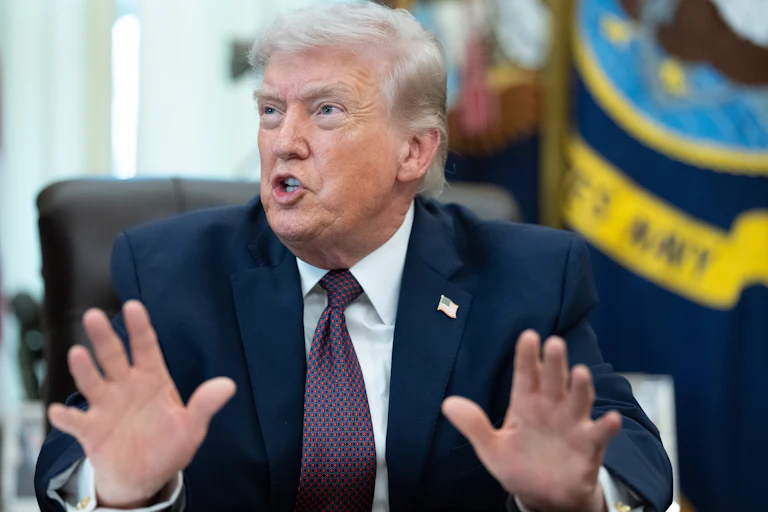
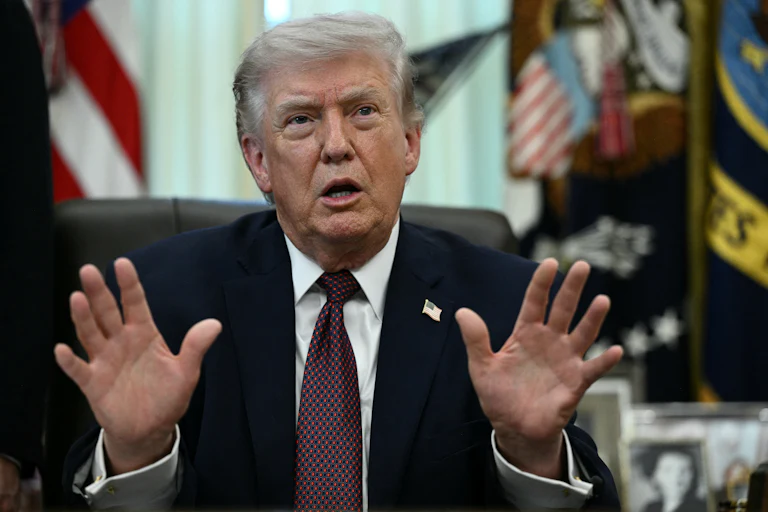
Donald Trump’s threat to leave NATO has one very big hurdle: approval from Congress.
The president told The Telegraph Wednesday that he is weighing an exit from the 1949 compact, saying it is “beyond reconsideration.” He later clarified to Reuters that he planned to mention his dissatisfaction with NATO countries such as France, Poland, the U.K., and others refusing to join the war in Iran during a live address to the country Wednesday night.
“I’ll be discussing my disgust with NATO,” Trump said. When Reuters asked him if he was considering withdrawing from the organization, he said: “Oh, absolutely, without question. Wouldn’t you do that if you were me?”
“They haven’t been friends when we needed them,” Trump added. “We’ve never asked them for much … it’s a one-way street.”
The U.S. joined NATO in 1949 after the Senate ratified the North Atlantic Treaty, and is considered a core founding member of the organization. The National Defense Authorization Act of 2024 made it harder for a future president to leave NATO, requiring a two-thirds Senate majority or a bill passed by both houses of Congress.
The only way Trump could unilaterally leave NATO is to invoke presidential authority over foreign policy. Republicans in Congress would then probably refrain from challenging Trump’s decision in court, possibly leading to NATO’s downfall without its most powerful member.
“I hope that amid the emotions surrounding the president of the United States today, a moment of calm will come,” Polish Defense Minister Władysław Kosiniak-Kamysz said Wednesday. “And why? Because there is no NATO without the United States, and it is in our interest that this calm comes. But there is also no American power without NATO.”
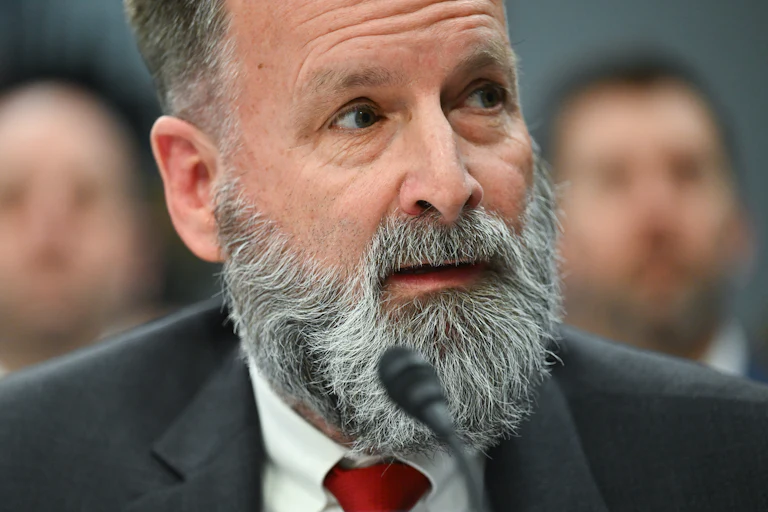
On Thursday, Secretary of Defense Pete Hegseth declined to commit to NATO’s collective defense provision, refusing to say whether the U.S. would defend its allies if they were attacked by another country, such as Russia.
“As far as NATO is concerned, that’s a decision that will be left to the president. But I’ll just say a lot has been laid bare,” Hegseth said at a press conference Tuesday. “You don’t have much of an alliance if you have countries that are not willing to stand with you when you need them.”
That would seem to foreshadow doom for NATO, and further unravel America’s long-standing alliances with European countries. Trump may not realize it, but that would make the U.S. a much weaker country.