Trump Says There Will Be No Consequences for Strike on Iran School
Instead, Trump punted to Defense Secretary Pete Hegseth.

President Donald Trump refused to mete out consequences for the horrific U.S. missile strike in Iran that killed more than 175 people, most of them children.
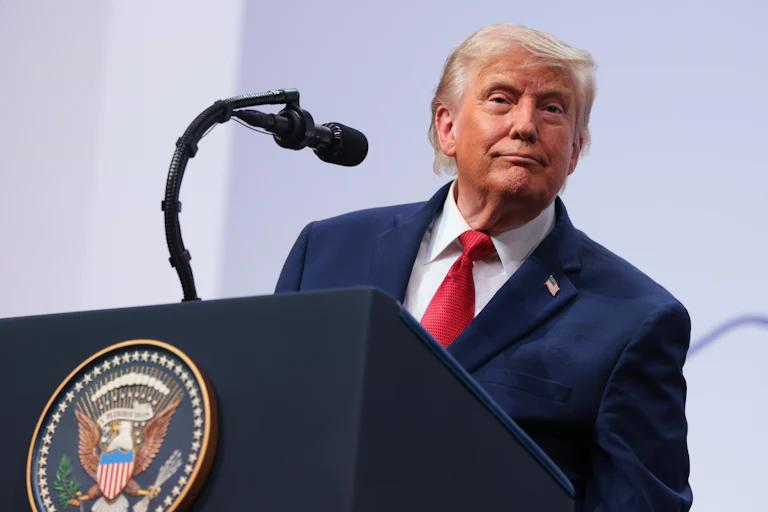
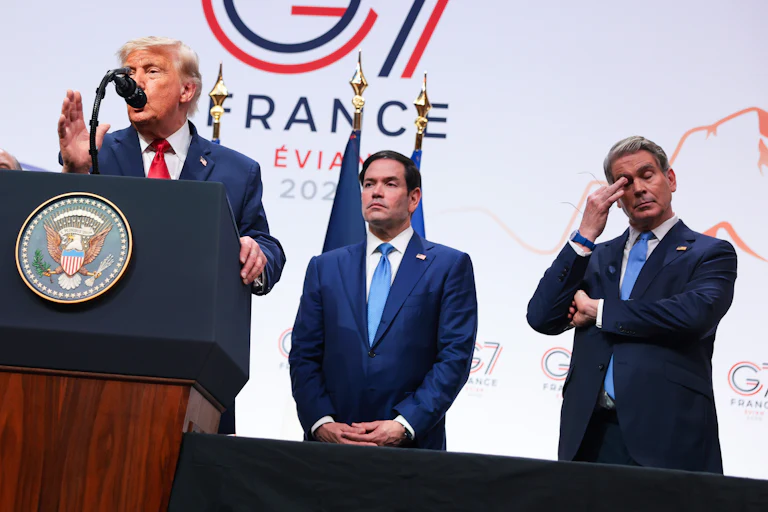
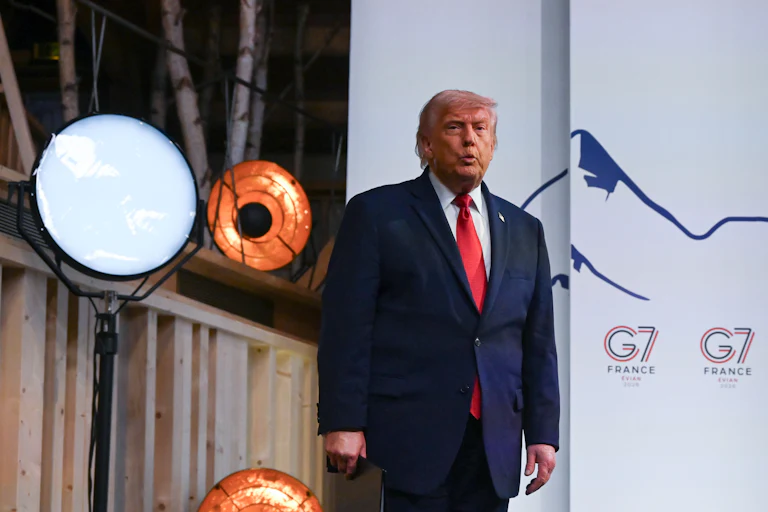
During a press conference Wednesday at the G7 summit, Trump was asked whether he planned to hold anyone accountable for the attack on a girls primary school in Minab that killed dozens of young girls between the ages of seven and 12.
“No, if it was a fault—and as you know that’s under investigation—it’s such a strange question to be asked at this state because we’re talking about a long time ago,” Trump said. “Nobody did that on purpose.”
A preliminary inquiry found that the strike was the result of using outdated intelligence. Trump seemed to suggest that because the strike had been made in error, there was no reason to punish anyone.
Clearly, a deadly mistake warrants a response, and failing to respond in a timely manner is not in itself an excuse for doing nothing. If Trump were a real leader who valued human life, this would be unacceptable.
Instead, Trump insisted that one would have to examine how many soldiers Iranians had killed and chalked it all up to the cost of doing business.
“No mistakes are made. Yeah, war is nasty. But I know it’s under investigation, I could have a report for you tomorrow,” Trump said, adding that the question would be better directed to Defense Secretary Pete Hegseth.
NYT: Now that you're approaching a new phase in this conflict in this Iran, can you now say whether you will hold anyone in your administration accountable for the strike on a school that killed more than 100 children?
— Aaron Rupar (@atrupar) June 17, 2026
TRUMP: No. It's such a strange question to be asked. It's a… pic.twitter.com/vh0plTlYKZ
More than 100 days after the strike in Minab, the DOD’s investigation is now complete and awaiting sign-off, military officials told The New York Times Tuesday. The report became delayed as a result of the slow-moving bureaucratic review process, the Pentagon’s efforts to save its own skin, and intelligence and targeting agencies that couldn’t believe their data could possibly be wrong.