Kagan Rips Supreme Court for Destroying Right to Racial Equality
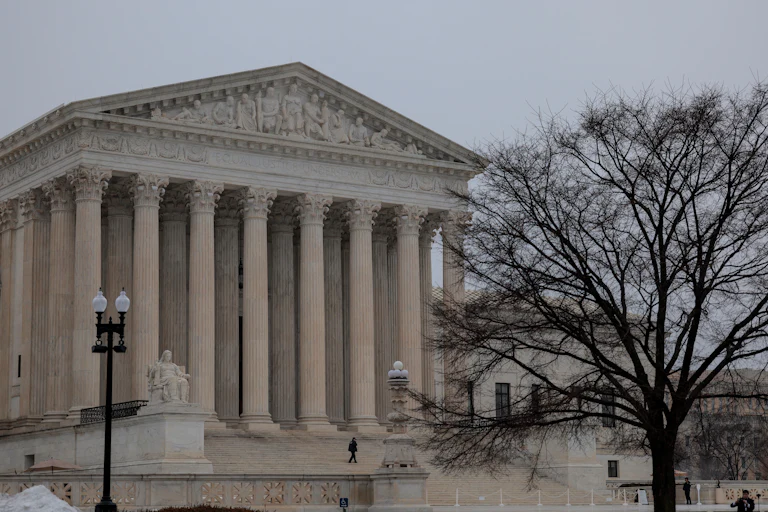
Supreme Court Justice Elena Kagan warned that her colleagues have demolished a foundational right with their attack on the Voting Rights Act.

On Wednesday, the Supreme Court ruled 6–3 to render the Voting Rights Act obsolete.
Louisiana v. Callais was first brought to the court in 2025 by a group of white voters, who argued that a congressional map drawn to create a Black-majority district in Louisiana was unconstitutional. The conservative judges ruled that while Section 2 of the 1965 Voting Rights Act outlaws race-based gerrymandering, Louisiana’s map did not fit the bill, and in fact unnecessarily employed racial statistics when drawing borders.
Justices Elena Kagan, Ketanji Brown Jackson, and Sonia Sotomayor all dissented. In a scathing 48-page opinion, Kagan, joined by her fellow liberal justices, warned the ruling “demolishes the foundational right Congress granted of racial equality in electoral opportunity.”
“The Voting Rights Act is—or, now more accurately, was—‘one of the most consequential, efficacious, and amply justified exercises of federal legislative power in our Nation’s history,’” Kagan wrote. “It was born of the literal blood of Union soldiers and civil rights marchers. It ushered in awe-inspiring change, bringing this Nation closer to fulfilling the ideals of democracy and racial equality. And it has been repeatedly, and overwhelmingly, reauthorized by the people’s representatives in Congress. Only they have the right to say it is no longer needed—not the Members of this Court.”
Kagan noted the ruling functionally eliminates Section 2 of the Voting Rights Act, and allows legislators to wipe out minority districts whenever they feel like it.
“Under the Court’s new view of Section 2, a State can, without legal consequence, systematically dilute minority citizens’ voting power,” Kagan wrote. “Of course, the majority does not announce today’s holding that way. Its opinion is understated, even antiseptic. The majority claims only to be ‘updat[ing]’ our Section 2 law, as though through a few technical tweaks.… But in fact, those ‘updates’ eviscerate the law.”
Kagan continued: “A plaintiff will have to show—contrary to Section 2’s clear text and design—that the legislators were ‘motivated by a discriminatory purpose.’ That, as Section 2’s drafters knew, is well-nigh impossible.”
She concluded: “I dissent because Congress elected otherwise. I dissent because the Court betrays its duty to faithfully implement the great statute Congress wrote. I dissent because the Court’s decision will set back the foundational right Congress granted of racial equality in electoral opportunity. I dissent.”