Alex Pretti’s killing at the hands of federal agents last week is an American tragedy. It has also exposed the fallacies and fault lines that shape how Americans live with widespread access to guns.
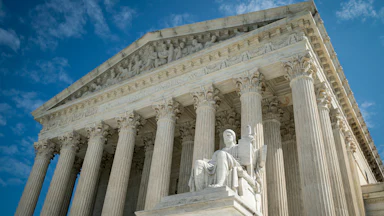
Put simply, the Supreme Court has handed down two irreconcilable lines of precedent over the past 20 years. The first is that Americans have a sacred constitutional right to carry guns in public. The second is that that police officers can kill people carrying guns in public with little risk of facing any legal consequences for doing so.
In 2008, the court first held that the Second Amendment protected an individual right to bear arms. The case, District of Columbia v. Heller, involved a man who wanted to keep a fully assembled handgun in his home for self-defense, which was prohibited by D.C. law at the time. In a 5–4 ruling, the court’s conservative justices sided with him.
“The enshrinement of constitutional rights necessarily takes certain policy choices off the table,” Justice Antonin Scalia wrote for the court, referring to concerns by D.C. and other parties that the ruling would fuel gun violence. “These include the absolute prohibition of handguns held and used for self-defense in the home.”
The Supreme Court revisited the Second Amendment in 2022 to strike down New York’s restrictive law on issuing concealed-carry permits. It marked the first time that the high court had directly addressed the Second Amendment’s scope outside the home. Justice Clarence Thomas, writing for the court, took an expansive view of it.
“This definition of ‘bear’ naturally encompasses public carry,” he explained. “Most gun owners do not wear a holstered pistol at their hip in their bedroom or while sitting at the dinner table. Although individuals often ‘keep’ firearms in their home, at the ready for self-defense, most do not ‘bear’ (i.e., carry) them in the home beyond moments of actual confrontation. To confine the right to ‘bear’ arms to the home would nullify half of the Second Amendment’s operative protections.”
Later this year, the Supreme Court is poised to rule on the lengths that states can go when restricting gun ownership in public. Wolford v. Lopez involves a Hawaii law that forbids gun owners from bringing firearms on private property accessible to the public—restaurants, stores, gas stations, and so on—without the property owner’s explicit permission. Most other states allow gun owners to carry their weapons in those locations unless the property owner explicitly says otherwise.
Gun rights advocates have warned that the default-property rule, as the state calls it, would make it nearly impossible to carry a gun in Hawaii since most businesses would refuse consent. That argument appears to have persuaded most of the conservative justices at oral argument earlier this month. At one point, Justice Samuel Alito chastised a lawyer arguing for the state of Hawaii for allegedly trying to turn the Second Amendment into a “second-class right.”
Running parallel to these rulings, however, is a consistent signal from the Supreme Court that law enforcement officials can kill people who pose a personal risk to them largely without risk of legal consequences.
A federal law known as Section 1983 allows people to sue state and local officials for violating their federal constitutional rights. Since the 1960s, the Supreme Court has substantially narrowed Section 1983 claims by inventing the doctrine of “qualified immunity.” In general terms, officers are only liable if their conduct violates a “clearly established right,” which can be interpreted with great particularity and narrowness by lower courts.
These hurdles are often highest in police use-of-force cases. As one justice wrote in a 1986 case, qualified immunity “provides ample protection to all but the plainly incompetent or those who knowingly violate the law.” The court also views police-involved cases with great deference toward officers’ subjective views about the situation at hand. In a 1989 case, the high court noted that police officers are entitled to great deference because they are “often forced to make split-second judgments—in circumstances that are tense, uncertain, and rapidly evolving—about the amount of force that is necessary in a particular situation.”
This deference is particularly high in use-of-force cases where the other side is armed. In a 2018 case, for example, the Supreme Court sided with a police officer who shot a woman holding a knife simply because she “did not acknowledge the officers’ presence or drop the knife.” Justice Sonia Sotomayor, who dissented, raised broader concerns about the court’s approach in similar cases. She warned that the court’s “one-sided approach” to qualified immunity “transforms the doctrine into an absolute shield for law enforcement officers, gutting the deterrent effect of the Fourth Amendment.”
“The majority today exacerbates that troubling asymmetry,” Sotomayor wrote. “Its decision is not just wrong on the law; it also sends an alarming signal to law enforcement officers and the public. It tells officers that they can shoot first and think later, and it tells the public that palpably unreasonable conduct will go unpunished.”
This is particularly true in situations where someone is armed: All of the major qualified-immunity cases involve either unarmed people or people with unconventional weapons like knives and swords because someone carrying a gun is such an obvious threat to police officers in that context. Pretti’s case is also unusual because it was so thoroughly documented by observers from multiple angles, which easily refutes the claims that he was a threat. Had it not been filmed, the federal government’s original claims would have been the only narrative of what had happened.
For federal agents like those who killed Pretti, the threshold for accountability is far higher. Section 1983 can’t be used to sue federal officials, and Congress has not passed a similar statute to fill the gap. In the 1960s, the Supreme Court held that plaintiffs could sue federal agents for civil rights violations under the Fourth Amendment without relying on an act of Congress, but the court has effectively abolished this option since then.
In theory, these agents could be criminally prosecuted for murder or for civil rights violations by state and federal officials. Or, as the Trump administration has shown, they simply could not be. The identities of the agents responsible for Pretti’s death are not publicly known. Since they wore masks, journalists and activists have been unable to identify them. And the Trump administration has refused to cooperate with local law enforcement agencies in Minnesota that have sought to investigate Pretti’s death. Unless the White House relents, Americans might not learn who shot Pretti until a new administration takes office and releases the names.
This outcome is particularly disturbing because Pretti’s actions were completely lawful. He had a license to carry his concealed weapon under Minnesota law and did not wield or brandish it against the ICE agents in question. He did not use force against any of the officers, nor was he an immediate threat to them. (They outnumbered him by more than a half-dozen to one.) Multiple videos even show one of the agents disarming Pretti before he was fatally shot at close range.
Nonetheless, the Trump administration’s response to Pretti’s death was to effectively declare that ICE agents were justified in killing him simply because he possessed a gun. The White House and the Department of Homeland Security initially described him as a “would-be assassin” and a “domestic terrorist.” Even after the video evidence proved them wrong, they stuck to their underlying rationale.
“You can’t have guns,” Trump told reporters on the White House lawn earlier this week. “You can’t walk in with guns. You just can’t. You can’t walk in with guns. You can’t do that. But it’s just a very unfortunate incident.” Other Trump administration officials shared the same sentiment.
“You cannot bring a firearm loaded with multiple magazines to any sort of protest that you want,” FBI Director Kash Patel said in an interview last Sunday. “It’s that simple.” Secretary of Homeland Security Kristi Noem echoed that sentiment to reporters. “I don’t know of any peaceful protester that shows up with a gun and ammunition rather than a sign,” she claimed.
Secretary of the Treasury Scott Bessent also offered a forceful rebuke of Pretti’s lawful possession of a firearm, during an interview with ABC News’s Jonathan Karl. “I am sorry this gentleman is dead, but he did bring a 9 mm semiautomatic weapon with two cartridges to what was supposed to be a peaceful protest,” Bessent said. Karl noted that Pretti was an ICU nurse who worked at the VA and, more relevantly, that he hadn’t brandished the weapon at all.
“But he brought a gun!” Bessent testily replied. “He brought a gun to a protest!” When Karl noted that the Second Amendment existed, Bessent suggested that it didn’t apply in this scenario. “I’ve been to a protest,” the treasury secretary replied. “Guess what? I didn’t bring a gun, I brought a billboard.”
This absolutist approach drew some ire among gun rights groups like the National Rifle Association. “The NRA unequivocally believes that all law-abiding citizens have a right to keep and bear arms anywhere they have a legal right to be,” the organization posted on its official Twitter account earlier this week in an thinly veiled rebuke of the Trump administration.
Bill Essayli, a federal prosecutor in California, posted on Twitter that the Pretti shooting was completely justified. “If you approach law enforcement with a gun, there is a high likelihood they will be legally justified in shooting you,” he claimed. “Don’t do it!” The NRA directly responded to him by calling his claim “dangerous and wrong” in a quoted post. “Responsible public voices should be awaiting a full investigation,” the group warned, “not making generalizations and demonizing law-abiding citizens.”
This state of affairs is not at all what gun rights groups had promised us. Other wealthy liberal democracies impose all sorts of restrictions on guns. In some European countries, civilians generally can’t own or possess them at all. Gun rights advocates have insisted, however, that the Second Amendment prevents Americans from making the same policy choices.
As a result, the widespread availability of guns has had dire consequences. The Pew Research Center estimated last year that 46,728 people had died in the United States from gun-related injuries in 2023, which the center described as the most recent year “for which complete data is available.” That figure is likely an undercount, since the underlying Centers for Disease Control and Prevention data only counts deaths where a gunshot was the primary factor.
Countries without widespread gun access also have murders and suicides, of course. But the availability of firearms likely plays a role in America’s higher rates. According to Pew, guns were used in four out of every five murders committed in the U.S. in 2023 and played a role in more than half of the roughly 27,000 suicides that year. It is impossible to know how many more people would be alive today if America had more restrictive laws, but the number would surely be much greater than zero.
Even those who do not own guns must live with the consequences of their ubiquity. An entire generation of Americans has now grown up with mass-shooter drills in case their K-12 school happened to become the latest in a long chain of tragedies. The average American can likely recite the names of more mass-shooting locations than World War II or Civil War battlefields: Columbine, Sandy Hook, Parkland, Uvalde, Virginia Tech, and onward.
In response to this regular churn of gun carnage, Americans have been told by gun rights advocates—both implicitly and explicitly—that these are acceptable losses for our society to bear. They defined the individual right to bear arms, which is only about 18 months older than the iPhone, as an intrinsic part of the nation’s social contract. One of the bluntest assessments came from Charlie Kirk, an influential conservative activist who frequently opposed gun-control proposals.
“I think it’s worth it,” Kirk said in 2023, during a public event where he was asked about his support for gun rights. “I think it’s worth to have a cost of, unfortunately, some gun deaths every single year so that we can have the Second Amendment to protect our other God-given rights. That is a prudent deal. It is rational.”
Kirk’s critics widely shared this comment after he was assassinated by a sniper on a Utah college campus last fall. In one sense, his analysis wasn’t completely flawed. (As seen earlier, it perhaps intentionally echoed Scalia’s opinion in Heller.) Every constitutional right comes with policy trade-offs. The First Amendment’s strict protections for free speech also mean that the government can’t simply criminalize hate speech and Holocaust denial. Life would be easier for Democratic presidents if they could simply shut down Fox News. Police would probably solve more murders if the Fourth Amendment didn’t require them to get warrants.
Americans generally accept those trade-offs, often on a subconscious level, because they generally prefer to live in a free and open society where their rights are less likely to be infringed. To paraphrase Kirk, that is a prudent and rational deal. The problem with his formulation was that, even if you accept his premise, the Second Amendment doesn’t work.
State legislatures and courts often describe the Second Amendment as a right to bear arms for lawful purposes like hunting and personal self-defense. But Kirk and other gun rights commentators also often suggested that the Second Amendment is necessary as a bulwark against government tyranny. The apparent implication is that if the government ever infringed upon our “God-given rights,” Americans could simply kill those who were responsible.
Trump, a master of turning the implicit into the explicit, voiced this sentiment in stark terms in 2016 about Hillary Clinton, his Democratic rival for the presidency that year. “If she gets to pick her judges, nothing you can do, folks,” Trump told a rally in North Carolina on the campaign trail. “Although the Second Amendment people—maybe there is, I don’t know.” When Democratic candidate Beto O’Rourke proposed a mandatory AR-15 buyback program in 2019 to stop mass shooting, conservative commentators likened it to an “incitement of violence” and a call for “civil war.”
The United States is now awash in firearms, with all the resultant deaths, injuries, and other harmful social effects to achieve surely modest gains in personal self-defense. The Second Amendment has plainly failed to deter tyranny in any meaningful way. To the contrary, many of the most vocal gun rights advocates have been cheering on the Trump administration instead of rising up against it. And the Supreme Court’s rulings have failed to protect an individual right to bear arms because its other decisions make it all but impossible to hold government agents accountable for killing people who exercise it. It shouldn’t have taken the death of Alex Pretti to illuminate what was already plain as day.