Breaking News
Breaking News
from Washington and beyond

Mike Waltz Caught Using App Even Less Secure Than Signal

Trump’s recently ousted national security advisor just keeps making things worse for himself.

Mike Waltz in a Cabinet meeting.
Shawn Thew/EPA/Bloomberg/Getty Images

The version of Signal that recently ousted national security adviser Mike Waltz was caught checking during a Cabinet meeting Wednesday is an unofficial edition of the app meant to archive messages, according to 404 Media. The archiving capability suggests that the app may not use end-to-end encryption, making it less secure than the standard version of Signal.
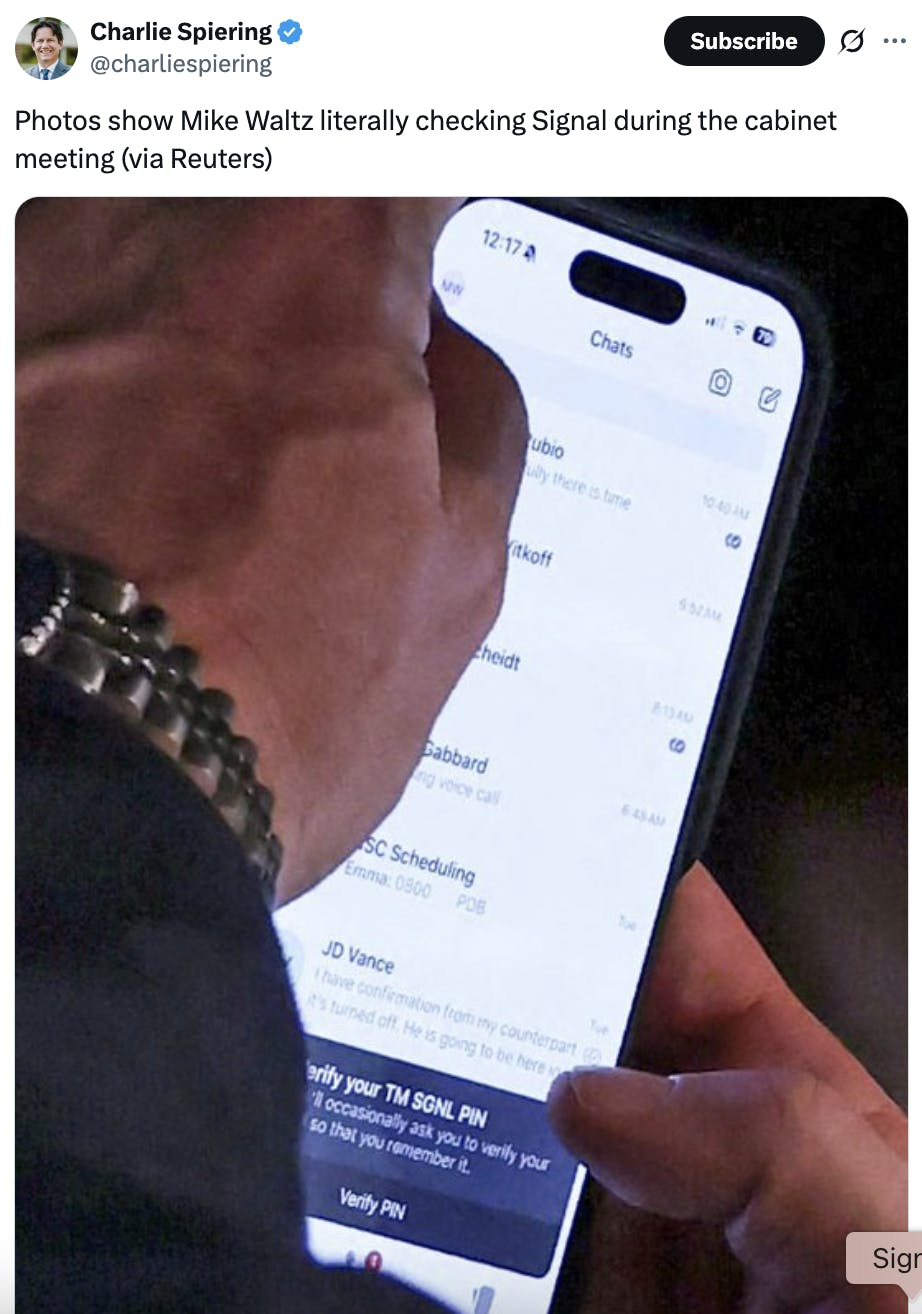
X screenshot Charlie Spiering @charliespiering Photos show Mike Waltz literally checking Signal during the cabinet meeting (via Reuters) (photo of Mike Waltz using TM Signal)

In the images, published by Reuters on Thursday, there is a visible message at the bottom of Waltz’s screen asking him to verify his “TM SGNL PIN.” This is different from the standard version of Signal, where this notification just reads “Verify your Signal PIN.” Not only was Waltz using a private, insecure platform to discuss highly sensitive information, he was using the least secure version of that platform to do so. “TM SGNL” refers to a program from software company TeleMessage that captures and stores Signal messages for the user.

White House communications director Steven Cheung on Thursday said that “Signal is an approved app that is loaded onto our government phones.” It’s not clear if other Trump officials are using the far less secure TM SGNL as well.

The latest controversy comes as both Waltz and current Defense Secretary Pete Hegseth have made headlines for multiple Signal chats. On Thursday, Trump removed Waltz from his post as national security adviser and nominated him to be U.S. ambassador to the United Nations.
Could Medicaid Cuts Lead Republicans to Break With Trump?

$880 billion in proposed cuts are making some GOP members of Congress very nervous.

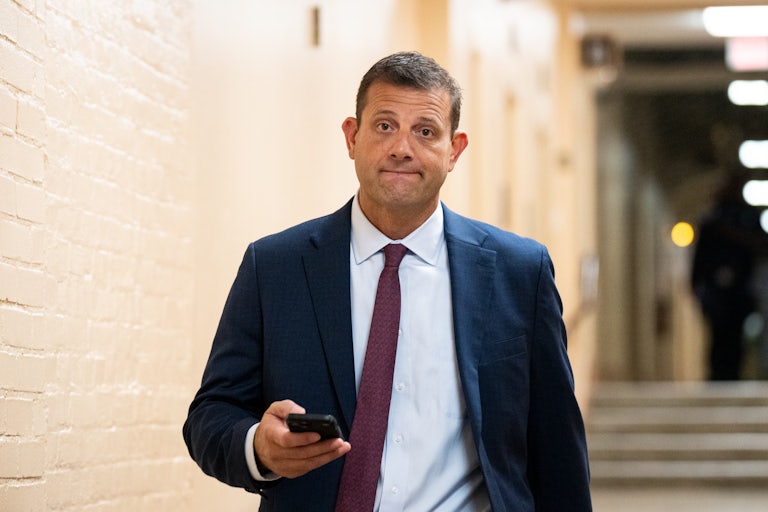
Rep. David Valdeo stares ahead as he walks in the Capitol
Bill Clark/CQ-Roll Call, Inc via Getty Images
Representative David Valadao, who has led GOP efforts to reduce Medicaid cuts

At least one Republican is thinking about the millions of Americans that depend on Medicaid.

Representative David Valadao, a California dairy farmer, represents more Medicaid recipients in his district than anyone else in his party. He also appears to be one of the few Republicans working overtime to keep the fallout of his party’s Medicaid slashing spree to a minimum.

Valadao has spent weeks coordinating group chats with other concerned conservatives and lobbying leadership over the proposed cuts. He also led a letter protest signed by a dozen vulnerable Republicans opposing the bill, all in hope of steering the party’s cart in a different direction from the steep cuts.

“He’s got a very good sense of what Americans need out of their health care. I appreciate his leadership,” New York Representative Nick LaLota, another vulnerable Republican, told Politico Friday. The two, according to LaLota, are in constant communication. “He’s been clear in his communications: We shouldn’t be throwing people off Medicaid who are designed to be on the program.”

Pennsylvania Representative Rob Bresnahan, who similarly has a lot of Medicaid recipients in his district, described Valadao as a “total pillar” of the internal Medicaid debate. “He’s someone I immediately gravitated to,” Bresnahan told Politico. “Just a great sounding board.”

Republicans have spent months attempting to pencil out a $880 billion cut to the program in order to extend Trump’s 2017 tax cuts for corporations and billionaires in an effort to make the tax cut’s estimated $6.8 trillion deficit hike more palatable to their base.

But Valadao, for his part, knows that his political future depends on keeping his constituents happy. The lawmaker was one of many House Republicans to lose his job in 2018 after he voted to repeal the Affordable Care Act—a failed effort that would have stripped health insurance from millions of Americans.

By 2020, Valadao was back in office with a better grip on the stakes of the job. But this time around, Valadao and his cohort are already facing aggressive counter campaigns, featuring provocative TV ads and town hills that oppose the Republican-led cuts.

“We’re going through this partisan exercise to do what is supposed to be a tax bill, and it’s becoming a health care bill, which is what we’re trying to avoid, on an issue that desperately needs reform to make it better,” Valadao told Politico.

One much-discussed solution to square the Medicaid cuts is to make the program more exclusive by way of adding returning work requirements, which House Speaker Mike Johnson said in April would encourage young men to “be at work instead of playing video games all day.”

Republican proposals to introduce a work requirement to Medicaid have thus far asked recipients to navigate work-reporting and verification systems on a monthly basis—a detail that would require significant federal funding. The plans would also negate coverage for individuals who find themselves temporarily unemployed, such as those who were recently fired or laid off.

A February report by the Center on Budget and Policy Priorities found that introducing work requirements to the insurance program could strip upwards of 36 million Americans of their health coverage—half of Medicaid’s 72 million enrollees.

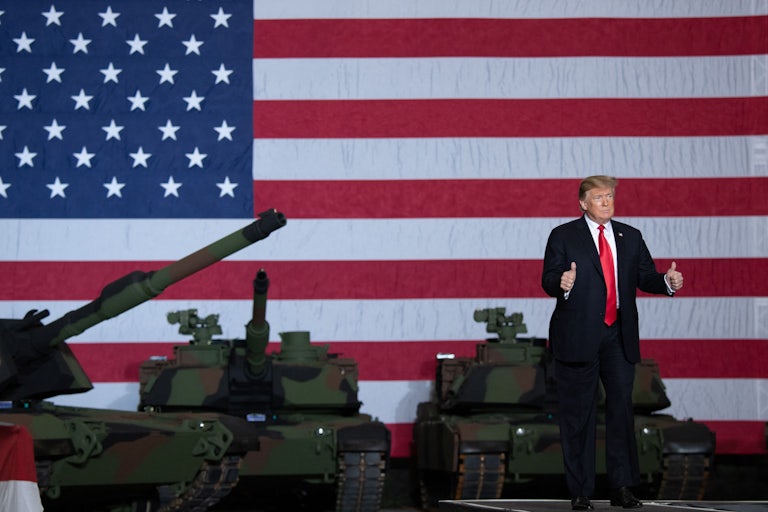
Trump’s Birthday Parade Now Includes Thousands of Soldiers and Tanks

Trump is dead set on throwing a gigantic military parade to celebrate the Army’s 250th anniversary—which just happens to be on the same day as his birthday.

Donald Trump does two thumbs ups in front of a giant American flag and several tanks
SAUL LOEB/AFP/Getty Images
Donald Trump at a tank plant in 2019

Happy birthday, Mr. President—it looks like Donald Trump may be getting his wish of a massive parade in his honor.

The Associated Press reported late Thursday that the Army’s most recent plans to celebrate its 250th anniversary include a large military parade scheduled to take place on June 14, which just happens to be the day Trump will turn 79 years old.

They say age is just a number, but the plan’s hefty price tag is very, very real.

The Army’s blueprints call for a whopping 6,600 soldiers, several Army bands, 50 helicopters, and at least 150 vehicles, which could include historic Army vehicles and even tanks that could significantly damage the streets of Washington, D.C.

When Trump first pitched having a military parade in the nation’s capital in 2018, plans were abandoned due to the exorbitant cost: roughly $92 million. Imagining that these plans include many of the same features as the ones from seven years ago, inflation would put the price tag closer to $117 million. Not to mention the cost of the Army festival already planned for the National Mall.

Plans for an expensive and frivolous military parade obviously fly in the face of the Trump administration’s supposedly necessary cost-cutting measures. In reality, the cuts are more punitive than actually thrifty. Trump signed an executive order Friday directing the Corporation for Public Broadcasting to stop allocating funds to PBS and NPR. The CPB disperses $535 million in taxpayer funds to public stations for educational and cultural programming. That amount is apportioned by Congress, placing the funding outside of Trump’s realm of control.

With the massive cuts to educational public programming, the president can almost afford to throw his lavish birthday party. But he’d still need to scrape together several additional millions.

Trump’s War on “Woke” Finally Hits NPR and PBS

Donald Trump is gutting the federal funding of the two media outlets Republicans have long whined about.

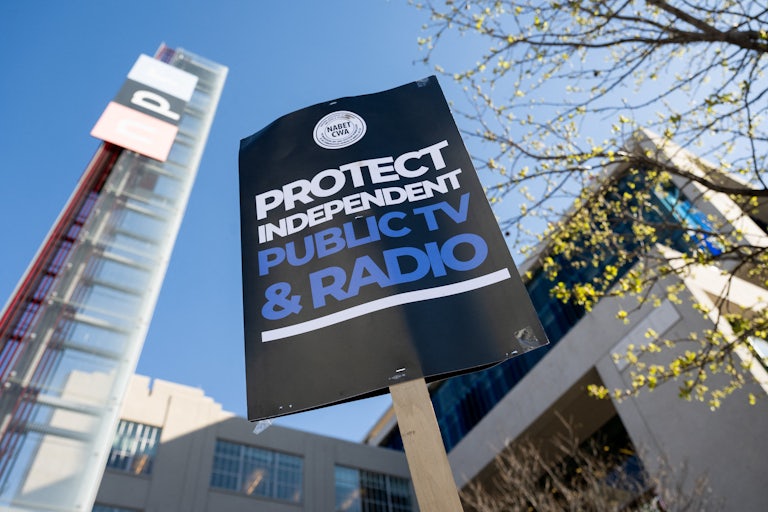
A protest sign reads "Protect Independent TV and Radio."
SAUL LOEB/AFP/Getty Images

President Trump on Thursday signed an executive order that ends public government funding of NPR and PBS in yet another culturally polarized attack on anything deemed “woke.”

“Unlike in 1967, when the CPB was established, today the media landscape is filled with abundant, diverse, and innovative news options,” the executive order reads. “Government funding of news media in this environment is not only outdated and unnecessary but corrosive to the appearance of journalistic independence.”

This order is more symbolic than anything, as both NPR and PBS receive most of their funding from independent sponsors. And yet the order would limit funding to rural areas in particular, as those stations receive the most of the sliver of government funding that NPR and PBS receive.

“This order defies the will of the American people and would devastate the public safety, educational and local service missions of public media—services that the American public values, trusts and relies on every day,” said America’s Public Television Stations CEO Kate Riley. She went on to note that those rural stations provide a “lifeline in hundreds of communities where there is no other source of local media.”

Trump Announces Twisted Plan to Use the IRS to Punish Harvard

“It’s what they deserve!” Trump declared.

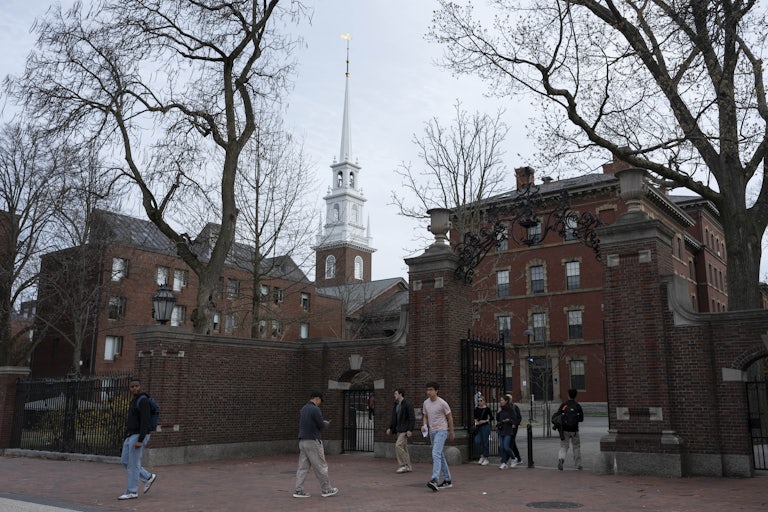
Harvard University campus
Mostafa Bassim/Anadolu/Getty Images

Donald Trump is trying to force Harvard University into subservience, and on Friday he announced that the institution will lose its tax-exempt status. 

“We are going to be taking away Harvard’s Tax Exempt Status. It’s what they deserve!” Trump posted on Truth Social. 

The move comes after weeks of threats following Harvard President Alan Garber’s announcement last month that the university would not give in to the Trump administration’s demands, outlined in a letter from the Department of Education. These included discontinuing diversity, equity, and inclusion initiatives, reforming Harvard’s admissions process for international students, and dismantling programs with “egregious records of antisemitism.”

Following Harvard’s reply, Trump cut $2.2 billion in grants to the school along with a $60 million contract. Secretary of Homeland Security Kristi Noem also demanded records on the “illegal and violent” activities of the institution’s international students, threatening to end Harvard’s ability to enroll any future international students if it didn’t comply.

Trump followed up with plans to pull $1 billion in medical grants to the university, accusing Harvard of “grandstanding” by publicly refusing to defy the White House. But the university isn’t backing down, and has the support of its staff: Over 80 faculty members have pledged to donate 10 percent of their salaries for up to a year to support the university’s cause, with the list growing.  

It’s all part of conservatives’ war on higher education, which they see as a liberal bastion in American life. Many on the right were also incensed at university protests across the country against Israel’s war in Gaza over the past year. Now, it seems that Trump is threatening the existence of America’s oldest university as a show of force. 

This story has been updated.