Tulsi Gabbard Reveals How Little Intel Trump Is Getting on Iran
Senior intel officials can’t explain why Trump is so shocked by Iran’s retaliation tactics in the war.

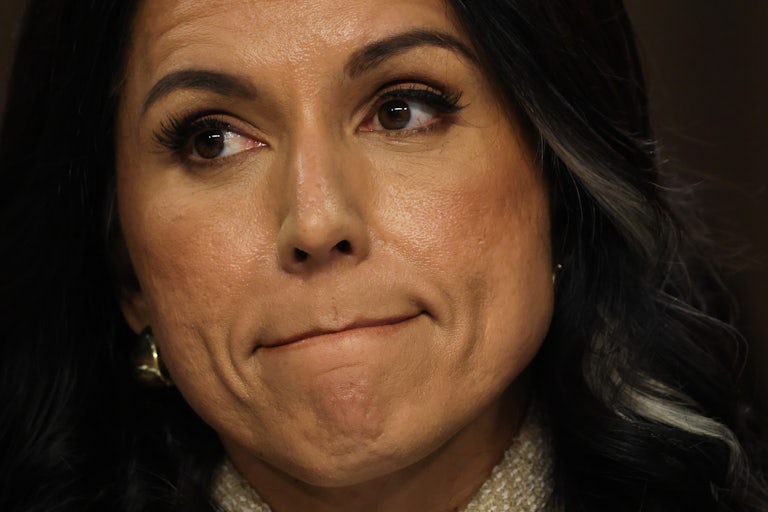
Contradictory answers from Director of National Intelligence Tulsi Gabbard and CIA Director John Ratcliffe during a Wednesday Senate hearing raise questions regarding the frequency and substance of President Trump’s intelligence briefings amid the Iran war.
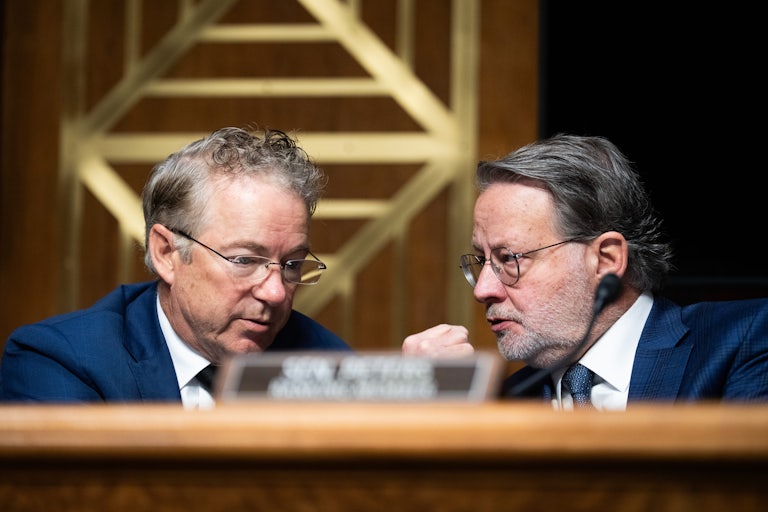
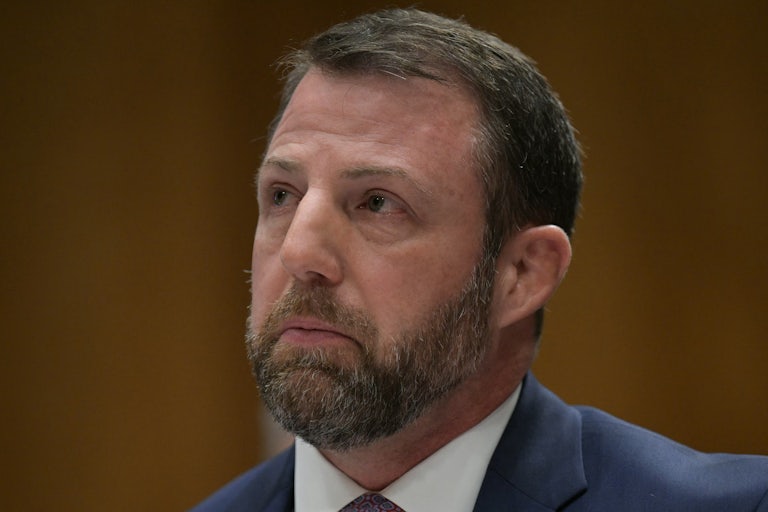
“Does the president take a daily brief from the intelligence community?” Senator Angus King asked, following a long silence from both officials. “This is a yes or no question.”
Ratcliffe eventually replied that he briefs the president “probably on average 10 to 15 times a week,” as Gabbard remained silent.
KING: Does the president take a daily brief from the intelligence community?
— Aaron Rupar (@atrupar) March 18, 2026
GABBARD AND RATCLIFE: ... ... ...
KING: This is a yes or no question pic.twitter.com/r92WKbp0tk
The point-blank question followed a lengthy exchange in which both officials were unable to explain why Trump was so shocked by Iran’s response to the war.
“There seems to be a discrepancy between what the intelligence community has reported over the years and what the president has said in terms of this action,” King said. “For example, Senator Wyden read the report from a year ago that strikes against neighboring states and action to close the Strait of Hormuz was predicted by the intelligence community. Yet the president says nobody knew. And my question is, did you tell him?”
An awkward silence passed as neither Gabbard nor Ratcliffe moved to answer the very direct question.
“Anybody wanna answer that question?”
“So with regard to briefings, the president gets briefings constantly about intelligence. Now the comments that you talked about, I had not heard,” said Ratcliffe. “What I can tell you is Iran had specific plans to hit U.S. interests and energy sites across the region. And that’s why the Department of War and the Department of State took measures for force protection and personnel protection in advance of Operation Epic Fury.”
“Any predictions to the president about the Strait of Hormuz? All you gotta do is look at a map, and you’ll see the vulnerability of the Strait of Hormuz,” King continued. “Was that part of the briefing, Director Gabbard?”
“I think Director Radcliffe made the point here is that this has long been an assessment of the I.C. that Iran would likely hold the Strait of Hormuz as leverage—”
“My question is, was that communicated to the president in the lead-up to this action?”
“And it’s because of that long-standing assessment that the I.C. has continued to report that the Department of War took the preemptive planning measures that it did,” Gabbard replied.
“They’ve stated that they did not plan for the Strait of Hormuz; the president said, ‘Who knew that was gonna happen?’”
King: The president says nobody knew. My question is did you tell him?
— Acyn (@Acyn) March 18, 2026
Ratcliffe: The president gets briefings constantly about intelligence. The comments you talked about, I had not heard.
Gabbard: Because of that longstanding assessment that the IC has continued to report… pic.twitter.com/AGcI9kweoY
King was likely referring to Trump’s repeated comments over the last week that he was surprised by Iran’s retaliation. On Monday, Trump again claimed that nobody expected Iran’s attacks on Qatar, the UAE, and other Gulf states. “Nobody. No no no no. The greatest experts—nobody thought they were going to hit,” Trump said. And on Sunday, CNN reported that the Pentagon had severely underestimated the negative impacts of a blockade on the strait, even as preparing for that same event had been “a bedrock principle of US national security policy for decades.” This massive oversight would indeed point to discrepancies in Gabbard’s and Ratcliffe’s vague answers. If the president was receiving regular and thorough intel briefings, why has the Iranian blockade of the strait been such a shock?
Trump’s continued flailing on the strait—from claiming he doesn’t need help getting oil tankers through it to begging European allies for help doing just that, to threatening to abandon the strait altogether—suggest that the briefings senior intel officers claim happen so frequently may not have resonated.