Breaking News
Breaking News
from Washington and beyond

Dr. Oz Gives Trump the Weirdest, Grossest Compliment Yet

Donald Trump is super healthy and manly, according to Dr. Oz.

Donald Trump raises one hand while speaking at a podium. Dr. Oz stands to his left and smiles at him.
Nathan Howard/Getty Images

Dr. Oz waved off national concerns Wednesday about Donald Trump’s health, claiming that the president is “healthy as a bull.”

The Centers for Medicare & Medicaid Services administrator told the New York Post podcast that Trump’s “success to longevity as well as good health is his incredible passion for what he is doing.”

Oz further claimed that Trump’s testosterone was “great,” recalling an instance in which Trump was on his daytime TV show and shared what the president claimed was a doctor’s note. “The one problem was his weight, which to this day he gives me a hard time about,” Oz said.

But America is not convinced. Trump’s decision to drag the country into another popular Middle East war, his extreme threats to annihilate Iranian civilization, and his recent public errors—including discoloration on his skin, repeatedly falling asleep during critical meetings, his inability to maintain his focus, and his amnesia on even the most basic details—have collectively alarmed the public regarding the 79-year-old’s mental health and his continued aptitude for the country’s biggest job.

Just last week, Trump forgot when Supreme Court Justice Ruth Bader Ginsburg died, and that one of his most fervent GOP critics—North Carolina Republican Thom Tillis—is still in the Senate. Trump also opted to go to a UFC tournament instead of overseeing his administration’s peace talks with Iran, and DoorDashed McDonalds to the Oval Office in a PR stunt that even he retroactively admitted was “tacky.”

Even his own advisers have anonymously admitted that Trump’s extreme mood swings have derailed peace talks with Iran.

HIs behavior has elicited a cultural shift on the ideological left and right. A group of MAGA thoughtleaders—including Alex Jones, Candace Owens, Tucker Carlson, and Megyn Kelly—have denounced Trump’s recent behavior as it relates to the war in Iran. Trump’s response, which involved completely disavowing his political acolytes, drove a deeper wedge in his movement.

Liberal lawmakers, meanwhile, have invoked the 25th amendment, formally challenging Trump’s mental acuity. Fifty House Democrats have filed legislation to create a commission that could shove Trump out of power and install Vice President JD Vance as his replacement.

Other Democrats have called for the president to have his brain tested by the end of the month. House Judiciary Committee ranking member Jamie Raskin demanded that Trump undergo a cognitive test by April 25, citing Trump’s escalating aggression toward Iran.

Meanwhile, the majority of the voting public has assessed the situation and determined that the House should impeach Trump. That statistic includes one in five of his own supporters, according to a poll published Wednesday by Strength in Numbers.
James Comer Is Effectively Killing the Epstein Investigation

A House Oversight Committee memo shows Representative James Comer plans to make big changes to the hearing process, including not requiring witnesses to swear in.

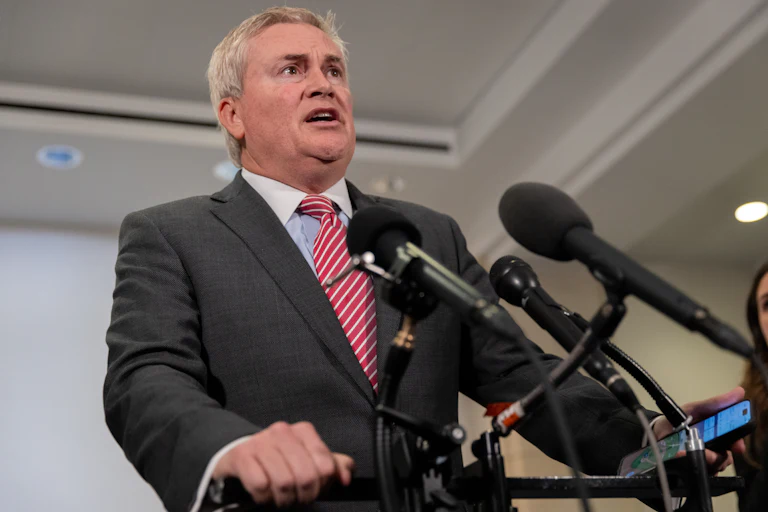
Representative James Comer speaks into reporters' microphones
Nathan Posner/Anadolu/Getty Images

Republicans have found a new way to conduct the Epstein investigation. Democrats insist it’s just another attempt to sweep the whole scandal under the rug.

Democrats on the House Oversight Committee flamed House Oversight Chair James Comer in a congressional memo for “running scared,” accusing the Kentucky Republican of changing the Epstein investigation proceedings into informal “roundtables” that lack any rules.

In this format, there’s no opportunity to consider subpoenas, and no recourse for Democrats to force votes on transparency measures, according to the memo shared among Democratic lawmakers last week.

Perhaps worst of all, the roundtables are designed to look and feel like “regular committee hearings,” according to the memo, but don’t require witnesses to speak under oath. That will effectively void the investigation of any value, giving potential witnesses an opportunity to lie before Congress without consequence.

“In a development with little precedent in modern Congressional history, Oversight Republicans have suspended the use of traditional committee hearings in favor of” the roundtables, the memo reads. “Oversight Republicans are avoiding hearings to block bipartisan subpoena motions they are losing. This shift doesn’t just affect Committee procedure—it limits Congress’s ability to uncover the truth and hold powerful actors accountable.

“By holding roundtables, Republicans are denying Members their basic rights as lawmakers,” the memo states. “Oversight requires transparency, rules, and accountability. Republicans are abandoning all three. Instead of holding real hearings, they are choosing forums designed to avoid scrutiny—because they are losing when the facts are on the table.”

The transition to hosting roundtables appears to be an attempt by Republican leadership to curtail the subpoena power of both parties. For months, Republicans and Democrats alike have hijacked committee hearings in order to vote on subpoenas that would require high-profile figures to speak on the Epstein investigation.

Several prominent figures were named as Epstein associates in the millions of recently released case files. They include Bath and Body Works co-founder Les Wexner, American financier and investor Leon Black, disgraced British former prince Andrew Mountbatten-Windsor, and Donald Trump.

Trump is mentioned more than 38,000 times in the Epstein files, and was flagged in more than 5,300 files in the document cache. Those include instances in which Trump was accused—by both victims and witnesses—of abusing children, such as one instance in which he allegedly attempted to force a girl between the ages of 13 and 15 years old to give him oral sex before he punched her in the head for biting his penis.

Trump Hasn’t Actually Wrecked as Much of Iran’s Military as He Claims

Iran still has a lot of firepower left.

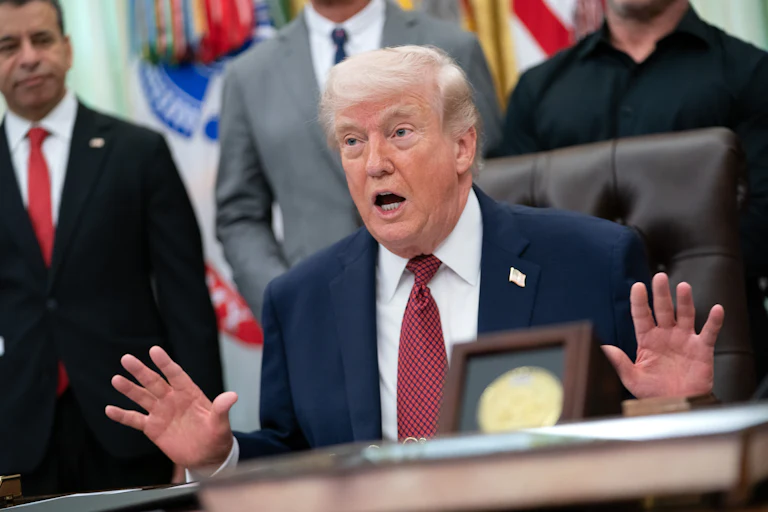
Donald Trump gestures with both hands and speaks while sitting at his desk in the Oval Office
Allison Robbert/The Washington Post/Getty Images

President Donald Trump has repeatedly claimed to have obliterated Iran’s navy and air force—but it seems that Iran has maintained far more military capabilities than his administration is willing to let on.

Last week, Trump claimed that Iran’s navy was “laying at the bottom of the sea, completely obliterated,” with the exception of a fleet of “fast attack ships” that the U.S. military did not consider a threat. However, multiple U.S. officials told CBS News Wednesday that roughly 60 percent of the Islamic Revolutionary Guard Corps’s naval arm still existed. In fact, several ships in the Strait of Hormuz were attacked by Iranian gunboats Wednesday.

That’s not all. Roughly two-thirds of the Iranian air force is still believed to be operational, U.S. officials told CBS News. Nearly half of Iran’s stockpile of ballistic missiles and associated launch systems was also still intact at the beginning of the ceasefire in early April, three U.S. officials told the outlet. Two weeks ago, Defense Secretary Pete Hegseth declared that “Iran no longer has any sort of comprehensive air defense” capability.

The Pentagon’s internal intelligence agency recently told lawmakers that Iran still maintained significant military capability, including thousands of missiles and one-way attack drones, NBC News reported Wednesday.

In a post on X Wednesday, White House press secretary Karoline Leavitt dismissed CBS’s reporting as propaganda, before spouting some of the adminstration’s own. “The truth is that under President Trump’s leadership, the U.S. military decimated the Iranian regime’s capabilities in just 38 days,” she wrote.

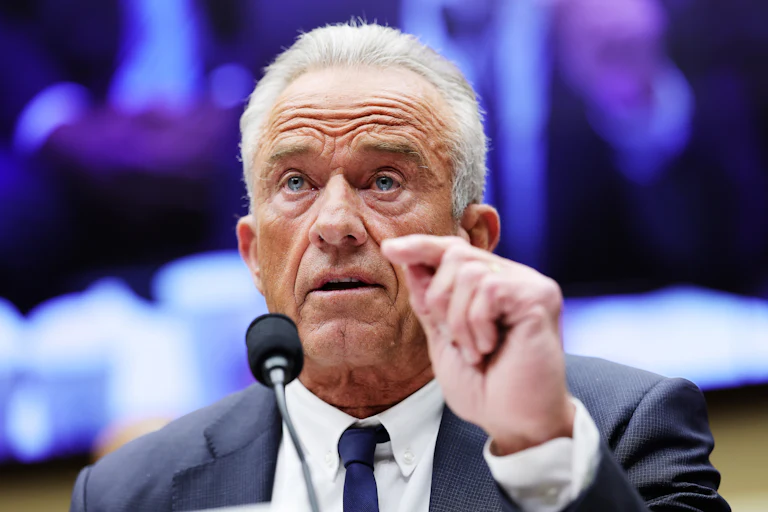
RFK Jr. Faces Backlash Over FDA Rejection of Lifesaving Cancer Drug

Health Secretary Robert F. Kennedy Jr. is trying to distance himself from the decision.

Robert F. Kennedy Jr.
Anna Moneymaker/Getty Images

President Trump’s Food and Drug Administration has decided not to approve a skin cancer treatment that could save lives, drawing backlash from doctors.

On Wednesday, Secretary of Health and Human Services Robert F. Kennedy Jr. told Congress that he had nothing to do with the decision to withhold approval for Replimune’s drug, RP1, which treats melanoma, shifting responsibility to FDA Commissioner Dr. Marty Makary.  

“This decision comes out of FDA, and we trust ​the process there. And I’ve been told by Marty Makary that every panel that looked at that drug unanimously voted against it … because it does not appear to work,” Kennedy said to the Senate Finance Committee. 

This is disputed by many oncologists, who pointed out in a Wall Street Journal op-ed this week that an initial panel approved the drug before being overruled by the head of biologics, Dr. Vinay Prasad. They also disputed Kennedy’s claim at a House hearing last week that Replimune did a “one arm trial, and all the people who were tested also received a chemotherapy drug, so we don’t know what the effect was.” 

In reality, none of the patients in the trial received chemotherapy; instead they received a different form of immunotherapy, the oncologists noted. A longtime melanoma researcher who worked on the trial, Dr. Anna Pavlick, told the Journal, “Honestly, there was no doubt in our minds whatsoever when we completed this study and we saw the results, that this was going to be approved as a wonderful alternative for our patients because they have no options.

“I have patients who have been treated with this drug that are still alive today who would otherwise be dead,” Pavlick added. 

Dr. Eric Whitman of the Atlantic Health System Cancer Care backed up Pavlick’s statement. 

“When you talk to the melanoma experts, people who treat lots and lots of melanoma patients like myself, it’s obvious that this is beneficial to patients and it’s saving lives or it has potential to save lives,” Whitman said. “The community of patients and doctors don’t understand the reasoning” for the FDA’s rejection. 

Under Kennedy’s leadership, HHS has made several questionable decisions to hurt public health, including blocking a Centers for Disease Control study showing that the Covid-19 vaccine significantly reduced emergency room visits and hospitalizations this past winter. RP1 shows significant potential in combating a fatal cancer, and its rejection fits into a shocking pattern of decisions from the Trump administration that seem to encourage the spread of cancer.  

Top Republican Sounds Like He Has Some Regrets on Redistricting

NRCC Chair Richard Hudson suddenly wants nothing to do with the redistricting conversation.

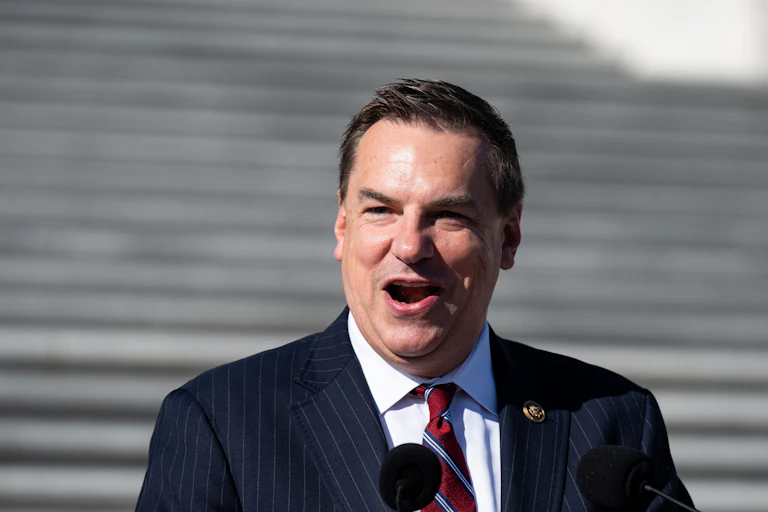
NRCC Chair Richard Hudson speaks outside the Capitol
Bill Clark/CQ-Roll Call, Inc/Getty Images
NRCC Chair Richard Hudson

National Republican Congressional Committee Chair Richard Hudson wouldn’t back up President Donald Trump’s gerrymandering scheme Wednesday after it backfired and gave Democrats a boost.

Virginians voted Tuesday to redraw their state’s congressional district map, potentially netting Democrats an additional three to four seats in the November midterm elections. The success of the measure could potentially see Democrats seize an edge over Republicans’ own gerrymandering efforts in red states, and MAGA is already flipping its lid.

Asked the morning after whether he felt the mid-decade redistricting effort was worth it, Hudson replied: “Not for me to decide that, wasn’t my decision,” Punchbowl News reported.

Hudson doesn’t seem interested in taking credit for his party’s political gamble. The North Carolina lawmaker appeared hopeful that Virginia’s Supreme Court will weigh in on a case against the new measure, in which the NRCC is a plaintiff.

“This close margin reinforces that Virginia is a purple state that shouldn’t be represented by a severe partisan gerrymander,” Hudson said in a separate statement. “That’s exactly why the courts, who have already ruled twice to block this egregious power grab, should uphold Virginia law.”

So far, five red statesMissouri, North Carolina, Texas, Ohio, and Utah—have moved to redraw their congressional maps at the president’s behest in order to hand a potential nine additional seats to the Republican Party.

Trump Starts Nonsensical Conspiracy After Major Redistricting Defeat

President Trump can’t accept the staggering loss for Republicans in Virginia.

Donald Trump speaking into a mic.
Anna Moneymaker/Getty Images

President Trump is once again alleging voter fraud—this time, after his gerrymandering defeat in Virginia.

“A RIGGED ELECTION TOOK PLACE LAST NIGHT IN THE GREAT COMMONWEALTH OF VIRGINIA! All day long Republicans were winning, the Spirit was unbelievable, until the very end when, of course, there was a massive ‘Mail In Ballot Drop!’” Trump wrote on Truth Social Wednesday afternoon. “Where have I heard that before — And the Democrats eked out another Crooked Victory! Six to five goes to ten to one, and yet the Presidential Election in November was very close to a 50-50 split.”

The president also made time to deride the way the referendum question was written.

“In addition to everything else, the language on the Referendum was purposefully unintelligible and deceptive,” he continued. “As everyone knows, I am an extraordinarily brilliant person, and even I had no idea what the hell they were talking about in the Referendum, and neither do they! Let’s see if the Courts will fix this travesty of ‘Justice.’”

Virginians voted 51–49 on Tuesday to redraw their state’s congressional map. The approved ballot measure could give Democrats as many as four additional seats in the House of Representatives. Like Trump wrote, that could mean that Democrats have a real chance of taking 10 of Virginia’s 11 House seats come November.

But there is no proof of voter fraud. And this entire effort was kickstarted last year when Trump himself started asking red states to gerrymander to help him overcome what looks like an incoming midterm defeat. The president claimed that Texas Republicans were “entitled to five more seats.” They obliged, and soon, Republicans in Missouri, North Carolina, and Ohio all capitulated. Now Virginia, like California, has responded. And Trump has a problem.

Pentagon Report Destroys Trump’s Dream of Cheaper Gas Before Midterms

Despite Donald Trump’s promises, it’s going to take a lot more than a few months to bring gas prices down.

A ship sails in the Strait of Hormuz
U.S. Navy/Getty Images
A ship in the Strait of Hormuz

It will be a long time before the Strait of Hormuz is back to business as usual.

A Pentagon assessment shared with lawmakers Tuesday revealed that it could take six months for the vital oil tradeway to be fully cleared of the mines planted by the Iranian military, according to officials that spoke with The Washington Post.

It’s unlikely, however, that any mine-sweeping operation will take place without a peace agreement and an official end to the Iran war—a possibility that could very well drag the current economic woes into the back half of the year or beyond.

That could have serious implications for Republicans come November: Most Americans do not approve of the war, with 41 percent of the country in doubt as to whether Donald Trump even has a plan for ending the conflict, according to a Politico survey published last week.

The unpopular war has also ripped the MAGA movement right down the middle. Several major far-right media personalities—such as Tucker Carlson and Alex Jones—have outright disavowed the president and his approach to foreign policy since the war began, arguing that Trump backtracked on his former platform and campaign promises. Trump has rebuked his former acolytes in response, directly attacking them on social media and reposting content that demands they “shut the fuck up.”

By Wednesday, the majority of the voting public said that the House should impeach Trump, including one in five of his own supporters, according to a poll by Strength in Numbers.

But the rejection is not entirely unexpected. The war in Iran has thrust the entire world into an energy crisis, spiking oil and gas prices, stalling trade, and tanking economies. Last month, the cost of Brent crude, a global oil benchmark, reached a high of $108 per barrel—a dramatic increase from before the war started in late February, when Brent crude cost around $65 a barrel. At the time of publication, the cost per barrel was hovering around $101.

It is not clear exactly what the war in Iran has accomplished. Trump has previously stated that his primary objective in the war was to erase Iran’s nuclear capabilities—but his administration’s battle assessments have stood in contrast to other attacks they boasted about as recently as last year.

Prior to the war—which never obtained congressional approval—Trump ordered strikes on three of Iran’s nuclear sites, hitting Fordo, Natanz, and Isfahan on June 22. At the time, the Trump administration claimed that the one-off air raid had set Iran’s program back by “years.”

Former director of the National Counterterrorism Center Joe Kent sparked a maelstrom in Washington when he resigned over the issue last month. Kent argued in his resignation letter that he could not “in good conscience” support the war in Iran. “Iran posed no imminent threat to our nation, and it is clear that we started this war due to pressure from Israel and its powerful American lobby,” he wrote at the time.

In the seven weeks since the war began, the U.S. and Israel have killed thousands of Iranian civilians and obliterated Iranian civilian infrastructure. Meanwhile, 13 U.S. soldiers have died.

Trump extended the ceasefire between the two nations Wednesday, promising to hold off on the violence until Tehran was able to offer a formal peace proposal. Shortly afterward, Iran’s top negotiator said that it was “not possible to reopen the Strait of Hormuz” due to “blatant violations” of the ceasefire, specifying the U.S. naval blockade of Iranian ports and “warmongering” by Israel “on all fronts.”

Democratic Congressman, 80, Dies in Office After Announcing Reelection

Democratic Representative David Scott had a terrible habit of not voting in elections.

Representative David Scott speaks in a congressional hearing.
Bill Clark/CQ-Roll Call, Inc/Getty Images
Representative David Scott in 2025

Democratic Representative David Scott of Georgia has passed away at the age of 80.

Scott has spent 50 years in politics, and was set to run for a 13th term in George’s 13th congressional district this year, the Atlanta Journal-Constitution reports, despite a visible decline in his mental acuity.

One of his primary opponents, Georgia state Representative Dr. Jasmine Clark, discovered last November through a public records request that Scott has not voted in the past six consecutive elections, including the 2024 presidential election.

“Our right to vote is sacred and constantly under attack. I cannot fathom any elected official asking his constituents for their votes every two years without even bothering to go vote himself,” Clark posted on X at the time, claiming that Scott wasn’t even a resident of the district.

There have been other signs of concern. In February of last year, Scott gave a long, incoherent speech about tariffs on the House floor before his microphone was cut off. In December 2024, just after he was reelected, Scott cursed at a photographer for taking his picture while being pushed in a wheelchair outside of the Capitol.

Scott’s mental and physical state was well-known on Capitol Hill, and his decision to run again in 2024 shocked colleagues, staff, and lobbyists. Many of them told Politico in February of that year that the then-ranking member of the House Agriculture Committee had issues with detailed conversations and often had to rely on a script.

Scott is the fourth Democratic member of Congress to pass away since the beginning of Trump’s term, joining Representatives Gerry Connolly, Sylvester Turner, and Raúl Grijalva. All of them were over the age of 70 representing safe Democratic districts.

This story has been updated.

Trump Plans to Bail Out Spirit Airlines With Your Taxpayer Dollars

The Trump administration is considering a massive rescue package for the budget airline.

Spirit Airlines plane
Kevin Carter/Getty Images

The Trump administration is considering a bailout for Spirit Airlines, which could be a loan worth as much as $500 million.

The Wall Street Journal reported Wednesday that the proposed deal could give the federal government warrants for a large stake in the company, and that the Transportation Department and Commerce Department are part of the discussions. Nothing has been finalized yet.

The budget airline, known (and frequently mocked) for its bare-bones offerings, has been struggling after declaring its second bankruptcy in less than a year. Last week, CNBC reported that Spirit could be liquidated in less than a week, with skyrocketing fuel prices adding to the company’s woes. The airline never recovered from the Covid-19 pandemic, as wages and costs shot up.

The airline was also hurt as the domestic flight industry became oversaturated, and a 2023 engine recall for its Airbus planes only made things worse. A merger with JetBlue Airways was blocked in 2024, and the company lost $257 million between March 2025, when it exited its first bankruptcy, and the end of June that year. The company then filed for bankruptcy a second time.

On Tuesday, President Trump lamented the airline’s woes, floating a bailout in an interview with CNBC.

“You know, Spirit’s in trouble, and I’d love somebody to buy Spirit. It’s 14,000 jobs, and maybe the federal government should help that one out. I told my people,” Trump said.

But why should American taxpayers bail out an airline? The last time the government intervened to help air carriers was after the Covid-19 pandemic; before that, it was following the 9/11 attacks. Both of those interventions were for companies across the industry, not one singular airline. On Tuesday, Transportation Secretary Sean Duffy expressed reservations about the proposed bailout.

“What we don’t want to do is put good money after bad, and there’s been a lot of money thrown at Spirit, and they haven’t found their way into profitability,” Duffy told Reuters. “And so would we just ​forestall the inevitable and then own that?”

Duffy seems to have been overruled in the past day, raising questions about the administration’s motive for seeking to save Spirit. Does Trump, one of his business allies, or even his fellow Republicans have a stake in keeping the south Florida–based company afloat?

Kash Patel Snaps When He’s Fact-Checked About Own Lawsuit to His Face

Patel’s lawsuit against The Atlantic states he was temporarily locked out of his government computer.

FBI Director Kash Patel speaks at a podium
Anna Moneymaker/Getty Images

FBI Director Kash Patel appeared to lie to reporters Tuesday about having a major meltdown over IT problems—contradicting his own $250 million defamation lawsuit in the process.

The Atlantic reported over the weekend that Patel lost his cool earlier this month when, unable to log into his work computer in the morning, he made a number of frantic phone calls claiming he’d been fired.

In his lawsuit against the publication, filed Monday, lawyers for Patel claimed the assertion he “engaged in a ‘freak out’” was false. “Director Patel had a routine technical problem logging into a government system, which was quickly fixed,” the lawsuit said.

But speaking to reporters Tuesday evening, Patel fell apart at the simplest question about the article, and claimed that he was “never locked out” of his computer in the first place.

“Your lawsuit contends that you were not able to log in to the system. What did you think after you were unable to log in to the system?” one reporter asked.

“Let’s have a survey: How many of you people believe that’s true?” Patel asked the crowd. The same reporter then asked Patel whether he communicated to anyone that he believed he was fired, and pressed him to answer the “straightforward question.”

“The problem with you and your baseless reporting is that it is an absolute lie. It was never said. It never happened,” Patel said, but the reporter did not relent.

“The simple answer to your question is you are lying,” Patel said, finally adding: “I’ve answered your question. It’s simply as follows: I was never locked out of my systems.”

The reporter noted that Patel’s own lawsuit said otherwise. “Anybody who says—anyone that says the opposite is lying,” Patel said.

Someone here is lying—but it’s not the reporter who was asking the questions.