Lawmakers Want Biden to Ask Permission Before Bombing Yemen Indiscriminately
The administration's escalation of an open-ended conflict with the Houthis has reawakened the long-running debate over who has the power to go to war.

As tensions in the Middle East escalate, some lawmakers are questioning whether the Biden administration can authorize attacks against the Houthi militants in Yemen without the express consent of Congress.
“We just need to get clarity about their perception about their legal authorities and the implications of those understandings moving forward. The American people want us to duly deliberate before committing to some sort of sustained action against the Houthis or others,” said Senator Todd Young, a Republican member of the Foreign Relations Committee who has helped lead efforts in the Senate to overturn the 2002 Authorization for Use of Military Force, or AUMF, that justified American action in Iraq.
This month, the Biden administration authorized multiple strikes against the Houthis, an Iranian-backed organization based in Yemen that has disturbed traffic in crucial shipping lanes connecting to the Suez Canal. The Defense Department has characterized strikes against the Houthis as “defensive,” citing “imminent threat” of attack to merchant ships and U.S. Navy vessels. The Houthis began attacking commercial ships in the Red Sea in response to Israel’s military campaign in Gaza.
“I know of no definition of self-defense that includes protecting foreign flagships. It might be a really good thing to do—but what’s the legal justification for it?” Democratic Senator Tim Kaine, the other leader of efforts to overturn the 2002 AUMF in the Senate, told me on Tuesday. “There’s a ‘What’s the strategy?’ question. And since the administration said they expect more escalation, and that’s what’s happening—OK, then, well, what’s the plan to de-escalate?”
Indeed, President Joe Biden himself has acknowledged that, despite failing to dissuade the group from attacking vessels traveling through key sea lanes, the campaign against the Houthis may be open-ended: “Are they stopping the Houthis? No,” Biden said last week. “Are they going to continue? Yes.”
(Insert extremely quick primer: The Houthis control a portion of territory in Yemen, and a Saudi-backed campaign to uproot them—supported by the United States—proved to be largely ineffective; a truce was eventually implemented in 2022. That conflict displaced millions of people and further exacerbated a humanitarian crisis in the Middle East’s poorest country.)
On Tuesday, Young and Kaine were joined by Democratic Senator Chris Murphy and Republican Senator Mike Lee in sending a letter to the White House asking for more details on the administration’s strategy in responding to Houthi attacks. While the senators said they “support smart steps to defend U.S. personnel and assets” and “hold the Houthis accountable for their actions,” they “further believe Congress must carefully deliberate before authorizing offensive military action.”
“The Administration has stated that the strikes on Houthi targets to date have not and will not deter the Houthi attacks, suggesting that we are in the midst of an ongoing regional conflict that carries the risk of escalation,” the senators said, adding that there is “no current congressional authorization for offensive U.S. military action against the Houthis.” Kaine separately told me that his office has been in contact with White House staff but has not yet received a satisfying response as to the administration’s strategy against the Houthis.
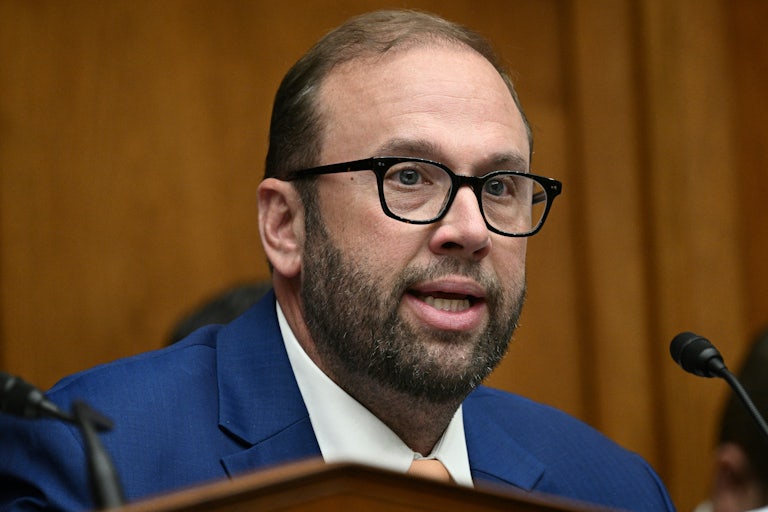
Some lawmakers in the House have also raised concerns about the president’s authority to launch strikes against the Houthis. In an op-ed in The Nation last week, Democratic Representative Ro Khanna argued that Biden has “both the constitutional obligation and a political imperative” to seek authorization from Congress.
“Conducted with extensive planning and in coordination with five other countries, the multiple rounds of US airstrikes in Yemen are retaliatory strikes for deterrence, not defense,” said Khanna.
It’s not just the strikes against the Houthis that have members of Congress scratching their heads. Young and Kaine also each expressed bafflement at the Biden administration’s use of the 2002 AUMF to justify airstrikes in Iraq earlier this month. The White House said the strike was justified by Article 51 of the United Nations charter, which outlines a nation’s right to self-defense, as well as the 2001 and 2002 AUMFs.
“We could not understand, like, what was the [White House] counsel’s office thinking? And we still haven’t gotten a good answer,” said Kaine.
Young, who described himself as a “recovering attorney,” told me on Tuesday that it was a “mistake” to cite the 2002 AUMF for the Iraq strikes, calling it an “untenable position.”
“Sometimes attorneys can get carried away. And that’s what happened in this case, which is what led the administration to a nonsensical and inconsistent position,” Young said. “The 2002 AUMF was drafted and passed for the narrow purpose of ensuring that we could go to war against Saddam Hussein’s regime. Saddam Hussein is dead, last time I checked—still dead, still very dead. And that AUMF is no longer in effect as a matter of law.”
The House voted in 2021 to repeal the 2002 AUMF. The Senate repealed the 1991 and 2002 AUMFs on a bipartisan basis last year, although that second measure has not made progress in the now Republican-controlled House. The recent strikes in Yemen—and, to a lesser extent, in Iraq—are once again raising questions about how far a president can go without congressional authority. Even in a divided and often dysfunctional Congress, some lawmakers argue that debating to authorize use of force in the legislature is a necessary next step.
“My anticipation would be that the president’s hand would be substantially strengthened if he came to Congress before committing to any longer-term action,” Young said.
This article first appeared in Inside Washington, a weekly TNR newsletter authored by staff writer Grace Segers. Sign up here.
Vibe check: The Chevron conundrum
Each week, I provide an update on the vibes surrounding a particular policy or political development. This week: how lawmakers are reacting to a Supreme Court case with far-reaching effects.
The Supreme Court appears poised to overturn a key precedent that empowers federal agencies, which would in turn raise the level of specificity required for Congress to draft regulatory laws to a near-impossible standard of complexity.
In oral arguments last week, conservative members of the court seemed skeptical of the so-called “Chevron doctrine,” a precedent that grants agencies authority to interpret congressional statutes when intent is unclear. The 1984 case that established the Chevron doctrine is one of the most cited cases in recent legal history; if overturned, it would transfer authority from executive agencies to the courts to determine legislative intent.
Although the Chevron doctrine was established during and supported by the Reagan administration, recent support for or opposition to it has largely fallen along party lines, with Democrats in favor of preserving agency authority and Republicans opposed.
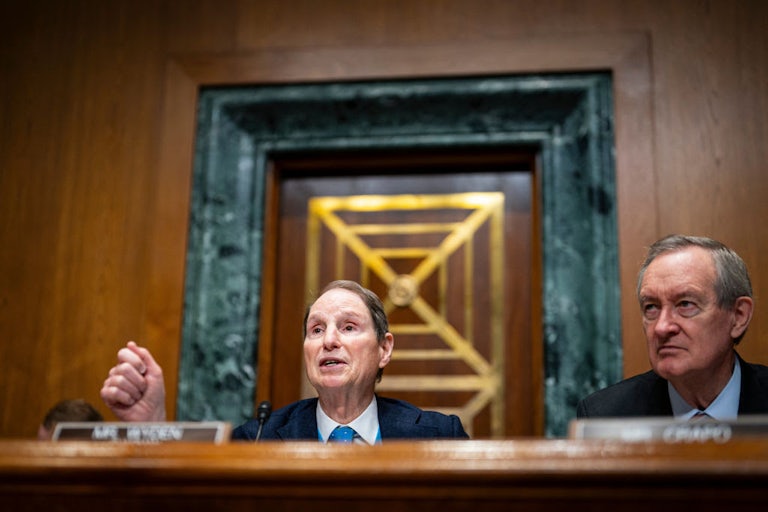
“The Supreme Court is considering a power grab designed to make day-to-day governance less effective and to give the courts more power in determining every detail of how government works,” said Senator Elizabeth Warren, who joined an amicus curiae brief supporting the doctrine along with other Democratic senators. “Instead of having scientists, for example, figure out the safety standards on nuclear energy, overturning the Chevron doctrine would mean courts could make that decision.”
But Republicans argue that Congress should be more specific in outlining statutes, contending that changing administrations allow agencies to interpret laws differently based on who is in office. “For too long, Congress has been content to punt decision-making to unelected bureaucrats in the executive branch,” said Senator Ted Cruz, who led several other Republican lawmakers in an amicus brief urging the court to overturn the precedent. “The growth of the administrative state has allowed politicians to avoid accountability to the people.” (However, the Supreme Court justices—who would almost definitely end up deciding what actions taken by regulatory agencies are kosher and which aren’t—are just as unelected and perhaps even less accountable to voters than executive branch bureaucrats.)
Senator Josh Hawley, another Republican opponent of the doctrine, said that “Congress has deliberately given up authority to agencies.”
“And then, you know, we whine about it all the time. ‘Oh, these agencies, they pay no attention to us.’ Well, that’s because we’ve given them wide-open discretionary authority,” Hawley told me. He echoed the common Republican belief that agencies functionally amount to a “fourth branch of government,” unaccountable to Congress or the executive (a Deep State, if you will).
Still, requiring Congress to be more specific in developing statutes would require a degree of granularity lawmakers are not used to considering. Moreover, supporters of the doctrine argue that leaving a statute up to the courts would not necessarily ensure stability in interpretation, because conservative and liberal justices may rule differently on a law: This could ultimately bring a statute before the conservative-majority Supreme Court for final decision, which has shown itself to be largely hostile to government regulation.
Democratic Senator Sheldon Whitehouse—who led the brief supporting the doctrine and has pointed out the ties between the conservative Koch network and the plaintiffs in one of the Supreme Court cases under consideration—said that agencies are already held accountable.
“Look at all the CRAs we’ve done in this building,” Whitehouse said, referring to votes to undo agency actions under the Congressional Review Act. “Look at the appropriations riders that get put on, look at all the Oversight Committee work, look at what’s happening to [Homeland Security Secretary Alejandro] Mayorkas on the House side, and tell me that Congress doesn’t oversee agencies.”
Whitehouse, who has pressed for the Supreme Court to adopt a formal ethics code, also argued that the judicial branch may not be the best venue for interpreting laws. “Even if it were true, which it isn’t, the idea you could solve an accountability problem by moving the locus of decision to an even less accountable part of government, shows how little this argument makes sense,” Whitehouse said.
What I’m reading
NJ race to replace Menendez pits insiders vs. grassroots backlash, by Jonathan Tamari in Bloomberg
She filed a complaint after being denied an abortion. The government shut her down, by Caroline Kitchener and Dan Diamond in The Washington Post
A small town struggles to survive in the heart of Mississippi’s hospital crisis, by Devna Bose in Mississippi Today
‘It’s embarrassing’: Republicans worry they have no achievements to run on in 2024, by Sahil Kapur in NBC News
The menu trends that define dining right now, by Priya Krishna, Tanya Sichynsky, and Umi Syam in The New York Times
Fetterman’s break from the left excites Republicans, by Ursula Perano in Politico
Pet of the week