NY Times Sues Pete Hegseth for Kicking Them Out of the Pentagon
Hegseth imposed new restrictions on media access that resulted in multiple legacy outlets leaving the Pentagon.

America’s news media companies are not taking the Pentagon’s new press restrictions laying down.
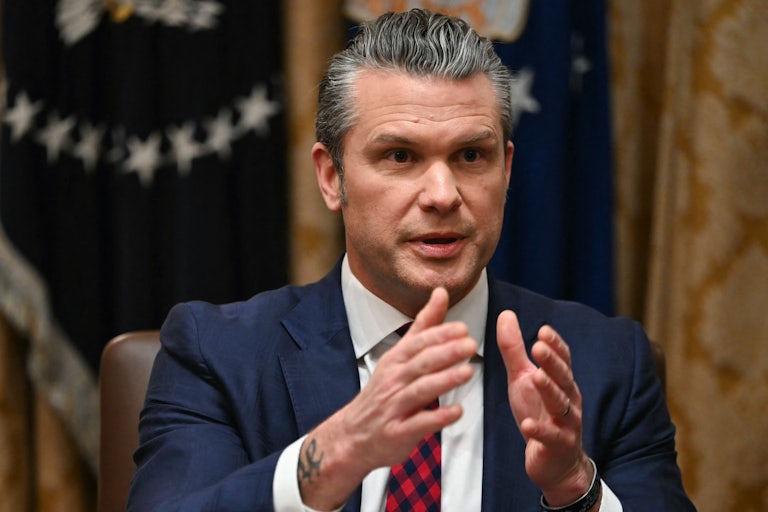
The New York Times named several key Trump officials in a sweeping lawsuit Thursday, including Defense Secretary Pete Hegseth and Pentagon spokesman Sean Parnell. The newspaper argued that the Pentagon’s new rules—which effectively forced out dozens of highly lauded legacy journalists and replaced them with fawning, far-right upstarts—actually “violates the Constitution’s guarantees of due process, freedom of speech and freedom of the press.”
The suit further argued that the punitive policy violated the First Amendment by seeking “to restrict journalists’ ability to do what journalists have always done—ask questions of government employees and gather information to report stories that take the public beyond official pronouncements.”
Under Hegseth’s new rules, credentialed Pentagon reporters were required to pledge that they would not report on anything from the department that had not been approved for official release. The new policy, announced in October, forced journalists to choose between reporting government-sponsored propaganda or having their press credentials revoked.
Dozens of journalists walked away from their desks at the Pentagon as a result, refusing to capitulate to Hegseth’s new standard. In turn, Pentagon officials offered those newly vacated spots to conservative outlets ideologically aligned with the Trump administration, including One America News, The Federalist, and LindellTV, a new outlet formed by Mike Lindell, the My Pillow CEO who practically bankrupted himself by broadcasting conspiracies about the 2020 presidential election.
The Times’ legal complaint seeks a court order to suspend Hegseth’s new rules, as well as a declaration that the initiative “targeting the exercise of First Amendment rights” was illegal.
In a press briefing Wednesday, a senior attorney for the Times said that the paper had discussed a joint lawsuit with other news organizations similarly affected by the policy, but ultimately decided to proceed alone.