ICE Can’t Even Fill Top Requirement of Arresting Minnesota Protesters
Judges are rejecting arrest warrants for anti-ICE protesters, which is rare.

Federal judges in Minnesota are rejecting arrest warrants for some anti-ICE protesters because federal officials haven’t actually backed up claims that demonstrators have broken any law.
Federal immigration agents have repeatedly failed to provide sufficient evidence that demonstrators have committed crimes, such as assault, when trying to obtain warrants for arrest, two people briefed on discussions of sealed court proceedings told MS NOW Friday.
In order to obtain an arrest warrant, a federal officer is only required to show a fair probability that the suspect has engaged in criminal activity—but apparently, they’re not even doing that.
For example, U.S. District Court Judge Douglas Micko struck a charge listed on an arrest warrant for Chauntyll Allen, one of the demonstrators arrested at an anti-ICE protest during services at a Minnesota church Sunday. The warrant originally alleged that Allen had physically obstructed entrance to a place of religious worship, impeding the churchgoers’ religious freedom. CBS News Minnesota’s Jonah Kaplan reported that Micko had struck this charge on the arrest warrant, noting that there was “no probable cause.”
The other charge listed on the warrant alleged that Allen had committed a conspiracy against rights, accusing her and her fellow protesters of intending to injure, threaten, or intimidate someone exercising their right to religion.
Micko also rejected the arrest warrant of journalist Don Lemon.
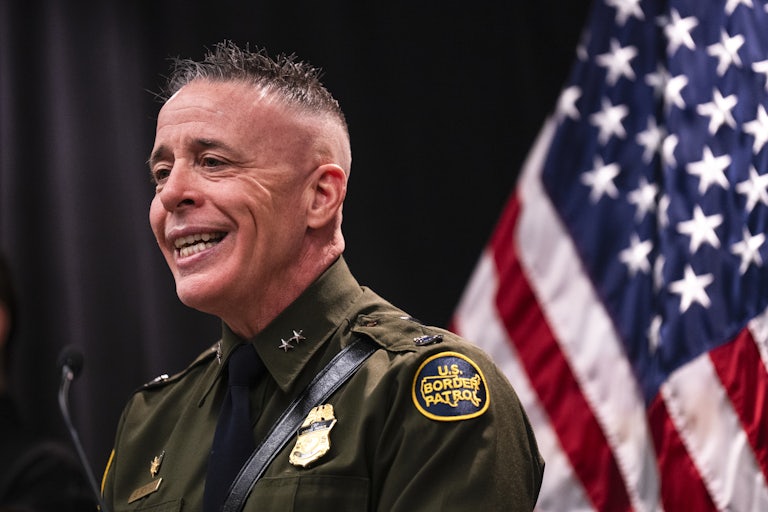
Customs and Border Protection Commander Greg Bovino claimed that his agents “work very hard with the Department of Justice” to obtain arrest warrants, even working for “several days” to get a warrant for one person. Of course, Bovino is probably best known for “outright lying” about protesters himself.