Breaking News
Breaking News
from Washington and beyond

U.K. Ambassador Says America Has One Special Relationship—With Israel

The U.K. ambassador to the United States made some particularly honest remarks on Israel, Jeffrey Epstein, and Donald Trump.

Britain’s King Charles III, drink in hand, and the British Ambassador to the U.S. Christian Turner speak as a group of people surround them.
Julia Demaree Nikhinson/POOL/AFP/Getty Images
Britain’s King Charles III and the British ambassador to the U.S. Christian Turner attend a garden party at the British ambassador’s residence in Washington, D.C., on April 27.

The United Kingdom’s new ambassador to the United States told a group of British students visiting Washington that America’s only “special relationship” is with Israel, not the U.K. 

Sir Christian Turner’s remarks were leaked to the Financial Times, which reported the news Tuesday as King Charles III visits the U.S. this week. Turner met with the students shortly after his appointment in February, and during a Q&A with them, was asked about the U.S.-U.K. “special relationship.” He described the phrase as “quite nostalgic,” saying that “it’s quite backwards looking, and it has a lot of baggage about it.”

“I think there is probably one country that has a special relationship with the United States—and that is probably Israel,” Turner said at the event prior to the U.S.-Israeli war in Iran. 

Turner also told the students that it was “extraordinary” that the fallout from the release of the Jeffrey Epstein files had “brought down a senior member of the royal family, a British ambassador to Washington, potentially the prime minister, and yet here in the U.S., it really hasn’t touched anybody.”  

Turner’s comments are surprising, but reflect reality in that Israel receives billions of dollars in U.S. aid every year. The State Department has admitted that the Iran war came at Israel’s urging, and U.S.-U.K. ties have gone up and down through the decades for many reasons, including the Iraq War, Trump’s tariffs, and the Iran war

Regarding Epstein, the U.S. government’s release of files related to the convicted sex offender has shaken the British government under Prime Minister Keir Starmer, resulting in Turner’s predecessor, Peter Mandelson, being fired and Andrew Mountbatten-Windsor, then Prince Andrew, being stripped of his royal titles.

Turner’s words likely won’t come with any consequences, especially considering that Mandelson was sacked over his close ties to the notorious sex offender. But they do give an insight into what leading foreign officials think of how the U.S. is run under President Trump, and things aren’t good. 
SPLC Debunks Justice Department Lie on “Secret” Informant Program

The Southern Poverty Law Center says the Trump administration knew all along about its work with paid informants.

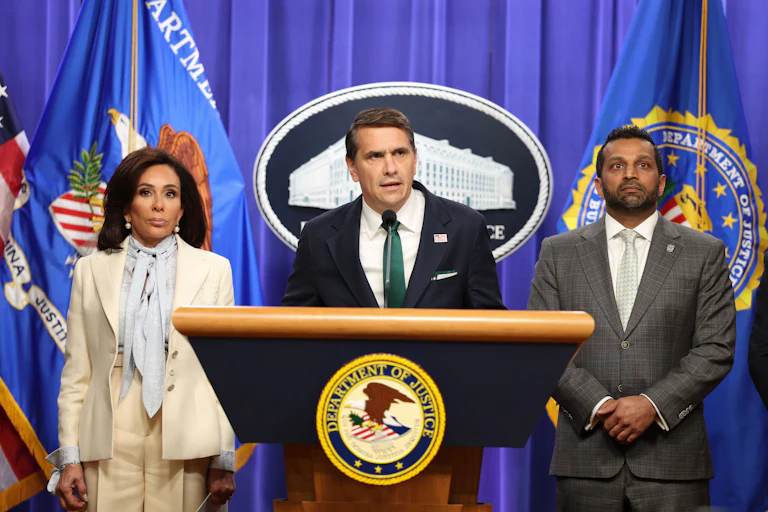
Acting Attorney General Todd Blanche speaks as U.S. Attorney Jeanine Pirro and FBI Director Kash Patel listen.
Tasos Katopodis/Getty Images
Acting Attorney General Todd Blanche, U.S. Attorney Jeanine Pirro, and FBI Director Kash Patel discuss the shooting at the White House Correspondents’ Dinner at a Justice Department press conference, April 27.

Acting Attorney General Todd Blanche accidentally jeopardized the Trump administration’s entire case against the Southern Poverty Law Center.

In a motion filed in federal court on Tuesday, the SPLC highlighted “the government’s materially false statements,” specifically Blanche’s claim that the civil rights organization did not report to law enforcement information gathered by informants undercover in hate groups like the Ku Klux Klan.

“There’s no allegation or information in the indictment that suggests [the SPLC] shared [the information from the informants] with law enforcement,” Blanche said last week on Fox News’s The Ingraham Angle, in comments highlighted in the court filing. “There’s no information that we have that suggests that the money they were paying to these informants and these members of these organizations, they then turned around and shared what they learned with law enforcement. To the contrary, or else we would have known, from their own words, that they had given this money to these guys. And we didn’t know.”

But the SPLC claims that’s exactly what it did, documenting incidents as far back as the 2017 “Unite the Right” rally in Charlottesville and, as recently as this month, sharing detailed information from paid informants with federal law enforcement.

“Weeks before the indictment, undersigned counsel provided information to the government demonstrating unequivocally that the SPLC had shared information from its informants with law enforcement,” the organization wrote in its motion. “The government’s false statement is highly material to the charges. The indictment alleges that the SPLC was paying informants not to dismantle ‘racist groups’ but instead paid informants who were ‘engaged in the active promotion of racist groups.’ In fact, the prosecutors in this case knew of specific instances when the SPLC provided information to law enforcement to thwart, stop, or otherwise help dismantle the activities of those racist groups.”

This gaffe from Blanche—made publicly on Fox News—raises questions regarding the DOJ’s chances of actually winning this case, especially given its recent string of losses.

Trump Judge Suddenly Quits Because His Job Is So Miserable

Judge Alan Albright has stepped down after eight years on the job—and left behind a mountain of work for his colleagues.

A gavel
Al Drago/Bloomberg/Getty Images

A federal judge is tapping out of the Trump administration.

Donald Trump appointed Judge Alan Albright in 2018, but last week, the Texas-based judge announced his sudden resignation, revealing that his time on the bench will come to a close in August.

The reason seems to be related to personal fulfillment: Bloomberg Law reported Monday that Albright had given “signs” that he “wasn’t enjoying the job” in the week leading up to his shock retirement.

In his wake, Albright leaves behind one of the largest backlogs of litigation for any federal judge. As of last September, Albright’s lagging pen accounted for 70 percent of the 129 civil cases that were pending in the Western District of Texas for three years or longer. At the same time, Albright had 446 undecided motions, approximately twice the number of any other district judge in the Fifth Circuit. His colleagues in Austin—Robert Pitman and David Ezra—had none, according to Bloomberg.

The 66-year-old also accounted for 63 percent of the 706 civil motions still awaiting decisions for six months or longer.

And that workload isn’t expected to lighten by the time Albright resigns. Instead, the federal judge is expected to push some of the unresolved caseload onto his staff and his successor, immediately hampering whoever is chosen to replace him.

“He has a huge docket that now the other judges are going to have,” Lee Yeakel, a retired judge from the Western District of Texas, told Bloomberg, “because it’s not going to go down appreciably by the end of August, no matter how hard he works.”

So far, over the course of his two terms, Trump has appointed 271 judges across the judiciary. But his recent grip on the judiciary—including a decision to fire and replace more than 100 immigration judges since he returned to office last year—has raised eyebrows and sparked uneasy questions about the governmental branch’s independence from the White House.

The Justice Department has opened a massive recruitment drive to fill the immigration vacancies. In doing so, the agency has tapped some 140 individuals who, for the most part, have no experience practicing immigration law. Instead, some of the newly hired judges include a divorce lawyer who has pledged to “fight exclusively for the rights of men” and believes that women are a “warm, wet hole.”

Other picks are a Minnesota attorney who backed the ICE raids in Minneapolis that resulted in two U.S. citizens being killed by federal agents, and a judge who denied humanitarian protection to a Serbian immigrant because he didn’t look ”overtly gay.”

ICE Arrests of Cubans Skyrocket—as Republicans Risk Losing Florida

Trump’s deportation campaign is hitting one of the most reliable voting blocs for Republicans.

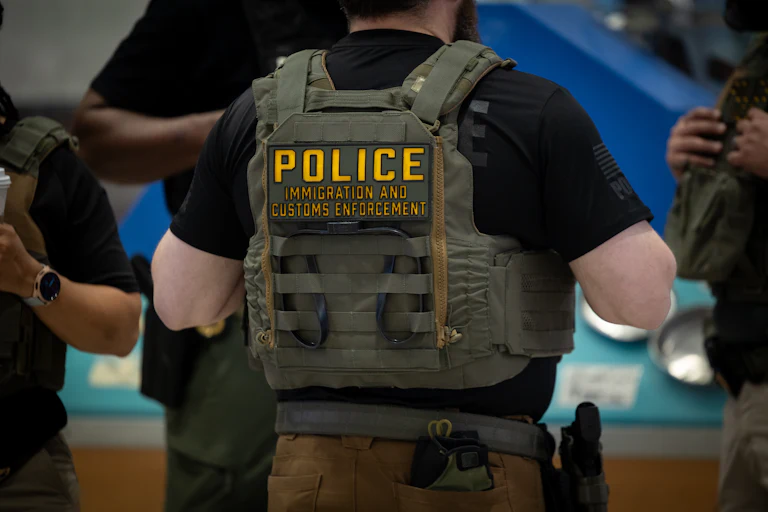
ICE agents stand in an airport
Nathan Posner/Anadolu/Getty Images

The Trump administration has detained a staggering number of Cuban immigrants while denying them permanent residency, which could have consequences for Republicans in November.

The Miami Herald, citing an analysis from the libertarian Cato Institute, reports that ICE arrests of Cuban nationals have gone up by 463 percent since December 2024, while green card approvals have dropped by 99.8 percent, nearly ending the program for Cubans in the U.S.

Before President Trump’s second term, Cubans in the U.S. could easily qualify for permanent residence and green cards under the Cuban Adjustment Act. The 1960s law allowed Cubans to apply for permanent residency just 366 days after entering the U.S. But in December, U.S. Citizenship and Immigration Services paused all immigration and citizenship applications, including green cards, from 18 countries including Cuba, putting more immigrants, especially Cubans, at greater risk for detention and deportation.

As of 2021, there are 1.3 million Americans of Cuban origin in the U.S., and 64 percent of them live in Florida. Immigration arrests have skyrocketed in the state but have drawn less attention than more publicized federal action in places like Minnesota thanks to agreements with local police.

Republicans count on Cuban American votes in Florida, especially in the Miami-Dade area, and about 70 percent of Florida’s Cuban American population voted for Trump in the 2024 election. But the end of immigration privileges and the sharp increase in deportations for the community is beginning to sour the community on Trump.

“The same Cubans who have been here for years don’t realize that Trump acts the same way as Fidel did,” manicurist Daimarys Hernández, referring to Cuba’s former dictator Fidel Castro, told Spanish news outlet El País in October. Her husband was awaiting deportation from the Krome Detention Center in Florida at the time.

Kids Forced to Appear Alone in Court as Trump Ramps Up Deportations

The significantly decreased timelines puts incredible stress on the unaccompanied children, who sometimes wet themselves in court out of fear.

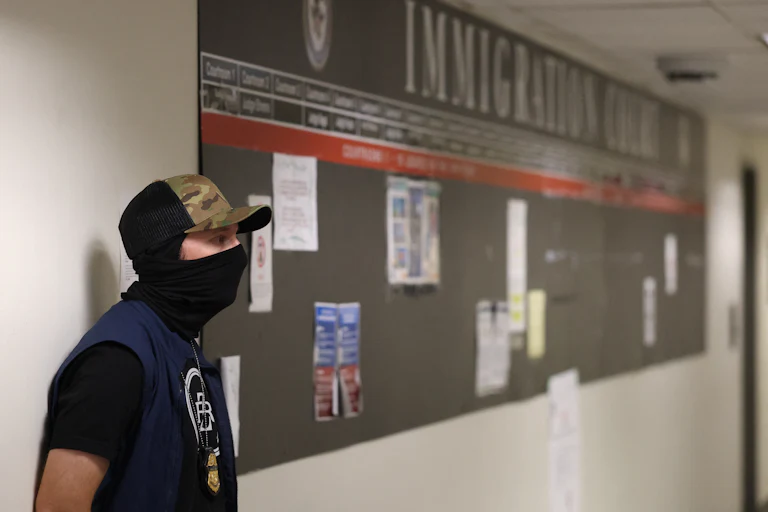
A masked federal agent waits outside the immigration court in New York
TIMOTHY A. CLARY/AFP/Getty Images

The Trump administration is moving to radically expedite the removal of immigrant children, impeding the work of immigration advocates, CNN reported Tuesday.

Immigration hearings for children are being moved up by weeks or even months, making it increasingly difficult for children to obtain legal resources or relief. These are children who are either unaccompanied minors or are taken into custody after their parents are detained for immigration charges.

Children as young as 4 years old are subjected to frequent hearings and forced to provide updates on their cases, in some instances without legal help, CNN reported. Emily Norman, the East Coast regional director at Kids in Need of Defense, told the outlet that immigrant children were facing “enormous pressure,” leading some of them to wet themselves in court.

It sounds like advocates are facing increasing pressure too. Norman told CNN that a hearing for one child, originally scheduled for 2027, had been moved up to a week away.

At the same time, the Trump administration has made it increasingly difficult for immigrant children to be allowed to stay in the United States. Sponsors in the U.S. now face stricter documentation requirements and even risk arrest themselves. Another method of securing the children’s release in the United States is to acquire special immigrant juvenile status, or SIJ, a legal process that can put them on the path to receiving a green card if they have experienced abuse or neglect.

Steven Wright, a clinical professor at the University of Wisconsin-Madison’s Immigrant Justice Center, told CNN that the process for that can take months. “In order to stop the government from removing the kids, I need to have that SIJ piece of paper. And they’ve given me a deadline that’s made it extremely difficult for me to get that SIJ piece of paper,” he said.

Immigrant children are often subjected to extended stays with the Office of Refugee Resettlement, or ORR, during which they can be subjected to all kinds of alleged mistreatment and abuse, either at government shelters or foster homes.

However, advocates are concerned that accelerated timelines wouldn’t mitigate harm and could result in migrant children being returned to the same conditions they fled in their home countries. At the end of March, there were 2,173 children in the custody of the ORR, and their average stay was more than six months long, according to the Administration for Children and Families.

Andrew Nixon, a spokesman for the Department of Health and Human Services, told CNN the department was “focused on resolving cases involving unaccompanied children as quickly and efficiently as possible, consistent with the law.”

“Many of these children are at risk of trafficking and exploitation, and in some cases are brought across the border by cartels under dangerous and coercive conditions. Moving cases forward helps disrupt those networks and ensures children are returned to safe environments as quickly as possible,” he said. “Reducing time in custody also lowers taxpayer costs and ensures the system is operating as intended.”