Breaking News
Breaking News
from Washington and beyond

Ex–Mob Prosecutor Debunks Trump’s Main Claim in James Comey Indictment

Donald Trump insists that “86” is a mob term for killing someone.

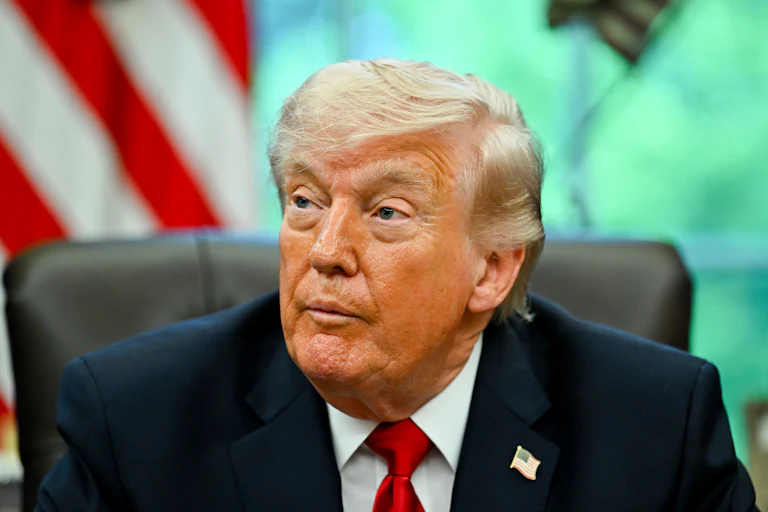
Donald Trump speaks while sitting at his desk in the Oval Office
Graeme Sloan/Bloomberg/Getty Images

President Donald Trump’s outrageous claim that former FBI Director James Comey tried to put a mob-style hit out on him with a photograph of seashells is already falling apart.

Trump has claimed that “86” is a “mob term” for ordering a hit on someone, meaning that when Comey posted a picture of seashells arranged on the beach in North Carolina to read, “86 47,” he was calling to “86,” or kill, the forty-seventh president.

Speaking on CNN’s The Source Wednesday, Elie Honig, a former federal prosecutor, challenged Trump’s claim, arguing that mobsters just don’t talk like that.

“There was a point in my life where I spent the better part of my waking hours either talking face-to-face with real-world mobsters, or listening to them talk to each other over wiretaps, body wires, or bugs,” Honig said. “I dealt with all five families: Gambino, Genovese, Bonanno, Lucchese, and Colombo. I dealt with bosses, underbosses, consigliere, capos, soldiers, associates, all the way down the line.”

“Never, ever. Not once did I hear any real-world gangster use the term ‘86’ to refer to a murder or anything, and God knows these guys had colorful lingo, but never that phrase,” Honig said. “I don’t know where the president’s getting this from. He said from some movie. They don’t use that term in The Godfather, The Sopranos, or Goodfellas. Maybe some old-timey movie, but that’s not reality.”

Honig also pointed out that when CNN’s Kaitlan Collins had pressed Trump earlier Wednesday on whether he really felt his life was in danger, the president had replied: “Probably, I don’t know.”

“Right there, that’s an acquittal,” Honig said. “Because prosecutors have to believe beyond a reasonable doubt that the victim believed that his life was in jeopardy.”

The brief indictment against Comey, listing charges that include making a threat against the president and transmitting it in interstate commerce, does not include this mobster argument. Rather, it claims that “86” was a symbol that a “reasonable recipient who is familiar with the circumstances would interpret as a serious expression of an intent to do harm to President Trump.”

But clearly there is nothing reasonable about Trump’s Mafia fiction—least of all any actual danger.

Janet Mills Pulls out of Senate Race Over Lack of Funding

Mills has trailed behind Graham Platner in the polls—and apparently also in fundraising.

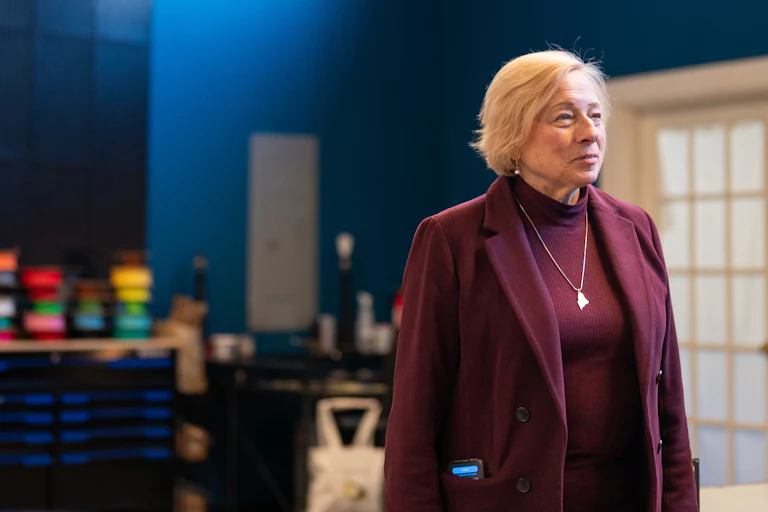
 stands in partial profile to the camera during a campaign event
Sofia Aldinio/Bloomberg/Getty Images
Maine Governor Janet Mills

Maine Governor Janet Mills withdrew her campaign to represent the state in the U.S. Senate on Thursday.

Mills was the establishment Democratic favorite to replace Senator Susan Collins, a Republican who has held the seat since 1997. But she severely lagged in the polls behind progressive candidate Graham Platner.

In a statement released Thursday, Mills explained that her exit from the race boiled down to basic resources, specifying that she lacked the campaign funds to continue campaigning.

“While I have the drive and passion, commitment and experience, and above all else—the fight—to continue on, I very simply do not have the one thing that political campaigns unfortunately require today: the financial resources,” Mills said. “That is why today I have made the incredibly difficult decision to suspend my campaign for the United States Senate.”

Mills’s late entrance into the race last year hampered her fundraising abilities, and raised questions about her hunger to represent Maine in Washington. Within the first three months of 2026, Mills had raised just $2.7 million, a paltry sum for an establishment favorite expected to have the party’s wealth behind her. Mills’s fundraising efforts were eclipsed by Platner’s campaign, which raised $4.6 million in the same period.

Her withdrawal is a stunning loss for the national Democratic Party, not only as a sign of her waning popularity within the state, but also for the waning popularity of the national establishment that endorsed her.

For nearly two decades, New York Senator Chuck Schumer has selected the party’s Senate candidates with little opposition. That is no longer the case. Schumer’s political apparatus also faces contention in the midwest, where his preferred Senate candidates are facing tough primary competition in Iowa, Michigan, and Minnesota.

The race to contest Maine’s Senate seat has also sparked a debate on age, challenging ideas about which generation of candidates should be representing the breadth of America. Platner, a Marine and Army veteran-turned-oyster farmer, is 41 years old. Mills, who has represented the Pine Tree State since the 1980s, is 78.

This story has been updated.

Amid All the Other Chaos, Congress Focuses on a Hasan Piker Bill

A Democrat and Republican representative have decided this is the appropriate use of taxpayer resources in this current moment.

Hasan Piker
Noushad Thekkayil/NurPhoto/Getty Images

Despite all of the other issues in the country, Congress wants to waste its time on a bill condemning Hasan Piker.

Democratic Representative Josh Gottheimer and Republican Mike Lawler on Wednesday introduced a resolution to target “the rise of antisemitic, hate-filled rhetoric disseminated by prominent online personalities, including Hasan Piker and Candace Owens, and calling on social media platforms and public leaders to take stronger action against hate.”

“Piker has openly applauded Hamas’ terrorism, downplayed the mass rape of civilians on October 7th, and dehumanized Orthodox Jews as ‘inbred,’” Lawler said in a statement, taking many of those statements out of context. “Owens has trafficked in vile conspiracy theories, promoted blood libels, and platformed Holocaust deniers. With an audience of millions, they have a responsibility to confront hatred and bigotry in every form, not to amplify it to the masses. So if they won’t call it out, I will.

“I get that speaking up is not easy,” Gottheimer said. “But our constituents didn’t elect us to always take the easy path. That’s what principled leadership is all about.”

Piker, who has built a large following as a left-wing influencer on the Twitch streaming platform, has come under fire from pro-Israel advocacy groups like AIPAC as well as centrist organizations like Third Way for alleged antisemitic rhetoric in his anti-Zionist, pro-Palestinian advocacy, despite his repeated condemnations of attacks on Judaism and the Jewish people. Owens, while criticizing Israel from the right, has engaged in openly antisemitic rhetoric, such as, “Jewish people control the media.”

Regardless, amid a war with Iran, a struggling economy, and numerous other legislative priorities in Congress, a symbolic resolution attacking two influencers can hardly be seen as a bipartisan priority for Congress. The resolution is not likely to deter any bigotry, either.

Trump Admits He’s Not Sure James Comey Was Trying to Kill Him

The confession undermines the Justice Department’s entire indictment against the former FBI director.

Donald Trump in the Oval Office of the White House
Graeme Sloan/Bloomberg/Getty Images

President Donald Trump’s indictments against his perceived political enemies are getting so flimsy, even he’s not sure he believes in them.

On Wednesday, CNN’s Kaitlan Collins asked Trump about the Department of Justice’s most recent target: former FBI Director James Comey, whom Trump already tried and failed to throw in jail last year. (That case was thrown out after the courts discovered Trump’s prosecutor had been illegally appointed. Brilliant move, Mr. President.)

This recent indictment is built on a photo Comey posted on Instagram last year, in which seashells on a beach were arranged to write out “86 47.” The term “86” is often used in the restaurant industry to get rid of or cancel a dish, so the DOJ is jumping to the very reasonable conclusion that this constituted a threat to Trump’s life.

Collins asked Trump whether he actually thought Comey was threatening his life with the post.

“Well if anybody knows anything about crime, they know ‘86,’” Trump said. “It’s a mob term for ‘kill ’em.’ You ever see the movies? … I think of it as a mob term. I don’t know.”

Trump then began talking about mobsters before Collins wisely cut him off: “Do you really think your life was in danger?”

“Probably, I don’t know,” Trump replied. “People like Comey have created tremendous danger, I think, for politicians and others. You know, Comey is a dirty cop. He’s a very dirty cop. He cheated on the elections.”

Entertaining as Trump’s rambling monologues are, “Probably, I don’t know,” isn’t going to hold up in court. Comey can very easily defend himself by arguing his seashell art just meant he wanted to be rid of the president.

Even some congressional Republicans have expressed reservations about the Comey indictment, as it becomes clear average Americans care little about Trump’s revenge tour. North Carolina’s Thom Tillis, who serves on the Senate Judiciary Committee, expressed skepticism that the Comey case held water.

“I’ve used ‘86’ a lot of times,” Tillis told The Washington Post. “I’ve never said it with the intent of killing somebody.”

Representative Troy Nehls called the case “a stretch,” adding, “you can indict anybody for anything.”

Hegseth’s Own Words on Illegal Military Orders Come Back to Bite Him

Pete Hegseth accused a Democratic representative of making a “partisan point.” Then she revealed whom she was quoting.

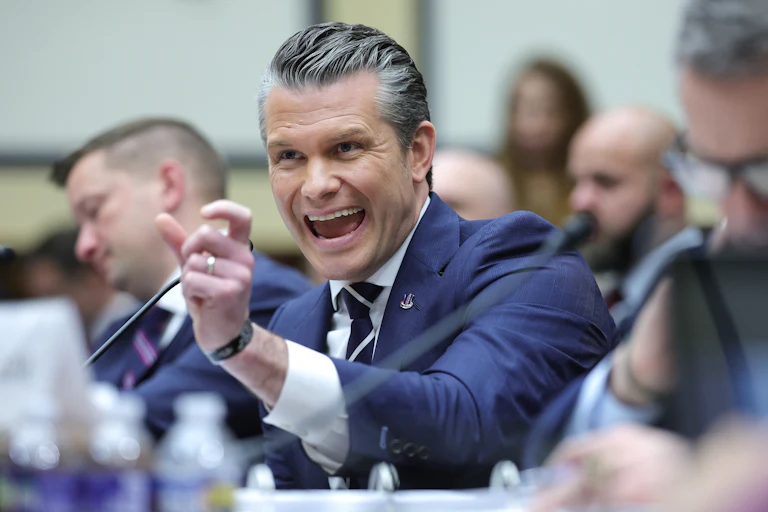
Defense Secretary Pete Hegseth gestures and speaks during a House committee hearing
Kevin Dietsch/Getty Images

Defense Secretary Pete Hegseth’s blind loyalty to the Trump administration has put him at odds with his own beliefs.

During a House Armed Services Committee hearing Wednesday, New Hampshire Representative Maggie Goodlander asked Chairman of the Joint Chiefs of Staff Gen. Dan Caine if he agreed with a statement that America’s “military won’t follow unlawful orders.” Without hesitation, Caine answered: “I do.”

Hegseth, however, was quick to pick a bone with the benign principle—an inclination that immediately morphed into a liability for the Pentagon chief as he tripped over what turned out to be a quote from his own mouth.

“Mr. Hegseth, do you agree with that statement?” asked Goodlander.

“I do, but understand what you’re insinuating is a partisan point,” said Hegseth.

“I’m not, I’m actually quoting you directly, Mr. Hegseth, from April 12, 2016, and I appreciate that on the record you’ve clarified this important principle,” Goodlander said.

At the time, Hegseth had told an audience that he believed there “had to be consequences for abject war crimes.”

“That’s why the military said it won’t follow unlawful orders from their commander-in-chief. There’s a standard, there’s an ethos. There’s a belief that we are above so many things that our enemies or others would do,” Hegseth said in footage uncovered by CNN.

But Hegseth’s belief system has obviously morphed in the decade since. Last November, six Democratic members of the House and Senate—a coalition of veterans and former national security professionals that included Goodlander and Senator Mark Kelly—urged U.S. service members not to “give up the ship.”

In a video statement posted to Facebook, the bloc repeated that America’s military and intelligence communities “can” and “must … refuse illegal orders,” echoing Hegseth’s prior remarks. They made no reference to disobeying the Trump administration directly, only reminding people to uphold the Constitution.

The White House did not take the missive in stride. Instead, Donald Trump called for the coalition’s execution, writing on Truth Social that their behavior was “punishable by DEATH!”

Hegseth then attempted to censure Kelly, claiming that the retired U.S. Navy captain should not be afforded the same First Amendment protections as the general population. A judge did not agree, and the case was tossed in February.