Breaking News
Breaking News
from Washington and beyond

Trump Tries to Goad Artemis II Astronauts Into Bashing NATO With Him

The astronauts appeared stunned as Donald Trump complained about NATO.

Donald Trump speaks while sitting at his desk in the Oval Office. He is flanked by the astronauts from the Artemis II mission.
Andrew Harnik/Getty Images

The crew of NASA’s Artemis II visited the White House Wednesday to celebrate their successful mission around the moon, but they ended up roped into one of the president’s diatribes against NATO.

The astronauts were visibly uncomfortable flanking Donald Trump behind the Resolute Desk as he tossed questions their way regarding the country’s participation in the strategic alliance.

“What do you think of that, Jared? Sending help after we win the war?” Trump said, turning to address NASA administrator Jared Isaacman (Isaacman is the third administrator of the agency since January 2025).

Trump then looked behind him, waving his open hand at the astronauts.

“I don’t want to get you guys involved, but I can imagine what you’re thinking,” Trump chortled.

But no one at the desk was laughing with him. Instead, the astronauts looked pained:  grimacing, pursing their lips, and turning away from the president as he continued to take questions from reporters.

Trump has long criticized America’s membership in the international military alliance. He regularly baselessly insists that other members have failed to pay their dues and argues that the U.S. has been shortchanged by other NATO countries, even though that’s not how the alliance operates.

The Cold War–era organization has “no ledger that maintains accounts of what countries pay and owe,” according to former Obama staffer Aaron O’Connell, who explained to NPR in 2018 that “NATO is not like a club with annual membership fees.”

Nonetheless, Trump has continued to verbally attack America’s closest allies, accusing NATO members of being “cowards” and “terrible” for refusing to assist in his blockade of Iran’s Strait of Hormuz. 

On Tuesday, King Charles of Britain spoke before a joint session of the U.S. Congress, compelling the American people—and their representatives—to support the NATO alliance. In doing so, the king reminded the country that there has only ever been one time in history when NATO’s Article 5 has been invoked: the global mobilization to support America in its military offensive against Afghanistan after 9/11.

Despite the king’s heavy messaging, Trump told reporters Wednesday that he “loved the speech,” though he specified that his opinion on NATO—and America’s potential withdrawal—was unchanged by the royal’s remarks.

It is unclear who in the Western world benefits from the dissolution of NATO. John Bolton, Trump’s first-term national security adviser and a policy hawk who also served under Ronald Reagan’s administration, has said that the consequences of exiting the alliance could be dire. America’s withdrawal from the pact could effectively be the death of NATO, leaving behind a fractured and significantly weakened European alliance, while devastating America’s international credibility as an ally.
Ted Cruz Slams Trump’s FCC for Operating as “Speech Police”

Even Ted Cruz thinks Trump’s FCC is crossing the line following that Jimmy Kimmel joke.

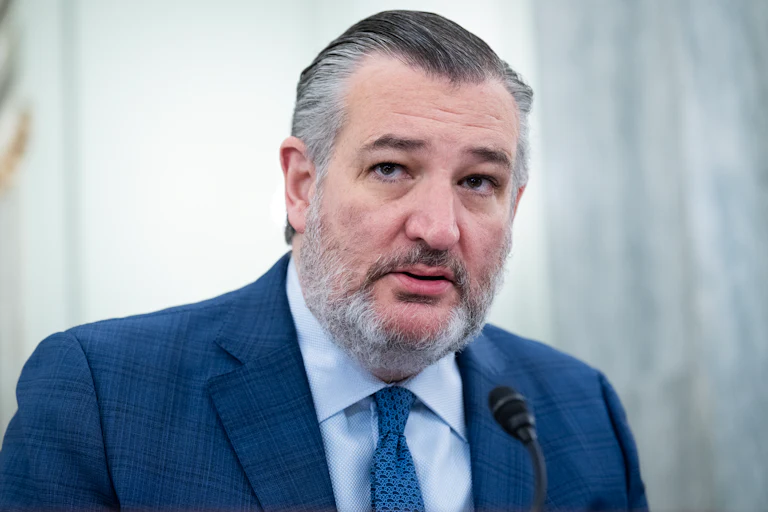
Senator Ted Cruz
Tom Williams/CQ-Roll Call, Inc/Getty Images

Senator Ted Cruz is defending late-night talk show host Jimmy Kimmel and his employer, Disney, from the Federal Communications Commission.

The Texas Republican blasted the agency’s decision to demand an early review of Disney’s broadcast licenses following a joke Kimmel told on TV about first lady Melania Trump last week where he said she would “glow like an expectant widow” at the White House Correspondents’ Dinner. Days later, a gunman tried to attack the event but was apprehended by the Secret Service.

“It is not government’s job to censor speech, and I do not believe the FCC should operate as the speech police,” Cruz said to Punchbowl News Tuesday.

Earlier that day, the FCC directed Disney’s eight ABC TV stations to file for early renewal for their broadcast licenses, to determine whether it potentially violated the agency’s “prohibition on unlawful discrimination.”

Weeks ago, FCC Commissioner Brendan Carr said that Disney’s licenses could be in jeopardy over the company’s alleged efforts on diversity, equity, and inclusion. But the timing of the commission’s latest demand is suspect, considering that President Trump, Melania Trump, and other administration officials all attacked Kimmel in the lead-up to the request.

Cruz also came to Kimmel and ABC’s defense last September after the FCC attempted to punish networks that carried Kimmel’s show over jokes he made about the Trump administration. At the time, Cruz said on his podcast that “I hate what Jimmy Kimmel said, I am thrilled that he was fired. But let me tell you: If the government gets in the business of saying, ‘We don’t like what you, the media, have said; we’re going to ban you from the airwaves if you don’t say what we like’—that will end up bad for conservatives.”

Last year, Kimmel was suspended for a week before returning to his show. This time, will he and Disney weather this new attempt at censorship? If not, another late-night talk show could bite the dust thanks to pressure from the Trump administration.

Trump Has a Plan to Force Iran to Make a Deal—and It’s a Bombshell

Apparently Donald Trump is tired of the negotiations dragging on.

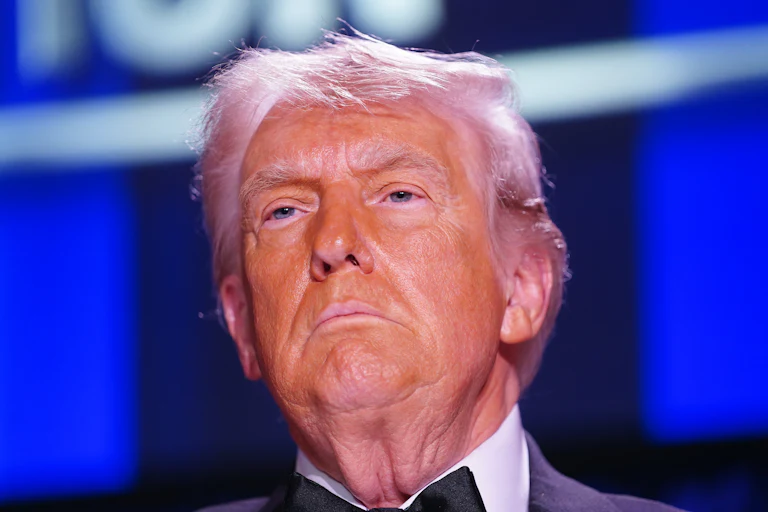
Donald Trump
Nathan Howard/Getty Images

President Donald Trump has rejected Iran’s proposal to open the Strait of Hormuz, as the U.S. military prepares to launch another wave of attacks.

Trump told Axios Wednesday that he would reject Iran’s proposal to allow trade through the Strait of Hormuz, in return for the U.S. lifting its blockade on Iranian ports and postponing nuclear talks.

“The blockade is somewhat more effective than the bombing. They are choking like a stuffed pig. And it is going to be worse for them. They can’t have a nuclear weapon,” Trump told Axios, adding: “They want to settle. They don’t want me to keep the blockade. I don’t want to [lift the blockade], because I don’t want them to have a nuclear weapon.”

It’s worth noting that experts say that Iran was nowhere near acquiring nuclear weapons when the U.S. first began its joint attacks with Israel. Even Defense Secretary Pete Hegseth struggled to explain how Iran posed any imminent nuclear threat at a congressional hearing Wednesday.

Alongside Trump rejecting a deal, U.S. Central Command has prepared a plan for a “short and powerful” wave of strikes against Iran, likely including infrastructure targets, three sources told Axios.

Their hope is to entreat Iran to come back to the table ready to acquiesce to U.S. demands, despite the U.S. president’s ready admission that bombing is less effective than the blockade. Not to mention how expensive the blockade is—the Pentagon revealed Wednesday that the estimated price tag for Operation Epic Fury was $25 billion.

A senior Iranian official warned Wednesday that the U.S. blockade would “soon be met with practical and unprecedented action.”

Pete Hegseth Flails Trying to Explain How U.S. Is Winning in Iran

Pete Hegseth struggled in the face of Iran’s evidently strong position.

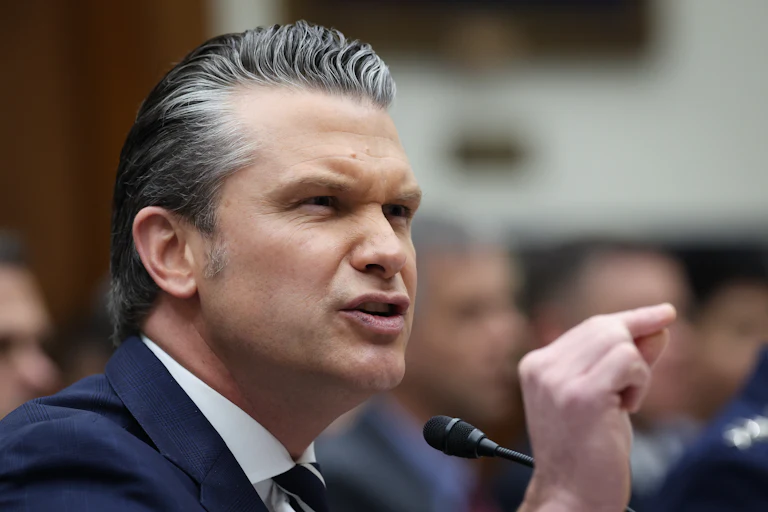
Defense Secretary Pete Hegseth gestures and speaks during a House committee hearing
Win McNamee/Getty Images

The Trump administration is failing to explain how the U.S. is coming out on top in the Iran war.

Defense Secretary Pete Hegseth appeared before the House Armed Services Committee on Wednesday to defend the DOD’s latest budget requests, but he came up incredibly short in providing examples showcasing America’s accomplishments in the current Middle East conflict.

“How much has Iran profited from your administration lifting the sanctions on Iran when you started this war?” asked Massachusetts Representative Seth Moulton.

“I can tell you that Iran is financially devastated,” said Hegseth.

That’s partially true. The war has forced more than a million Iranians out of work, devastated the country’s infrastructure, and tanked the value of Iran’s currency. In response, the authoritarian regime running Tehran has raised wages, subsidized basic goods, and provided cash supplements to the poor, leveraging the government’s relative wealth to resist Washington’s pressure campaign.

But weeks into the war, Donald Trump opted to temporarily lift sanctions on 140 million barrels of Iranian oil that were sitting at sea. In doing so, he gave the country a $14 billion windfall that has since bolstered the regime.

“They’ve earned about $14 billion,” Moulton said, citing the figure, though he was cut off by Hegseth.

“They’re at a point where, between the blockade and what we’ve done to them militarily, remember they don’t have a Navy so they can’t contest the blockade,” Hegseth said, adding that Tehran has “very few options.”

“OK,” Moulton continued. “How many Chinese missiles can they buy with $14 billion? Does that sound like winning?”

“Um, they’re not—we’re ensuring that they’re not buying Chinese missiles,” Hegseth said, lowering his voice.

Hegseth tripped over his words in another exchange with Ranking Member Adam Smith, flubbing the Trump administration’s narrative by suggesting that U.S. officials had lied to the public last year when they claimed Iran’s nuclear facilities were completely destroyed during Operation Midnight Hammer.

“Their nuclear facilities have been obliterated, underground—” Hegseth started.

“Woah, woah, woah, woah,” said Smith. “You just said we had to start this war, you just said, 60 days ago because the nuclear weapon was an imminent threat. Now you’re saying that it was completely obliterated?”

“They had not given up their nuclear ambitions,” responded Hegseth.

“So Operation Midnight Hammer accomplished nothing of substance and left us at exactly the same place that we were before,” interpreted Smith. “So much so that we had to start a war.”

Florida Passes New Map to Give Republicans Four More House Seats

The Florida legislature approved the map just hours after the Supreme Court destroyed the Voting Rights Act.

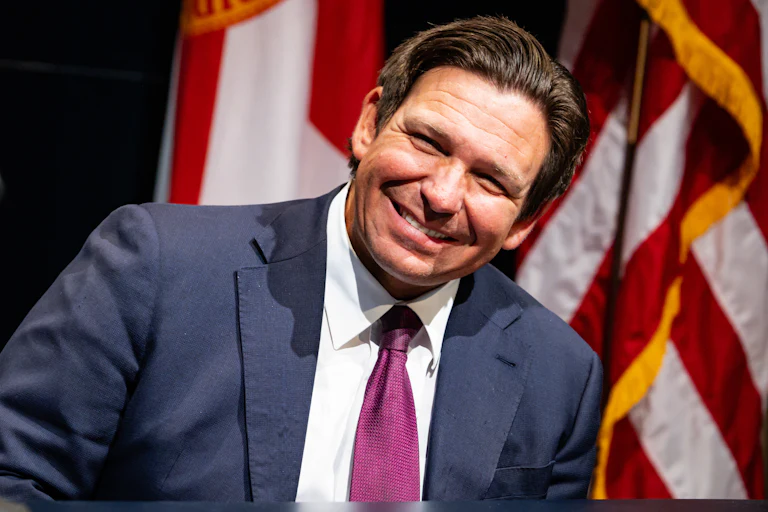
Florida Governor Ron DeSantis smiles
Marie Uzcategui/Bloomberg/Getty Images
Florida Governor Ron DeSantis

Florida’s legislature on Wednesday approved a new congressional map written by Governor Ron DeSantis’s office that aims to give Republicans four more House seats.

The proposal passed 21-17 in the state Senate and 83-28 in the state House of Representatives—the same day that the Supreme Court decided to gut the Voting Rights Act. DeSantis is expected to sign the legislation into law.

The Democrats most at risk under the new map are Representatives Kathy Castor, Jared Moskowitz, Darren Soto, and Debbie Wasserman Schultz.

While the House session debating the map took less than 90 minutes, Democratic state Representative and U.S. Senate candidate Angie Nixon tried to disrupt the vote by shouting that the new map “was out of order,” and fellow Democrats tried to argue that the move would violate the state’s Constitution, which bans drawing districts with “the intent to favor or disfavor a political party or an incumbent.”

Florida House Democratic Leader Fentrice Driskell pointed out that the DeSantis staffer who drew the map, Jason Poreda, admitted to using partisan data.

“The man who drew this map testified under oath that he used partisan data to draw up every single district,” Driskell said. “Every single one. And when the governor’s attorney was asked whether Democratic voters were being underrepresented in our congressional delegation, his answer was that ‘this is a normative question.’”

“Members, if we vote yes on this bill, it’s not just that we’re being misled, we are blessing this mess. The timing tells the rest. The governor announces his intention to redistrict, shortly after the president of the United States asked Republican-led states to do exactly that. There is no neutral explanation for that sequence of events,” Driskell added.

The House vote came just an hour after the U.S. Supreme Court destroyed the Voting Rights Act by eliminating a majority-black district in Louisiana. The Florida House voted down a Democratic proposal to delay the vote by two hours to study the Supreme Court decision’s implications. On Wednesday morning, DeSantis posted on X that the high court’s ruling vindicated his move to redraw the state’s map.

“Called this one months ago,” DeSantis said. “The decision implicates a district in FL — the legal infirmities of which have been corrected in the newly-drawn (and soon to be enacted) map.”

With Republicans polling terribly thanks to President Trump, the new map could still backfire, as the new districts are not entirely safe GOP seats. Democratic-run states like California and Virginia are also seeking to redraw their congressional districts, leaving the outcome of November’s midterm elections wide open.

This story has been updated.