Breaking News
Breaking News
from Washington and beyond

Mark Zuckerberg Desperately Wants to Get on Trump’s Good Side

And he’s dishing out a cool million bucks to make it happen.

Mark Zuckerberg smiles, dorkily.
KENZO TRIBOUILLARD/AFP/Getty Images
Mark Zuckerberg in 2020

Meta donated $1 million to Donald Trump’s inauguration fund, marking CEO Mark Zuckerberg’s descent from the president-elect’s target to the backer of his party-planning committee.

Ahead of the presidential election, Trump issued direct warnings to Zuckerberg, while chastising him for Meta’s efforts to prevent the spread of his own misinformation.

“We are watching him closely, and if he does anything illegal this time he will spend the rest of his life in prison—as will others who cheat in the 2024 Presidential Election,” Trump wrote in his book Save America, which was published in August.

That wasn’t even the first time that Trump had made this kind of threat against the social media mogul. The president-elect called out dear old “ZUCKERBUCKS” in a July post on Truth Social, promising to “pursue Election Fraudsters at levels never seen before, and they will be sent to prison for long periods of time.”

Zuckerberg responded to Trump’s comments in July by fawning over his “badass” response to his attempted assassination, because when someone threatens you, you should immediately start sucking up to them as much as possible. Trump claimed in September that after the attempted shooting, Zuckerberg privately told him that he would “never vote for the people running against” Trump. Publicly, Zuckerberg issued neither an endorsement nor an explicit denial.

Now that Trump has been elected, Zuckerberg seems to be following this instinct with his wallet. And so, Meta, which Trump once called “the Enemy of the People,” (he says this so much it loses all meaning), has now poured $1 million into a fund for a spate of massive events to celebrate his victory.
Whoops! Donald Trump Admits He Doesn’t Know How to Fix Inflation

In fact, his most cherished economic policy will almost certainly make things much worse.

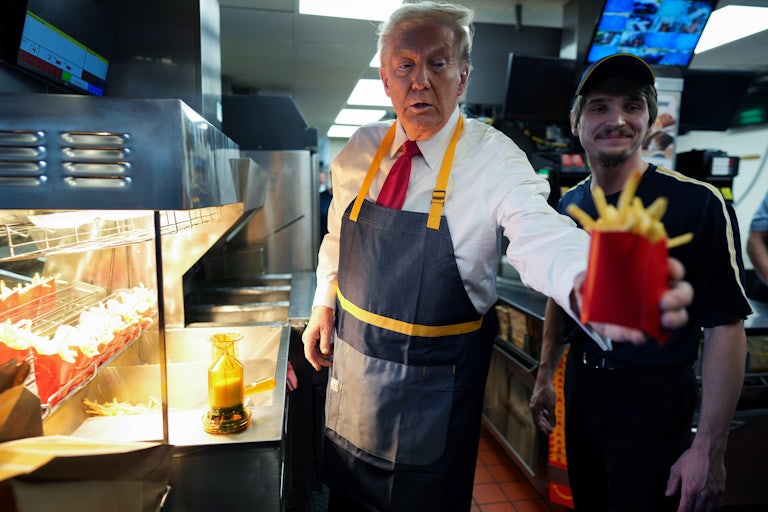
Donald Trump, wearing a McDonald's apron and standing by a fryer, reaches out holding a container of french fries.
Doug Mills/Pool/Getty Images
Donald Trump “working” at a McDonald’s in October

Donald Trump knows that he won the presidency because grocery prices are high. What he doesn’t know is how to actually get those prices to come down.

In a lengthy interview with Time magazine published Thursday, Trump had changed up his tune when asked if his presidency would be a failure if he couldn’t deliver his promise to lower the price of groceries.

“I don’t think so. Look, they got them up. I’d like to bring them down. It’s hard to bring things down once they’re up. You know, it’s very hard. But I think that they will,” Trump said.

“I think that energy is going to bring them down. I think a better supply chain is going to bring them down. You know, the supply chain is still broken. It’s broken. You see it. You go out to the docks and you see all these containers,” Trump said. He proceeded to describe a port in California that held over a dozen full shipping containers as evidence for a “broken” supply chain.

It seems Trump is already trying to manage expectations after making more than a few lofty promises about bringing grocery prices down, a goal that is not reflected in his disastrous proposed economic policies. Trump’s plan to implement 25 percent tariffs on Canada and Mexico will likely increase the price of everyday consumer products, like groceries. In 2022, Mexico accounted for a whopping 69 percent of U.S. vegetable imports and 51 percent of fresh fruit imports.

On Meet the Press Sunday, Trump claimed that he’d won the election on solely the issue of groceries. “Very simple word, groceries. Like almost—you know, who uses the word? I started using the word—the groceries. When you buy apples, when you buy bacon, when you buy eggs, they would double and triple the price over a short period of time, and I won an election based on that.”

Mitch McConnell Bashes Trump’s Entire Philosophy in New Interview

The longtime Republican leader is getting increasingly fed up with Donald Trump. (At least in words.)

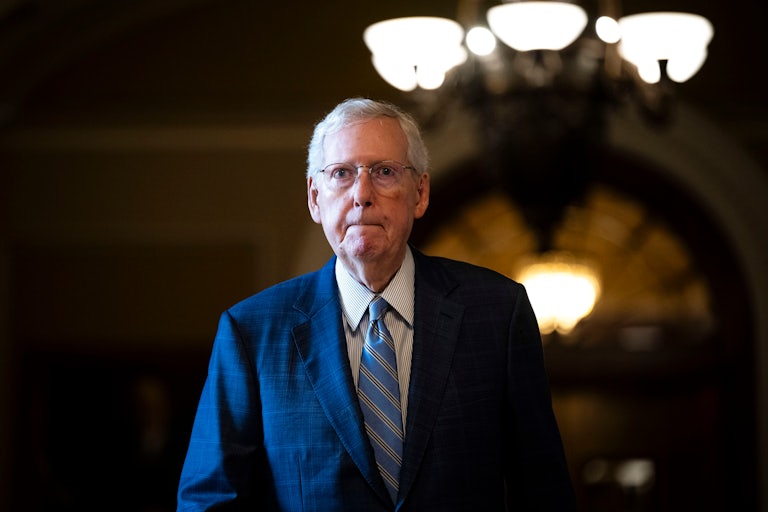
Mitch McConnell
Graeme Sloan/Bloomberg/Getty Images

Mitch McConnell is still throwing jabs at Donald Trump.

“We’re in a very, very dangerous world right now, reminiscent of before World War II,” the longtime Republican Senate leader told the Financial Times. “Even the slogan is the same. ‘America First.’ That was what they said in the ’30s.”

McConnell went on to throw stones at Trump’s isolationist tendencies, comparing them to the “raging” President Howard Taft’s. He also said he believes that the “America First” wing of the Republican Party will do irreversible damage to the U.S. standing on the global stage.

“To most American voters, I think the simple answer is, ‘Let’s stay out of it.’ That was the argument made in the ’30s and that just won’t work,” McConnell said. “Thanks to Reagan, we know what does work—not just saying peace through strength, but demonstrating it.”

The longest-serving Senate leader also pushed back against Trump’s “enemy within” rhetoric, noting that Russia and China are bigger threats than citizens on American soil.

This is another installment in a long-standing feud between McConnell and Trump, as the latter upended the norms and ideals of his party in just a few years. According to a recent biography of him, McConnell privately called Trump “stupid” and a “despicable human being” after the 2020 election. He also stated that Trump was “practically and morally” to blame for the insurrection on January 6, 2021.

That being said, McConnell has fallen in line every time it matters, including when he opposed Trump’s impeachment. He voted for Trump and, in the same FT interview, called his victory a “remarkable comeback.”

Biden Announces Stunning Number of Pardons After Hunter Uproar

This is the biggest single-day act of clemency.

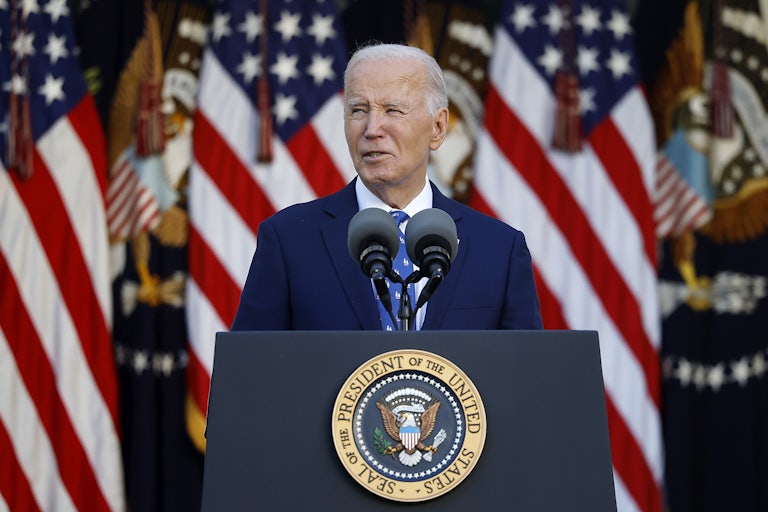
Joe Biden at the presidential podum
Kevin Dietsch/Getty Images

President Joe Biden on Thursday commuted 1,500 sentences and granted 39 pardons, the largest single-day clemency act in history.

“America was built on the promise of possibility and second chances,” a White House statement from Biden read. “That is why, today, I am pardoning 39 people who have shown successful rehabilitation and have shown commitment to making their communities stronger and safer. I am also commuting the sentences of nearly 1,500 people who are serving long prison sentences—many of whom would receive lower sentences if charged under today’s laws, policies, and practices. These commutation recipients, who were placed on home confinement during the COVID pandemic, have successfully reintegrated into their families and communities and have shown that they deserve a second chance.”

Biden pardoned people who were in prison for nonviolent crimes like marijuana possession or violating the military’s antiquated laws banning gay sex. A commutation allows the verdict to remain while lessening punishment, while a pardon completely nullifies a conviction.

This comes just days after Biden’s controversial pardon of his son Hunter Biden for federal tax and gun convictions. The president pardoned his embattled son after saying again and again that he would never do such a thing. While criticized for hypocrisy and dishonesty, many also pointed out that there were many potentially more deserving people who could use a pardon.

Thursday’s pardons have already been met with calls for more pardons, including for people like Native American activist Leonard Peltier, environmental lawyer Steven Dozinger, and the 40 people still on federal death row. Biden noted that he will continue to consider clemency petitions as the week goes on.

Justice Department Has Grim Warning for Convicted January 6 Rioters

Many people convicted for participating in the January 6 attack are hoping for a pardon from Donald Trump.

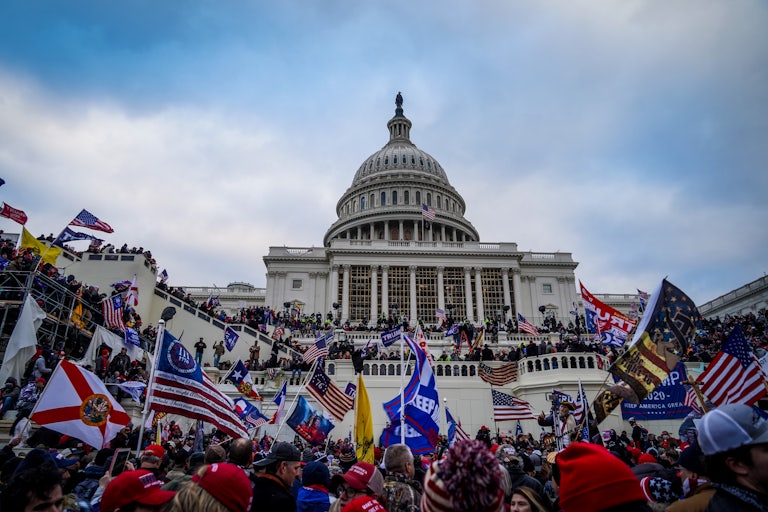
Donald Trump supporters wave flags outside the U.S. Capitol on January 6, 2021
Selcuk Acar/NurPhoto/Getty Images

The U.S. Justice Department sent a message Wednesday to those hoping for a pardon over their participation in the deadly riot on January 6, 2021: They will have to admit their guilt to receive one.

Prosecutors filed a motion responding to a request from the attorney for one rioter, Dova Winegeart, which would have delayed her judgment and report date in the hopes of receiving a presidential pardon when Donald Trump is sworn in next month. The 51-year-old woman was sentenced Monday to four months in prison for violently swinging a pole outside the U.S. Capitol as it was being ransacked by MAGA fanatics nearly four years ago.  

Prosecutors opposed Winegeart’s motion and issued their own warning to any rioters hoping Trump might save them from jail time, according to Politico. 

“The defendant hopes to avoid that harm by receiving a presidential pardon from a future executive. But the defendant’s personal motivation to avoid public disclosure of her judgment of conviction is no reason to delay entry of judgment and deviate from the regular order of criminal procedure,” the motion stated. 

“And, even if the defendant were to receive a pardon at some unspecified date in the future—which is purely speculative at this juncture—that pardon would not unring the bell of conviction,” the prosecutors wrote. “In fact, quite the opposite. The defendant would first have to accept the pardon, which necessitates a confession of guilt.”

Prosecutors wrote that a pardon would not undo the fact of the crime, only prevent punishment for that crime. If anything, a pardon would be to admit to the crime. 

Trump has long promised to pardon the nearly 1,600 people facing charges over their involvement in the riot. Many have attempted to have their judgments delayed until after Trump takes office. 

Prosecutors took sharp issue with the suggestion that they obey in advance of Trump’s orders. 

“The criminal justice system cannot operate on such uncertainty. Indeed, it is neither the court’s role or function to speculate about any president’s pardon decisions, nor is it appropriate for the Court to halt the normal functioning of criminal procedure based solely on that speculation,” the prosecutors wrote. 

“If a future Executive cannot, today, grant a pardon, this Court cannot expand the temporal grace that Executive may or may not extend in the future to … affect the present,” they added.