Breaking News
Breaking News
from Washington and beyond

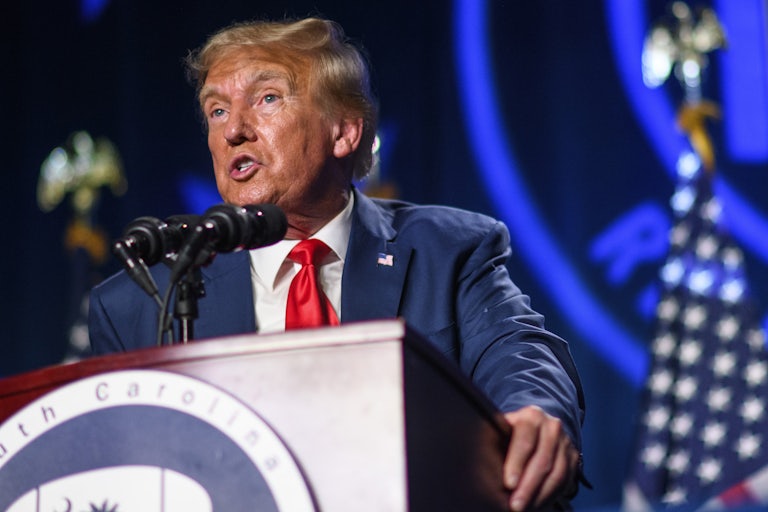
Elon Musk’s Twitter Delayed a Search Warrant for Trump’s Account

The social media company dragged its feet in complying with the search warrant.

Elon Musk and Donald Trump side by side
Nathan Laine/Bloomberg/Getty Images, Chip Somodevilla/Getty Images

Elon Musk’s Twitter refused to comply with a federal search warrant for Donald Trump’s Twitter account, resulting in hundreds of thousands of dollars in fines for the social media company, according to court documents released Wednesday.

Special counsel Jack Smith obtained the warrant in mid-January and served the warrant to Twitter, now called “X,” alongside a “nondisclosure order.” The order barred the social media platform from informing Trump that his account would be searched.

After being  served the warrant, however, the company took several days to respond. Twitter then filed a motion to vacate the nondisclosure order on February 2, arguing the order violated the First Amendment, and refused to comply. The company demanded that U.S. District Court Judge Beryl Howell, who was overseeing the case at the time, block enforcement of the search warrant until the matter was resolved.

Instead, Howell found Twitter in contempt and fined the platform $50,000 a day, doubling for each day of noncompliance. Twitter still did not comply with the warrant until February 9, resulting in a total of $350,000 in fines.

Twitter appealed the ruling, but in July, an appeals court upheld Howell’s decision, the documents released Wednesday show.

The district court found probable cause to search the Twitter account for evidence of criminal offenses,” the three-judge panel said in its ruling. “Moreover, the district court found that there were ‘reasonable grounds to believe’ that disclosing the warrant to former President Trump ‘would seriously jeopardize the ongoing investigation’ by giving him ‘an opportunity to destroy evidence, change patterns of behavior, [or] notify confederates.”

It’s not yet clear what Smith was looking for on Trump’s account. The former president favored Twitter over every other form of communication, and used the platform to push his election fraud conspiracies and encourage his followers to come to Washington on January 6, 2021. Many people arrested in connection with the January 6 insurrection said they felt that Trump’s tweets were a direct call to arms.

Smith could try to use Trump’s tweets to demonstrate a pattern of behavior, part of proving one of the conspiracy charges against the former president. Trump was charged last week with trying to overturn the 2020 election and faces four counts of conspiracy to defraud the United States, conspiracy to corruptly obstruct an official proceeding, obstruction of and attempt to obstruct an official proceeding, and conspiracy against the right to vote.
Ohio Vote Is Crushing Defeat for Sherrod Brown’s Likely ’24 Opponent

Frank LaRose made the ballot measure related to abortion his central issue—and Ohio voters overwhelmingly rejected it.

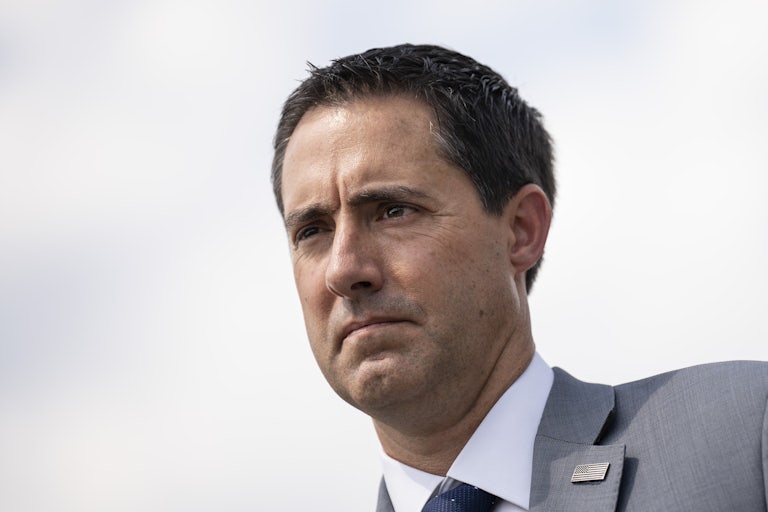
Frank LaRose
Drew Angerer/Getty Images
Ohio Secretary of State Frank LaRose

Ohio Secretary of State Frank LaRose is livid that his plan to overthrow local democracy was thwarted by democracy, and the Senate candidate has decided the best response is to insult his own constituents.

Ohioans on Tuesday overwhelmingly rejected an amendment to raise the threshold for ballot initiatives to 60 percent of votes, which would have paved the way for minority rule in the state. Republicans had argued the amendment was needed to protect the state constitution from the influence of special interest groups.

But in reality, the measure was put forward to block another amendment, which goes up for a vote in November, to enshrine abortion rights in the constitution. LaRose himself admitted as much, saying in June that the August election “is 100% about keeping a radical pro-abortion amendment out of our constitution.”

Now that his central issue has lost (badly), LaRose, who will likely be the Republican candidate challenging Democrat Sherrod Brown for Senate, is blaming all the people he claims to want to represent. “I’m grateful that nearly 1.3 million Ohioans stood with us in this fight, but this is only one battle in a long war. Unfortunately, we were dramatically outspent by dark money billionaires from California to New York, and the giant ‘for sale’ sign still hangs on Ohio’s constitution,” he said in a statement.

This is blatantly untrue. Both campaigns supporting and opposing raising the vote threshold were primarily funded by out-of-state donors, but the “yes” campaign significantly out-fundraised the “no” side.

Most of the “yes” campaign’s money came from one billionaire Republican megadonor, with smaller donations from anti-abortion groups—including Susan B. Anthony Pro-Life America, which is linked to dark money king Leonard Leo.

LaRose also used his statement to spread baseless fears: “Ohioans will see the devastating impact of this vote soon enough. The radical activists that opposed Issue 1 are already planning amendments to shut parents out of a child’s life-altering medical procedure, force job killing wage mandates on small businesses, prevent law abiding citizens from protecting their families and remove critical protections for our first responders.”

There are currently no state ballot initiatives for the issues LaRose mentions, such as gender-affirming care for minors or raising the minimum wage. But go off, I guess.

LaRose ended his statement by promoting himself and, implicitly, his Senate campaign. But that may not go down so well, now that he’s shown he backs losing issues and then has a tantrum when they perform poorly.

Dianne Feinstein Was Hospitalized After Falling at Home

The 90-year-old senator was missing from Congress for months earlier this year due to her health.

Al Drago/Bloomberg/Getty Images
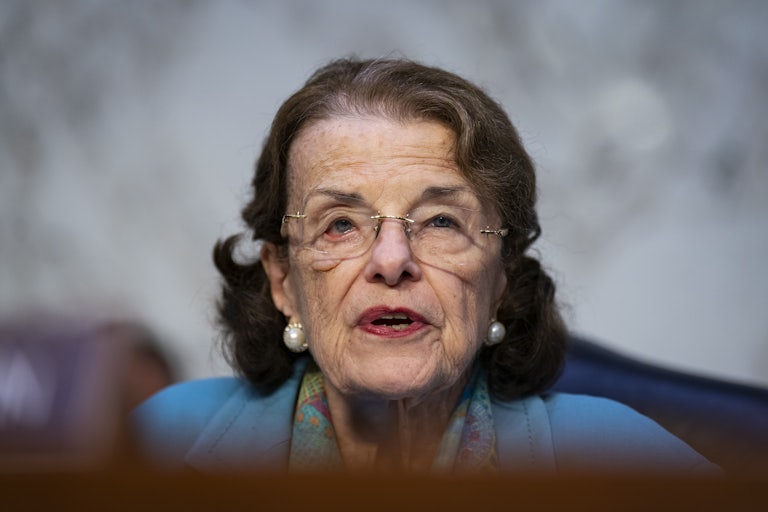
Dianne Feinstein

Senator Dianne Feinstein was taken to the hospital after falling at her home in San Francisco, according to multiple outlets.

“Senator Feinstein briefly went to the hospital yesterday afternoon as a precaution after a minor fall in her home,” a Feinstein spokesperson told TMZ Wednesday. “All of her scans were clear and she returned home.”

The 90-year-old senator was missing from the chamber for nearly three months earlier this year due to a particularly bad bout of shingles. That illness led to her contracting Ramsay Hunt syndrome, which causes facial paralysis and vision and balance impairments, as well as encephalitis—an inflammation of the brain that can cause “lasting memory or language problems, sleep disorders, bouts of confusion, mood disorders, headaches and difficulties walking,” according to The New York Times.

When she did finally return to Congress, she seemed completely unaware that she had been missing at all.

She is also increasingly reliant on her staff to direct her on how and when to vote. “Just say ‘aye,’” a colleague told her in one particularly awkward moment last month.

This is the second-oldest U.S. Senate in history. Two-thirds of Californians believe Feinstein is no longer fit to serve.

Stunning New Memo: Trumpworld Knew Fake Elector Scheme Would Fail, Didn’t Care

A newly uncovered memo details how Trump’s team knew their efforts to overthrow the election were a long shot—but pressed forward anyway.

Donald Trump
Melissa Sue Gerrits/Getty Images

The lawyer who came up with the idea of using fake electors to overthrow the 2020 election knew the plan would fail, but Donald Trump and his allies pressed forward anyway, according to a previously unknown internal memo that prosecutors are using to prove the former president engaged in a criminal conspiracy.

The memo, sent by Kenneth Chesebro on December 6, 2020, was published by The New York Times Tuesday night and details the plan to send in fake electors to falsely certify Trump had won certain states (which is illegal, despite what Trump’s legal team says). Chesebro acknowledges in the memo that he is suggesting a “bold, controversial strategy” that the Supreme Court would “likely” ultimately reject.

But that still wasn’t enough to dissuade Trump.

Prosecutors described Chesebro’s memo in Trump’s latest indictment as part of a criminal plan to create “a fake controversy that would derail the proper certification of Biden as president-elect.”

The point of Chesebro’s plan was not to actually pass legal and judicial scrutiny. Instead, Chesebro’s goals were to increase the spotlight on the baseless claims of voter fraud and to give Trump’s campaign more time to win its multiple lawsuits challenging the vote results. (Judges threw out every single one of those lawsuits because they had no basis.)

The plan, which Trump lawyer John Eastman eventually took over, involved creating slates of fake electors in multiple states that Joe Biden had won. The argument would be that doing so would ensure that the correct electoral votes could be counted in case a recount flipped the state to Trump.

In separate, previously seen emails, Chesebro had also suggested having then–Vice President Mike Pence open and count the electoral votes alone. Pence could then certify the fake electors’ votes, even though Biden would have won the state.

Chesebro cited multiple articles from Harvard Law School professor Lawrence H. Tribe to back up his plan. But Tribe slammed Chesebro’s arguments as a “misrepresentation of my scholarship.”

In an essay published Tuesday, Tribe pointed out that Chesebro had taken certain points out of context or had applied narrow, specific details to a more generalized situation. Instead, what “Chesebro sought to do could grievously endanger our entire system of self-government under law,” Tribe said.

Ohio Voters Reject Measure That Would Have Paved Way for Minority Rule

This is a huge victory for democracy—and for abortion rights.

Sarah L. Voisin/The Washington Post/Getty Images

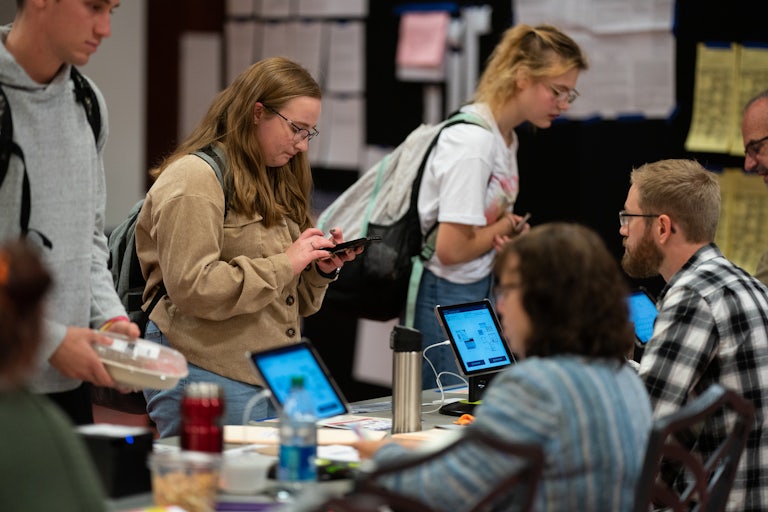
Ohio voters have overwhelmingly rejected an amendment to raise the threshold for ballot initiatives to 60 percent of votes, which would have paved the way for minority rule in the state.

Decision Desk HQ, an election results reporting agency, called the race around 8:12 p.m. And the results are not even close: With about 33 percent of the votes in, the “no” vote on the amendment is leading by a 30-point margin.

Republicans argued the amendment was needed to protect the state constitution from the influence of special interest groups. But in reality, the measure was put forward to block another amendment, which goes up for a vote in November, to enshrine abortion rights in the constitution.

Abortion is currently legal in Ohio until about 22 weeks, although not for lack of GOP efforts after Roe v. Wade was overturned. The November amendment would allow people to decide for themselves about all reproductive health. The state could only restrict abortion access after a doctor determines the fetus is viable, or could survive outside the uterus. And even then, abortions can be performed if the patient’s health or life is at risk.

In response, Republicans tried to raise the threshold for constitutional amendments to a 60 percent vote, instead of a simple majority. If they had prevailed, the new threshold would mean that just 40 percent of Ohio would have to vote against a measure, such as abortion, to reject it, allowing the minority of state residents to have the final say.

And when it comes to abortion, blocking reproductive rights is in fact a minority opinion. A USA Today Network/Suffolk University poll released two weeks ago found that 58 percent of Ohioans support enshrining abortion rights, while just 32 percent oppose it. The support crosses party lines, with a third of Republicans backing the amendment, as well as 85 percent of independent women—a crucial voter demographic.

Now that voters blocked raising the threshold, it will require only a simple majority to amend the state constitution to include abortion rights. But the issue of using abortion rights as a proxy for wars on democracy remains.

Ohio is not the first state to use abortion regulations as a way to circumvent the will of the people. In Kansas, after state residents overwhelmingly voted to keep abortion protections in the constitution, Republicans moved to implement laws that would still restrict access to the procedure.