Behind the scenes at the Capitol—and beyond, by Grace Segers

The Most Cynical Week in Washington

Behind all the political theater over the now-dead border bill, there is still a humanitarian crisis that’s been left to fester.

Senator James Lankford at the U.S. Capitol on February 7
Chip Somodevilla/Getty Images
Senator James Lankford at the U.S. Capitol on February 7

The national security supplemental legislation that included a controversial bill on border and asylum policy—which failed to even scrounge up 60 votes in the Senate on Wednesday—was the result of months of negotiations, yet ended in foreseeable defeat. So foreseeable, in fact, that Senate Majority Leader Chuck Schumer immediately replaced it on the floor with a bill that included aid to Ukraine, Israel, and the Indo-Pacific region—without any border provisions. The second supplemental advanced on Thursday afternoon, with more votes expected over the weekend.

Nonetheless, the first national security supplemental proposed this week, and the bipartisan border bill contained within, was significant for two reasons: its politics and its policy. Less than 24 hours after its release, Senate Republicans immediately torpedoed the prospects of the bill negotiated in part by one of their own—GOP Senator James Lankford—because they found it insufficiently stringent.

Even though the border legislation will not become law, it’s worth considering its substance: It could provide a framework for future legislation or—perhaps more likely—yet another cautionary tale as to why substantive immigration-related measures are doomed to fail in the modern political era.

Substantively, the initial supplemental contained controversial elements regarding asylum, immigration, and border policy, which left many humanitarian and immigrant rights groups concerned. Not only was this legislation insufficient to solve any of the problems the bill purported to solve, these organizations say, but serious unaddressed issues will remain long after the media stops gawking at this week’s legislative wreckage.

“It doesn’t do anything to solve the root of the problem, which is that our immigration system hasn’t been overhauled since 1986,” said Mark Hetfield, the president and CEO of HIAS, a refugee resettlement organization. “The entire asylum system is bearing the burden that we haven’t updated our immigration laws to make sure they meet the labor needs of the country.”

The border legislation would have made significant changes to the backlogged asylum system. It would have made it more difficult for migrants to claim asylum, requiring them to show greater proof that they have a “credible fear” of facing persecution upon returning to their home countries. It would attempt to streamline the appeals process by functionally excising immigration courts, granting those decisions to internal review boards. It would include around $3 billion for Immigration and Customs Enforcement to expand detention capacity.

The measure would also require the Department of Homeland Security to shut down the border if illegal crossings exceed 5,000 migrants over a week, or 8,500 in one day; the administration would also be able to shut down the border if crossings exceed 4,000 daily for a week. The border would only reopen if crossings dropped to 75 percent of that number over the course of a week. (This was a provision that many Republicans found to be unsatisfactory, contending that it allowed for too many crossings.)

Krish O’Mara Vignarajah, the director of the refugee resettlement organization Global Refuge, called that provision “deeply unsettling” because it would require the expulsion of migrants seeking asylum without recourse, and thus perhaps even a violation of international agreements like the Refugee Convention.

“I think at the end of the day, we all understand that bipartisanship requires compromise. But lawmakers have to ask themselves, does it require us to compromise our nation’s core values?” O’Mara Vignarajah said. “We’re trying to support the effort to fix the system but also ensure that it doesn’t preclude people in the most desperate of circumstances from exercising a legal right.”

There are elements of the legislation that humanitarian organizations would support, including offering 250,000 new visas for migrants who wish to work in the United States or join family members, making asylum-seekers eligible for work permits as they wait, and providing a pathway to citizenship for children of immigrants who came to the U.S. on certain work permits. However, as Hetfield put it, “the good stuff doesn’t compensate for all the bad stuff.”

Hetfield argued that economic circumstances “demand” immigration reform to help address the labor shortage. Many migrants are using the asylum system to get into the U.S. for work, he continued, even though that process is not designed for such a purpose. “What really drives me crazy is this line that Republicans have been giving for years, which is that ‘first we have to fix the border,’” Hetfield said. “It is one ecosystem.”

This article first appeared in Inside Washington, a weekly TNR newsletter authored by staff writer Grace Segers. Sign up here.

Vibe check: Update on the Afghan Adjustment Act

Each week, I provide an update on the vibes surrounding a particular policy or political development. This week: the future of a key bill to aid Afghan allies.

There were other elements of the initial legislation that did not make it into the second supplemental proposal, including a version of the Afghan Adjustment Act: a bill that would grant Afghan evacuees paroled into the U.S. after the withdrawal from Afghanistan a way to obtain permanent residency, and that would expand and streamline the Special Immigrant Visa process for allies still trapped in Afghanistan. Veterans groups and humanitarian organizations have been lobbying to pass the bill for years.

“We’re very unhappy about it not being in the bill right now,” said Senator Richard Blumenthal, one of the co-sponsors of the Afghan Adjustment Act.

The initial exclusion of the Afghan Adjustment Act was a major blow to the tens of thousands of Afghans paroled into the U.S., the allies still in Afghanistan, and their advocates stateside. However, there was a fervent behind-the-scenes effort by the bill’s supporters in the Senate to ensure it would receive a vote as an amendment—assuming, of course, that the underlying second supplemental could advance.

“We are trying to get a vote on that amendment,” Senator Chris Coons, one of the bill’s co-sponsors, told me on Wednesday afternoon. “There’s a strong bipartisan group that would support it.”

Although it was unclear whether there would be votes on amendments at the time of publication, the Afghan Adjustment Act might be a relatively popular addition.

“If it gets offered as an amendment, I’ll be voting for it,” said Senator Thom Tillis, a Republican co-sponsor of the Afghan Adjustment Act. “I’ve got to imagine that there are several members that would want to offer that up as one of the amendments.” Such an amendment might be brought by Senator Amy Klobuchar, who introduced the legislation in the Senate and has helped drive the behind-the-scenes effort to attach it to the supplemental.

Representative Earl Blumenauer, who introduced the bill in the House, said on Wednesday that the Afghan Adjustment Act is “noncontroversial” and has bipartisan support. (The bill is not entirely “noncontroversial”—GOP Senator Chuck Grassley previously blocked it due to concerns over vetting of parolees, even though the legislation would include an additional vetting process.)

But Blumenauer also highlighted the chaos that has consumed Congress, indicating that across-the-aisle endorsements may not be enough to get this portion over the finish line. “It’s a crazy time. I mean, who knows?” Blumenauer said.

For refugee advocates, the inclusion of the Afghan Adjustment Act in the initial supplemental legislation was a positive step forward—even if it didn’t make up for the provisions they did not like. “When you work in the immigration space, you’ve got to have hope,” said O’Mara Vignarajah. “But it still feels like an uphill battle.”

What I’m reading

Billy Joel said he’d retired from pop. Here’s what brought him back, by Caryn Ganz in The New York Times

It was a pleasure just to watch Carl Weathers move, by Matt Zoller Seitz in Vulture

We all know we should save the whales. What about the sardines? by Russell Jacobs in Slate

Team Cow or Team Soy: The milk wars roiling America, by Kristina Peterson in The Wall Street Journal

TikTok is full of tryhard slang, by Rebecca Jennings in Vox

Pet of the week

Want to have your pet included at the bottom of the next newsletter? Email me: gsegers@tnr.com.

This week’s featured pets are Bandit (left) and Cleo, submitted by Tal Kopan. The two are 7-year-old littermates; their favorite things include cuddles, scratchies, loudly hunting their toys in the middle of the night, and sharing Goldfish crackers for snack with their human sister.

Is Washington Writing the Script for the Next Forever War?

The Biden administration's open-ended escalations in the Middle East are starting to feel like the sequel to a bad movie.

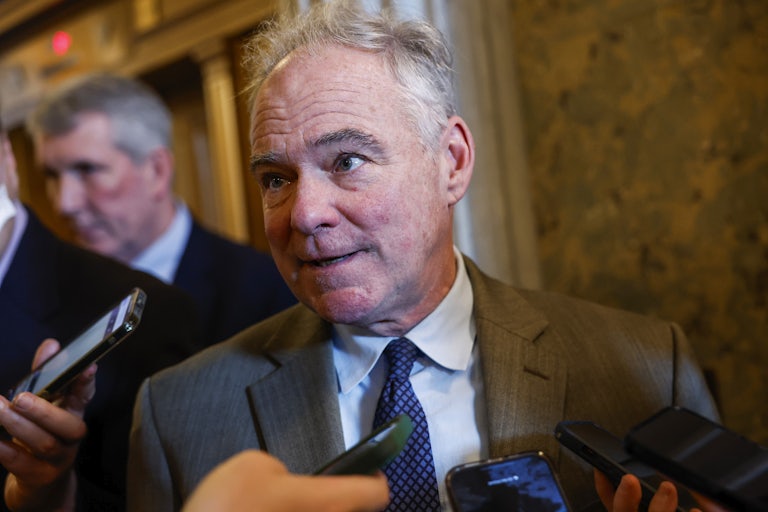
Sen. Tim Kaine speaks to reporters during a vote in the Senate Chambers of the U.S. Capitol Building on January 25, 2024 in Washington, DC.
Anna Moneymaker/Getty Images
Sen. Tim Kaine speaks to reporters during a vote in the Senate Chambers of the U.S. Capitol Building on January 25, 2024 in Washington, DC.

INT. U.S. CAPITOL—OUTSIDE THE SENATE CHAMBER ON JANUARY 30, 2024

It’s been a few days since three U.S. service members were killed in a drone strike by an Iran-backed militia in Jordan. President JOE BIDEN has said that the U.S. “shall respond” but has not given details about what that response will be. Given the various ongoing conflicts in the Middle East—including Israel’s war against Hamas in Gaza, and recent U.S. airstrikes against Houthis in response to their disrupting traffic in the Red Sea—reporter GRACE SEGERS wonders whether lawmakers are concerned that the U.S. might become embroiled in yet another “forever war” in the Middle East. She questions senators across the ideological spectrum about this possibility.

Enter Senator TIM KAINE, a Democrat from Virginia who has co-sponsored legislation to repeal the 1991 and 2002 Authorizations for the Use of Military Force in Iraq.

KAINE:  We shouldn’t be in another war in the Middle East, but particularly without a congressional debate and vote. So self-defense is one thing, but escalating regional conflict with the U.S. involved and our troops at risk is something that should not happen without a congressional debate and vote.

Camera pans to the Senate basement. Grace asks Senator MIKE ROUNDS, a Republican from South Dakota, if he’s worried about the U.S. getting entangled in a larger conflict in the United States.

ROUNDS:  Sure, everybody should be. If we continue down this policy of not dealing with the problem children in the Middle East, yes. It started with a very, very poor policy with regard to Afghanistan, and now it’s continued on … where if you don’t deal with these individuals that are causing the problem up front, then they just continue to test the waters.

GRACE:  Isn’t there the threat that if you go down that route of responding, that then it could end up in a tit-for-tat?

ROUNDS:  We know what happens when you’re in a tit-for-tat, which is what we’re in right now. Where all we do is, just kind of push them a little bit, and then they go, “Oh, that wasn’t so bad.” So then they push back, and now they’re killing Americans. Bottom line is, they have to fear us, and they have to respect our military.

Back outside of the Senate chamber, we turn to Senator JOSH HAWLEY, a Republican from Missouri who has been skeptical of U.S. involvement in foreign conflicts.

HAWLEY:  We’ve got to find a way to isolate Iran, to cut off any kind of support from the international community, to return to something like we had in the previous administration, where they really were truly isolated. Their revenues were way down. I mean, that’s got to be our goal while we continue our pivot toward the Pacific, where our biggest enemy is in China, where our biggest national security threats are.

GRACE:  I think everyone wants to avoid another type of “forever war,” but do you feel as if there are steps that could be taken where the U.S. could go in that direction again?

HAWLEY:  I’m leery of anything that would get us more involved in the Mideast in terms of central command—the central command area of authority—in terms of more manpower, more hardware. We have finite resources, and we have threats all over the world, but we have to prioritize.… Do I want to do nothing with Iran? No, I think we need to retaliate. We certainly need to isolate them. But I think we want to be careful that we don’t find ourselves embroiled, we don’t take actions that can embroil us in a major military conflict.

INT. U.S. CAPITOL—IN THE SENATE BASEMENT ON JANUARY 31, 2024 Enter Senator CHRIS COONS, Democrat from Delaware, a close ally of Biden.

GRACE:  I’m wondering if you’re concerned at all—

COONS:  “Wondering if you’re concerned.” Oh, my. That’s quite a way to frame it.

GRACE:  Sure.

COONS:  Let’s try again.

GRACE:  How do you feel about the possibility that what’s happening in the Middle East could escalate into another type of “Forever War” that the U.S. could be embroiled in?

COONS:  (Laughs, shakes head) Well, that’s about as negative a way as you could possibly characterize it. “Are you concerned about another Forever War?” I mean the answer to any formulation like that is going to be, “Of course I’m concerned.” Let’s put it differently: How confident am I that President Biden is clear eyed about the risks in the Middle East and is taking measured, responsible steps to both deter aggression and defend our troops and yet avoid a regional conflagration? Highly confident.

One of the great things about having a president with 50 years of experience in foreign policy is, he’s very, very aware of the difficulties, the tension, the competition in the region; the differences between the Houthis, Hezbollah, Hamas; the different militias in Syria and Iraq; and the overarching role that Iran is playing. But I’m confident that he is carefully balancing how to deter Iran, how to strike back in a way that shows a firmness and determination to protect American troops, with an eye towards avoiding broadening the conflict.

Camera pans to GRACE, who looks directly into the lens as she offers the following analysis.

GRACE:  It’s still unclear to what extent the U.S. will become further engaged in conflicts in the Middle East in the coming weeks. While senators agree that Iranian-backed aggression should not go unheeded, the correct path for de-escalation is uncertain. While the prospects of another “forever war”—à la Afghanistan or Vietnam—are unappealing, time will tell whether the current conflict will evolve into a full-blown sequel.

Vibe check: Senate Republicans iffy on Mayorkas impeachment

Each week, I provide an update on the vibes surrounding a particular policy or political development. This week: how Senate Republicans are reacting to the impending impeachment of Homeland Security Secretary Alejandro Mayorkas.

The House Homeland Security Committee advanced articles of impeachment against Mayorkas early on Wednesday morning, after a brutally long and contentious hearing. (Readers will be unsurprised to learn that the articles, which have been decried by Democrats as a “political sham,” passed along party lines.)

With the full House expected to vote on the articles imminently, the Senate may soon undertake its third impeachment trial in five years—albeit the first trial for a Cabinet official in a century and a half. The outcome is a foregone conclusion: Sixty-seven senators would need to convict Mayorkas for him to be removed, which would never happen in the Democratic-controlled Senate. The impeachment discussion also comes as bipartisan negotiators toil over a legislative deal on border security, although it is one that House Republicans—spurred by former President Donald Trump—have insisted will be DOA in the lower chamber.

For their part, Senate Republicans are feeling mixed about the House sending articles of impeachment for Mayorkas their way. When I asked Senator Mitt Romney whether he believed an impeachment trial was the best use of the Senate’s time, he bluntly replied: “No.”

Senator Todd Young, who previously expressed frustration with the speedy timelines of the two Trump impeachment proceedings, highlighted “the importance of some measure of due process and building a very strong factual foundation before you impeach.”

“Otherwise you end up … with snap impeachments. I predicted this was what would happen. It is happening,” Young said. “There was a rush to impeach. There’s a rush to dispense with our consideration of the impeachment.”

Indeed, it’s possible that the Democratic-controlled Senate may try to avoid the issue altogether by moving to table the articles. “It’s going to be up to Senator Schumer how to proceed over here, I suspect,” predicted Senator John Cornyn, who is “all for” the House’s impeachment effort. “I suspect [Democrats] might try to table impeachment, which will take 51 votes, because they probably don’t want additional attention to their failures.”

Schumer, the Democratic majority leader, did not commit to a decision on holding a trial, saying the Senate will “see what the House does first.”

Even those who approve of the House’s actions could be noncommittal about the prospects of a trial. Senator Tommy Tuberville appeared broadly supportive of the effort, saying he was glad the House is “doing their work.” However, when asked about whether a trial would be a valuable use of time, Tuberville said, “Well, not our time, but their time.”

What I’m reading

The band that’s been charting America’s burnout for decades, by Spencer Kornhaber in The Atlantic

Are we sliding toward McCarthyism? by Emily Tamkin in The New Republic

​​Prisoners in the US are part of a hidden workforce linked to hundreds of popular food brands, by Robin McDowell and Margie Mason in the Associated Press

Tammy Murphy and the nepo state, by Simon van Zuylen-Wood in New York

Chita Rivera, electrifying star of Broadway and beyond, is dead at 91, by Robert D. McFadden in The New York Times

Pet of the week

Want to have your pet included at the bottom of the next newsletter? Email me: gsegers@tnr.com.

This week’s featured pet is Babs, submitted by Eleanor Mueller. The 6-year-old Babs acts exactly like a dog, according to Eleanor, even coming running when you walk in the door and climbing on top of you any time she can.

Lawmakers Want Biden to Ask Permission Before Bombing Yemen Indiscriminately

The administration's escalation of an open-ended conflict with the Houthis has reawakened the long-running debate over who has the power to go to war.

Tom Williams/Getty Images
Senators Tim Kaine (left) and Todd Young

As tensions in the Middle East escalate, some lawmakers are questioning whether the Biden administration can authorize attacks against the Houthi militants in Yemen without the express consent of Congress.

“We just need to get clarity about their perception about their legal authorities and the implications of those understandings moving forward. The American people want us to duly deliberate before committing to some sort of sustained action against the Houthis or others,” said Senator Todd Young, a Republican member of the Foreign Relations Committee who has helped lead efforts in the Senate to overturn the 2002 Authorization for Use of Military Force, or AUMF, that justified American action in Iraq. 

This month, the Biden administration authorized multiple strikes against the Houthis, an Iranian-backed organization based in Yemen that has disturbed traffic in crucial shipping lanes connecting to the Suez Canal. The Defense Department has characterized strikes against the Houthis as “defensive,” citing “imminent threat” of attack to merchant ships and U.S. Navy vessels. The Houthis began attacking commercial ships in the Red Sea in response to Israel’s military campaign in Gaza.

“I know of no definition of self-defense that includes protecting foreign flagships. It might be a really good thing to do—but what’s the legal justification for it?” Democratic Senator Tim Kaine, the other leader of efforts to overturn the 2002 AUMF in the Senate, told me on Tuesday. “There’s a ‘What’s the strategy?’ question. And since the administration said they expect more escalation, and that’s what’s happening—OK, then, well, what’s the plan to de-escalate?”

Indeed, President Joe Biden himself has acknowledged that, despite failing to dissuade the group from attacking vessels traveling through key sea lanes, the campaign against the Houthis may be open-ended: “Are they stopping the Houthis? No,” Biden said last week. “Are they going to continue? Yes.”

(Insert extremely quick primer: The Houthis control a portion of territory in Yemen, and a Saudi-backed campaign to uproot them—supported by the United States—proved to be largely ineffective; a truce was eventually implemented in 2022. That conflict displaced millions of people and further exacerbated a humanitarian crisis in the Middle East’s poorest country.)

On Tuesday, Young and Kaine were joined by Democratic Senator Chris Murphy and Republican Senator Mike Lee in sending a letter to the White House asking for more details on the administration’s strategy in responding to Houthi attacks. While the senators said they “support smart steps to defend U.S. personnel and assets” and “hold the Houthis accountable for their actions,” they “further believe Congress must carefully deliberate before authorizing offensive military action.”

“The Administration has stated that the strikes on Houthi targets to date have not and will not deter the Houthi attacks, suggesting that we are in the midst of an ongoing regional conflict that carries the risk of escalation,” the senators said, adding that there is “no current congressional authorization for offensive U.S. military action against the Houthis.” Kaine separately told me that his office has been in contact with White House staff but has not yet received a satisfying response as to the administration’s strategy against the Houthis.

Some lawmakers in the House have also raised concerns about the president’s authority to launch strikes against the Houthis. In an op-ed in The Nation last week, Democratic Representative Ro Khanna argued that Biden has “both the constitutional obligation and a political imperative” to seek authorization from Congress.

“Conducted with extensive planning and in coordination with five other countries, the multiple rounds of US airstrikes in Yemen are retaliatory strikes for deterrence, not defense,” said Khanna.

It’s not just the strikes against the Houthis that have members of Congress scratching their heads. Young and Kaine also each expressed bafflement at the Biden administration’s use of the 2002 AUMF to justify airstrikes in Iraq earlier this month. The White House said the strike was justified by Article 51 of the United Nations charter, which outlines a nation’s right to self-defense, as well as the 2001 and 2002 AUMFs.

“We could not understand, like, what was the [White House] counsel’s office thinking? And we still haven’t gotten a good answer,” said Kaine.

Young, who described himself as a “recovering attorney,” told me on Tuesday that it was a “mistake” to cite the 2002 AUMF for the Iraq strikes, calling it an “untenable position.” 

“Sometimes attorneys can get carried away. And that’s what happened in this case, which is what led the administration to a nonsensical and inconsistent position,” Young said. “The 2002 AUMF was drafted and passed for the narrow purpose of ensuring that we could go to war against Saddam Hussein’s regime. Saddam Hussein is dead, last time I checked—still dead, still very dead. And that AUMF is no longer in effect as a matter of law.”

The House voted in 2021 to repeal the 2002 AUMF. The Senate repealed the 1991 and 2002 AUMFs on a bipartisan basis last year, although that second measure has not made progress in the now Republican-controlled House. The recent strikes in Yemen—and, to a lesser extent, in Iraq—are once again raising questions about how far a president can go without congressional authority. Even in a divided and often dysfunctional Congress, some lawmakers argue that debating to authorize use of force in the legislature is a necessary next step.

“My anticipation would be that the president’s hand would be substantially strengthened if he came to Congress before committing to any longer-term action,” Young said.

This article first appeared in Inside Washington, a weekly TNR newsletter authored by staff writer Grace Segers. Sign up here.

Vibe check: The Chevron conundrum

Each week, I provide an update on the vibes surrounding a particular policy or political development. This week: how lawmakers are reacting to a Supreme Court case with far-reaching effects.

The Supreme Court appears poised to overturn a key precedent that empowers federal agencies, which would in turn raise the level of specificity required for  Congress to draft regulatory laws to a near-impossible standard of complexity.

In oral arguments last week, conservative members of the court seemed skeptical of the so-called Chevron doctrine,” a precedent that grants agencies authority to interpret congressional statutes when intent is unclear. The 1984 case that established the Chevron doctrine is one of the most cited cases in recent legal history; if overturned, it would transfer authority from executive agencies to the courts to determine legislative intent.

Although the Chevron doctrine was established during and supported by the Reagan administration, recent support for or opposition to it has largely fallen along party lines, with Democrats in favor of preserving agency authority and Republicans opposed.

“The Supreme Court is considering a power grab designed to make day-to-day governance less effective and to give the courts more power in determining every detail of how government works,” said Senator Elizabeth Warren, who joined an amicus curiae brief supporting the doctrine along with other Democratic senators. “Instead of having scientists, for example, figure out the safety standards on nuclear energy, overturning the Chevron doctrine would mean courts could make that decision.”

But Republicans argue that Congress should be more specific in outlining statutes, contending that changing administrations allow agencies to interpret laws differently based on who is in office. “For too long, Congress has been content to punt decision-making to unelected bureaucrats in the executive branch,” said Senator Ted Cruz, who led several other Republican lawmakers in an amicus brief urging the court to overturn the precedent. “The growth of the administrative state has allowed politicians to avoid accountability to the people.” (However, the Supreme Court justices—who would almost definitely end up deciding what actions taken by regulatory agencies are kosher and which aren’t—are just as unelected and perhaps even less accountable to voters than executive branch bureaucrats.)

Senator Josh Hawley, another Republican opponent of the doctrine, said that “Congress has deliberately given up authority to agencies.”

“And then, you know, we whine about it all the time. ‘Oh, these agencies, they pay no attention to us.’ Well, that’s because we’ve given them wide-open discretionary authority,” Hawley told me. He echoed the common Republican belief that agencies functionally amount to a “fourth branch of government,” unaccountable to Congress or the executive (a Deep State, if you will).

Still, requiring Congress to be more specific in developing statutes would require a degree of granularity lawmakers are not used to considering. Moreover, supporters of the doctrine argue that leaving a statute up to the courts would not necessarily ensure stability in interpretation, because conservative and liberal justices may rule differently on a law: This could ultimately bring a statute before the conservative-majority Supreme Court for final decision, which has shown itself to be largely hostile to government regulation.

Democratic Senator Sheldon Whitehouse—who led the brief supporting the doctrine and has pointed out the ties between the conservative Koch network and the plaintiffs in one of the Supreme Court cases under consideration—said that agencies are already held accountable.

“Look at all the CRAs we’ve done in this building,” Whitehouse said, referring to votes to undo agency actions under the Congressional Review Act. “Look at the appropriations riders that get put on, look at all the Oversight Committee work, look at what’s happening to [Homeland Security Secretary Alejandro] Mayorkas on the House side, and tell me that Congress doesn’t oversee agencies.”

Whitehouse, who has pressed for the Supreme Court to adopt a formal ethics code, also argued that the judicial branch may not be the best venue for interpreting laws. “Even if it were true, which it isn’t, the idea you could solve an accountability problem by moving the locus of decision to an even less accountable part of government, shows how little this argument makes sense,” Whitehouse said.

What I’m reading

NJ race to replace Menendez pits insiders vs. grassroots backlash, by Jonathan Tamari in Bloomberg

She filed a complaint after being denied an abortion. The government shut her down, by Caroline Kitchener and Dan Diamond in The Washington Post

A small town struggles to survive in the heart of Mississippi’s hospital crisis, by Devna Bose in Mississippi Today

‘It’s embarrassing’: Republicans worry they have no achievements to run on in 2024, by Sahil Kapur in NBC News

The menu trends that define dining right now, by Priya Krishna, Tanya Sichynsky, and Umi Syam in The New York Times

Fetterman’s break from the left excites Republicans, by Ursula Perano in Politico

Pet of the week

Want to have your pet included at the bottom of the next newsletter? Email me: gsegers@tnr.com. 

This week’s featured pets are Ruby and Layla, submitted by Ally Boguhn. Ruby is a Boston terrier–French bulldog mix, and Layla is also a Boston terrier mix. The two pups, who are both rescues, like to hang out together in the sun. Fun fact about Layla: She can jump through hoops, a talent she enjoys sharing with guests at parties.

Millions of Americans Could Soon Be Very Offline

A staggering number of households across the country may lose broadband access if Congress doesn’t act.

Helen H. Richardson/Getty Images
A tower technician makes repairs on the Pollard cell tower in rural Rio Blanco County, Colorado.

Without additional funding, a program providing affordable internet access for low-income Americans could end this spring. Last week, the Federal Communications Commission warned that the Affordable Connectivity Program, or ACP, was due to run out of funding in May and would no longer accept new enrollments beginning in early February. In October, the White House requested that Congress authorize an additional $6 billion for the program, which helps provide discounted internet access for around 23 million households.

In order to address that impending shortfall, a bipartisan crew of senators have introduced legislation to extend the program, which provides up to $30 monthly discounts on internet bills for low-income families and up to $75 monthly discounts for eligible households on tribal lands. The bill, which also has bipartisan support in the House, would grant the program an additional $7 billion to keep it running.

The ACP replaced the pandemic-era Emergency Broadband Benefit Program, which provided $50 monthly broadband subsidies for low-income households. “When the pandemic happened, it became crystal clear that a robust affordable broadband program is not a luxury, it’s a necessity,” said Gigi Sohn, the executive director of the American Association for Public Broadband, which supports the Affordable Connectivity Program Extension Act.

Senator Peter Welch, who introduced the legislation in the Senate, said that he was heartened by the bipartisan support; as the lack of broadband access particularly affects people living in rural areas, it’s an issue that crosses party lines. However, it’s unclear whether the legislation will be a part of the ongoing appropriations process to keep the government funded. “We have to contend with all the complications of a complicated budget,” said Welch.

Despite its bipartisan support, the program is not universally popular. Some Republicans have challenged the FCC’s claims that ending the program would lead to 23 million households getting disconnected. In a letter to FCC Chairwoman Jessica Rosenworcel last month, several Republican lawmakers argued that “it appears the vast majority of tax dollars have gone to households that already had broadband prior to the subsidy.”

“The program’s record of targeting taxpayer subsidies to consumers who already had broadband is further apparent in the FCC’s enrollment numbers: The number of households in the ACP—approximately 22 million—far exceeds the 16 million unconnected households according to 2021 Census data,” the letter said. However, many of the current beneficiaries of the ACP had previously obtained access through the Emergency Broadband Benefit Program.

Sohn said that the ACP helped both people who previously did not have access to the internet and those with “internet insecurity.” “There are families who may purchase internet for a couple months so the kids can do homework and then they disconnect over the summer,” Sohn said. “It’s not a constant connection, which is what you want.”

Welch argued that even if a household technically has access to broadband, it doesn’t mean that they can afford it. “This is a $30 rebate for folks, many of whom are making $15,000 a year with two kids. So we’ve got to help those folks so that they can get ahead, their kids can get ahead,” said Welch. “So I think it’s a totally worthwhile use of money.”

Representative Brian Fitzpatrick, the bill’s Republican co–lead sponsor in the House, also argued that keeping low-income Americans connected to the internet should outweigh concerns about cost.

“It’s more expensive for people not to have access. The downstream costs, economically and socially and psychologically, are much more expensive than not doing it,” Fitzpatrick said. “It’s an investment, not an expense. Not everything that you spend money on is an expense.”

Vibe check: Trump wins over GOP senators

Each week, I provide an update on the vibes surrounding a particular policy or political development. This week: growing support for Trump among Republican senators.

With Senator Ted Cruz’s endorsement of former President Donald Trump on Tuesday, more than half of the 49 Republicans in the Senate now formally support Trump’s presidential bid. Despite the outright antagonistic relationship between the former president and Senate Minority Leader Mitch McConnell, Republican senators have increasingly fallen in line behind Trump’s campaign.

On Wednesday, Cruz told reporters that Trump’s blowout win in the Iowa caucuses this week left him with the belief that the race is “effectively over.” Senator Cynthia Lummis concurred, saying that “the window closed” on Trump’s would-be competition—the fact that Nikki Haley and Ron DeSantis are sallying on to compete in the New Hampshire and South Carolina primaries notwithstanding. “I think in 2023 the window was open to more candidates but when finally 2024 rolled around ... it just became apparent the window had closed and Trump was going to be the nominee,” Lummis told HuffPost reporter Igor Bobic.

Florida Senator Marco Rubio, who endorsed Trump on Sunday, explained to reporters why he had chosen Trump over his home state governor, Ron DeSantis. “I endorsed the candidate in the race who asked for my endorsement,” Rubio said.

Still, support for Trump among Republican senators isn’t universal. Senator John Thune, the GOP whip, told CNN that he has “always been worried” about Trump’s general election prospects. Senator John Cornyn said that “it’s not over yet.”

Senator Mike Rounds, who endorsed fellow Republican Senator Tim Scott for president before Scott dropped out of the race, told me that he was waiting to endorse another candidate. “I have a huge amount of respect for Tim, and … with him stepping into it, I think it probably would have been inappropriate—based on our relationship—not to have offered him my full endorsement,” Rounds said. “Now I can relax a bit.”

Perhaps unsurprisingly, Senator Mitt Romney—one of Trump’s harshest critics—expressed frustration with not only Trump but his supporters.

“I think a lot of people in this country are out of touch with reality and will accept anything Donald Trump tells them. You had a jury that said that Donald Trump had raped a woman, and yet I don’t think that seems to be moving the needle,” said Romney, referring to a ruling by a New York jury last year that Trump sexually abused writer E. Jean Carroll. “There are a lot of things about today’s electorate I don’t understand.”

What I’m reading

How Octavia Butler told the future, by Tiya Miles in The Atlantic

$6 trillion in taxes are at stake in this year’s elections, by Richard Rubin in The Wall Street Journal

‘This to him is the grand finale’: Donald Trump’s 50-year mission to discredit the justice system, by Michael Kruse in Politico

A death at Walmart, by Jasper Craven in The New Republic

The stunt awards are back, by Brandon Streussnig and Bilge Ebiri in Vulture

Hakim, meet Hakeem: How a young city farmer got to know a congressman, by Mihir Zaveri in The New York Times

Pet of the week

Want to have your pet included at the bottom of the next newsletter? Email me: gsegers@tnr.com.
This week’s featured pet is George, submitted by The New Republic’s own Tori Otten. Here are some collected facts about George, provided by Tori:
1. He weighs five pounds, and most of it is fluff.
2. He enjoys sleeping on his stomach, but with his head elevated. It’s very strange and looks uncomfortable.
3. He can catch his own tail.
4. His favorite snacks are apples with peanut butter and roasted squash.
5. His growl sounds like an electric pencil sharpener.
6. He’s very good at identifying the one person in the room who doesn’t like dogs and then deciding this person is now his best friend.


Congress May Finally Pass a Child Tax Credit—but Will It Pay Off for Families?

A bipartisan deal is in reach at last, but there’s no guarantee that some children won’t get left behind.

Brendan Smialowski/Getty Images
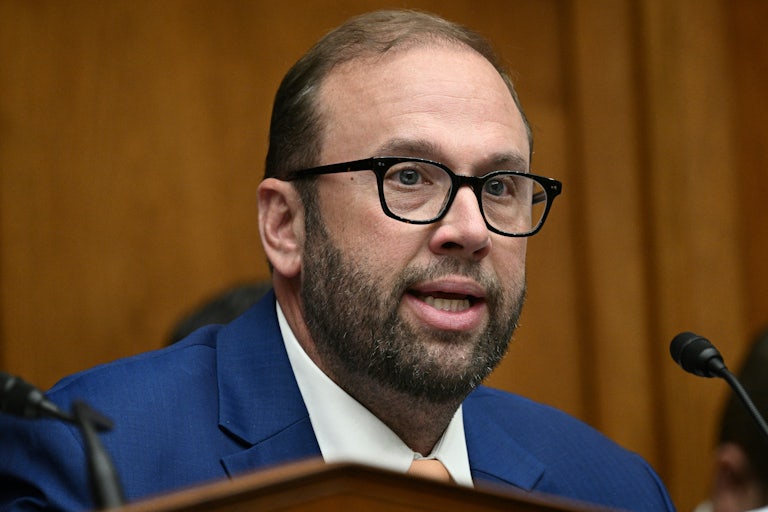
Representative Jason Smith

There’s a lot of news on the child tax credit this week, so I’m focusing the full newsletter on that topic. Rest assured, the key deals dominating conversation in Congress—on funding the government, foreign aid, and the border—will be live issues going forward. But the chances of a bipartisan deal on a critical anti-poverty measure is my favorite story on Capitol Hill this week.

reported earlier this week that the top members of the tax-writing committees in the House and Senate are close to hashing out a deal on legislation that would expand the child tax credit and implement business-friendly tax benefits and deductions. Senate Finance Committee Chair Ron Wyden, a Democrat, and House Ways and Means Committee Chair Jason Smith, a Republican, have been negotiating an agreement for several months, and lawmakers believe that they are close to creating compromise legislation amenable to both parties.

Democrats have long aimed to reinstate some version of the expanded child tax credit that was briefly implemented by the American Rescue Plan Act in 2021, which drastically lowered child poverty during the six months it was in effect. However, it appears that one of the key elements of the expanded child tax credit that helped alleviate child poverty may not be included in the final tax deal.

Democratic members of the Ways and Means Committee told reporters on Wednesday that they had been briefed on a framework that would cost around $70 billion, with $35 billion each for the expanded child tax credit and business tax benefits. Democrats said they were told it would be paid for in part by ending employee retention tax credit claims. The framework discussed would also increase partial refundability of the child tax credit, without providing full refundability for the poorest Americans. However, a source familiar with the negotiations between Wyden and Smith cautioned that the numbers related by House Democrats were not final and that there were still elements of a deal under consideration.

The American Rescue Plan Act eliminated the earnings requirement for the credit and allowed families too poor to pay income taxes to claim it—a provision colloquially known as “full refundability.” The American Rescue Plan Act also increased the amount of the credit and disbursed it on a monthly basis, instead of an annual lump sum. During the six months that it was in effect, from July through December 2021, this measure contributed to a dramatic decrease in child poverty, as well as a drop in food insecurity among families with children.

Although the decrease in child poverty in 2021 was due to a combination of those changes to the child tax credit, the refundability portion was perhaps the most significant expansion, because it allowed parents without income tax liability to still access the credit. Under current law, the $2,000 credit is only refundable up to $1,600.

“The refundability piece is critical, because you can’t just raise benefit levels on their own and expect to see these gaps close,” said Megan Curran, the policy director of the Center on Poverty and Social Policy at Columbia University. Curran and her colleagues recently released a report finding that 18 million children under age 17 were ineligible for the full credit—including 91 percent of children living below the poverty line and 36 percent in households living between 100 and 200 percent of the poverty line.

Democrats have been unsuccessfully working to revive the credit for years, and the current negotiations appear to be the closest lawmakers have come to a deal. However, Democrats on the Ways and Means Committee were unhappy with the numbers they were seeing from Wyden and Smith’s talks.

“This has to be a CTC tax package that makes that kind of profound difference in people’s lives. And right now, I don’t think they’re there yet,” said Representative Jimmy Gomez, a member of the Ways and Means Committee.

Representative Don Beyer told reporters that “it’s definitely not enough.” “There’s no refundability, which we’ve always wanted. It’s not monthly, which we’ve always wanted. It does move the dollar amount up, which is good,” said Beyer. Democrats said that the amount refundable would be $2,000 by 2025, matching the amount of the nonrefundable credit.

Partial refundability meant that low- to middle-income children do not receive the full credit, as well as children in very poor households. Moreover, the amount available changes based on how many children a household has: For example, a parent with one child would need to earn around $31,000 per year to obtain the full credit, while a parent with two children would need to have an annual salary of $36,000.

Under the current framework being discussed, people earning under $2,500 would be ineligible. The credit would still phase in at a 15 percent rate for each dollar of earnings above $2,500. But rather than getting up to 15 percent of annual income in tax credits capped at $1,600 per year—the refundable amount of the current credit—those eligible would receive 15 percent of their income capped at $2,000 in 2025.

A source familiar with the negotiations also said that the framework would phase in the credit per child, allowing parents with multiple children to receive a higher amount. A November analysis by the Tax Policy Center found that phasing in the credit at a rate of 15 percent per child would “benefit 23 percent of families in the lowest income quintile by an average of $270.”

Democratic senators also appeared more sanguine with the turn of events than their House counterparts.

“It’s not going to be everything that I would’ve wanted,” Senator Michael Bennet, a Democratic member of the Finance Committee and longtime advocate for expanding the credit, told me on Wednesday. “We weren’t going to do any extensions of the [research and development] tax credit without improvements to the child tax credit, that’s going to make a difference here, and that’ll make a difference to a lot of poor kids.”

Some progressives voiced their frustration with the possible deal in a meeting of Democrats on the Finance Committee Wednesday morning. But Wyden noted that because the credit would be “relitigated,” it would give Democrats the opportunity to push for some of their priorities—such as full refundability—again in 2025.

“I’d much rather get into 2025 from a position of strength, which is what we get if we get the child tax credit improved now,” Wyden told me.

Meanwhile, Republican lawmakers appear pleased about the addition of benefits and deductions for businesses in a potential deal, even if it’s still unclear when an agreement will be formally announced. Smith told me that he believed “pro-growth tax policies” would be crucial for combating inflation.

“The three tax provisions of R&D, business expensing, and interest expensing—those are crucial, and they’re crucial for Republicans and they’re crucial for Democrats,” said Representative Blake Moore, a Republican on the Ways and Means Committee. However, he acknowledged that the future of such legislation is uncertain, adding: “I don’t have any visibility on how it plays out. I don’t think anybody truly, truly does.”

Lawmakers would want to pass a deal by the end of January, to allow for the credits to retroactively apply to the 2023 tax year. But that gives them little time to reach an agreement, and it’s uncertain what vehicle they would use to pass such comprehensive tax legislation. The opacity of the deal’s future was echoed by Neal, who sounded more bearish on its prospects. 

“This idea that it’s just around the corner doesn’t seem to be very plausible,” he told reporters.

What I’m Reading

The nation’s capital is falling behind on fighting violent crime. Here’s why, by Yours Truly. (Yes, I realize I’m promoting my own article in the “What I’m reading” section, but that’s because it’s a very thorough reported piece!)

The U.S. is dealing with an Israeli leader who’s losing control, by Nahal Toosi in Politico

Trump is connecting with a different type of evangelical voter, by Ruth Graham and Charles Homans in The New York Times

Skipping school: America’s hidden education crisis, by Alec McGillis in ProPublica

This tribe got their “land back.” But it’s no longer livable, by Margaret Grebowicz in The New Republic

The queerest thing about Taylor Swift, by Spencer Kornhaber in The Atlantic

Pet of the Week

Want to have your pet included at the bottom of the next newsletter? Email me: gsegers@tnr.com. 

Today’s featured pet is Hope, a 10-year-old rescue kitty submitted by Ursula Perano. Hope, whom Ursula adopted two years ago, is very food-motivated, and trained to use buttons for certain commands.