Breaking News
Breaking News
from Washington and beyond

You Won’t Believe Who Trump Told About Venezuela Attack Ahead of Time

Here’s a hint: it wasn’t Congress.

Donald Trump walks outside the White House
Aaron Schwartz/CNP/Bloomberg/Getty Images

No, President Donald Trump didn’t tell Congress before launching a large-scale operation to attack Venezuela and kidnap its president—but he did tell someone.

Speaking to the president on Air Force One Sunday, one reporter asked whether Trump had looped in U.S. oil companies to his plans to oust Nicolás Maduro by force.

“Did you speak with them before the operation took place?” the reporter asked.

“Yes,” Trump replied.

Did you maybe tip them off about what was gonna—?” the reporter continued.

“Before and after. And they want to go in, and they’re gonna do a great job for the people of Venezuela,” the president said. “And they’re gonna represent us well.”

Trump seemed to have no reservations about revealing that his government isn’t a democracy at all—it’s an oligarchy, where companies come first and his constituents don’t matter whatsoever. U.S. oil companies are already cashing in on his brazen constitutional violation.

Shortly after the military operation in Venezuela took place, Trump made clear his intention for oil companies to “go in, spend billions of dollars, fix the badly broken infrastructure, the oil infrastructure, and start making money for the country.” Trump has insisted that “the money coming out of the ground is very substantial,” but it seems that rebuilding the country’s oil industry won’t be cheap or easy.

Not only did Trump not receive authorization from Congress before launching the strike, but Democratic lawmakers now allege that Secretary of State Marco Rubio intentionally misled lawmakers about the administration’s intentions to do so.
Trump Declares U.S. Will Run Venezuela After Regime Change

U.S. oil companies will also be a big part of the transition in Venezuela, President Trump announced. Sound familiar?

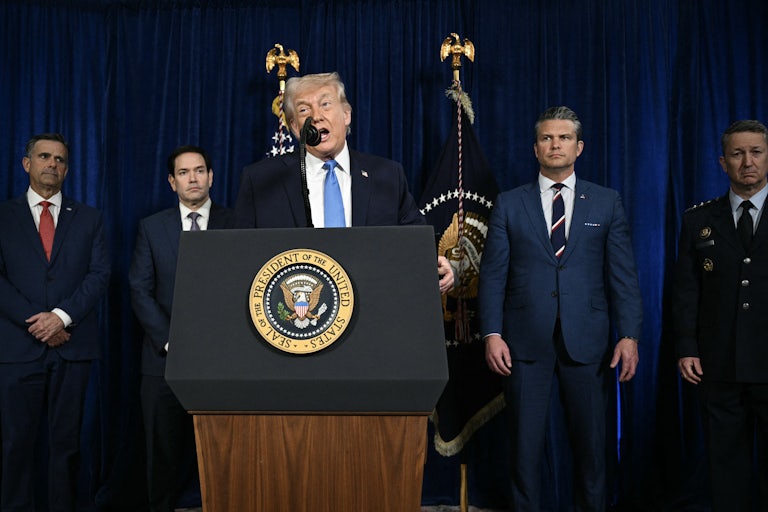
Trump speaks at the presidential podium while CIA Director John Ratcliffe, Secretary of State Marco Rubio, Defense Secretary Pete Hegseth, and Chairman of the Joint Chiefs of Staff General Dan Caine stand behind him in a row.
Jim WATSON/AFP/Getty Images
President Donald Trump, alongside CIA Director John Ratcliffe, Secretary of State Marco Rubio, Defense Secretary Pete Hegseth, and General Dan Caine, chairman of the Joint Chiefs of Staff, speaks to the press following U.S. airstrikes in Venezuela, at Mar-a-Lago, on January 3.

After bombing Venezuela and kidnapping President Nicolás Maduro and his wife in the middle of the night, President Trump has declared that he will “run the country” in the meantime.

“We’re going to run the country until such time, as we can do a safe, proper, and judicious transition,” Trump said at a press conference on Saturday. “So we don’t wanna be involved with having somebody else get in, and we have the same situation that we have for the last long period of years. So we are going to run the country.”

Trump also dedicated a significant portion of the presser to discussing the future of U.S. oil companies in Venezuela, which has the largest oil reserves on the planet. “As everyone knows, the oil business in Venezuela has been a bust, a total bust, for a long time,” he said. “We’re going to have our very large United States oil companies, the biggest anywhere in the world, go in, spend billions of dollars, fix the badly broken infrastructure … and start making money.

Could you imagine if another country sent a team of special agents to kidnap President Trump and his wife Melania from the White House while they slept? And then went on air the next morning saying they’d plug and play someone else as president?

That someone else could very well be María Corina Machado, Venezuelan opposition leader and Nobel Prize winner who has already displayed her eagerness to serve Trump and the U.S. agenda. For now, Trump hasn’t yet signed off.

Was Someone Insider Trading Right Before Trump’s Attack on Venezuela?

A new account on Polymarket was very lucky with some perfectly timed Venezuela bets.

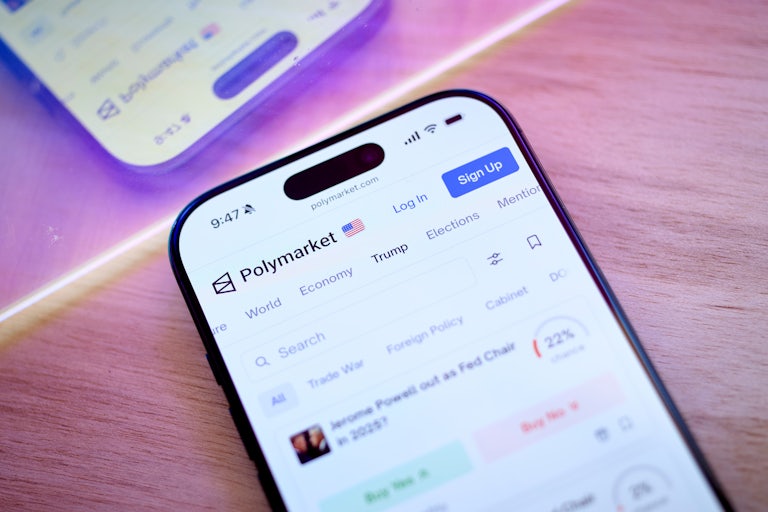
Polymarket on a smartphone
Gabby Jones/Bloomberg/Getty Images

A suspicious new user on the prediction market Polymarket just made bank on the Trump administration’s military strikes on Venezuela.

The account, which was created on December 27, has only bet on two things: the U.S. invading Venezuela, and its president, Nicolás Maduro, being forced out of leadership by January 31. The user bet $35,000 when the market estimated the probability of intervention in Venezuela at only 6 percent.

Thanks to their very lucky bets, they made over $400,000 in less than a day.

Screenshot of Polymarket account and Venezuela bets
Polymarket/Screenshot

The timing of the account’s bets—and its creation—is certainly suspicious. According to reports, U.S. military officials initially discussed bombing Venezuela on Christmas Day, but reversed course after deciding to pursue airstrikes against ISIS in Nigeria instead. In the days following Christmas, officials held off on the attacks due to the weather.

Trump announced his strikes on Venezuela, and his abduction of Maduro and his wife, early Saturday morning. While he did a good job at keeping the attack from being leaked to the media, it seems someone on his team had no problem leaking the news to Polymarket—and making themselves quite a bit richer in the process.

After Venezuela Attack, Trump Says Something Must Be Done About Mexico

Donald Trump is hinting at a military conflict with Mexico next.

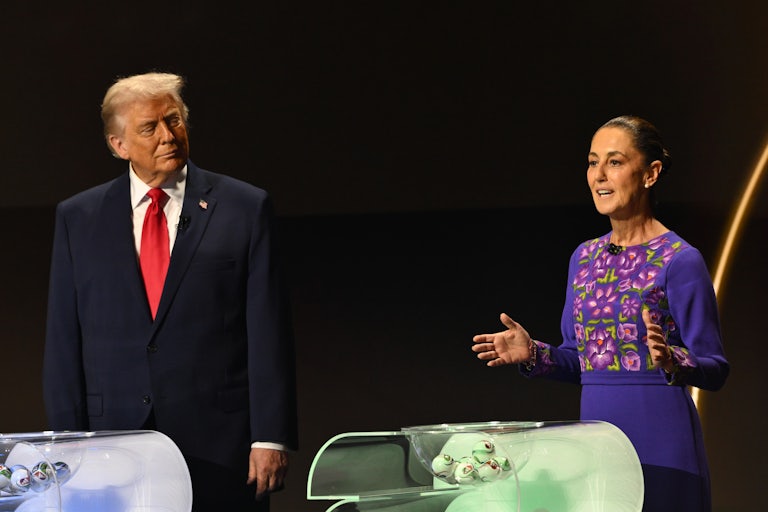
Donald Trump and Claudia Sheinbaum
Mandel NGAN/Pool/Getty Images
U.S. President Donald Trump and Mexican President Claudia Sheinbaum

After the U.S. bombed Venezuela in the middle of the night and abducted its president, Nicolas Maduro, President Donald Trump warned that more attacks could be on the way in the region.

Trump hinted at a future conflict with Mexico in particular in an interview with Fox News Saturday morning.

“Your vice president, JD Vance, said that the message is pretty clear: that drug trafficking must stop. So was this operation a message that you’re sending to Mexico, to Claudia Sheinbaum, the president there?” Fox’s Griff Jenkins asked.

“Well, it wasn’t meant to be, we’re very friendly with her, she’s a good woman,” Trump began. “But the cartels are running Mexico. She’s not running Mexico.”

“We could be politically correct and be nice and say, ‘Oh, yes, she is.’ No, no. She’s very, you know, she’s very frightened of the cartels. They’re running Mexico. And I’ve asked her numerous times, ‘Would you like us to take out the cartels?’ ... Something is gonna have to be done with Mexico.”

Trump also told Fox that a “second wave” of strikes could take place in Venezuela and warned Maduro’s supporters will have a “bad future” if they stay loyal to him.

Trump Admits the Real Reason for His Surprise Attack on Venezuela

Donald Trump immediately began talking about Venezuela’s oil, after the U.S. bombed the country and abducted its leader.

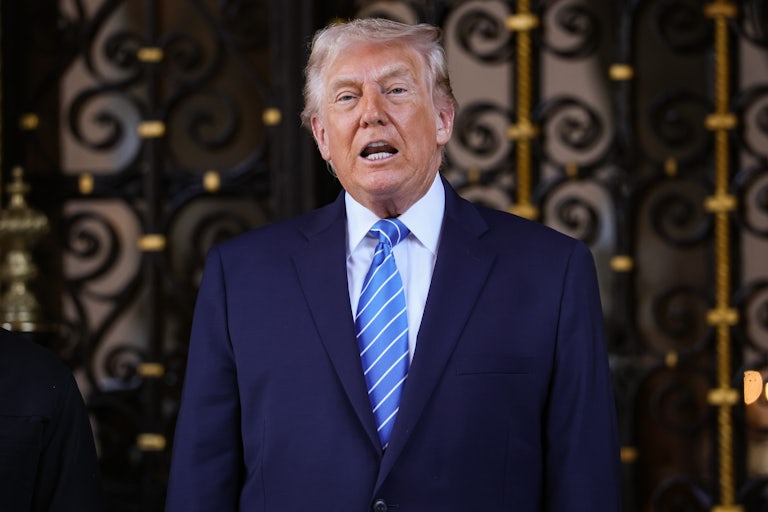
Donald Trump speaks in front of an ornate door.
Joe Raedle/Getty Images

Just hours after President Donald Trump bombed Venezuela and abducted its leader, Nicolás Maduro, he began talking about the Latin American country’s oil industry.

Venezuela has the largest proven oil reserves on the planet, with 303 billion barrels worth of crude, or about a fifth of global reserves, according to the U.S. Energy Information Administration. And that fact has clearly been at the top of Trump’s mind.

Appearing in a Fox News interview Saturday morning, Trump was asked what he sees for the “future of Venezuela’s oil industry.”

“Well, I see that we’re going to be very strongly involved in it, that’s all. I mean, what can I say? We have the greatest oil companies in the world, the biggest, the greatest, and we’re going to be very much involved in it.”

This wasn’t the first time that Trump has admitted his war with Venezuela is at least partly motivated by oil. Earlier last month, the U.S. military seized two Venezuelan oil tankers. Asked what would happen to the oil, Trump replied, “we’re going to keep it,” then added: “Maybe we will sell it, maybe we will keep it. Maybe we’ll use it in the Strategic Reserves. We’re keeping the ships also.”