Breaking News
Breaking News
from Washington and beyond

Trump Admits He May Be Fine With Another Religious Leader in Iran

President Trump revealed he has only one requirement for Iran’s next leader.

Donald Trump points while speaking at a podium in the White House.
Alex Wong/Getty Images

Donald Trump only has one requirement for who should lead Iran after its leader, Ayatollah Ali Khamenei, was killed in airstrikes last week: be on good terms with the U.S. and its top ally.

They need to “treat the United States and Israel well,” Trump told CNN’s Dana Bash in a phone interview Friday morning. Trump envisions Iran working out like Venezuela, he said to Bash, adding that he “may be” OK with a religious leader leading the country.

Trump said he wanted to pick Iran’s next leader, repeating what he said on Thursday. “It’s going to work very easily, it’s going to work like it did in Venezuela,” he said according to Bash, who relayed the conversation on the network. “We have a wonderful leader there. She’s doing a fantastic job, and it’s going to work like that.”

In Venezuela, the U.S. military abducted Venezuelan President Nicolás Maduro early on the morning of January 3 but did not implement a plan of succession, instead allowing Venezuelan Vice President Delcy Rodríguez to succeed Maduro while Trump declared himself “acting president” of the South American country.

A similar situation is not likely to happen in Iran by Trump’s own admission, as has claimed multiple times this week that many of the likely candidates to lead Iran are dead. One possible candidate that has emerged as a possible new leader is Khamenei’s son, cleric Mojtaba Khamenei, but Trump has rejected him.

“Khamenei’s son is unacceptable to me. We want someone that will bring harmony and peace to Iran,” Trump said Thursday, adding that Mojtaba Khamenei’s accession to power would lead to war again “in five years.”

Trump’s words mean that he simply wants compliance and not the total regime change some on the right, as well his supporters among the Iranian diaspora, have been calling for. It once again shows that there was no administration plan for a postwar Iran, and that Trump has been making it up as he goes along, recklessly bombing the country with no clear end in sight.
Trump Brags About Iran Evacuations, as Proof of His Failures Piles Up

Donald Trump insisted that Americans were being evacuated “quietly, but seamlessly” from the Middle East.

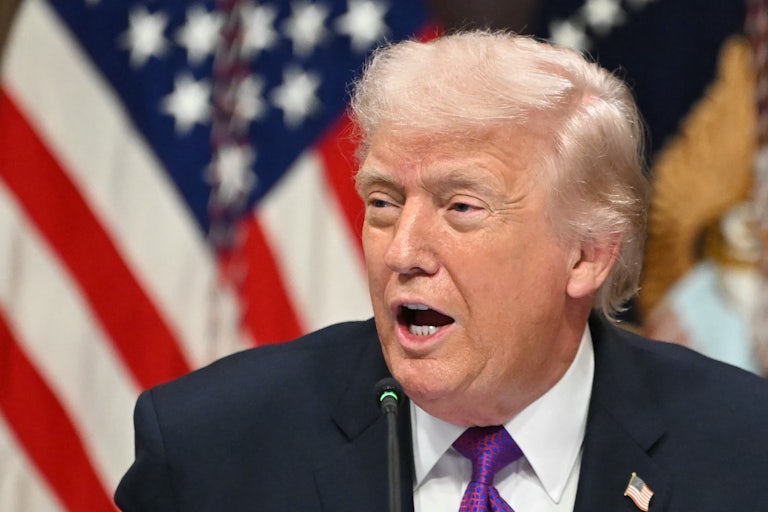
Donald Trump turns his head to the side while speaking into a microphone
ANDREW CABALLERO-REYNOLDS/AFP/Getty Images

Donald Trump is insisting that the United States is secretly evacuating citizens stranded in the Middle East—but multiple reports indicate they have been left on their own.

In a post on Truth Social Friday, Trump lauded the efforts of the State Department in getting Americans out of range of the illegal war he started. “We are moving thousands of people out of various Countries throughout the Middle East,” he wrote. “It is being done quietly, but seamlessly.”

Trump’s post comes as veteran diplomats blame the State Department for conducting evacuations out of the region that are too slow and started too late, The New York Times reported Thursday.

Despite the weeks of planning ahead for the U.S. and Israel’s assault on Iran, the State Department did not issue travel advisories or restrictions for Americans. Given the fact that Trump had spent weeks loudly amassing military assets in the Middle East, a warning to Americans would not have ruined the surprise attack, diplomats told the Times.

The State Department announced Wednesday that the first chartered flights to evacuate Americans had departed for the Middle East—days after Trump launched an initial barrage of strikes against Iran. They didn’t say how many flights would be operating.

The State Department initially instructed citizens abroad to flee on their own, telling them to seek commercial flights amid a massive wave of flight cancellations.

Yael Lempert, who served as the Biden administration’s ambassador to Jordan, told the Times that Iran’s strikes against neighboring countries such as Qatar, Saudi Arabia, and the United Arab Emirates were an all too predictable outcome, and that airspace in the region had been previously closed during similar strikes.

“It’s stunning there were no orders for authorized departure for nonessential U.S. government employees and family members in almost all the affected diplomatic missions in the region—nor public recommendations to American citizens to depart—until days into the war,” Lempert said.

Trump practically admitted Tuesday he had no plan for evacuations—he didn’t even have a plan for the war itself.

Meanwhile, the State Department has pushed back on claims that it left Americans high and dry, insisting that it assisted more than 10,000 Americans abroad, of the 20,000 who had returned to the United States since the conflict began. But some critics have pointed out that assisting Americans could simply mean providing security guidance.

Unprompted, Trump Warns Cuba Is Next

President Trump is going to turn his focus to Cuba after Iran.

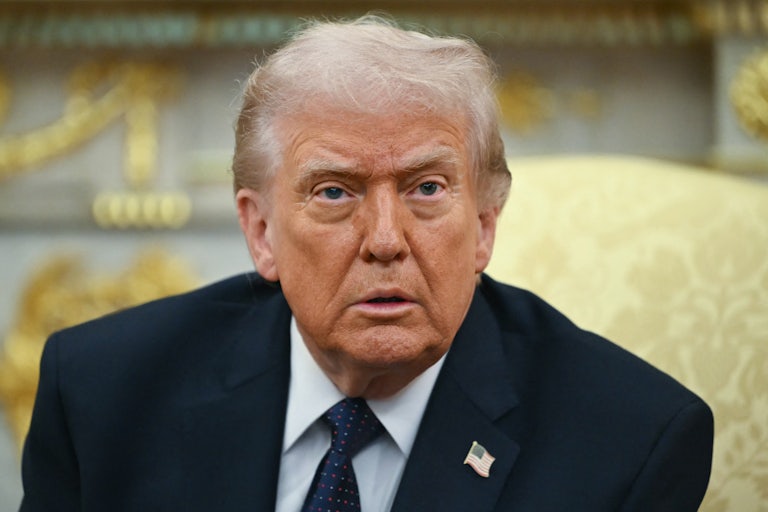
Donald Trump in the Oval Office of the White House
ANDREW CABALLERO-REYNOLDS/AFP/Getty Images

As job growth stagnates, as oil prices spike amid war on Iran, and as the majority of Americans view his second term negatively, President Trump has laid his eyes on Cuba.

In a phone call with CNN’s Dana Bash on Friday, Trump, unprompted, turned his attention to Cuba.

“Cuba is going to fall pretty soon, by the way, unrelated, but Cuba is gonna fall too. They want to make a deal so badly,” Trump said

When asked how, Trump said, “They want to make a deal, and so I’m going to put [Secretary of State] Marco [Rubio] over there and we’ll see how that works. But we’re really focused on [Iran] now. We’ve got plenty of time, but Cuba’s ready—after 50 years.

“I’ve been watching it for 50 years, and it’s fallen right into my lap because of me, it’s fallen, but it’s nevertheless fallen right into the lap. And we’re doing very well.”

Trump last week threatened a “friendly takeover” of Cuba, and he has already destabilized the island with his aggressive oil blockade, baselessly declaring the Cuban government an “unusual and extraordinary threat.” The blockade has led to power outages, business closings, and price gouging. If he is true to his word, this would be the third coup in his second term, after Venezuela and Iran.

Trump’s Best Bud Putin Is Helping Iran Attack American Forces

Russia is giving Iran intelligence on the locations of American forces.

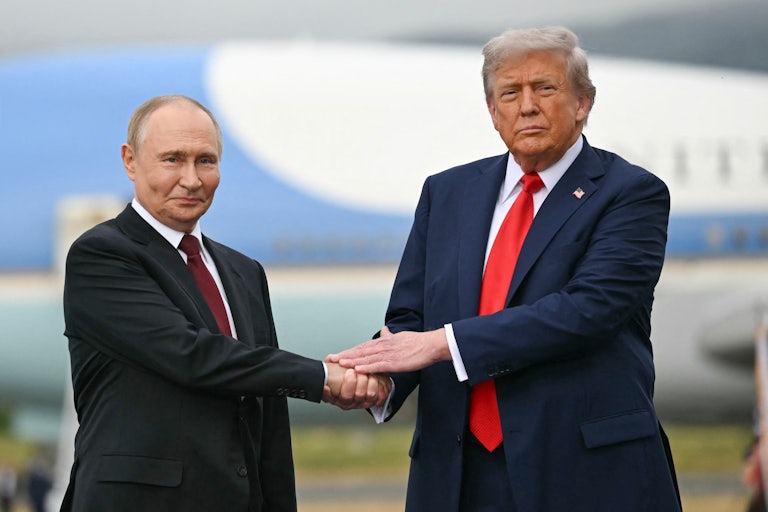
Russian President Vladimir Putin and Donald Trump shake hands
ANDREW CABALLERO-REYNOLDS/AFP/Getty Images

Surprise, surprise: Russian President Vladimir Putin has once again stabbed Donald Trump in the back—but this time, it wasn’t about the war in Ukraine, it was about Iran.

Russia has been helping Iran target the locations of U.S. military assets, including warships and aircraft, three officials told The Washington Post Friday.

“It does seem like it’s a pretty comprehensive effort,” one official told the Post. It was unclear exactly how much assistance Russia was providing, as Iran’s targeting capabilities have weakened significantly since strikes from the U.S. and Israel began last week.

But Nicole Grajewski, a scholar on Iran’s cooperation with Russia at the Harvard Kennedy School’s Belfer Center, suggested that Iran’s strikes against U.S. forces indicate a high level of sophistication.

“They’re getting through air defenses,” Grajewski told the Post, noting that Iran appeared to have become more advanced since it responded to Israeli strikes last summer.

In addition to the CIA’s station in the U.S. Embassy in Riyadh, Iran has also attacked command and control infrastructure, radars, and temporary structures, such as the one where six U.S. service members were killed.

This is the first indication that another U.S. adversary has entered the spiraling regional conflict in the Middle East—and it’s the one with nuclear capabilities and an extensive intelligence network.

Earlier this week, when asked about whether he had a message to China or Russia—some of Iran’s biggest backers—Defense Secretary Pete Hegseth said, “They’re not really a factor here.”

During his second term, Trump’s long-standing fondness for Putin has been increasingly put under strain, as Moscow has repeatedly gone back on public agreements to spare Ukrainians and delayed negotiations to end Russia’s violent incursion there.

Read more about the war:

“People Will Die”: Trump’s Wild Response to Potential Attacks on U.S.

Donald Trump is supremely unbothered by what he may have unleashed.

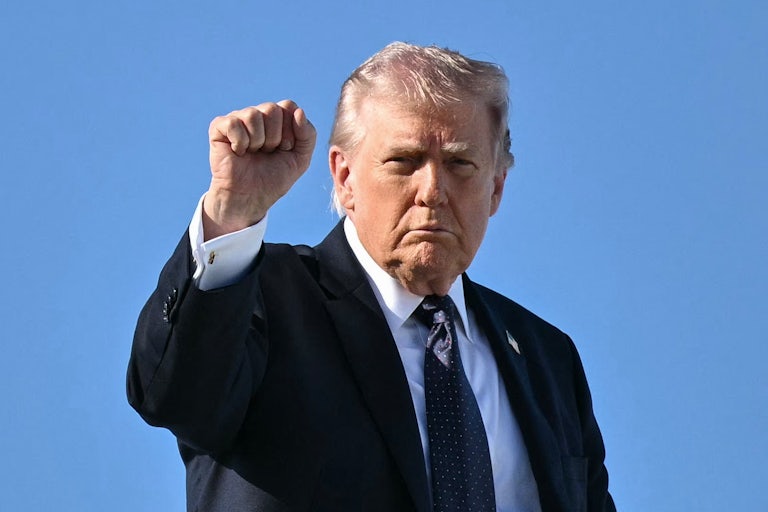
Donald Trump raises his fist
Mandel NGAN/AFP/Getty Images

The U.S. president could not care less if Iran’s violent retaliation includes the deaths of American citizens. Actually, it’s something he’s planning for.

When asked by Time if Americans should be worried about Iran attacking them at home, Trump responded: “I guess.”

“But I think they’re worried about that all the time,” he continued. “We think about it all the time. We plan for it. But yeah, you know, we expect some things. Like I said, some people will die. When you go to war, some people will die.”

The self-titled “peace president” has so far used his second term to sweep foreign cities, massacre foreign leadership, and indiscriminately bomb civilian targets, such as elementary schools in Tehran.

So far, six U.S. soldiers have been killed in the conflict, as have more than 20 Iranian officials, including Supreme Leader Ayatollah Ali Khamenei. Eighteen American soldiers have also been seriously injured. More than 1,200 Iranian civilians have been killed, including 176 children, dozens of whom were at a girls’ school in the country’s south.

Still, Trump has not directly addressed the American people, even as Republicans discuss the potentially unavoidable reality of a U.S. ground invasion in Iran.

That’s a major departure from his predecessors that sat at the Resolute Desk, who universally recognized the need to immediately justify military intervention to the public. Woodrow Wilson spoke to the nation the same day he asked Congress to declare war against Germany during World War I, while Franklin D. Roosevelt gave a national address hours before the country declared war during World War II.

Just one in four Americans say they support the war in Iran, according to a Reuters/Ipsos poll published Monday. In the same survey, 56 percent of respondents said they believe Trump is too quick to use military force as a foreign policy solution.