Breaking News
Breaking News
from Washington and beyond

DNC Kills Resolution Condemning AIPAC Influence in Elections

The Democratic National Committee has once again proved it is out of step with the base of the party.

Israeli Prime Minister Benjamin Netanyahu speaks on two giant screens at the AIPAC conference.
Cheriss May/NurPhoto/Getty Images
Israeli Prime Minister Benjamin Netanyahu speaks at AIPAC’s 2019 Policy Conference in Washington, D.C.

A Democratic National Committee panel on Thursday killed a resolution condemning the “growing influence” of dark money groups like the American Israel Public Affairs Committee, or AIPAC—even as an overwhelming majority of Democrat voters have an unfavorable view of the country that has committed genocide in Gaza, started a war in Iran, and continues to bomb civilians in Lebanon.

“The use of massive outside spending to support or oppose candidates based on their positions regarding international conflicts or foreign governments raises concerns about undue influence over democratic debate and policymaking, potentially constraining elected officials’ ability to represent the views of their constituents,” read the nonbinding resolution.

At least two potential 2028 Democratic nominees may have played a role in killing the resolution, with one DNC member telling Politico they received direct calls from the presidential hopefuls expressing concern about the resolution.

The DNC resolutions committee also punted on two other resolutions on recognizing a Palestinian state and conditioning military aid to Israel.

It’s clear that the Democratic establishment is not ready to let go of AIPAC, even as Israel’s genocide on Gaza and influence on American politics has become perhaps the defining progressive issue of this era. AIPAC wouldn’t be spending millions of dollars every year trying to oust progressive Democrats if that wasn’t the case. And while public opinion continues to shift sharply against it, party leadership continues to squirm and offer nonanswers when confronted with that reality.
Trump Stranded Students in Persian Gulf With Iran War

About six American cadets were working on ships in the Persian Gulf when Donald Trump launched a war.

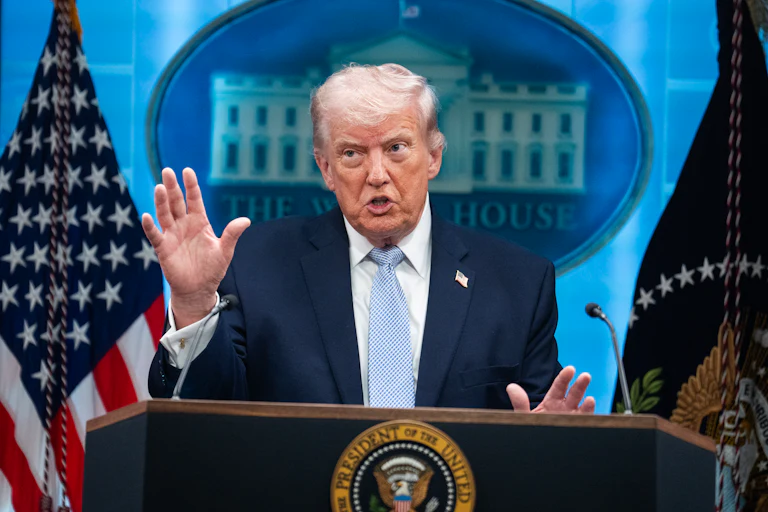
Donald Trump gestures while speaking at a podium
Tom Williams/CQ-Roll Call, Inc/Getty Images

The bombs began raining down in Iran on February 28. Israel had successfully convinced Donald Trump to launch a joint attack on the Gulf nation. There was just one thing that the White House had forgotten about: half a dozen U.S. cadets who were working just off the coast, sitting ducks in the Persian Gulf.

Five privately owned ships flying the U.S. flag were nearby carrying students from the U.S. Merchant Marine Academy, the U.S. Merchant Marine, and the transportation industry when the U.S. military started the war in Iran, NOTUS reported Thursday.

Unlike previous conflicts, there was no advance word or warning to the ships to evacuate, effectively trapping them as the violence began.

“Nobody told them. They were caught unawares,” one source close to the situation told NOTUS. “It was very strange that [officials] weren’t even given a whiff, weren’t even given an indication.”

The military had no plan to transport the vessels out of the Strait of Hormuz. Instead, the students were forced to find safe refuge in harbors around the Gulf, living on their ships. They were evacuated a month later, three sources told NOTUS, though it is not known whether all the students have made it back to American soil.

“If they’d had even just a day’s notice, they could have gotten them out,” another person familiar with the situation told NOTUS.

But the cadets weren’t the only Americans in the region that the White House forgot.

The Trump administration also failed to properly notify regional embassy staff of the impending bloodshed that week. In an email delivered February 27, Ambassador Mike Huckabee gave nonemergency workers at the U.S. Embassy in Jerusalem less than 24 hours to exit Israel, informing them that anyone planning to leave the country “should do so TODAY.”

The order and its timeline were highly unusual: Embassy staff are typically provided several days’ notice in order to comply with state-mandated evacuations, with some warnings given as much as a month in advance of the anticipated departure date. By comparison, Huckabee’s 24-hour deadline was shockingly short.

RFK Jr.’s CDC Delays Report Proving the Covid Vaccine Worked

Anti-vax nonsense has infiltrated every corner of America’s public health agencies.

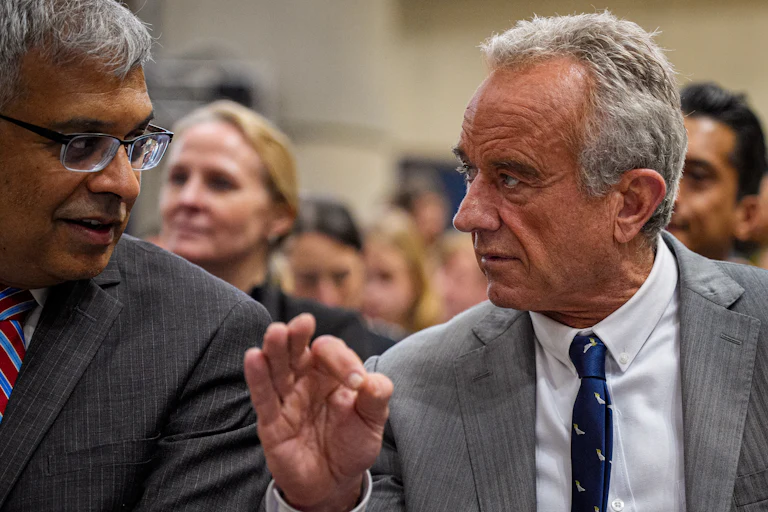
Jayanta Bhattacharya speaks with Robert F. Kennedy Jr.
Andrew Harnik/Getty Images
Acting CDC Head Jayanta Bhattacharya and Health Secretary Robert F. Kennedy Jr. on April 22, 2025, in Washington, D.C.

The Centers for Disease Control and Prevention has delayed the release of a report showing that the Covid-19 vaccine cut hospitalizations and emergency room visits for healthy adults by half last winter.

The Washington Post reports that acting CDC director Jay Bhattacharya made the decision because he was purportedly concerned about the report’s methodology, even though it has been used by the agency for years to examine vaccine effectiveness for other respiratory viruses like the flu.

In fact, the agency published a similar report about the flu vaccine with the same methodology on March 12 in its Morbidity and Mortality Weekly Report. The Covid-19 vaccine report had cleared the CDC’s scientific review process, and was scheduled to be published in the MMWR before Bhattacharya’s decision.

The same methodology is also used to evaluate vaccines by numerous medical journals including the New England Journal of Medicine, JAMA Network Open, the Lancet, and Pediatrics, according to the Post.

The newspaper obtained a copy of the report, which states that between September and December 2025, healthy adults who got the vaccine cut their likelihood of visiting urgent care or the emergency room by 50 percent and of Covid-related hospital stays by 55 percent, compared to those who didn’t get a Covid vaccine in 2025.

Bhattacharya was a staunch critic of the CDC’s Covid-19 response, calling for an early end to lockdowns in the “Great Barrington Declaration” he helped write, and said that calling for masking was “pseudoscience.” However, he did tell a Senate committee in February that he didn’t think vaccines cause autism.

On the other hand, Bhattacharya’s boss, Secretary of Health and Human Services Robert F. Kennedy Jr., is a longtime anti-vax activist, calling the Covid-19 vaccine the “deadliest vaccine ever made” in 2021. Last year, Kennedy announced that the CDC would no longer recommend the vaccine to healthy pregnant women and children.

In Trump’s second term, vaccination has been discouraged, resulting in rising and more severe illnesses. Meanwhile, the administration, under the thrall of Kennedy’s MAHA pseudoscience, is burying anything that proves their ideology wrong.

Aslyum Rates Plummet Thanks to Secret Orders From Trump Officials

Donald Trump has overhauled the immigration system to keep as many people out as possible.

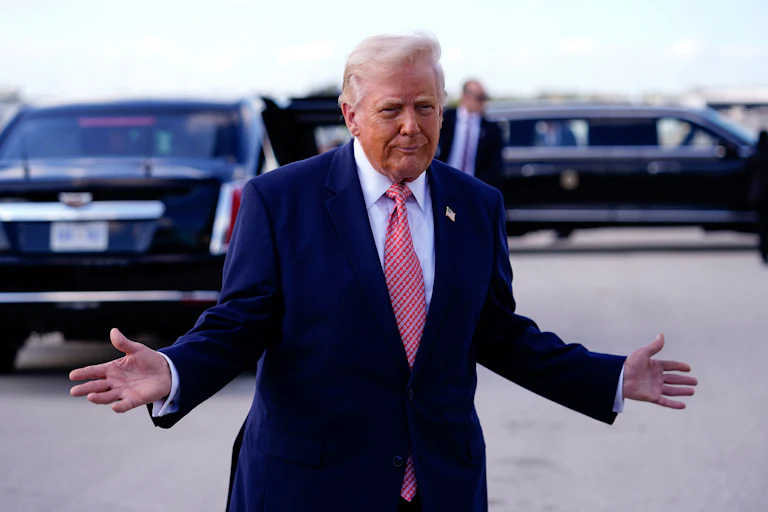
Donald Trump holds his hands out to the side and makes a weird face
Nathan Howard/Getty Images

U.S. immigration judges have essentially been told that they cannot grant asylum to immigrants, The New York Times reported Thursday.

In a previously unreported whistleblower letter to Congress, a military lawyer who served as a temporary immigration judge before being fired, quoted an official who’d offered a frank—and dark—description of the standard for granting asylum under the Trump administration: “Maybe if you were Jewish and escaping Nazi Germany in 1943, you should get it.”

Illegally denying immigrants their lawful pathway to citizenship is just one way that President Donald Trump transformed the country’s immigration court system into the engine of his mass deportation agenda. Since Trump reentered office, his administration has carried out an unprecedented purge of the country’s immigration judges, culling 100 judges from a body of about 750 officials, according to the Times.

Meanwhile, the Trump administration has sought to replace these officials with a class of so-called “deportation judges” and has announced the appointment of 143 permanent and temporary judges, many of whom previously worked as immigration prosecutors or military lawyers. As a result, deportation rates have skyrocketed and the number of successful asylum claims has seen a precipitous drop.

An analysis by the Times found that many of the judges who were fired under the Trump administration had been appointed under Democratic administrations, and tended to approve more asylum cases than their peers. Some immigration courts, such as one in San Francisco, that were viewed as friendly to asylum claims were shuttered altogether. Judges who were fired as part of Trump’s purge approved about 46 percent of asylum claims, while those who remained approved roughly 15 percent.

By comparison, the administration’s new hires have approved roughly 6 percent, according to an analysis by the Times.

The Trump administration wanted immigration judges to act as “puppets for the administration with a singular goal of deporting as many people as possible as quickly as possible,” Shuting Chen, an immigration judge who was dismissed last November, told the Times.

The immigration judges who remain have found themselves in a precarious position. More than two dozen immigration judges who spoke with the Times said they felt pressure to go along with the Trump administration’s mass deportation agenda or risk losing their jobs.

Last June, a memo from a top DHS official accused certain judges of tolerating bias so long as it was “in favor of an alien,” and warned that judges who favored one side “may be subject to corrective or disciplinary action.”

“All of us are looking over our shoulders,” said Holly D’Andrea, an immigration judge in Texas who spoke with the Times in her capacity as president of the National Association of Immigration Judges union.

Hegseth Hatches Plot to Oust Army Secretary in Middle of War

Defense Secretary Pete Hegseth is apparently pissed that the secretary of the Army is outshining him.

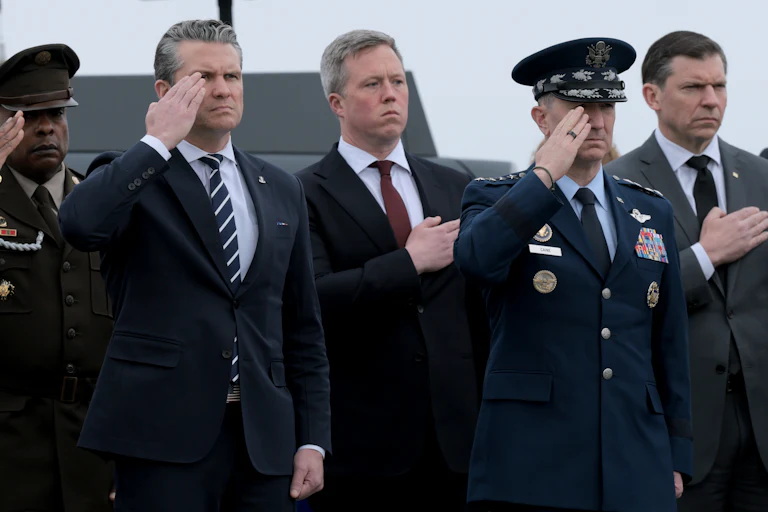
Defense Secretary Pete Hegseth and Army Secretary Daniel Driscoll stand at attention alongside three other men.
Anna Moneymaker/Getty Images
Defense Secretary Pete Hegseth stands next to Army Secretary Daniel Driscoll (center).

Defense Secretary Pete Hegseth is reportedly attempting to frame Army Secretary Dan Driscoll as a “resistance figure” in an effort to oust him from the Trump administration. 

Multiple sources told The Hill that Hegseth, who has ousted multiple senior military officials both before and during the war on Iran, sees Driscoll as a rival of sorts. Sources noted that Hegseth’s paranoia had been heightened in recent weeks following Trump’s firing of his two Cabinet colleagues, Pam Bondi and Kristi Noem. And Driscoll has previously been floated as a potential successor to Hegseth if he ever gets canned.    

“He’s just really uncomfortable with anyone who could potentially be outshining him,” a current Pentagon official told The Hill. The Pentagon itself denies this, stating that Hill sources were “serving up fake news to anyone gullible enough to write about it.” And head Pentagon spokesperson Sean Parnell wrote that Hegseth “maintains excellent working relationships with the secretaries of every service branch.”  

But another Pentagon official claimed that Hegseth’s inner circle “believes they’ve uncovered proof that Driscoll has become a resistance figure within the Pentagon not only against Hegseth, but against President Trump as well”—raising major doubts about just how copacetic things really are inside Hegseth’s Pentagon right now.  

Hegseth has also made moves targeted at Driscoll’s support network, firing his chief of staff, Gen. Randy George, and two other high-ranking military officials. The new plot against Driscoll fits into a larger pattern with Hegseth, who at the start of his term was overcome by paranoia and suspicion so intense that he made Pentagon employees take polygraph tests and would only speak in confidence to his wife.

It’s unclear what exactly Driscoll has done to elicit this alleged treatment from Hegseth, other than to be reasonably well liked and respected. 

“From what I’ve seen in the press, and from whatever it’s worth, what I hear from people in the Army, it’s not like Driscoll is scheming and plotting to make Hegseth look bad. I mean, Hegseth takes care of that himself on a regular basis. It’s just, it’s all just very strange. And it’s just irresponsible,” retired Army reserve colonel and Pentagon staffer Kevin Carroll told The Hill

Driscoll has no plans to resign, and has stated that “serving under President Trump has been the honor of a lifetime.”  

Army Survivors of Deadliest Iran Attack Say Pete Hegseth Is Lying

Troopers that were injured in the attack say they were “unprepared.”

Defense Secretary Pete Hegseth frowns and looks to the side during a press conference
Stefani Reynolds/Bloomberg/Getty Images

When Defense Secretary Pete Hegseth described a deadly Iranian strike in Kuwait as a rare “squirter” that had broken through the defenses of a U.S. military base, it didn’t quite sound right—especially to the service members who actually lived through it. 

“Painting a picture that ‘one squeaked through’ is a falsehood,” one of the injured soldiers told CBS News Thursday. “I want people to know the unit … was unprepared to provide any defense for itself. It was not a fortified position.”

The injured soldier, a member of the Army’s 103rd Sustainment Command who spoke to CBS News under the condition of anonymity, highlighted the valiant efforts of his fellow service members who were left in a dangerous situation by their leadership.  

“I don’t think that the security environment or any leadership decision diminishes in any way their sacrifice or their service,” the injured soldier told CBS in an interview. “Those soldiers put themselves in harm’s way and … I’m immensely proud of them, and their family should be proud of them.”

Ahead of Operation Epic Fury, U.S. troops in the Gulf region were instructed to move away from the “X,” or danger zone. But a group of soldiers were sent from Kuwait City to Port of Shuaiba, still well within striking distance for Iran. There, they would establish a makeshift portside tactical operations center in a series of small tin buildings.

“We moved closer to Iran, to a deeply unsafe area that was a known target,” another soldier told CBS News. “I don’t think there was a good reason ever articulated.”

The soldier described how the troops had been protected by only a thin layer of vertical standing blast barricades. “From a bunker standpoint, that’s about as weak as one gets,” he told CBS News. Images of the base showed that it had limited defenses against drone or missile strikes. 

When asked to describe the degree of fortification at the makeshift operations center, the soldier told the outlet: “I mean, I would put it in the ‘none’ category. From a drone defense capability … none.”

This runs counter to the Pentagon’s repeated assertions that the operations center was fortified. “Every possible measure has been taken to safeguard our troops—at every level,” Pentagon spokesman Sean Parnell wrote on X in March. 

The Iranian strike on that base killed six U.S. service members, making it the deadliest Iranian strike of the first five weeks of the joint U.S.-Israeli military campaign in Iran. More than 30 military members were hospitalized, with dozens suffering from injuries, including burns, shrapnel wounds, and brain trauma. 

The Defense Department did not initially release information about how many were hurt in the strike, and U.S. Central Command initially claimed that five had been seriously wounded. This isn’t the only case of the Pentagon downplaying the toll of Trump’s reckless war in Iran The government has published outdated numbers in statements on casualties, resulting in an undercount of how many troops have been wounded or killed, and a U.S. official said last week that the Pentagon appeared to be engaged in a “casualty cover-up” in Iran.

Pope Meets With Top Obama Adviser Following Pentagon Threat

Pope Leo continues to snub Donald Trump.

Seen in profile, Pope Leo smiles during his weekly general audience in St. Peter's Square
Maria Grazia Picciarella/SOPA Images/LightRocket/Getty Images

Barack Obama could be about to one-up Donald Trump yet again.

Pope Leo XIV met with Obama adviser David Axelrod Thursday morning, reported Substack journalist Christopher Hale, marking a major progression in the quest to land the 44th president a meeting with the Chicago-born pontiff.  

Obama’s enthusiasm for meeting the pope was made apparent in February, when he joined Brian Tyler Cohen’s podcast for a Valentine’s Day episode.

“I’ll be honest with you, being president or even being an ex-president, I can kind of meet everybody, so I’ve met a lot of folks,” Obama said at the time. “The person who I have not yet met that I’m looking forward to meeting—and I hope I get an opportunity sometime in the future—is the new pope, who’s from Chicago, and a White Sox fan.”

Axelrod worked as Obama’s chief strategist on both of his presidential campaigns. It’s not clear what Axelrod and the pope discussed, but the shrinking degrees of separation between the global figures bodes well for Obama’s dream.

The effort to pair the two has been actively in the works since at least March, when Hale reported that the Holy See had been in communication with Obama’s team about arranging a meeting.

That could mean that Obama meets Pope Leo XIV before Trump does.

Leo became the first American-born pope on May 8, 2025, but Trump has not managed to meet him over the past year. Instead, the Vatican has shied away from the Trump administration, in no small part due to threats made by Defense Department officials who were unhappy with the pontiff’s various criticisms of Trump’s warmongering.

Days after Pope Leo XIV delivered his “State of the World” speech in January, Under Secretary of Defense for Policy Elbridge Colby summoned Cardinal Christophe Pierre, the Vatican’s U.S. representative, to a closed-door meeting at the Pentagon. The atmosphere was anything but friendly: Pentagon officials openly threatened the religious ambassador, asserting that the Catholic Church needed to get behind the Trump administration’s global whims due to the country’s military prowess.

One U.S. official present at the meeting brought up the Avignon papacy, a period in the fourteenth century in which the French monarchy bent the Catholic Church into submission, ordering an attack on Pope Boniface VIII that led to his downfall and subsequent death, and forcing the papacy to relocate from Rome to Avignon.

The Vatican was so alarmed by the Pentagon’s warning that Pope Leo cancelled his plans to visit the U.S. later in the year, reported Hale, who noted that “many in the Vatican saw the Pentagon’s reference to an Avignon papacy as a threat to use military force against the Holy See.”

The Vatican also rejected the White House’s invitation to host the pope for America’s 250th anniversary on July 4.

Read about the pope’s relationship with the current administration:

“America First” President Using Foreign Steel for White House Ballroom

President Trump is facing backlash over his decision to use foreign steel for the construction of his gaudy ballroom.

A crane stands next to the White House
Andrew Harnik/Getty Images

Donald Trump, despite his praise for the U.S. steel industry, will be using foreign steel for his ballroom project.

The New York Times reports that Luxembourg-based company ArcelorMittal will be providing millions of dollars in steel for the project, all produced in Europe. Trump said in October that he was offered $37 million worth of donated steel for the ballroom, but didn’t say where it was from.

He told ballroom donors at the time that a “great steel company” had come forward with a gift.

“He said, ‘Sir, I’d like to donate the steel for your ballroom,’” Trump recounted to the donors. “I said: ‘Whoa, that’s nice.’ And I found out—‘How much is the steel?’ I called the contractor. ‘Sir, it’s down for $37 million.’ I said, ‘This is a nice donation, right?’”

He called the steel “great steel as opposed to garbage steel, because they dump a lot of garbage around. You know, steel is like everything else, including human beings. Steel could be high quality, and it can be low quality. He wants to make sure it’s high quality.”

Days after Trump made that announcement last year, he halved tariffs that applied to automotive steel exports that ArcelorMittal happens to produce in Canada. An unnamed White House official told the Times that despite ArcelorMittal being a foreign company, it was benefiting the U.S. through a joint venture with Japan’s Nippon Steel in Alabama and an iron mine in Minnesota, and denied that the company received anything in return for its donation.

Last year, the Trump administration allowed Japan-based Nippon Steel to take over U.S. Steel in exchange for a “golden share” in the company, which allows the government to block major decisions such as offshoring or layoffs. Why would Trump get steel from ArcelorMittal when the government already has a close (and controversial) stake in U.S. Steel?

On top of that, going with a foreign steel company contradicts Trump’s stated “America First” ethos, which critics seized upon Wednesday.

“While the White House imports foreign steel to build Trump’s ugly Epstein Ballroom, California is opening its first new steel plant in 50 years,” California Governor Gavin Newsom’s press office posted on X. “Thanks, Gavin Newsom!”

“Make America Luxembourg Again?” Newsom also posted on his personal account.

“Foreign steel in the White House? Are you kidding? We’ve got Iron Range mines shut down & 100’s @steelworkers laid off. Instead, they’re outsourcing one of the most iconic American buildings overseas! American steel built this country, it should build the White House too,” Minnesota State Senator Grant Hauschild, a Democrat, said on X.

Trump Warns NATO to Clean Up His Mess in Iran War

Trump has issued an ultimatum after his meeting with the NATO secretary general.

Donald Trump points as he speaks
Brendan SMIALOWSKI/AFP/Getty Images

President Trump issued an “ultimatum” to European countries regarding the Strait of Hormuz after meeting with NATO Secretary General Mark Rutte at the White House on Wednesday.

German news magazine Der Spiegel reported that Trump is expecting NATO members to help reopen the strait, which Iran closed in retaliation for the war Trump started without speaking to any of those NATO members. He’s also threatening to pull U.S. military support from any countries that don’t help reopen the strait.

Trump’s demand is equivalent to an “ultimatum,” several European diplomats told Der Spiegel.

“None of these people, including our own, very disappointing, NATO, understood anything unless they have pressure placed upon them!!!” Trump posted on Truth Social early Thursday morning, hours after his meeting with Rutte.

This isn’t the first time Trump has begged NATO to help him reestablish a status quo that he disrupted. Last month, Trump claimed that other countries—such as China—depend more on the Middle East waterway than the U.S. does, and should therefore be leading the charge in reopening the bomb-laden strait.

“I’m demanding that these countries come in and protect their own territory, because it is their territory. It’s the place from which they get their energy. And they should come and they should help us protect it,” Trump said. “Why are we maintaining the Hormuz Strait when it’s really there for China and many other countries? Why aren’t they doing it?”

Trump Sounds Ready to Break His Own Ceasefire in Iran

Donald Trump reportedly begged for a ceasefire. Less than 48 hours later, he already seems over it.

Donald Trump mimes aiming a gun while speaking at a podium
Chen Mengtong/China News Service/VCG/Getty Images

It’s been less than 48 hours since the U.S. brokered a fragile, two-week ceasefire agreement with Iran, and Donald Trump is already raring for his next fight.

The president issued another violent threat against Iran Wednesday night, promising that the “shootin’ starts” if the two countries do not reach a “REAL AGREEMENT.”

“All U.S. Ships, Aircraft, and Military Personnel, with additional Ammunition, Weaponry, and anything else that is appropriate and necessary for the lethal prosecution and destruction of an already substantially degraded Enemy, will remain in place in, and around, Iran, until such time as the REAL AGREEMENT reached is fully complied with,” Trump wrote on Truth Social.

“If for any reason it is not, which is highly unlikely, then the ‘Shootin’ Starts,’ bigger, and better, and stronger than anyone has ever seen before.”

“It was agreed, a long time ago, and despite all of the fake rhetoric to the contrary—NO NUCLEAR WEAPONS and, the Strait of Hormuz WILL BE OPEN & SAFE,” he continued. “In the meantime our great Military is Loading Up and Resting, looking forward, actually, to its next Conquest. AMERICA IS BACK!”

Iran offered a 10-point peace plan on Monday that the White House tepidly agreed to work with, mere minutes before Trump’s deadline the following night to completely obliterate the country.

The plan includes various demands for an immediate end to the regional violence, including proposals for a permanent end to the war, guarantees that Iran and its allies would not be attacked again, and an end to Israeli strikes on Hezbollah in Lebanon.

It also seeks the lifting of all U.S. and international sanctions on Iran; the imposition of a new $2 million toll per ship through the Strait of Hormuz, a vital oil passageway situated between Iran and Oman; and a $1 toll per barrel of oil delivered through the waterway.

But there was an additional detail included in versions of the ceasefire arrangement distributed in Farsi—Iran’s native language—that was not included in the English edition, specifying the “acceptance of enrichment” for Iran’s nuclear program, suggesting that the country was not yet willing to let go of its plans to develop nuclear technology.

While it’s hard to see how any components of the deal offer a benefit to the U.S., the final point undermines Trump’s rationale for the war entirely: The president’s primary interest in fighting Iran was to cripple the country’s nuclear program, stripping any potential for the country to create a nuclear weapon. Failing to do so would imply that the war—which has so far cost the lives of 13 U.S. troops and billions of dollars in munitions—was a complete waste of time, even by the White House’s own metrics.